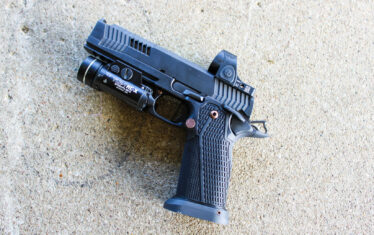

While the gun industry often sees trends that eventually fade, red dot optic systems are here to stay, at least I think. Even for those like me, who grew up using iron sights and still rely on them, it’s hard to ignore the benefits of a red dot optic. With this new release, Springfield Armory and Aimpoint have teamed up to bring us a modern-day 1911. That is to say, a sleek, double-stack 1911 equipped with an Aimpoint COA optic.
When Aimpoint first released their A-Cut mounting system, I was a little skeptical. I tend to prefer universal mounting systems that work with a multitude of optics. But that’s based on the idea that you buy a handgun, find an optic, and attach it with a compatible mounting plate. With the new 1911 DS Prodigy COA, your handgun is truly “ready to go” out of the box.
Here is a quick rundown of the Prodigy and COA optic after spending some time with them on the range.
The Double Stack Prodigy
The Springfield Armory 1911 DS Prodigy has been around for a while. It’s a double-stack 1911 chambered in 9mm, with a magazine capacity of 18+1, which is a great capacity for a grip that doesn’t really feel all that thick. Sure, it’s thicker than a single-stack 1911, but it doesn’t have the bulky grip feeling that a lot of double-stack 1911’s have.
Weight, Size, and Architecture
The version Springfield Armory used for the Aimpoint COA has a 4.25-inch forged stainless steel bull barrel. Its overall weight comes in at about 32.5 ounces unloaded. That’s heavier than a full polymer handgun, but lighter than a full metal 1911.
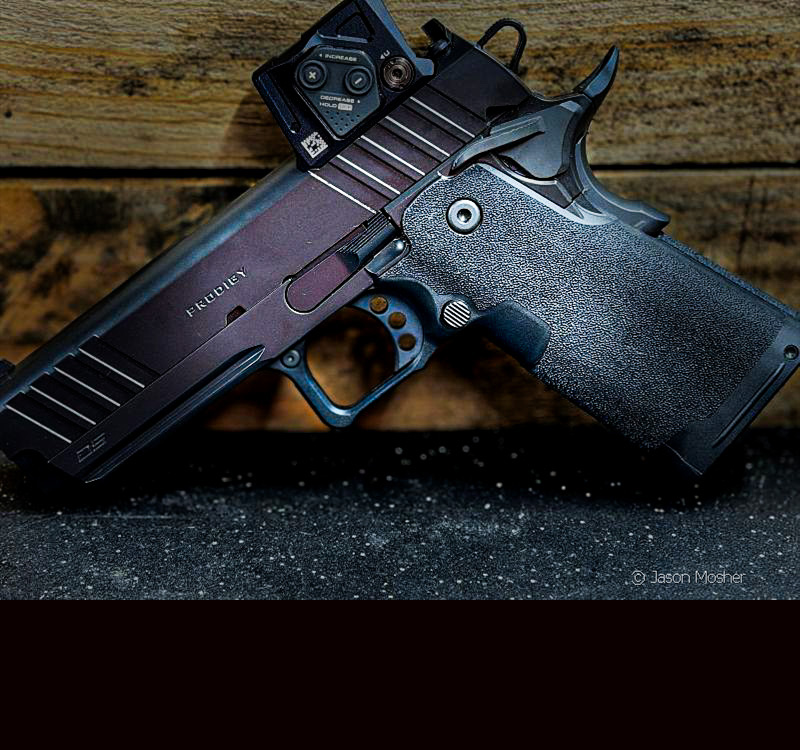
Architecturally, the Prodigy uses a hybrid frame design consisting of a forged carbon steel mainframe paired with a polymer grip module. This configuration provides a solid, reliable rail system and keeps it durable under high round counts while shaving some weight.
The steel core and the forged carbon steel slide are finished in a sleek black Cerakote, which holds up very well to heavy use on a daily basis.
Ergonomics & Grip Texture
By separating the frame into two pieces, Springfield managed to keep the grip profile fairly slim for a double-stack platform. The polymer grip module has a wrap-around molded texture that really makes it stand out. Because it’s a one-piece grip system, there are no separate panels on each side. Like traditional 1911’s. You end up with a lightly textured surface that flows around the entire grip.
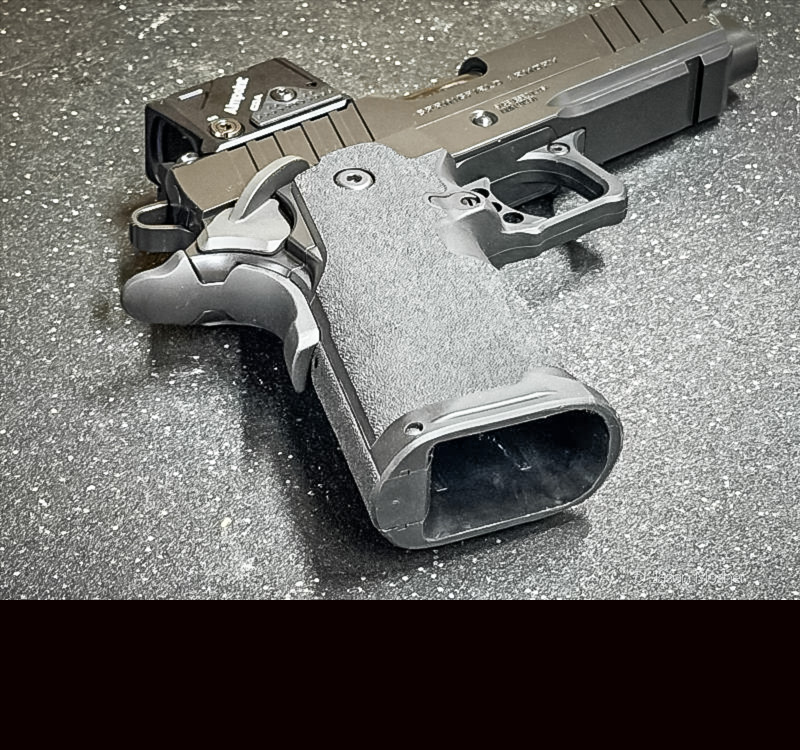
An extended beavertail safety is provided to protect your hand from slide bite. This helps keep a higher grip on the gun and, in return, provides better control.
There are some slide serrations on the front and back of the slide that help give it that “tactical” look. The front slide serrations really help with performing that press check.
Trigger Pull
The trigger is one reason we all like 1911’s. With a single-action trigger that pulls directly to the rear, it feels like your classic 1911 trigger pull. There is just a hair of slack in the trigger before you feel the solid wall. After that, it’s about a 4.8-pound trigger pull with a clean break. It also has a short reset, making it much easier to perform rapid follow-up shots.
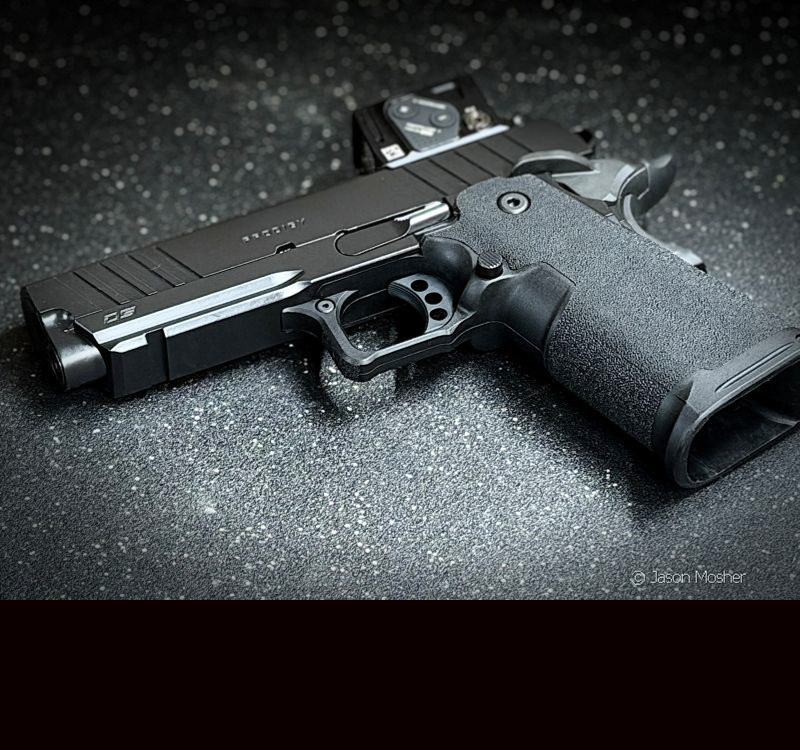
The thumb safety is ambidextrous and easy to manipulate when drawing from a holster. Unlike modern, striker-fired pistols with trigger safeties, 1911’s require the safety to be used when drawing and rebolstering. Because of this, I like the safety to have a good, distinctive “click.” The safety on the Prodigy is excellent and provides audible feedback as well.
High-Capacity Mec-Gar Magazines
The factory bundled COA package ships with two 18-round flush-fit metal Mec-Gar magazines, and I got along just great with them. They’re made in Italy and appear to be of great quality. They are easy to load and have been perfectly reliable for me so far.
Disassembly: Two-Piece Guide Rod System
One of the most unique mechanical characteristics of the 4.25-inch Prodigy is its two-piece full-length guide rod. To field-strip the pistol, you need a hex wrench to unscrew and remove the front half of the guide rod. First, loosen the front part of the guide rod, then remove the slide from the frame. After that, you can take the front of the guide rod the rest of the way off and remove the recoil spring.
This is the first handgun I’ve owned with this type of guide rod system, so I’m not sure how I feel about it yet. My first concern is the threads coming loose and the front part of the guide rod coming off while shooting. But after doing some research and putting a lot of ammo through the Prodigy, I am not as worried about this design.
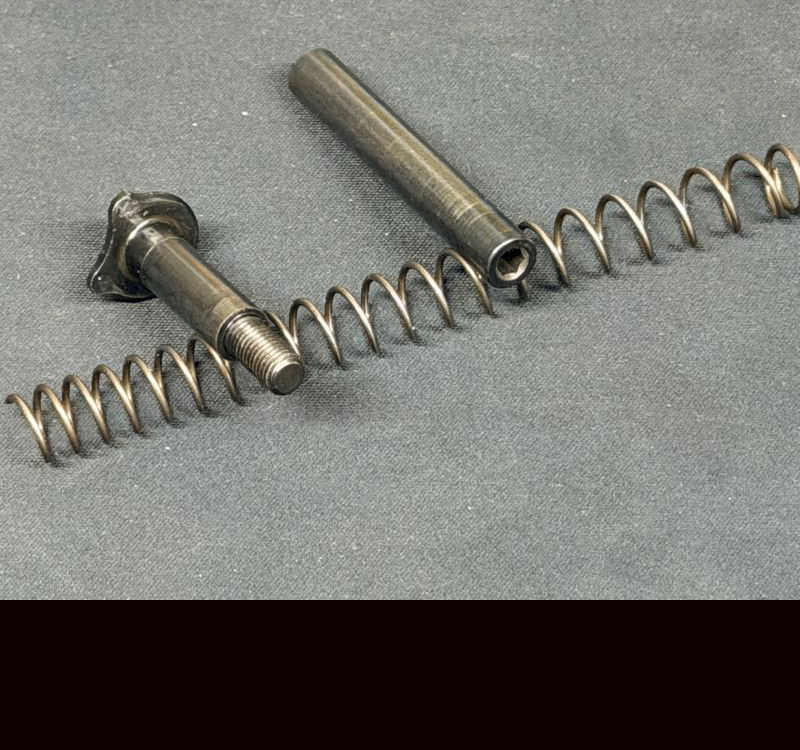
After firing nearly 1,000 rounds through the gun, I checked the guide rod, and it was still tight. It would take about 10 seconds to double-check it before each range session, just to be sure it’s not loose. Another option is to use Blue Loctite or some other thread locker to make sure it stays snug. And for those who don’t like either of those options, you can purchase an aftermarket one-piece guide rod for about $50.
The benefit of the two-piece design is to make the gun easier to field-strip. When you loosen the front of the guide rod, there is not as much pressure on the slide as you hold it back to remove the take-down pin. You also do not have to worry about rotating a barrel bushing with this design.
1911 DS Prodigy 4.25″ COA Handgun Specifications
- Caliber: 9mm Luger
- Barrel: 4.25″ Forged Stainless Steel, Match Grade, Bull Barrel with 1:16 Twist
- Slide: Forged Carbon Steel, Black Cerakote Finish, Aimpoint A-CUT Interface
- Frame: Forged Carbon Steel Mainframe, Black Cerakote Finish
- Grip Module: Black High-Impact Polymer with Adaptive Grip Texture
- Sights: Black Front and Rear Co-Witness Iron Sights
- Recoil System: 2-Piece Full-Length Guide Rod
- Magazine Capacity: 18+1 Rounds
- Overall Weight: 32.5 ounces unloaded
- Dimensions: 7.8″ Length by 5.75″ Height
Aimpoint COA
The Aimpoint COA (Closed Optic Assembly) is much slimmer than the Aimpoint ACRO and other enclosed emitter optics out there. While the trend has been larger and larger windows on optics, the COA takes us back to a slim, compact optic that, for me, is a relief to see.
I was a little concerned about target acquisition with a smaller window, but I didn’t have any problems at all.
The COA weighs about 1.7 ounces and houses the reticle-emitting LED inside a 7075-T6 aluminum housing. Because the optical channel is completely sealed by front and rear lenses, environmental hazards like rain, mud, lint, and snow cannot block the emitter path. If the glass gets dirty, you simply wipe it off.
I didn’t understand the importance of an enclosed emitter optic until I went through a qualification course in the rain. My eopen-emitter optic was useless until the rain stopped.
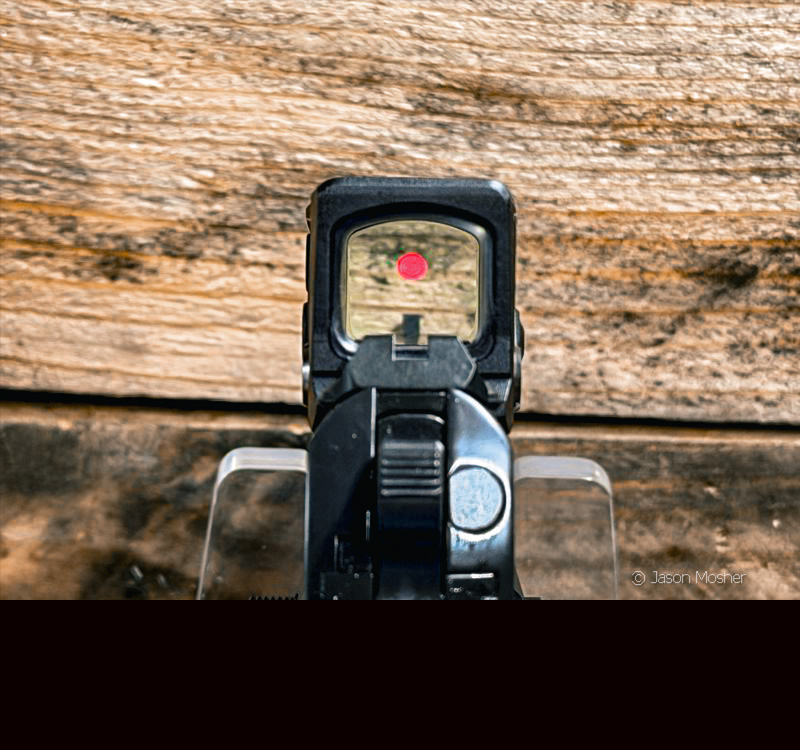
The COA has a 3.5 MOA red dot that is in the “standard” dot size compared to other dots on the market. It has 12 total brightness adjustments, which include 8 daylight settings and 4 night-vision-compatible modes. They can be adjusted by using the buttons on the side of the optic.
It’s powered by a CR2032 battery and has a run time of more than 50,000 hours, or five years, of continuous use. A quick-access side-loading compartment allows the battery to be replaced without removing the sight from the slide. It also carries a waterproof rating that allows it to be submergible up to 25 meters.
Why the A-CUT Footprint?
So why do we need yet another optics mounting system? Standard optic footprints rely heavily on two vertical screws to bear the shear stress of the slide slamming rearward and forward during cycling. This can cause them to become loose, shear, or lose zero over time while adding unnecessary stack height.
The A-CUT interface uses a full-length dovetail machined directly into the top of the slide. To install the COA, the front hook of the optic tucks under a matching protrusion in the slide cut. It rotates down and mechanically locks into place using a rear wedge mechanism.
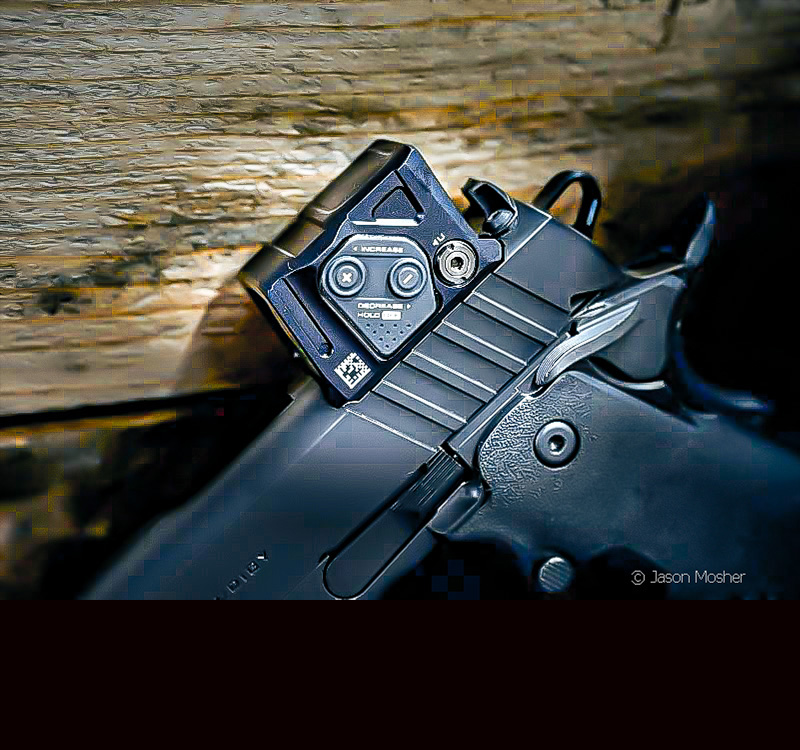
This wedge-locking transfers most lateral and horizontal recoil forces away from the mounting screws and directly into the structural steel of the slide.
By ditching the adapter plate entirely, the COA sits lower in the slide. This means it sits at the same natural indexing plane as traditional iron sights. This is one of the things I like most about this system. The iron sights on the Prodigy feel natural to use, but with the addition of a dot. You don’t need tall iron sights to use both systems together.
You basically get standard-height iron sights that co-witness in the lower third of the 15x15mm window for a clean, unobstructed sight picture.
Aimpoint COA Optic Specifications
- Optic Type: Enclosed Emitter Red Dot Reflex Sight
- Reticle Size: 3.5 MOA Red Dot
- Lens Window Dimensions: 15mm by 15mm (0.59″ x 0.59″)
- Housing Material: High-Strength 7075-T6 Aluminum
- Mounting Interface: Proprietary Aimpoint A-CUT Footprint (Wedge-Locking Architecture)
- Brightness Settings: 12 Total (8 Daylight, 4 Night-Vision Compatible)
- Battery Type: Single CR2032 Lithium Coin Battery
- Battery Life: Over 50,000 Hours (5+ Years) of Continuous Use
- Battery Access: Side-Loading Quick-Access Tray
- Waterproofing: Submergible up to 25 Meters (82 Feet)
- Weight: 1.7 ounces
Range Time = Fun Time
Range time is always the best part of reviewing a firearm, isn’t it? The air fills with that mixture of gunpowder and coffee while the sound of brass hitting the ground is picked up in our hearing muffs.
Thanks to Ammunition Depot, I had plenty of ammo to start my day. I wanted to get a feel for how the Prodigy and COA handled together, so I just wanted to do some fun shooting first. My first few mags were at the 10-yard line, and I focused more on the accuracy than speed. They must pre-zero the COA at the factory because my first full mag hit right where I was aiming.
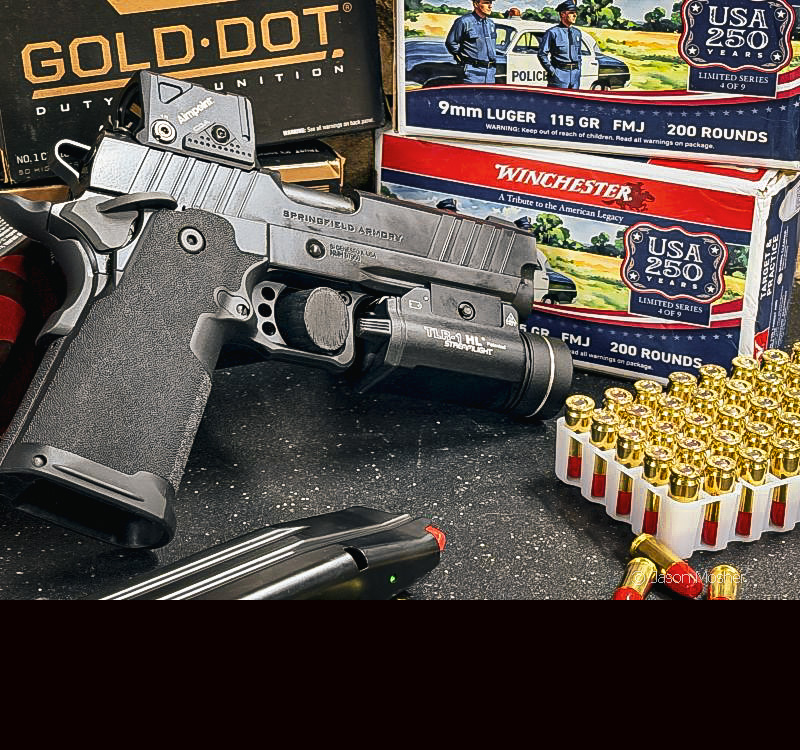
After that, I moved the target out to 20 yards and did some “up-down” drills to get a feel for the sighting system. I really like how the iron sights line up in the optic. It was like I had a soft red glow right at the end of my front iron post.
As far as the feel of the Prodigy, it shot smoothly and had extremely low recoil. I noticed the faster I shot, the more my grouping moved to the left, so I will need to work on my grip with this gun a little. It felt comfortable, but I think I’ll just need to get used to it.
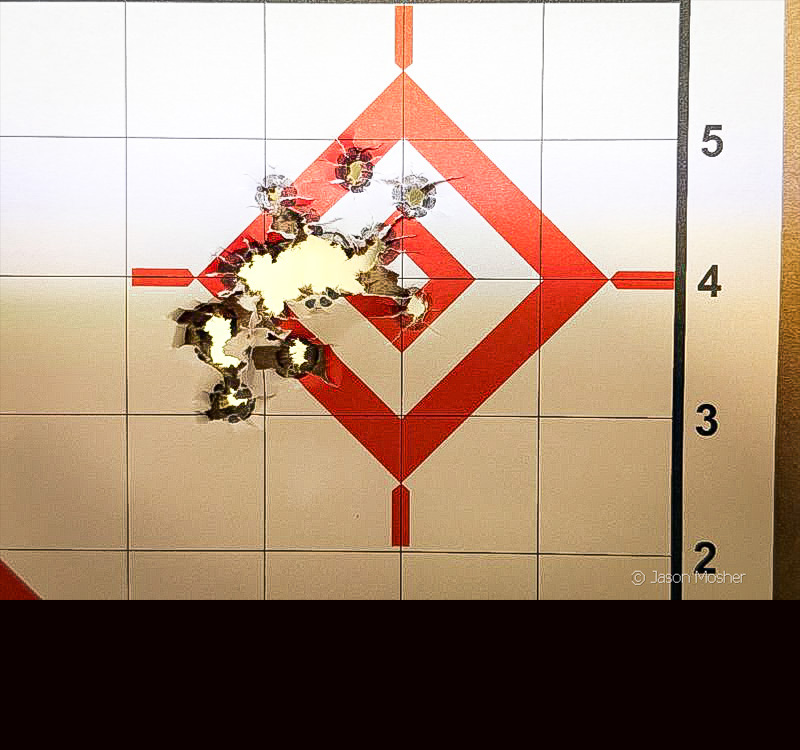
No failures during range time
During my first session, I fired about 500 rounds of Winchester Target 115Gr FMJ ammo. Then I switched to Federal Syntech Range ammo (124Gr Synthetic Jacket). After that, I used some 115Gr HP Speer LE Gold Dot and Hornady Critical Defense.
I didn’t have any feeding or cycling issues at all during my range session. On the last few mags, I put up a new target at 25 yards and did some defense-style speed shoots. I’m not a marksman shooter by any means, but all my shots were on paper. For me, this is a great defensive gun, so I wanted to see how natural it felt to draw and shoot quickly.
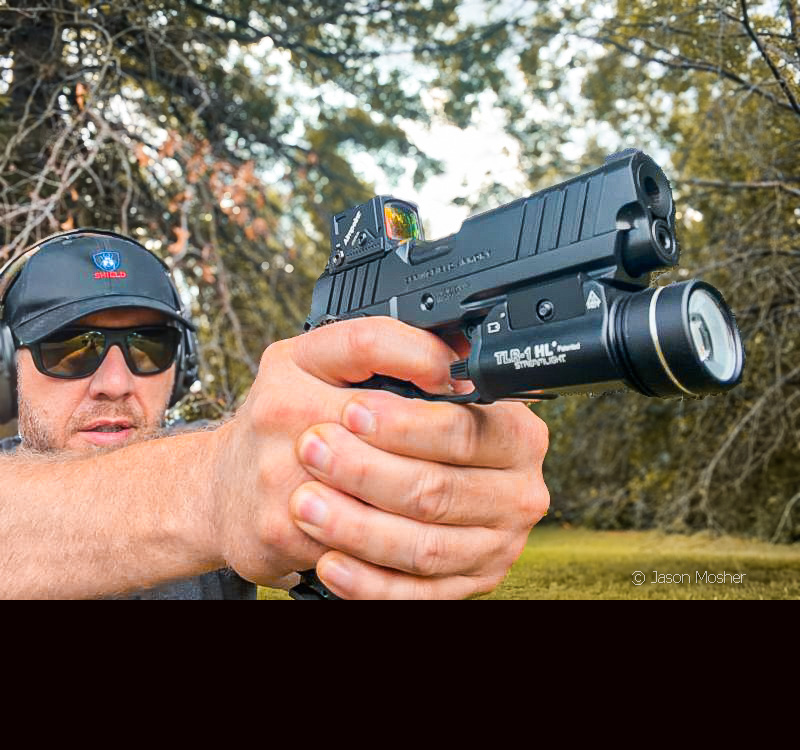
This is really where my appreciation for the slim optic with co-witness sights came from. If you are used to using iron sights, it feels perfectly natural even with the red dot attached. If you like red dots, it feels just as natural.
Thumbs Up for the Prodigy + COA Package
After putting about 1,000 rounds through the prodigy, I can easily say I like this setup. The gun looks great and shoots even better. Aimpoint did a great job on the COA, and being able to buy a handgun with the optic already mounted, zeroed, and ready to go is awesome.
I’ve had some optics sheer off over the years, and one even hit me in the face. Using this A-CUT system just about eliminates the chances of that happening again.
The Prodigy and COA package makes for a perfect modern-day 1911 setup. It’s one that I would feel comfortable using on duty or for personal defense. Springfield Armory and Aimpoint get two thumbs up on this one.