
GLOCK began shipping Gen 6 guns in January. Now, six months in, I’ve got enough rounds through a Gen 6 G45 to provide a solid review on how the changes to the gun’s ergonomics effect performance. The improvements are impressive.
A bit of history on the G45
From Gen 1 to Gen 5, we’ve seen modest improvements in GLOCK ergonomics. What started as bare-bones, indestructible duty pistols grew into a versatile family of handguns, but changes were subtle and GLOCK developed a standing reputation for being blocky pistols that place function over form.
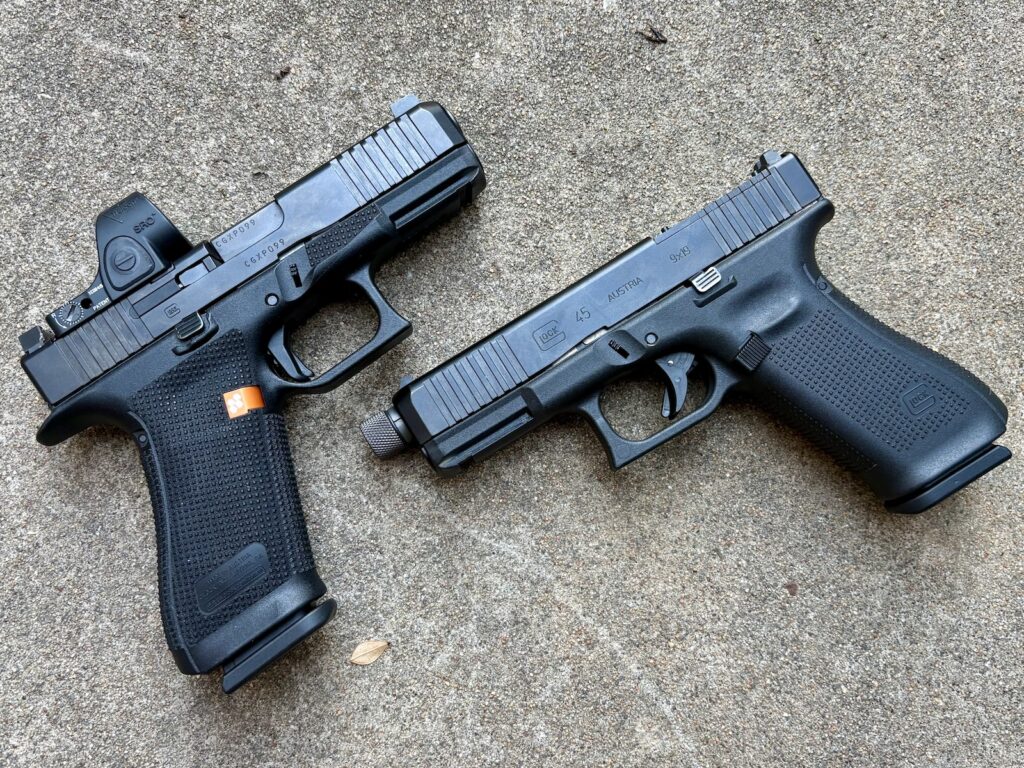
Even the G45, which debuted in the last generation, was hard to call innovative. This is a hybrid of the GLOCK 17 and GLOCK 19. A G17 is longer and provides a little bit more grip, and therefore more control. But the G19 has a shorter barrel. While chopping half an inch from the barrel of a G17 doesn’t make much difference in maneuverability, it tends to make for a faster and cleaner draw and reholster.
The combined grip length of a G17 with the slide length of a G19 first appeared when GLOCK introduced the 19X as a contender for the XM17 handgun trials. It was essentially what would become the G45, finished in coyote tan. Even though the 19X didn’t take off with the military, it gained an impressive following in the civilian market.
Later in the same year, the Gen 5 G45 hit the catalog. It fit G19 holsters, so if a department was using G19s, it could issue officers something that fit the hand better without replacing holsters. It took existing G17 mags. And the upper and lower of a G45 and a G19 were interchangeable. It served as a more adaptable option to improve on the G19 as a carry gun.
GLOCK’s well-deserved reputation
My go-to handgun is a Gen 4 GLOCK 19 that’s been in the family since 2011. It absolutely holds up to its reputation. Especially in terms of reliability. I have trained with it extensively. It’s been a workhorse for reviewing suppressors, aftermarket parts, holsters, and ammunition. And I still use it as a fun gun on the range, on top of that.
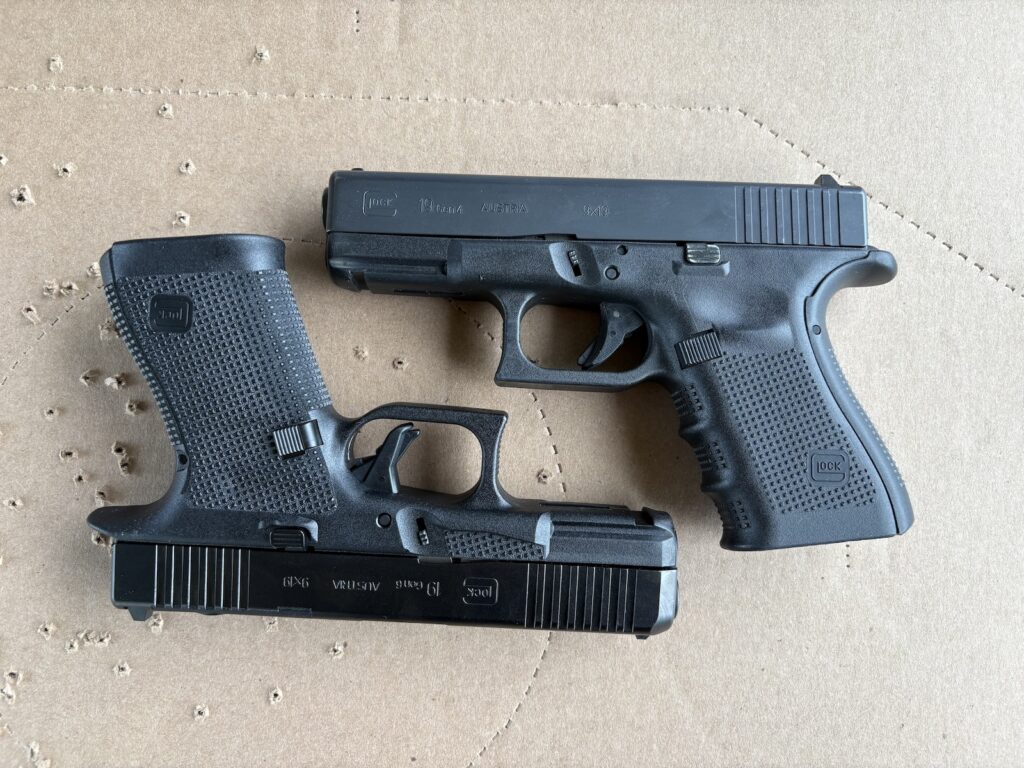
We’ve never deep-cleaned it, as kind of a longitudinal study to see how long it’ll take for it to fail under normal conditions. I oiled it once when I put in a threaded barrel to review a suppressor. That’s it. And right now, it has fired more than 25,000+ rounds without a single malfunction that wasn’t forced.
Granted, that’s from training, reviews, and normal range shooting. I’ve not torture tested this gun or carried it in many adverse environments. If it ever did get muddy, sandy, dirty, etc., especially if I was carrying it as a defensive weapon, I’d clean it afterwards. If you have the time and ability to upkeep a firearm that you might rely on, then there’s absolutely no excuse not to.
Gen 6 G45 Specs
| Length | 7.44 inch |
| Slide Length | 6.85 inch |
| Width | 1.35 inch |
| Slide Width | 1.0 inch |
| Height incl. Mag. | 5.47 inch |
| Line of Sight | 6.18 inch |
| Trigger Distance | 2.68 inch |
GLOCK’s RTF6
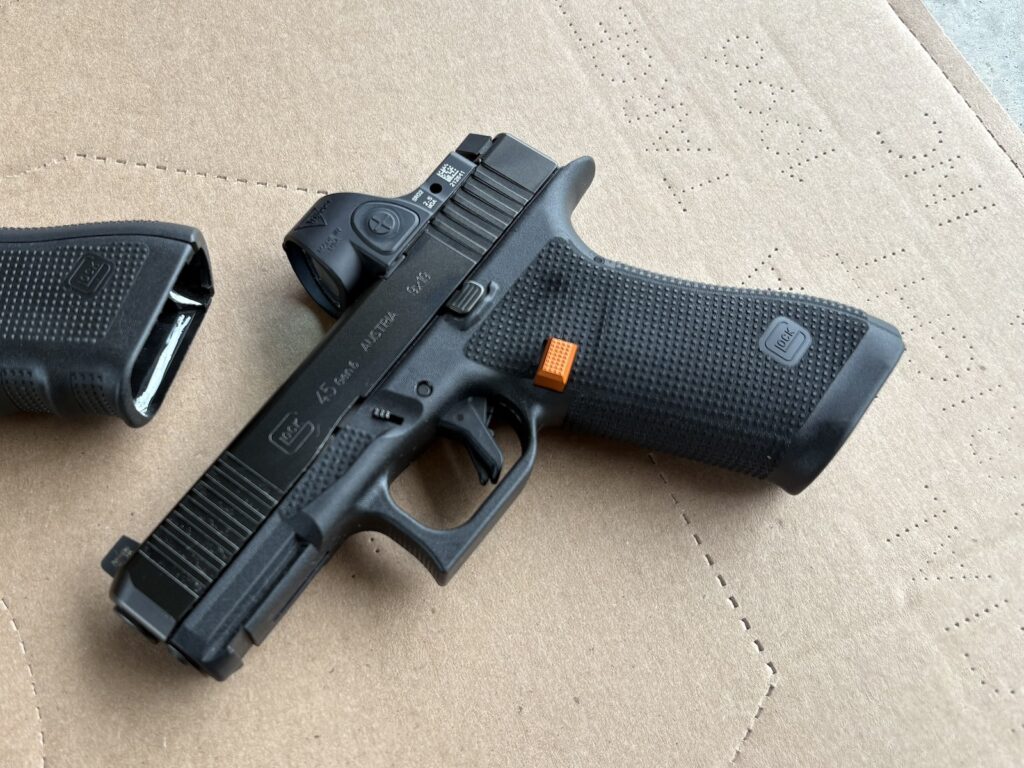
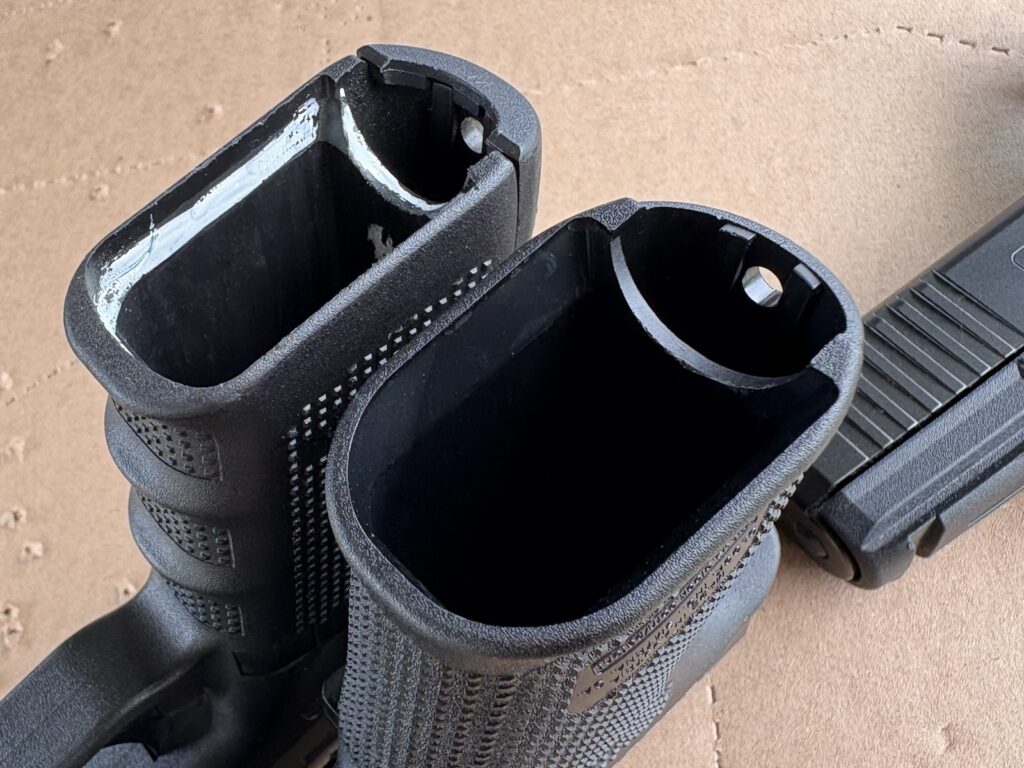
The Gen 6 G45 is ergonomically leaps and bounds above Gen 5. The overall shape of the grip is more rounded and conforms to the hand. While I don’t mind the grip shape of my Gen 4 because of my large hands, I have to admit the newer style is more comfortable.
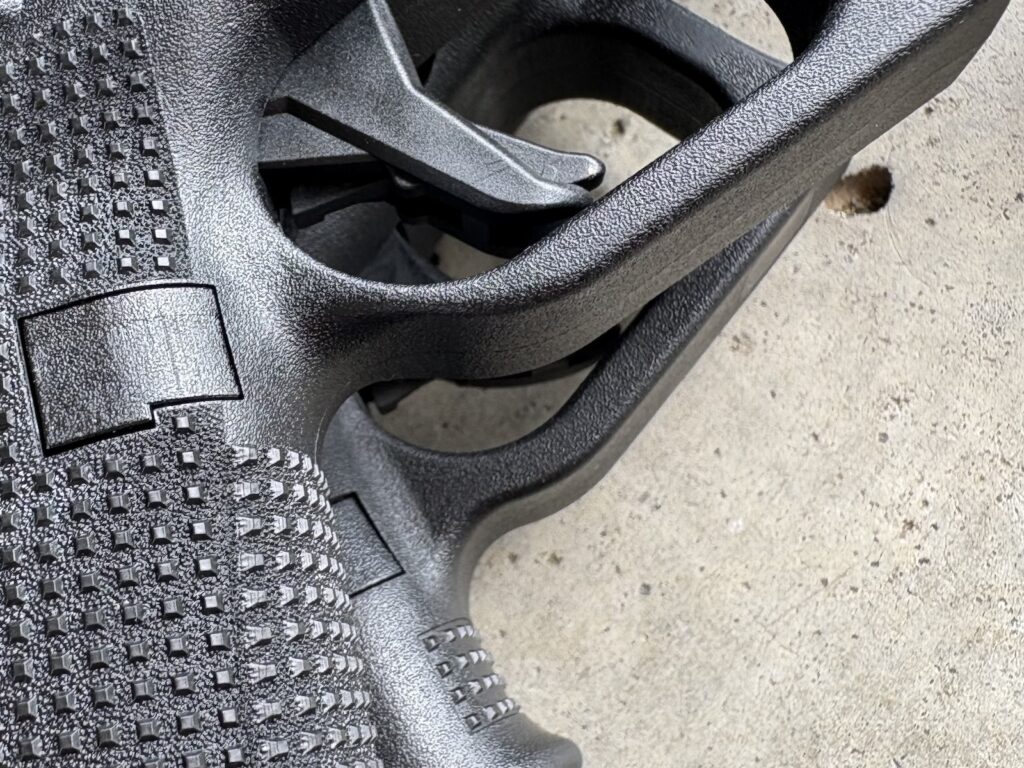
The trigger guard is undercut, so no more “GLOCK knuckle,” and it provides a more comfortable high-hand grip. Gen 6 keeps the interchangeable backstraps, but adds a much larger beavertail to the grip. GLOCKs have never had a big problem with slide bite, at least from my experience, but with the bigger tail, you can get a little bit higher purchase on the grip and feel more secure about it.
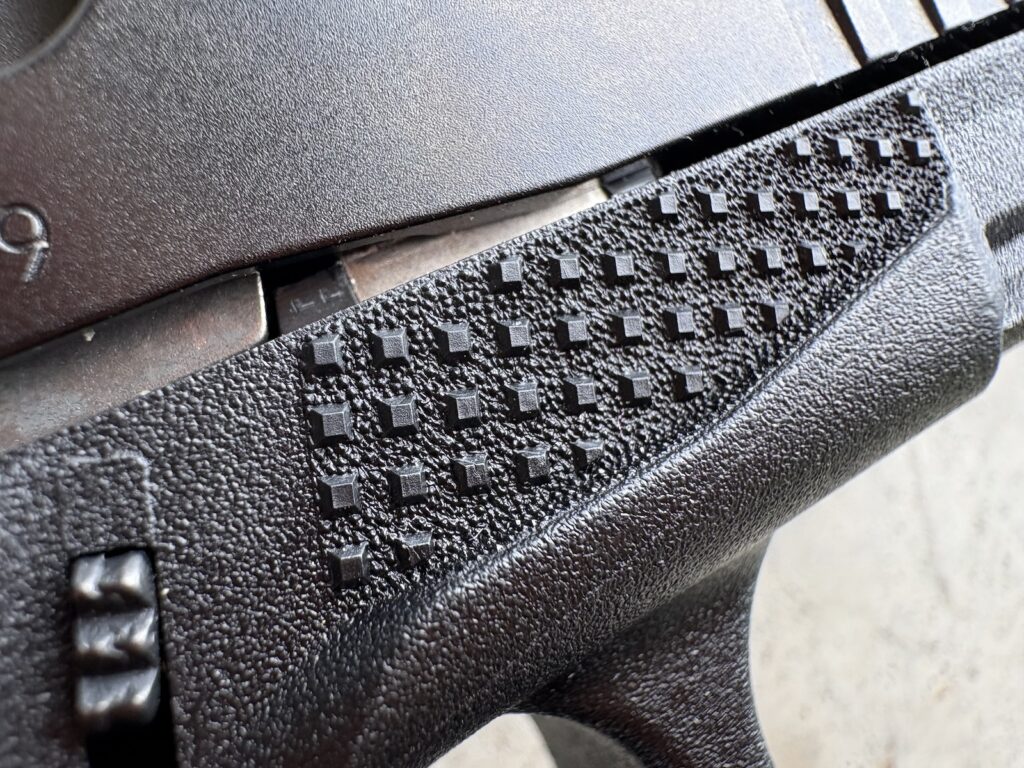
RTF6, what GLOCK calls the new texture of the grip, has been reworked, too. I like it a little bit more than previous textures, and it’s nice that it wraps all the way around the grip. There’s also a textured section further forward that gives you some leverage with your support thumb that helps manage recoil. These essentially just mean that your shooting grip is optimized, and getting a shooting grip when you go for your gun feels easier.
New slide serrations
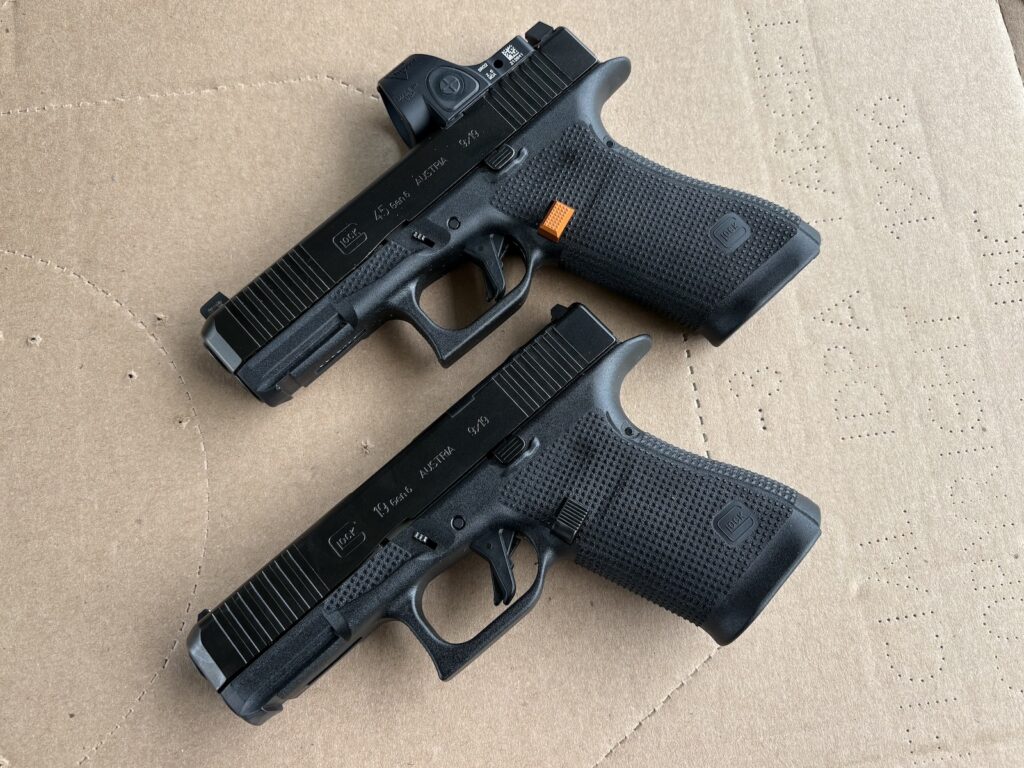
The front slide serrations of the Gen 5 carried over to Gen 6, but the serrations are a little bit deeper and more aggressive. In my opinion, it’s not really noticeable unless you feel both side by side and specifically are looking for it. The serrations are nice if you feel like racking the slide to drop it, especially if you use an overhand motion. If your rear serrations are blocked by a bigger optic, it makes press checks noticeably easier.
Controls
Speaking of reloads, Gen 6 has channels molded into the grip that cause your thumb to naturally slip to the magazine release when you remove your support hand. This is nice because you don’t have to fish for the release in a stressful situation, even with a smaller button. Also molded into the grip is a palm swell that doubles as a flared magwell. The magwell on Gen 5 was slightly flared, but Gen 6 is noticeably more so.
Gen 6 also introduced a slightly changed trigger design, most noticeable in the angular flat face that replaced the older curved trigger shoe. The break and reset are supposed to be a little bit cleaner than older GLOCKs, but similarly to the reworked serrations, you probably won’t notice it unless you’re meticulously looking for a side-by-side difference.
At the end of the day, it’s a GLOCK, and that applies to the trigger too. It’s by no means a top-of-the-line, crisp trigger. Even with the improvements to ergonomics, its main goal is still function-first. People feel very differently about GLOCK triggers.
If you want to improve your GLOCK and adapt it for how you want it to feel, I would highly recommend replacing the trigger and the magazine release. It isn’t at all necessary if you just want a solid handgun, and I hold the stock version of both in pretty high regard in the handgun world, but I can’t deny that a good aftermarket trigger is a marked improvement.
Shooting the Gen 6 G45 and G19
The Gen 6 doesn’t really shoot very differently from the Gen 5. It’s almost the exact same gun dressed differently. The accuracy and aim feel the same, but the reworked grip makes recoil noticeably easier to control since I can get a slightly higher grip and more purchase for my support hand. Reloading also feels more streamlined because of the flare in the magwell and the channel towards the magazine release.
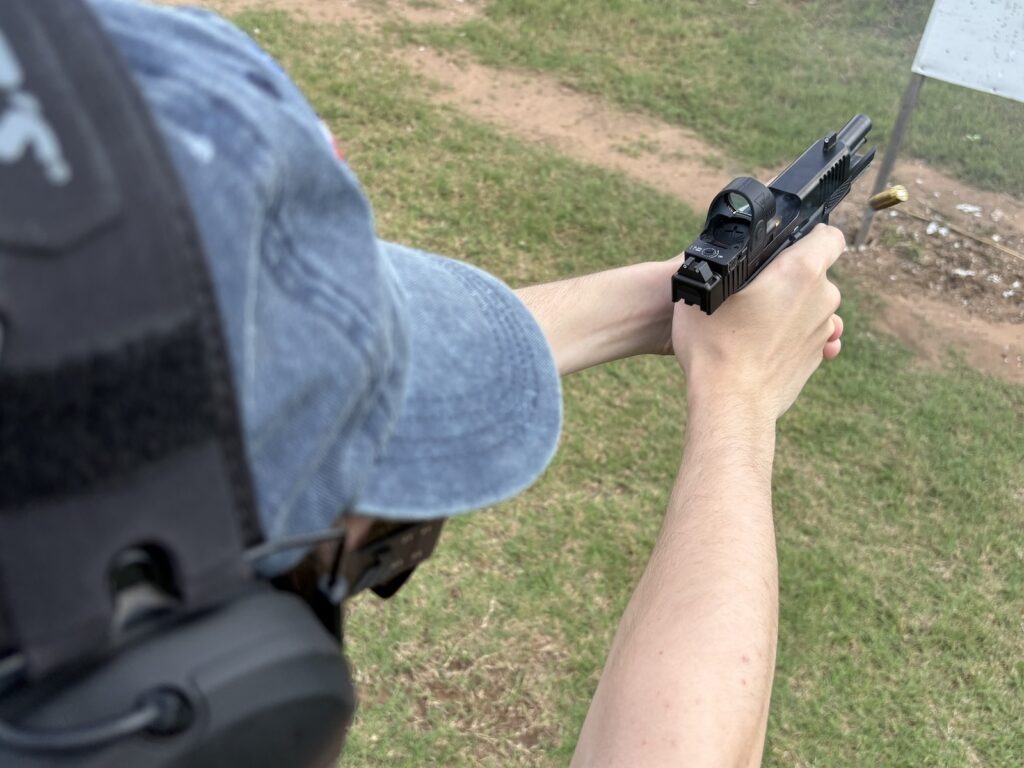
The grip texture feels nice, but I had problems with it shooting. I spent a few hours on my last range trip, and started to work with the GLOCK towards the end. It’s summer in Arkansas. My hands were sweaty, and I noticed that my grip was slipping, especially when I was shooting rapidly.
That’s hard to avoid for any handgun, really, without making the grip uncomfortable to actually hold onto, but this was one of the first times I noticed it happening. If that’s a concern for you, grip tape is an option. Or even better, especially if you miss the finger grooves like I do and have big hands with long, spindly fingers, I recommend one of the Hogue overmolded grips.
Holsters for the new Gen 6 GLOCK 45
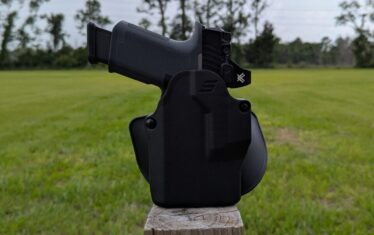
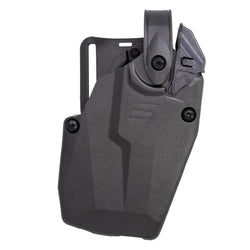
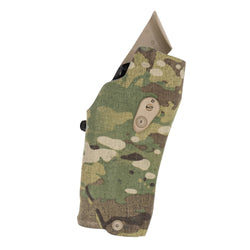
G45s fit G19 holsters. For outside-the-waistband carry, the 6,000 series is my go. The 6354RDSO is available for large lights, small lights, and non-light versions–and all are RDS compatible. With its QLS fork, it is easy to get on and off a belt.
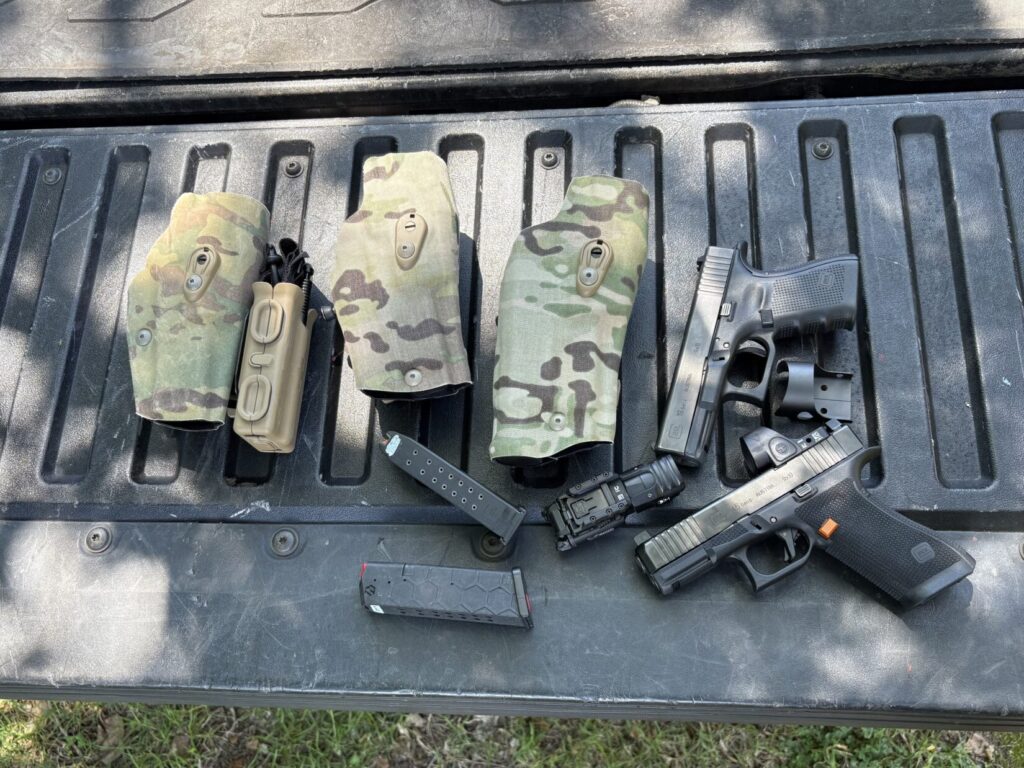
The Gravity is also a solid option for a friction-fit OWB. This design is much thinner and is actually good for EDC if you have a coat or long shirt to cover it.
Inside the waistband, I use the Incog X with a mag caddy. If I’m carrying a big gun, I’m inclined to go with an AIWB that has storage for an extra mag. The G45 prints more easily than a G19, though, as there’s a bit more grip. For AIWB carry, the G45 may be too large for some.
Safariland’s new Incog XS is a single-clip version, and it works too, if you want a smaller profile. This new version has no mag caddy, so it has a smaller footprint and can be carried strong-side, if you want.
Solis is good for Level I retention. If you want Level III, a 6360RDS is the classic, but the Ballast is the top-of-the-line.
Light it up?
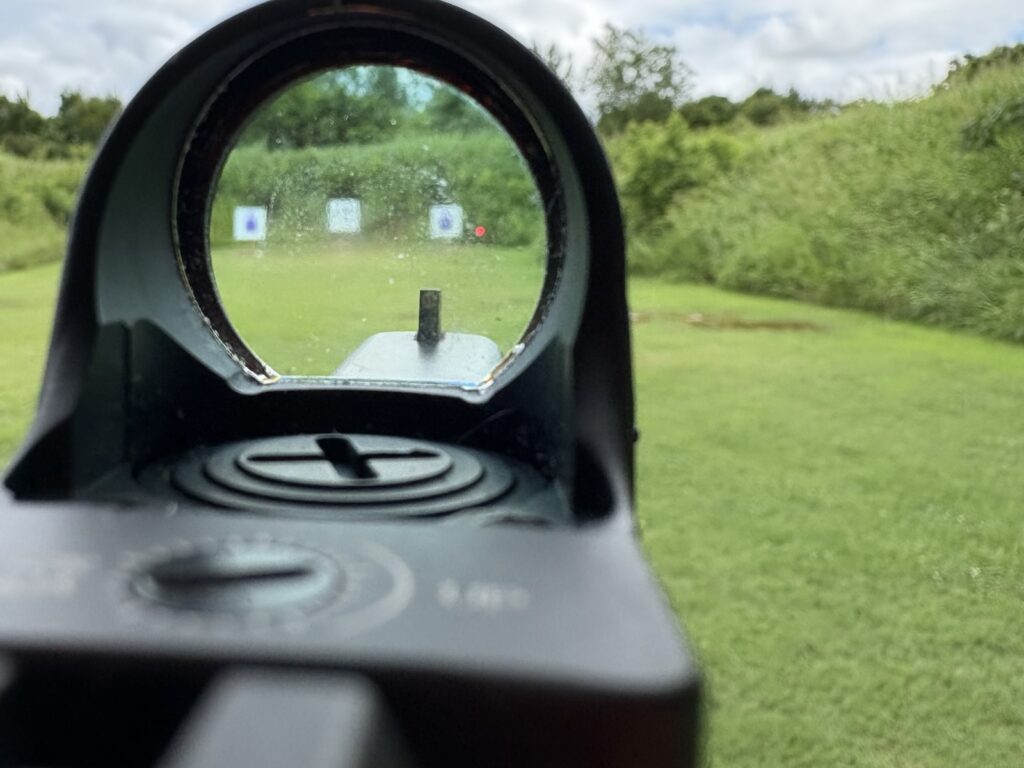
This can go two ways. As this is a duty gun, and a GLOCK, you can put damn near any optic you want on top. Large closed-emitters work great. Trijicon’s SRO works fine, too.
I don’t typically use red dots. For these range sessions, I was shooting a Gen 6 G19 with irons and the G45 with the SRO, just for comparison.
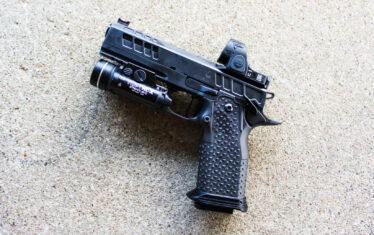
The second way to add some light is just as wide open. As this is a bigger GLOCK, the large lights like the Surefire X300 will extend beyond the end of the barrel. Small lights, like the TLR-7, will fit more neatly under, but they’re not as strong. What are you using it for?
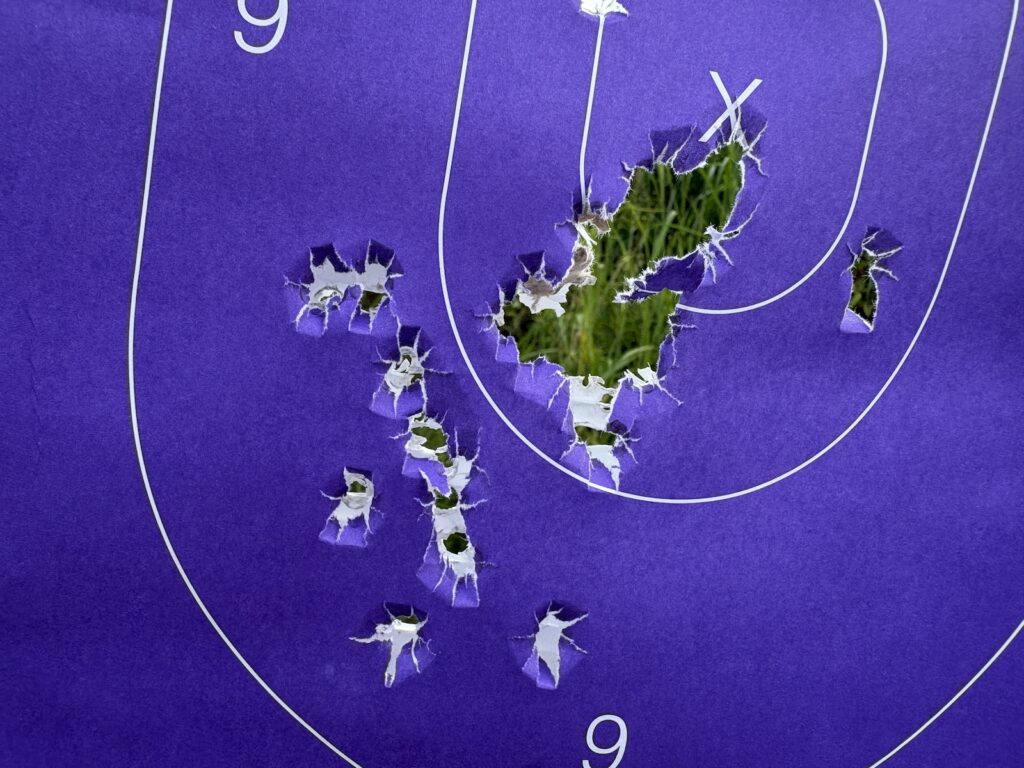
How much does a Gen 6 G45 set you back?
Gen 6 guns have an MSRP of $745. Like many things lately, these are more expensive. Still, there’s a reason why this upgrade has people talking, and have a sense of perspective. When the Gen 1 G17 launched in the 80s, they sold for something like $300. That would be closer to $950 with inflation.
And if you don’t yet have a GLOCK, you need one. We’re locked into this form factor now for a few years, maybe a decade, so it is a good time to pick one up.