
We often talk about our gear in terms of price, specs, and durability. But the most important component of your gear isn’t any of that. The most important component is the human brain and how well it knows your gear. To survive stressful moments, you must understand how your body builds habits without your permission.
When a stressful incident happens, your body will react one way or another. If there are only seconds to grab your gear and go or react in some way, your body will default to what it has done the most. But that may not always be what it needs to do in the moment. This is because we often create bad habits that hinder our reactions. One of these bad habits is not standardizing our gear for stressful moments.
How Muscle Memory Works
We often think of muscle memory as something earned through thousands of repetitions on the range. While that is true, your body is actually a sponge for repetition in every context. You are building muscle memory right now, even if you aren’t “training.”
Your brain loves efficiency. When you perform a physical action repeatedly, the neural pathways associated with that movement become “myelinated.” Think of it like turning a landline into a high-speed fiber-optic cable. The more you do a thing, the less the conscious part of your brain has to get involved.
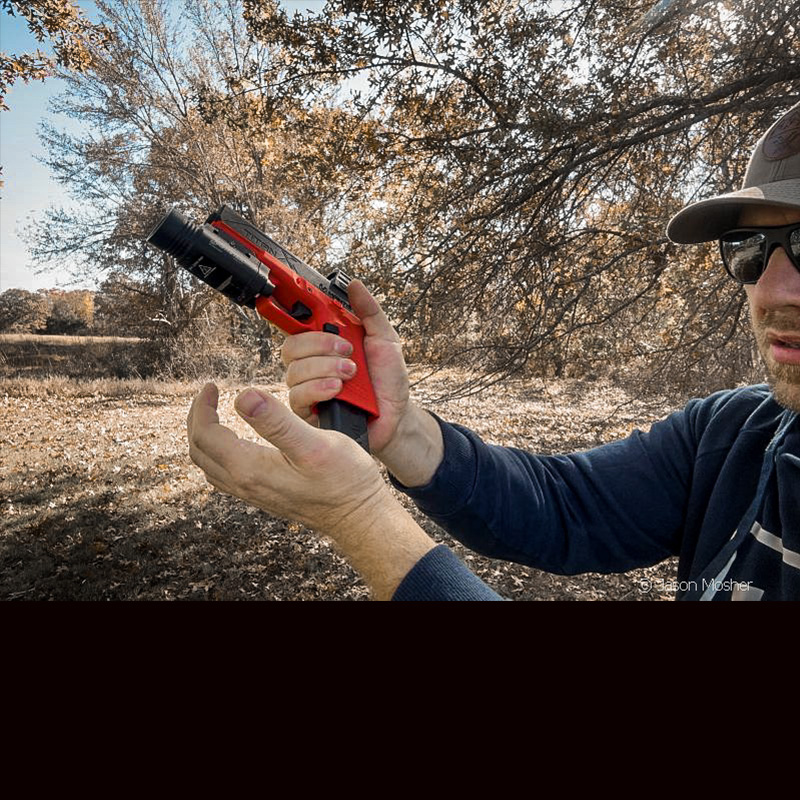
This is why you can drive home from work and realize you don’t remember the last five miles. Your body took over. The same thing happens with your gear. Every time you reach for your keys in the same pocket, you are training. When you click your seatbelt, you are training.
This is why it’s so important to pay attention to the little things we do throughout the week, not just on the range or in a training class.
What does this have to do with standardizing our gear?
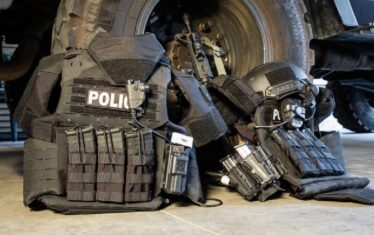
In a high-stress situation, your fine motor skills degrade. If you have to look down to find a pouch or remember which way a switch flips, you’ve already lost. Consistency equals speed. If your medical gear, magazines, or tools are always in the same “GPS coordinates” on your body, your hands will find them, even before your brain finishes processing the need.
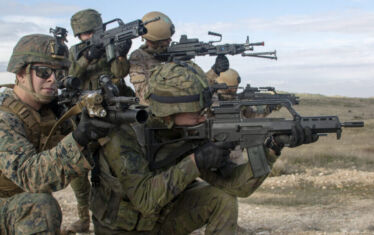
Standardization means your body is used to the gear around you. But it isn’t just about your gear either. It’s about the team or the family, and the gear they use as well. When everyone uses the same magazine types, battery sizes (like CR123s or AAs), medical layouts, etc., you can support each other.
There is nothing wrong with trying out new gear (and I love buying new gear). But you must make sure that the new gear doesn’t confuse your body’s muscle memory or others who may need to use your gear.
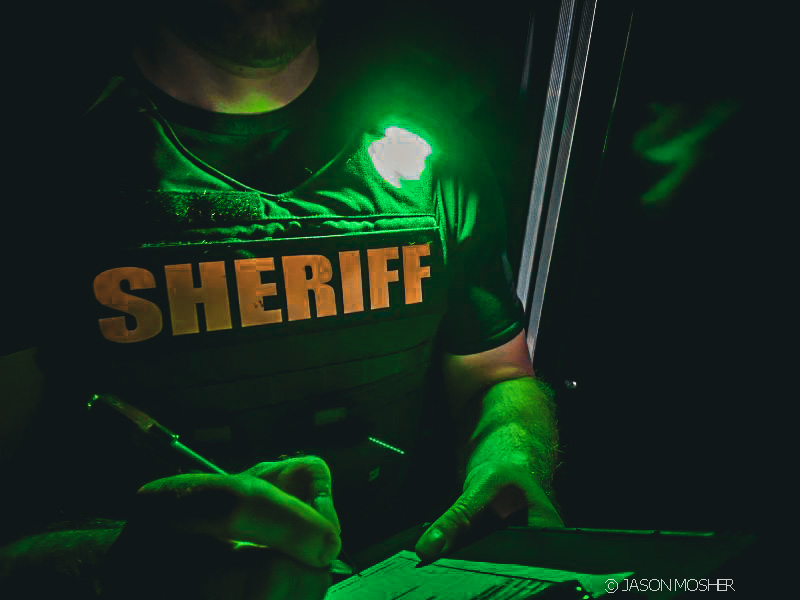
When everyone in a group uses the same standardized gear, that team will function much more efficiently. If you have an emergency bag for each person in the family, are they all different, or are they set up the same? Remember, when the body is under stress, it doesn’t process things the same way. You may not always have time to think about where something is.
The Science of Stress and Physical Rejection
When something suddenly goes wrong, your sympathetic nervous system dumps a cocktail of chemicals into your blood. Your heart rate spikes, your vision narrows (tunnel vision), and your fingers turn into sausages.
In this state, you cannot “think” your way through your gear. If your gear isn’t where your body expects it to be, your brain will often reject the reality of the situation. You might find yourself frantically patting your hip for a magazine that is actually in a cargo pocket.
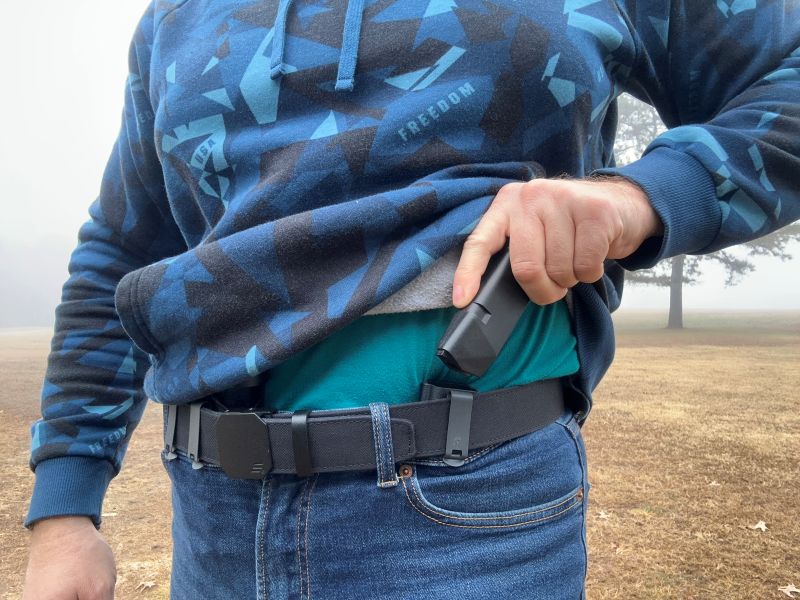
Have you ever lost your keys or phone and found yourself looking around like a confused tourist while patting your pocket over and over? This confusion is caused by an item not being where your body expected it to be. Your hands are moving over your pocket repeatedly because this is where your brain sends your hand to retrieve your phone.
If you stop and think about what you’re doing, you probably wouldn’t check the same pocket more than once, right? But when your muscle memory is trying to do it, it’s more like a robot. This is the same for an item’s location or how the item works.
When you keep something in a specific pocket 90% of the time, placing it in a different pocket will almost always cause confusion. My kids think it’s hilarious when I run all over the house trying to find my truck keys, only to realize they were on me the whole time. When I get in my wife’s car, I reach up towards the steering column for the gear shifter, even though it’s between the seats in her car. My muscle memory is trained for my truck, not her car.
The Cost of Changing Setups
We often think adding more “choices” with our gear is a good thing during an incident. To some extent, having more than one choice of action is a good thing. But it can also be counterproductive.
When our body and mind are under great stress, the Hick-Hyman Law takes over. This principle states that the more choices a person has, the longer it takes them to make a decision. If your brain has to ask, “Wait, is the mag on my hip or my chest today?” you’ve already taken too long. Your body needs to perform this function without making a decision.
If you use multiple setups, your reaction time will inevitably be slower. Your brain has to “search” for the correct program to run. This delay is often called “the glitch.” Under stress, a half-second glitch feels like an eternity.
I have always carried my phone in the same pocket of my jeans. When I started a job with a new agency years ago, I was issued a work phone. This meant carrying two phones around all the time. Not wanting to carry them both in the same pocket, I would place my personal phone in my car while at work, and carry the work phone in my pocket.
This process caused me to forget one of my phones nearly every day. Either my personal phone would get left in the car, or my work phone would get left at home because it wasn’t in my pocket when I went to work.
This happened because I didn’t stop to think about grabbing a second phone. My body was used to placing a phone in my pocket and moving on.
Grab-and-Go: Standardize your gear
The goal of the Grab-and-Go philosophy is to make your gear an extension of your body.
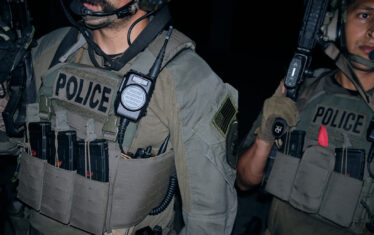
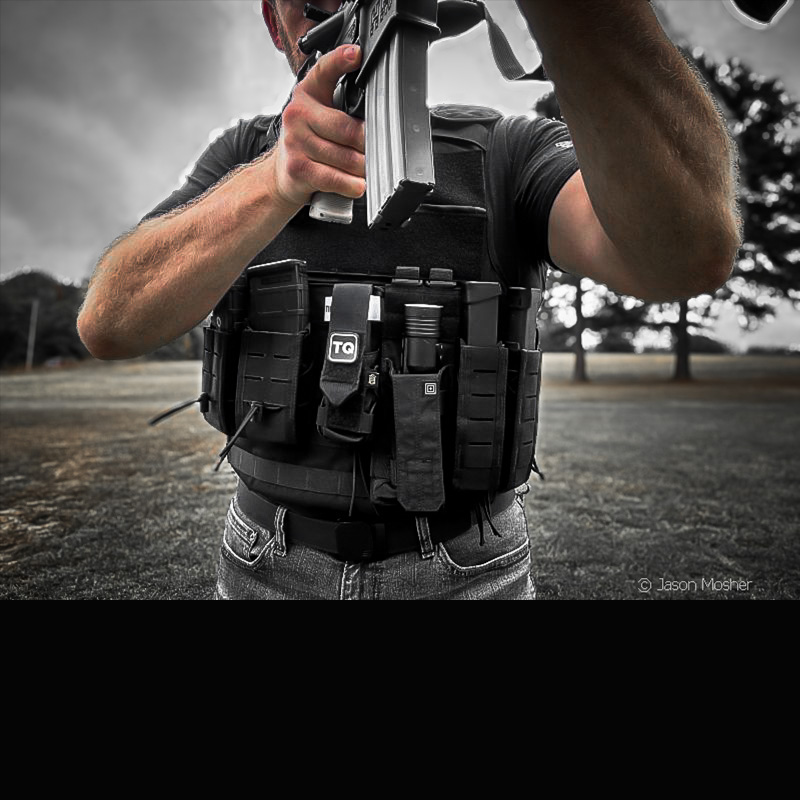
If you carry a spare magazine on your left hip for duty, carry it on your left hip for CCW. Even if the pouch is different, the “reach” remains the same. Make sure your hand hits the same part of your body to initiate a draw. Whether you are wearing a plate carrier or a t-shirt, the “anchor point” for your hand should be consistent.
Once you find a placement for your medical gear, leave it there. Do not move your tourniquet to make room for a new flashlight. Your life might depend on reaching that TQ in the dark while you are lightheaded.
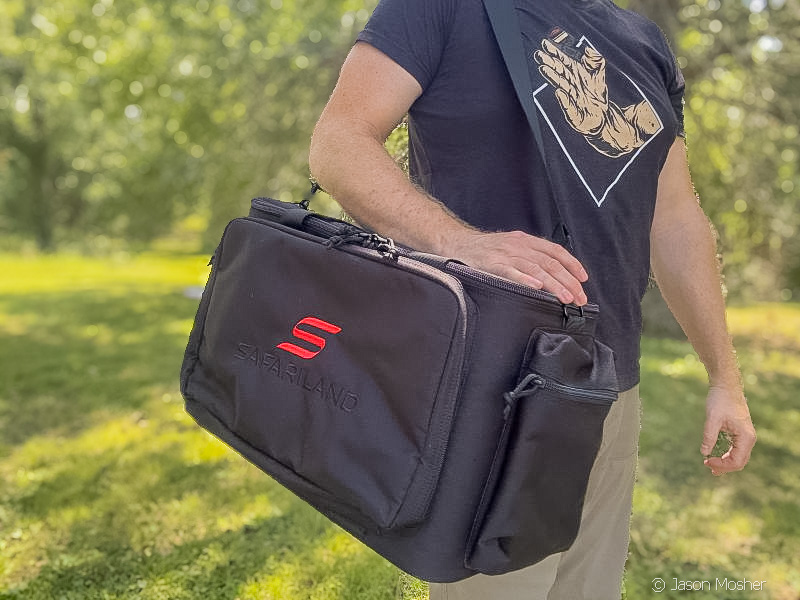
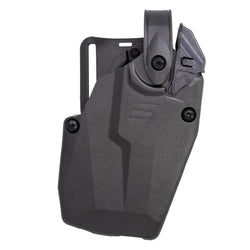
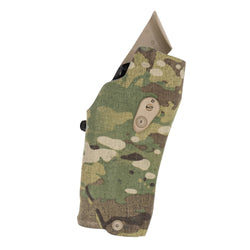
Use interchangeable systems whenever possible. A good example of this is the Safariland QLS (Quick Locking System). This allows you to move the same holster seamlessly between a belt loop, a leg shroud, a paddle attachment, or even a MOLLE vest (using an MLS adapter). By keeping your firearm in the exact same holster body, your brain and hands stay efficient at working the retention locks, keeping your draw consistent no matter where the gun is riding.
When everything is in the same place at all times (or as much as possible), you become more efficient and effective.
Final thoughts
Can you build up muscle memory for more than one thing? Technically, yes. However, this is done through a volume of repetitions that takes a lot of time and dedication. But your goal should always be to standardize as much of your gear as possible.
This doesn’t mean you can’t upgrade gear, add gear, or move gear. Just remember to train with that set-up and incorporate it into your daily life as much as possible. For new EDC gear, make a habit of retrieving it and using it often when it’s new so your body will learn where it is and how to use it. Don’t just throw something new on and head out the door.
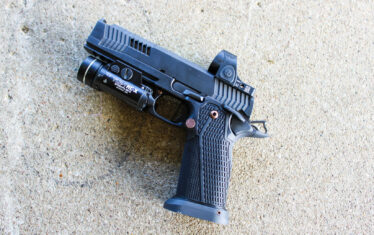
While we rely on our muscle memory to keep us functioning effortlessly throughout the day, standardizing our gear as much as possible helps it along. If you carry a larger gun in the winter and a smaller one in the summer, use handguns that function the same. This also goes for optics, lights, pocket knives, and everything else we use.
Focusing on this process can reduce stress and make your day go a whole lot better.