
When the words “precision scoped rifle” register, you typically imagine a long-barreled bolt gun or gas gun with a barrel north of 16” with a heavy contour, optic with a massive objective lens, and a weight that would certainly hurt your back.
Perhaps your mind went to a special purpose AR15 rifle, a RECCE, setup. It is safe to assume you didn’t immediately think of a short-barreled rifle with a 1-6 low-power variable optic.
Most SBRs are appreciated for their compact and easy handling characteristics. Online commentators will point out the loss of velocity a shortened barrel has, and some will state there may be less accuracy. Despite the noise found online, some shooting professional instructors make believers out of their students in classes and followers online.
I wanted to test out the LPVO on an SBR setup and see what reasonable expectation for accuracy I could determine. I’ve shared my results here.
The Setup
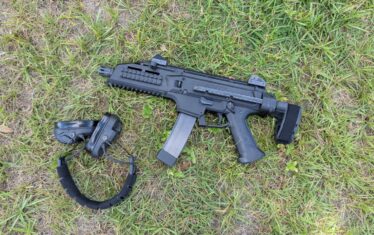
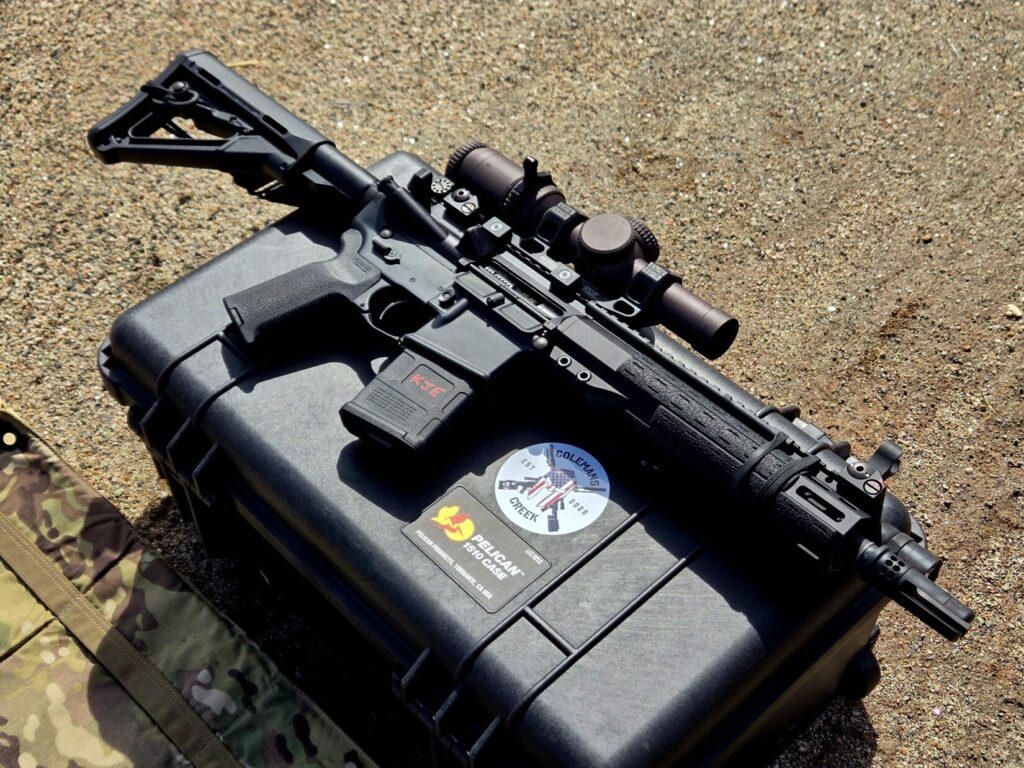
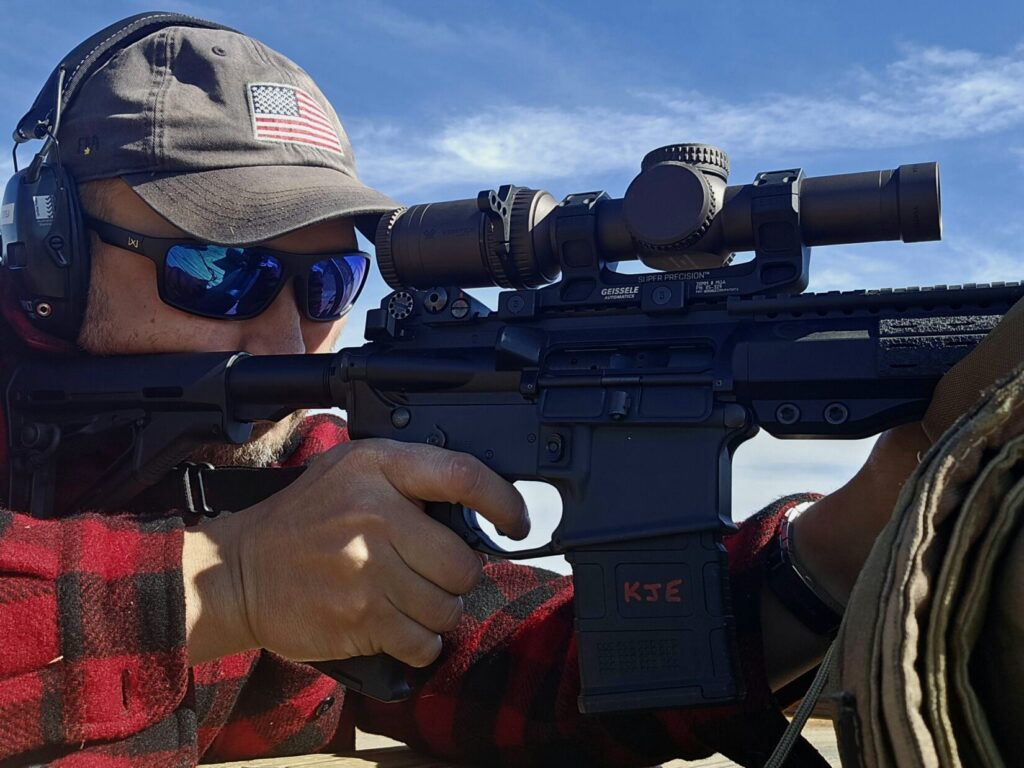
The rifle used in this test is a mashup of parts. The lower is an old Eagle Arms receiver with Geissele SS-A and Magpul furniture. The upper is a stock Colt 11.5” M5 Commando except for the Surefire Warcomp.
The LPVO optic is a Vortex 1-6 Gen 2 Razor mounted in a Geissele cantilever mount. This optic has become even more affordable as more 1-8 and 1-10 power LPVOs have entered the market.
The existing red dot is an Aimpoint Patrol Rifle Optic in a Geissele Mount. Ammunition used for this evaluation came from Hornady. Item number 8026 is 223 Remington 75 gr BTHP. The added weight of this projectile excels at greater distances than lighter-weight counterparts can reach out to.
The Test
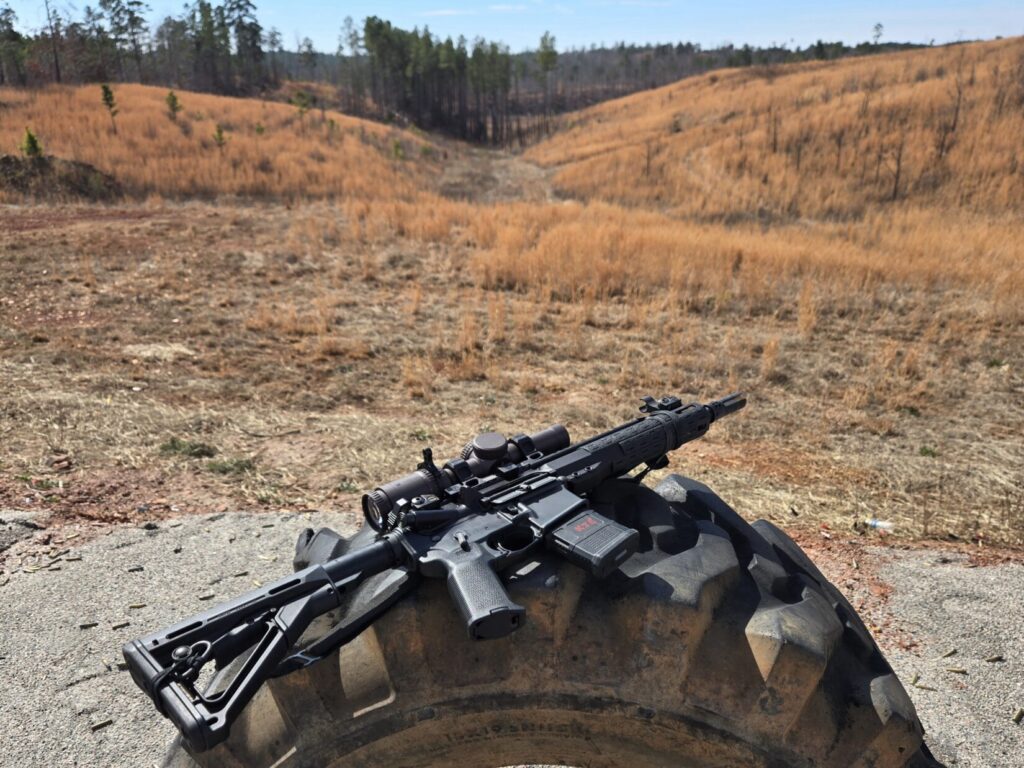
I stretched the legs of this LPVO-equipped SBR at Coleman Creek in Ellerbe, NC. This range is set up for mile-long shots as well as unknown distance steel targets inside of a bowl and traditional pistol and rifle bays.
Using this range, I could run the rifle like one equipped with a simple red dot by turning the LPVO to the lowest magnification and the reticle to a brighter setting. On the same day, I could drive up the range road and test the rifle at longer ranges at higher settings and in different positions.
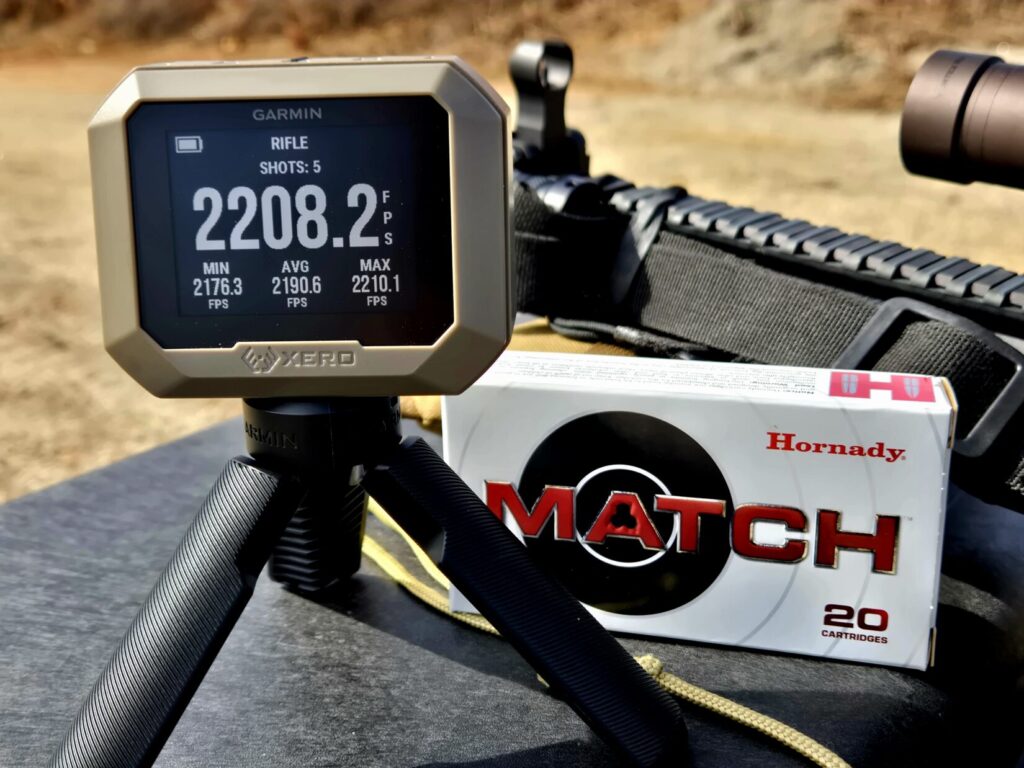
I chronographed the ammunition using a Garmin Xero, wait 30 seconds between each shot fired, and let the barrel cool completely before moving over to zero.
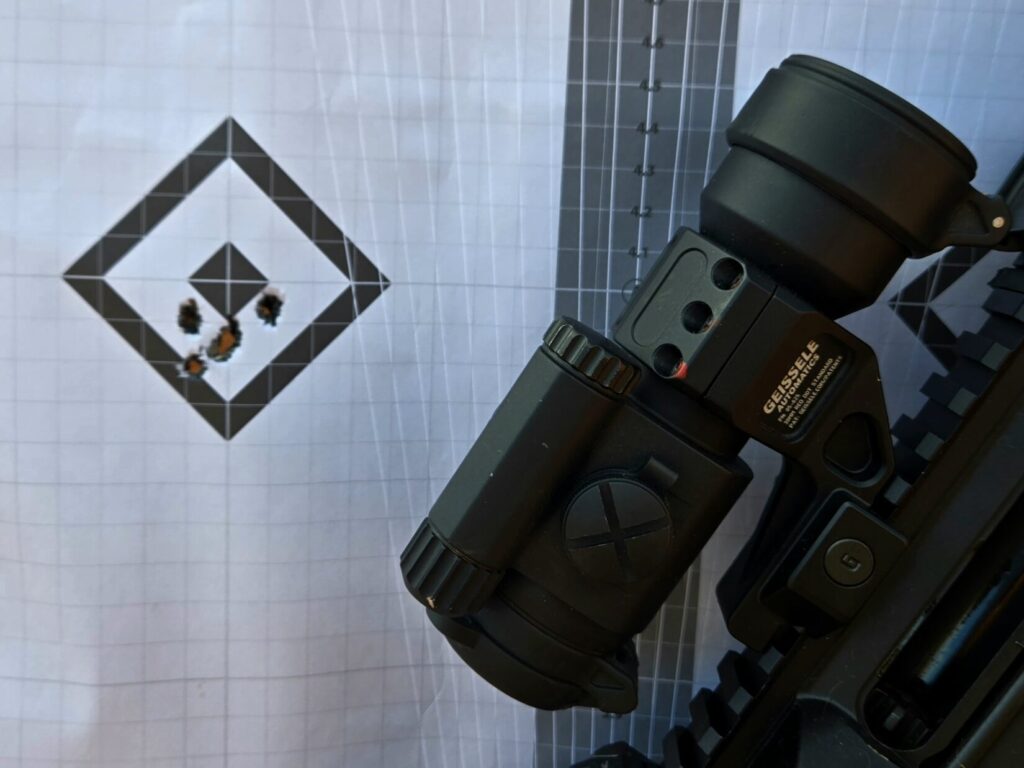
I tested the accuracy of the rifle at 25-50 yds with the red dot that has been mounted on the rifle. I then switched out the dot for the LPVO to sight in. I was relieved to see the point of impact from the first LPVO 5-shot group wasn’t far off from where the dot was.
Fine-tuning of my zero was accomplished with the heavier 75 gr Hornady ammo. Measured by my Garmin Xero chronograph, the ammunition averaged 2190 feet per second with a standard deviation of 15 feet per second. Even at the shorter distances, I noticed the LPVO shining in terms of group size. The dot kept all the rounds inside the target 10 ring, but the dot was more precise.
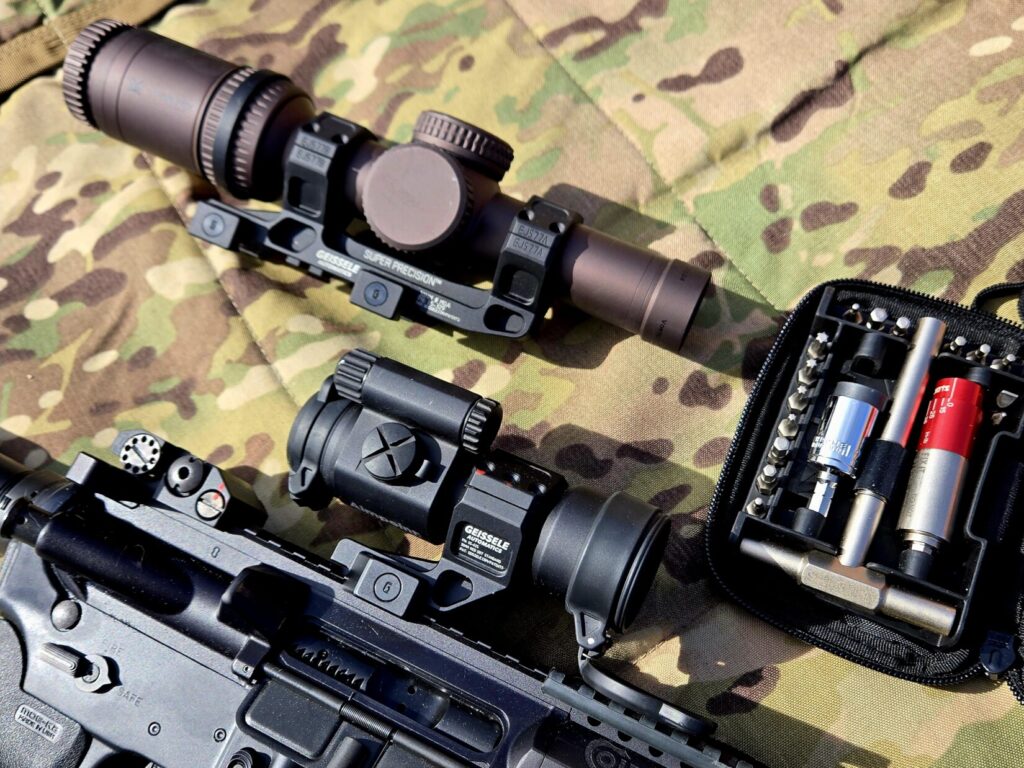
Out of curiosity, an informal test took place. Using a set of Fix-It sticks, I removed the LPVO and returned the red dot to the SBR. I fired another group at 50 yds and then switched the red dot to the LPVO once again.
The rationale is simple. I wanted to know if I could use the optics interchangeably without having to confirm the zero of the rifle. As long as the correct amount of torque was used, I could not discern a noticeable affect to the zero that could also pass as user error.
Reaching Further
After working the SBR/LPVO combination in one of the 270-degree bays, I moved to the 300-yard steel range. Working from a bench using my shooting mat as a front rest and a basic rear bean bag rear rest, I engaged targets out to 300 yards. At that distance, very little holdover was necessary for the furthest targets. In fact, favoring the upper half of the target dropped most shots into the steel, for most steel.
For the furthest targets, I didn’t pay too much attention to specific holdovers but rather experimented with moving the horizontal subtensions higher on the target until that rewarding metal ringing sound registered. After a couple of boxes of ammo were spent moving from one target to another, mixing near shots and far, I moved further up the range road.
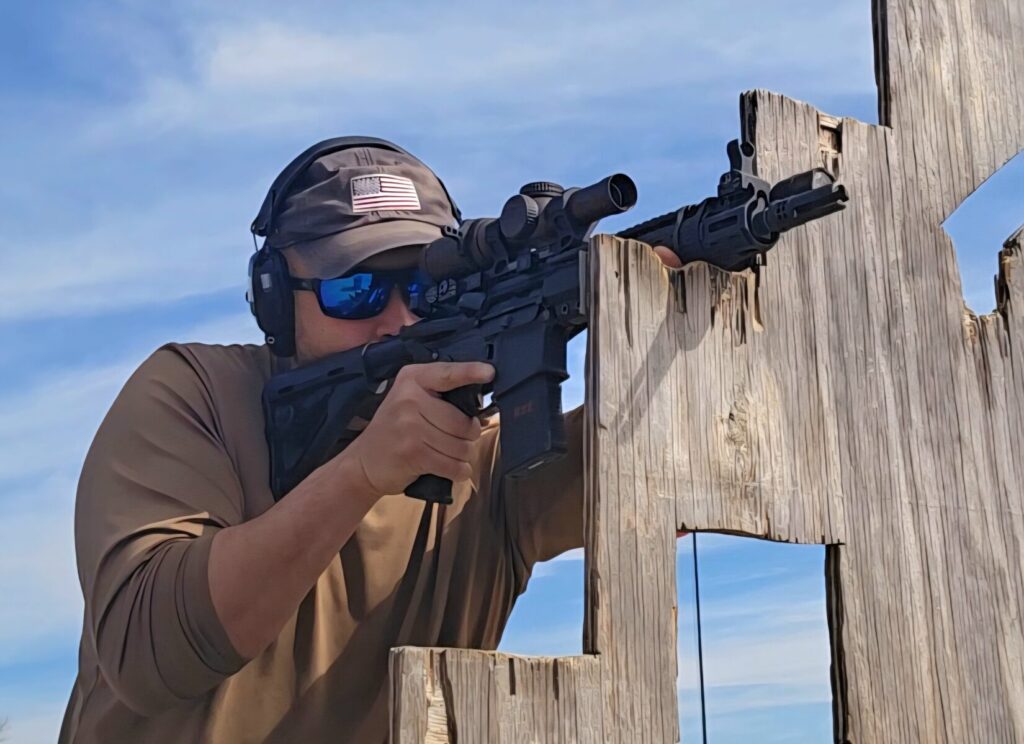
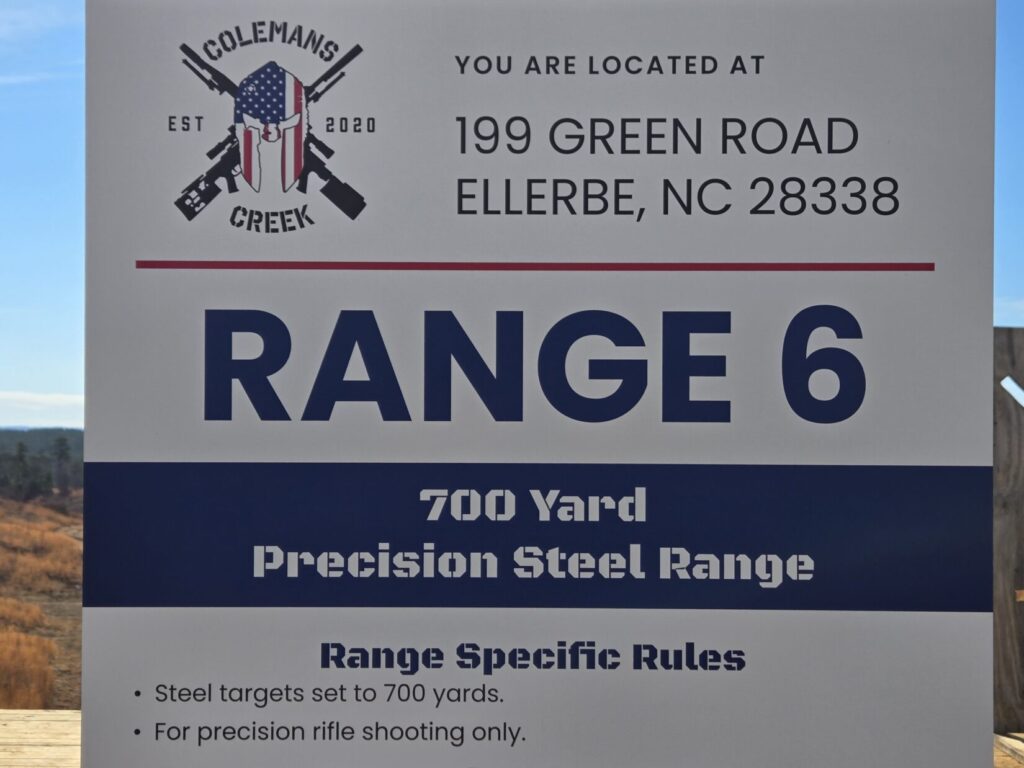
Pulling up to Range 6, the 700-yard precision steel target range, I set up similarly to the last range with my impromptu front and rear bags.
I worked the near targets inside of 300 yards without issue, once again favoring the upper half of the target. I shifted my sights to two targets along a road leading up to a range vehicle with steel around it. I used an inexpensive rangefinder and determined that one of the targets was 415 yards away.
Typically, I’d pull out my Kestrel and build out my rifle’s profile in the ballistic program with precise data, including twist rate, muzzle velocity, height over bore, zero, etc. Instead, I used the basic ballistic calculator available on the Hornady website.
Using the data, a shot at 400 yards on the cheat sheet called for a 3.95 MIL hold. I called it 4 MILS, placed it on the upper half of the steel target, pressed the trigger smoothly, and waited for feedback. “Ponnnggg”, the steel registered a hit with that intoxicating sound.
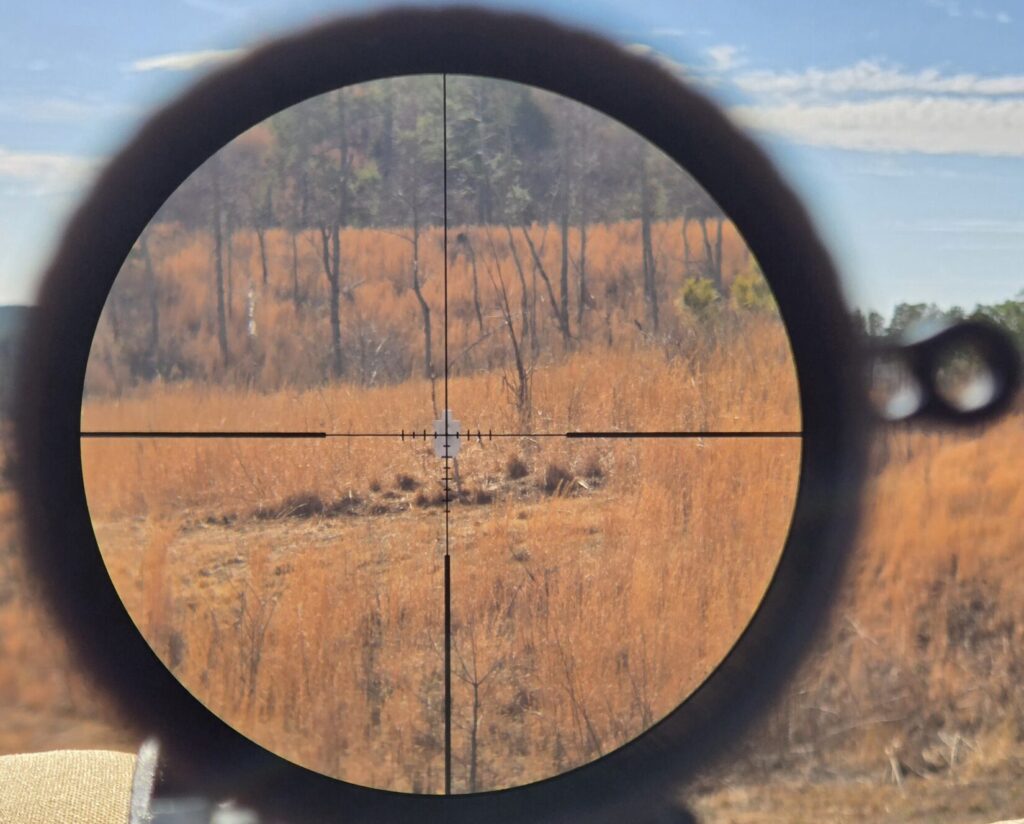
Looking further down range, I used my old rangefinder on a target, but the only distance that came up was a “—” line, meaning it was too far or the laser couldn’t pinpoint exactly what I was looking at. I estimated the shot was between 500 and 600 yards and referred back to my ballistic supplement. It called for a 5.8 MIL hold. I held, pressed, and nothing. The wind was moving that day, so I held left of the target using what I felt was a 1 MIL hold, and that 6 MIL elevation hold pressed the trigger, and maybe…
I couldn’t hear if I was hitting with the sound of the wind creating static in my electronic ear pro. Without a spotter, I was guessing where my hits were hitting, and with only six power, I just couldn’t be sure. Saving a couple of boxes, I packed up and headed to the pro shop to talk to the pros about coming back and asking them to help walk me into the further shots next time.
Help from a Pro
Before you purchase an LPVO and assume long-range shots will become a no-brainer, take some advice from a pro. Better yet, get proper training from a trusted pro.
According to Dan Posey at Coleman’s Creek, “The most significant gap I see when it comes to LVPOs is a lack of understanding regarding the reticle, ballistics, point blank zero, and danger space. A solid grasp of these concepts will allow a shooter to get the absolute most out of their LVPO setup from 5 to 500.”
Daniel’s military background includes many years in special operations, including four years instructing at the US Army Special Operations Sniper Course.
The perfect-quality AR and optic with strong marksmanship fundamentals from the shooter won’t always result in hits at greater distances if the ammunition isn’t correct. To truly unlock performance out of a smaller AR at greater range, an investment in heavier precision ammo matters.
There’s an expression that at 100 yards, a small grouping is the measure of a shooter. At 1000 yards, it is a test of the ammunition. Consistency matters, and heavier .223 or 5.56 rounds will be less affected by the wind.
According to Posey, “Consistency from round to round is what truly matters, as it allows you to correct for the uncontrollable variables of external ballistics. Cheaper ammo usually comes with smaller weighted and lower BC projectiles as well as not as consistent. Better quality ammo usually has heavier projectiles with higher BCs. BC or ballistic coefficient is a number that tells you how efficient the projectile travels through air. Higher BC better performance put simply.”
Is There a Final Word?
Is the LPVO better than the red dot? The answer is, “it depends.” If the user never anticipates taking shots further than 100 yards, then a dot offers a weight reduction benefit. If shots are taken from standing when the grouping size can be attributed to the acceptable wobble that happens from an unsupported shot, then perhaps a dot is all you need.
However, if you work in an environment where you could be indoors and outdoors, where the range to targets varies, then an LPVO is the way to go. If the reticle is illuminated, it can be used like a dot at low power and then cranked to high power for more accurate shots at distance.
If you have time to create a stable shooting platform or need to see the target better, then magnified optics will reign supreme. Also, with new cartridges like the 6mm ARC that allow for smaller frame firearms to achieve incredible accuracy, we haven’t seen the highest evolution of smaller firearms tiptoeing into the domain of more precision rifles.