Policing changes constantly, but the more it changes, the more it stays the same. Technology has always been a part of policing; for example, “motorized bandits” in the 1930s gave birth to the modern radio systems still used today. The implementation of new technology in policing promises safer streets, more effective crime prevention, and greater accountability.
However, new technology comes with the weight of innovation. Agencies must balance the benefits of modern tools against the physical and cognitive burdens on officers.
These technologies should aim for seamless integration and enhance, rather than replace, the officer’s fundamental skills. Today, we’re looking at both current and emerging technological resources for the modern police officer.
Firearm Upgrades
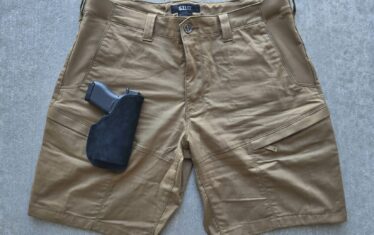
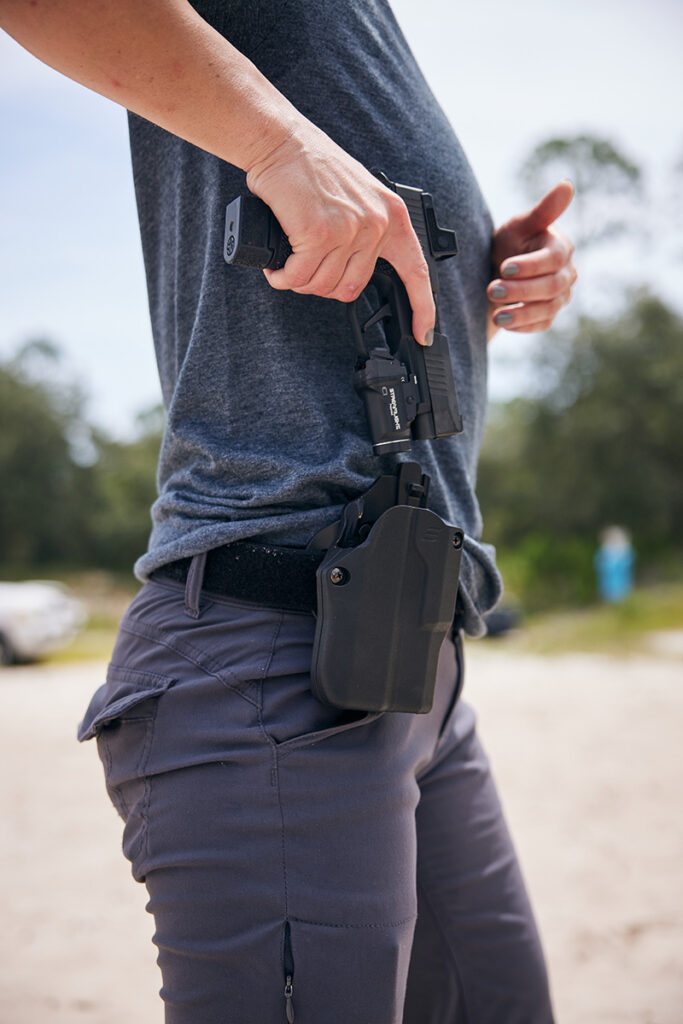
Firearms themselves aren’t changing much; we have largely peaked with current ballistic technologies. Instead, firearms are becoming more efficient. We’ve seen guns like the SIG P365 pack more rounds into a smaller package, changing the landscape for plainclothes officers. Smaller, lighter guns are now easier to carry without sacrificing ammunition capacity for concealment and comfort.
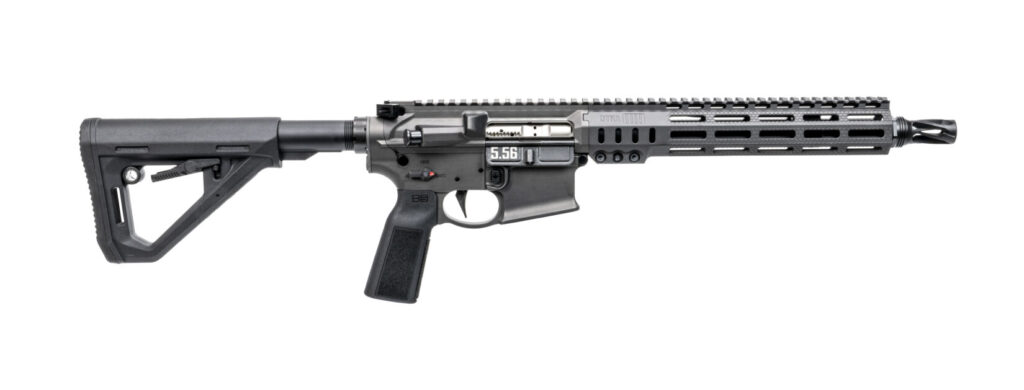
In the realm of long guns, we’ve seen wider adoption of shorter, lighter rifles. These carbines offer 10.3- to 12.5-inch barrels, providing a cruiser-friendly design that’s maneuverable and easy to wield while remaining highly capable.
Another addition becoming more common is the suppressor. Suppressors allow officers to maintain hearing, situational awareness, and effective communication during an engagement. While suppressed rifles are still loud, they significantly reduce noise pollution and muzzle blast.
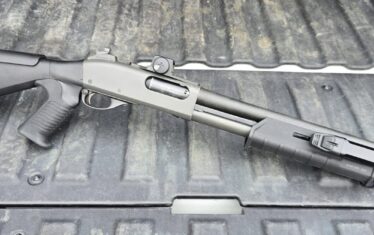
The classic police shotgun is also evolving. We are seeing a rise in the use of semi-automatic shotguns, with the Benelli M4 and the Beretta 1301 slowly overtaking the classic pump-action. These guns are often loaded with tight-patterning buckshot, like Federal FliteControl, to improve both effective range and shot accountability.

Firearm Attachments
Optics and weapon lights have slowly become the standard. A red dot sight on a handgun allows officers to shoot faster, further, and with greater accuracy; it’s almost like a “cheat code” for handgun proficiency.
While rifles have long used red dots, the recent adoption of LPVOs (Low Power Variable Optics) allows officers to engage with precision over longer ranges while providing better threat identification.
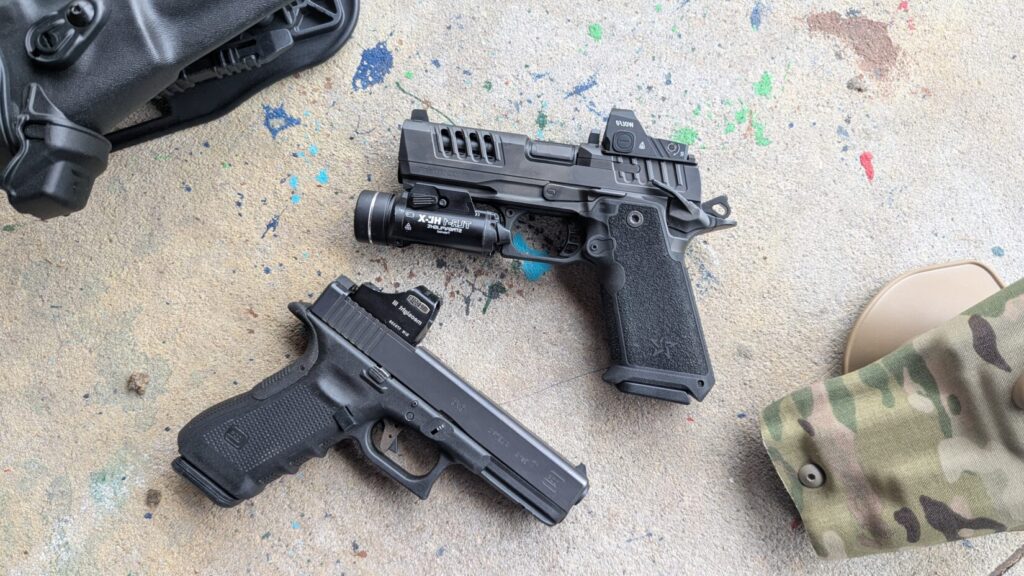
Weapon-mounted lights (WMLs) also continue to improve. A modern WML packs significantly more power than the old Maglites. These tools allow an officer to identify threats not only in dark conditions but also in environments where “photonic barriers” (like high-contrast street lighting) can hinder target identification.
Holsters
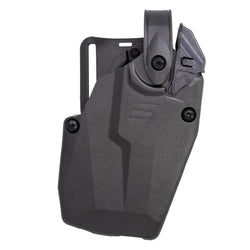
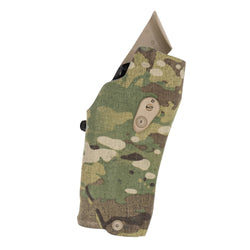
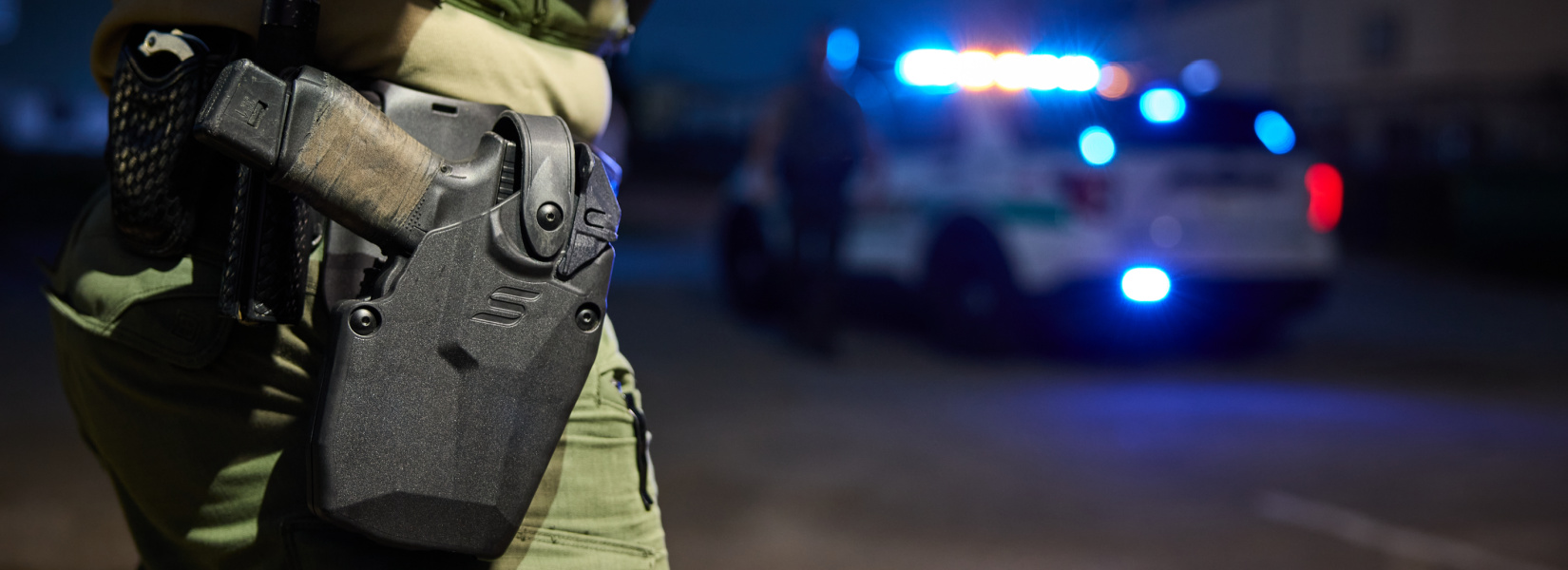
The era of leather and soft nylon is long gone. In its place are modern polymers that provide a safer, stronger, and more stable platform. This material doesn’t rip or stretch, which improves officer safety during a gun-retention struggle.
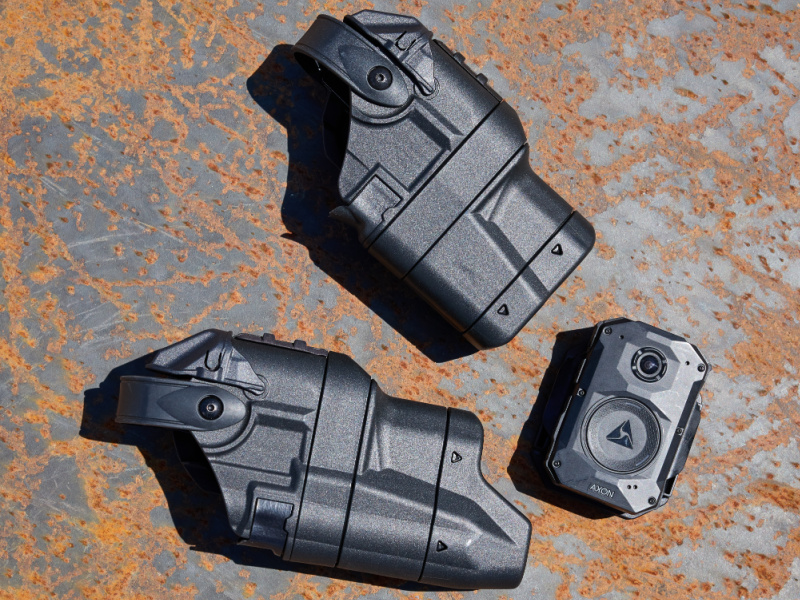
Modern holsters feature active retention devices requiring specific movements to free the firearm. With Safariland, these are the ALS and SLS devices, which can be combined for Level 1, 2, or 3 retention. Furthermore, “smart holsters” are now linking sidearms to other equipment. Safariland has partnered with Axon to create a system that automatically activates a body-worn camera the moment a gun is drawn.
Axon has created similar triggers for TASERs and vehicle light bars. Future systems are being developed to trigger an immediate alert to dispatch with real-time GPS tracking the moment a holster is cleared, freeing up the officer’s cognitive load during high-stress situations.
Body Armor
The adoption of outer carriers has not only saved officers’ backs but also created space for more advanced armor sets. Body armor is becoming more effective through materials that stop more powerful cartridges while remaining lighter and more durable.
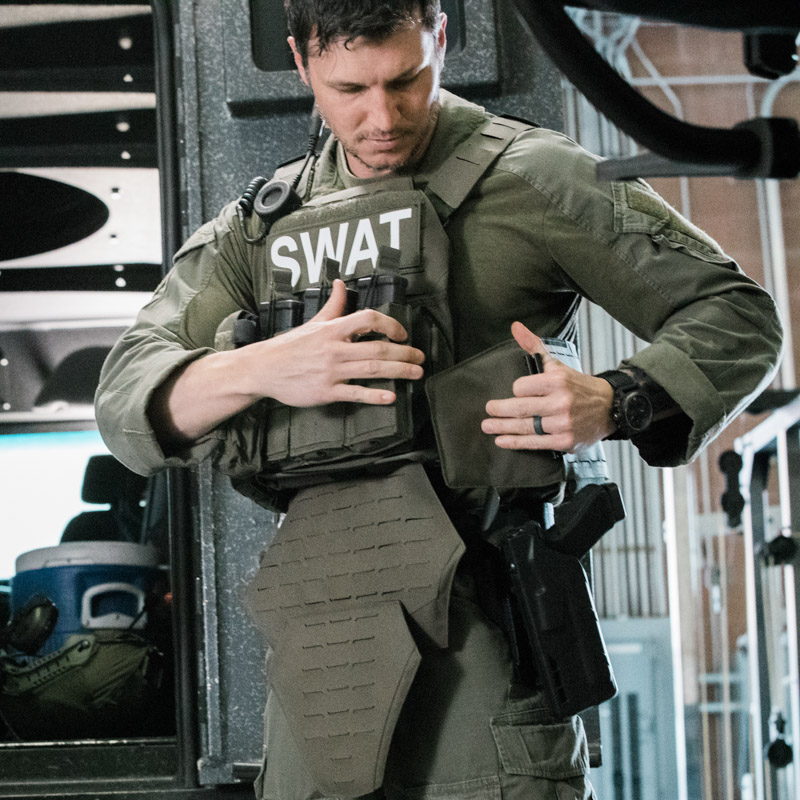
Emerging technologies are looking to place sensors inside armor that can signal dispatch the moment an officer is stabbed or shot. This enables rapid deployment of backup and medical resources without requiring the officer to key a mic. Similarly, systems using accelerometers and gyroscopes can detect if an officer has fallen and send an automatic SOS signal for help.
Drones
Drones, also known as Unmanned Aerial Vehicles (UAVs), are increasingly used by agencies each year. These devices provide a significant tactical advantage, allowing officers to search for suspects or conduct recon in dangerous environments without putting personnel in the line of fire.
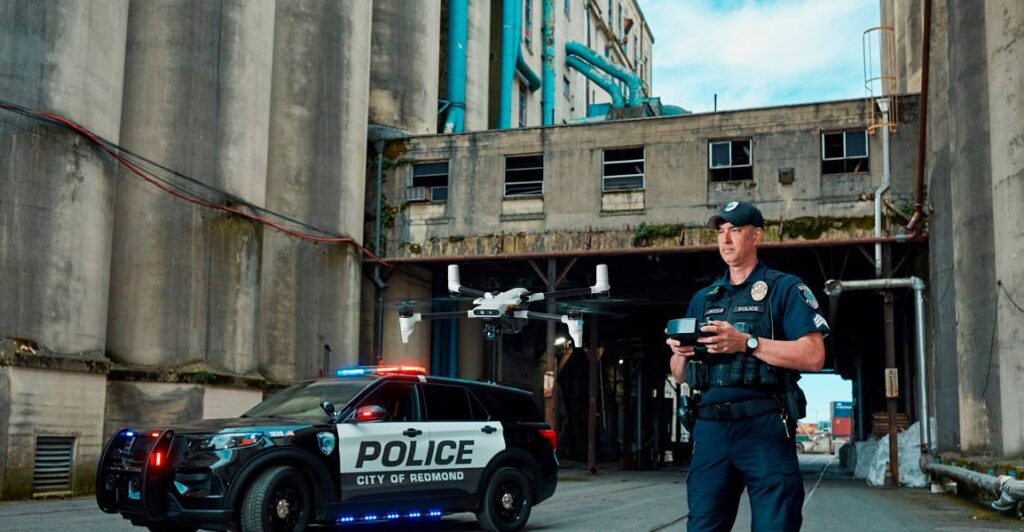
In search and rescue operations, UAVs equipped with thermal cameras can cover more ground than dozens of volunteers on foot. There is no need to wait for a helicopter; a UAV is cheaper, faster, and easier to deploy. They are quickly becoming a standard tool for police, firefighters, and rescue crews alike.
Augmented Reality Systems
The FBI recently released a paper detailing the potential use of Augmented Reality (AR) systems in law enforcement. These systems typically utilize glasses integrated with cameras and microphones.
Use cases vary widely: these systems could provide a “heads-up display” (HUD) to view or send photos, provide active translation of foreign languages, or identify known subjects through facial and voice recognition.
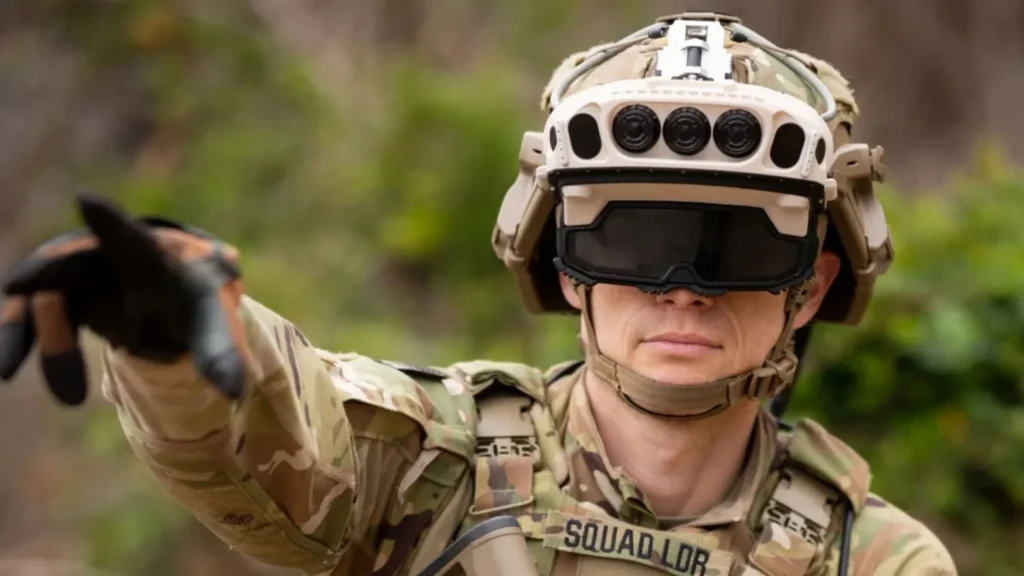
As the technology matures, the integration of night vision, mapping, and real-time navigation becomes a real possibility. While still in their infancy for duty use, commercial variants like the Meta Ray-Ban glasses already demonstrate the potential for active translation and display options.
A.I. Integration
The infusion of Artificial Intelligence into policing is accelerating. Some systems are already in use, while others are near-future concepts. A.I. promises to reduce the administrative burden so officers never miss a detail.
Currently, systems like “Axon Draft One” use AI to transcribe body-camera audio to help officers draft initial reports. In Florida, Tampa Police are using a system that allows 911 callers to activate live AI-powered translation and transcription alongside video footage.
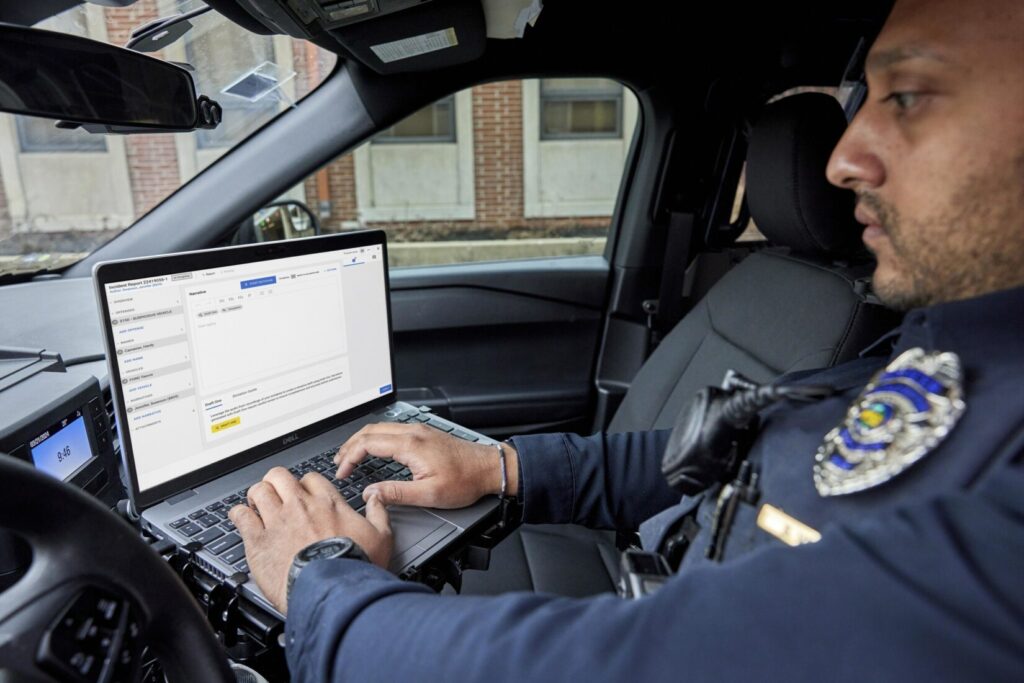
Systems in development include bodycam-integrated A.I. capable of identifying discarded weapons in a crowd or during a foot chase. These same systems can read license plates and automatically signal an officer when a BOLO (Be On The Look Out) vehicle is nearby. Companies like Flock Safety are integrating AI into everything from autonomous drones to gunshot-detection sensors.
The Future
We aren’t quite building “RoboCops,” but we are much closer than we were even a decade ago. Modern police forces that use these technologies can enhance officer safety, operational efficiency, and community accountability. When technology supports the human element of policing, the result is a safer community for everyone.