
I purchased my first AR-15 in my early 20s, and over the past couple of decades, I’ve learned a thing or two about what additions or changes make sense for a rifle. It isn’t just what is upgraded; it is why and when. This article is all about the AR-15 upgrades that can be made and the thought that goes into the decision to swap out parts.
1. Weapon-mounted Light
Weapon-mounted lights need no introduction. We know we need the ability to positively ID with our firearm before we can put sights on a target and press the trigger.
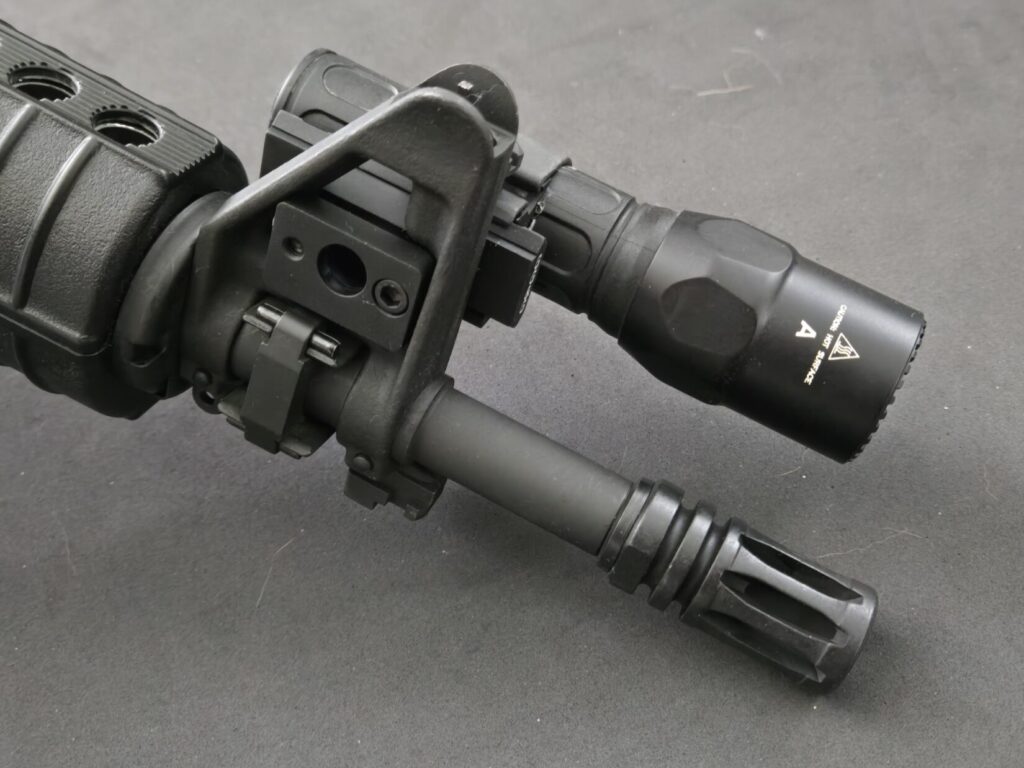
Older AR15s, like the first one I purchased over 20 years ago, came with standard A2 front sight posts. This post can be used as an interface for a weapon-mounted light with the right parts. I highly recommend the GG&G SLIC Thing combo. It provides a Picatinny rail section on one side and a QD sling release on the other. You can decide to mount the light to the left or right of the front post with a simple 1-inch Weaver ring.
There is no shortage of 1-inch personal lights with incredible output. For this article, I mounted a Surefire 6P Fury. It has more than enough lumens and candela for a weapon-mounted light and certainly more than similarly sized options from two decades ago. One cautionary statement: make sure your sling doesn’t interfere with the placement of the 6-volt light.
2. Optic
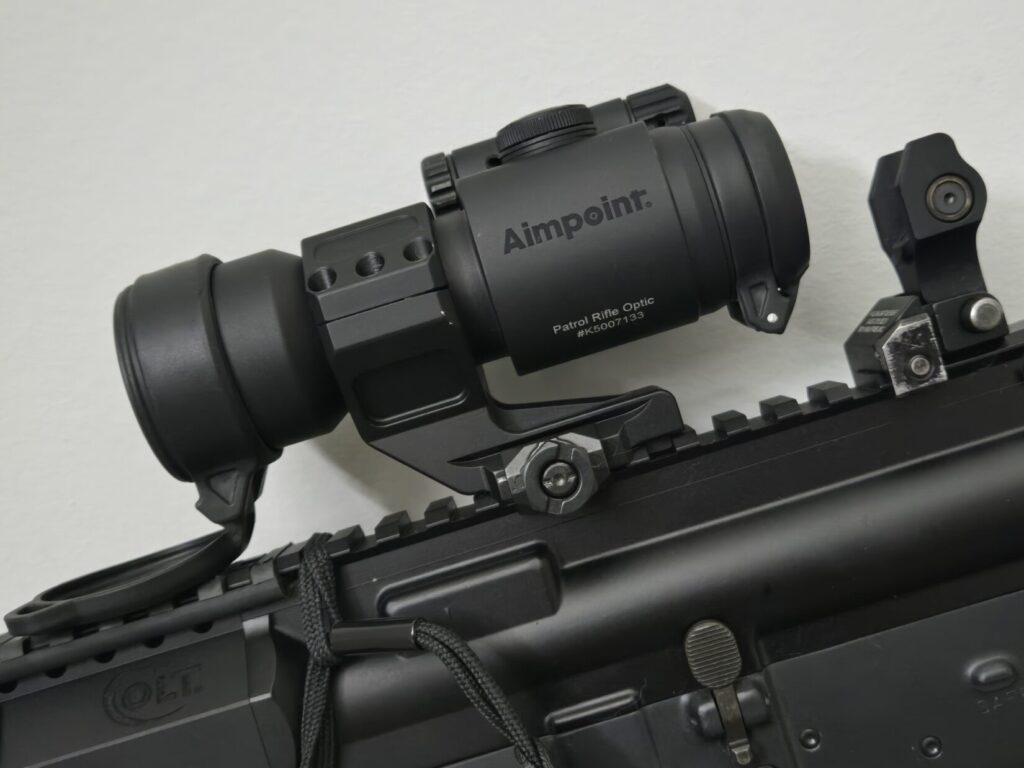
Most of my ARs have dot sights or LPVO optics. This is the only AR that I wanted to keep iron sights on. I’ll eventually put my Vortex AMG UH-1 or Aimpoint Patrol Rifle Optic (PRO) on this, but for now, I have a removable carry handle on the receiver rail. Every once in a while, I’ll push the iron sights out to distance on steel.
Shooting irons is as dying of a skillset as writing in cursive is. I like the A3 carry handle because it lets me use irons when I want and then throw on a quick-release dot when I want to update my sighting system.
Even though I get nostalgic for iron sights, putting a red dot on a rifle helps the shooter aim better. With a single focal reference point that is shot instead of aimed, accuracy improves. Ask any professional firearms trainer, and you’ll be hard-pressed to find one who says those with “cowboy sights” are faster or more accurate than those with a dot.
3. Sling
Pistols deserve holsters, knives deserve sheaths, ARs deserve slings.
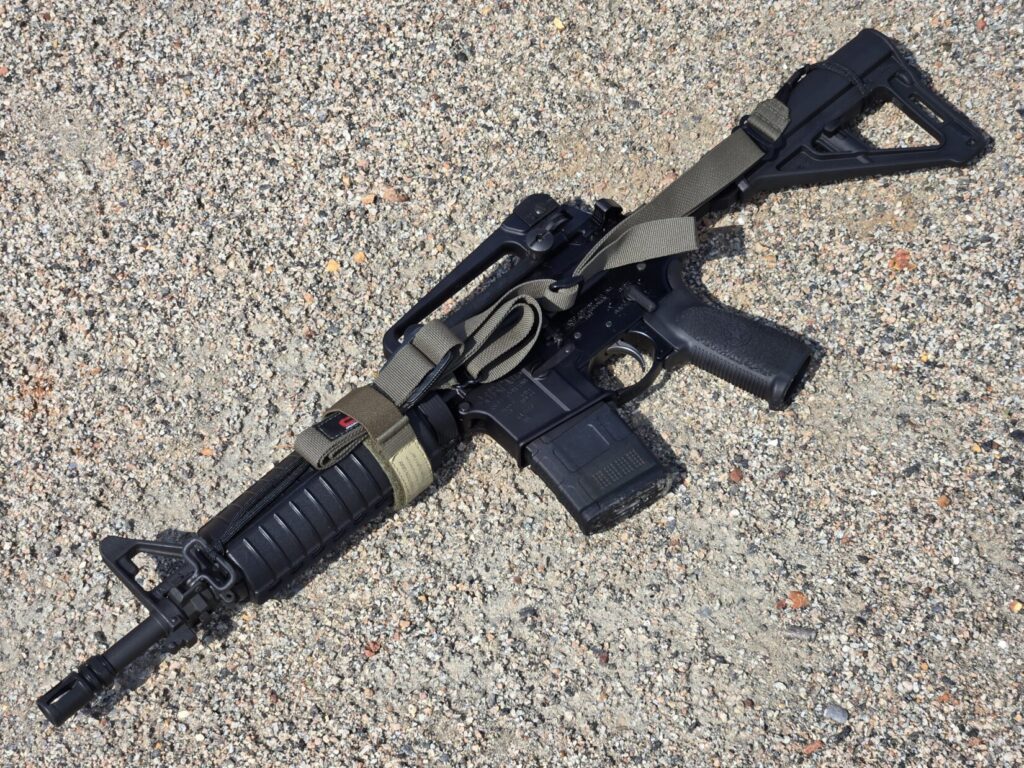
One of my favorite minimalist slings that has served me well over the years is the Frank Proctor V3 sling. Utilizing 1-inch webbing and girth hitch loops, this sling is easy to stow when not in use. It is comfortable and easily adjustable. If you don’t have many sling attachments, there are multiple options for how to rig this sling to your rifle.
With a good sling, you can travel further, free up your hands, and live with your AR in camp without having to put it down.
The V3 sling is comfortable to wear all day during courses, and it is stout enough to haul your AR into the field for miles. It is also easy to swap from one firearm to another, and it keeps the weight down since it doesn’t require QD cups.
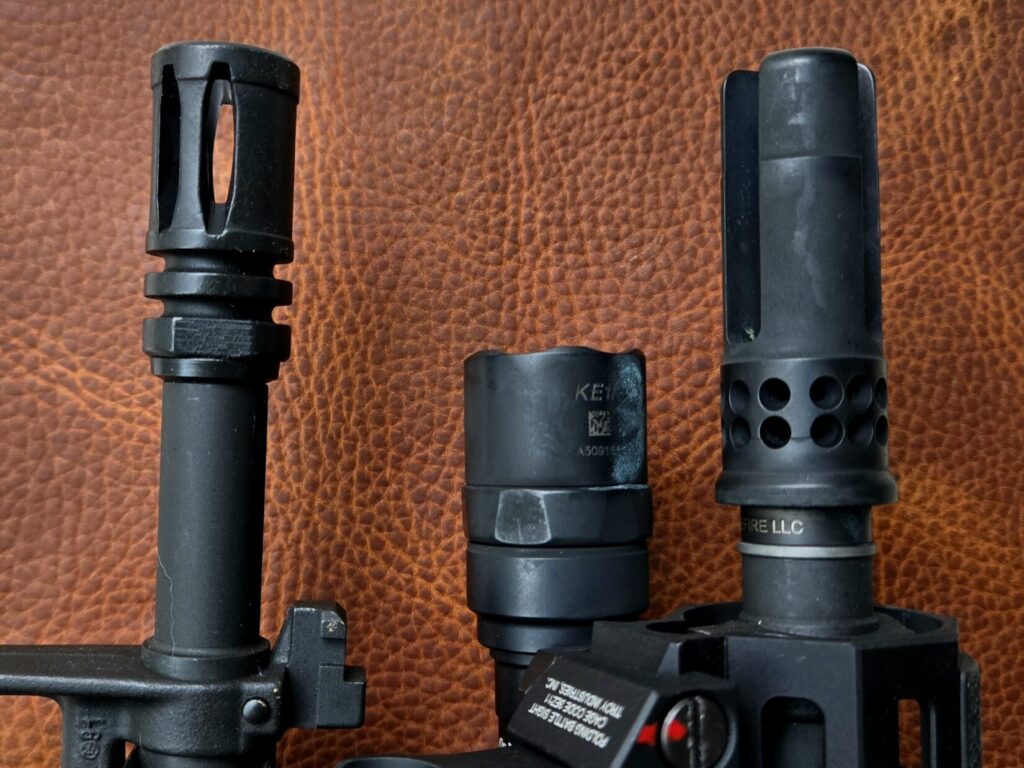
4. Flash Hider/Muzzle Device
I don’t particularly hate the standard A2 muzzle device. If I am not using a suppressor, that simple muzzle device works well as is. The bottom of the bird cage is closed when shooting from the prone and it is fairly inexpensive.
I do like to swap out my muzzle devices when finances allow and when I want to use a suppressor. My Surefire 5.56 suppressor requires a specific mount from Surefire. Spending $125 to $150 on a muzzle device may not appear logical, but some, like the Surefire Warcomp, also help drive the muzzle back down on target.
When used with a good suppressor, the overall length of the pistol/rifle isn’t increased that much with the addition of a suppressor, and if the pistol/rifle has a shorter 11.5-inch barrel, the firearm and suppressor are about the length of a standard 16-inch carbine.
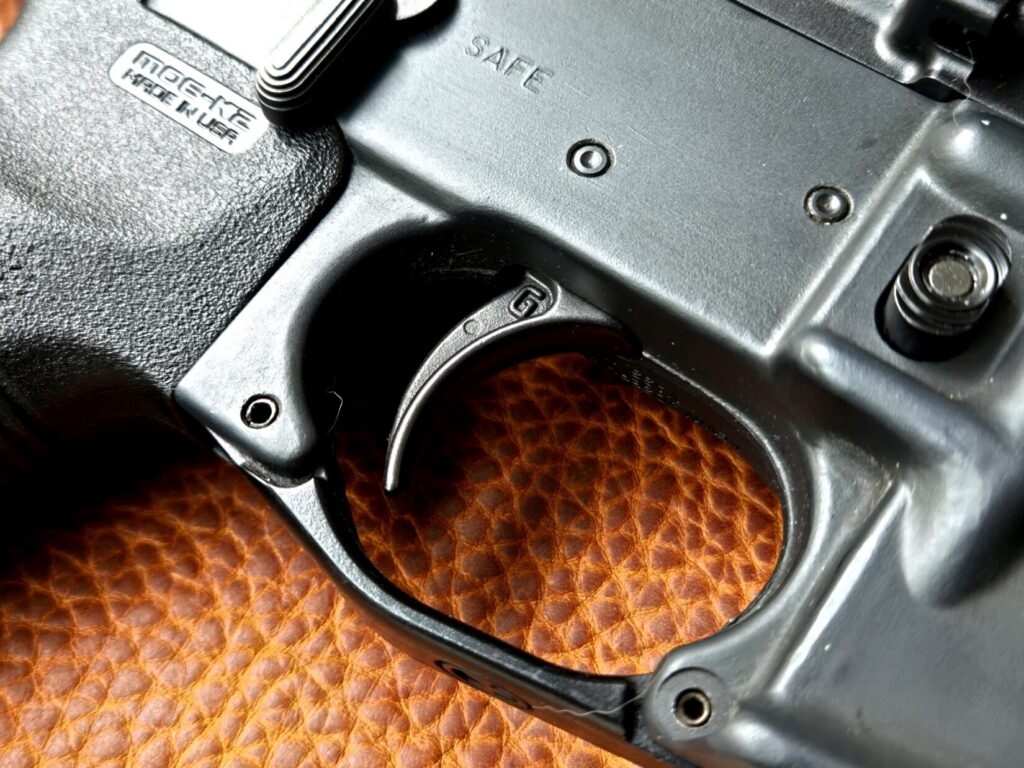
5. Trigger Upgrade
The trigger that comes in the BCM lower I have is Mil Spec and well made. It will function for thousands of rounds. The parts are easily sourced if there’s an issue at a class, and they are widely interchangeable.
There are times when you want something that has a lighter press or maybe something that offers the chance to fire more rapidly. For a precision trigger, my other ARs have Geissele Super Semi Automatics. These triggers are crisp, durable, predictable, and a definite upgrade from the stock trigger.
Lightening the trigger can help the shooter keep a steadier sight picture with less perceived wobble as the trigger is pressed. Don’t forget, some triggers are competition triggers with lighter springs that may or may not work with mil-spec ammo if that is what you’re shooting. Make sure whatever trigger you upgrade to is fully functional.
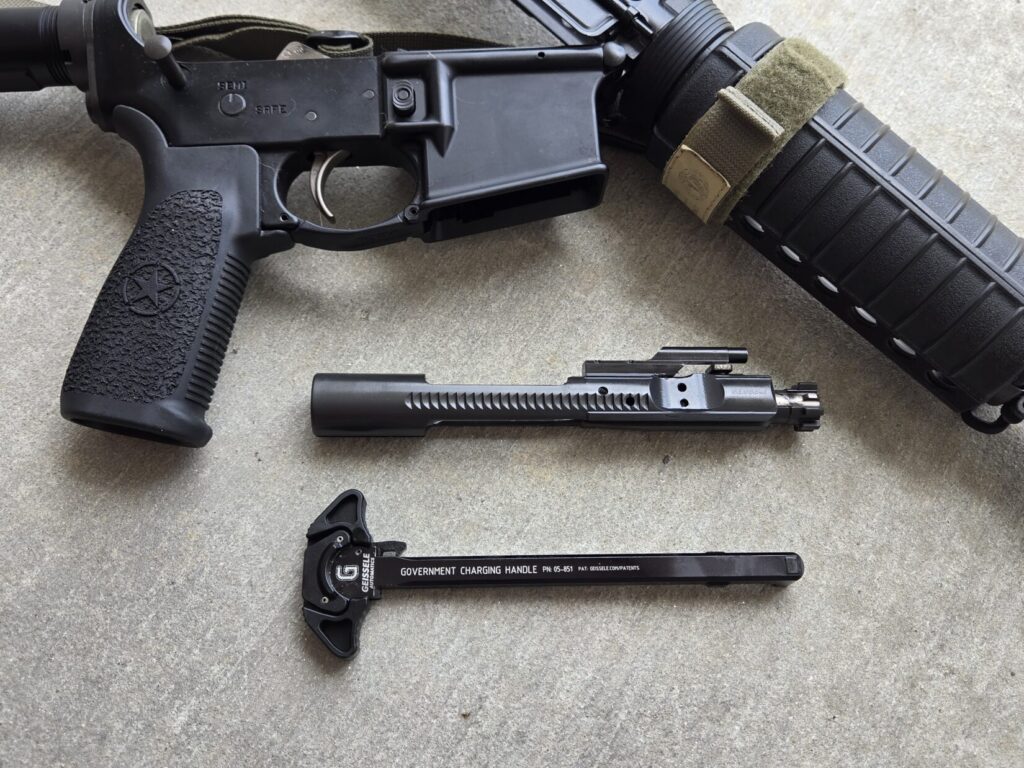
6. Charging Handle and Bolt
If you plan on training, you’re going to want parts that will hold up to different firearm manipulations. The standard charging handle can easily be missed when reaching for it.
Geissele makes a user-friendly version called the Government Charging Handle with more of a profile to get a purchase on. Most of the time, it will stow away, but when you reach for it, you will be happy you have more confidence in it. I have them in all of my rifles, and for good reason. They work.
Speaking of Geissele, you can’t go wrong with their bolt-carrier groups. It’s hard to find one that is better engineered or executed. Bolt carrier groups are fairly robust, but some problems materialize when you least expect them. An AR can experience broken lugs from stress fractures if the firearm is used heavily. At the very least, make sure you keep a spare bolt assembly in your repair kit.
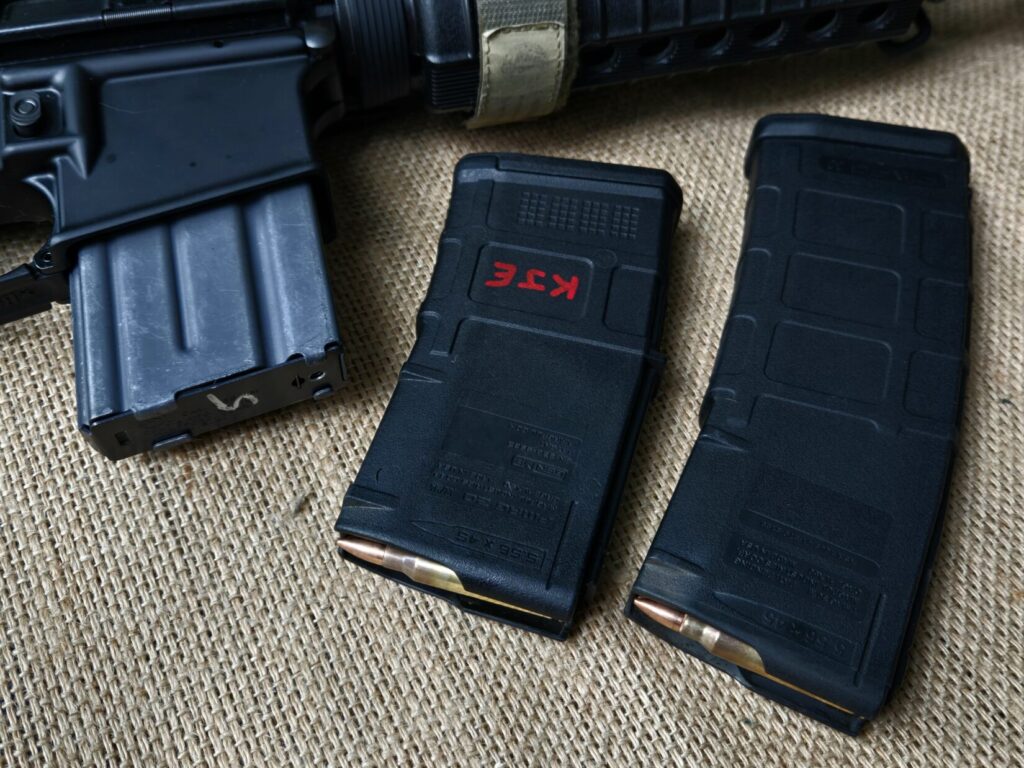
7. Magazines
My AR is a hybrid BCM pistol lower from Brownells and an 11.5-inch A2 Upper from Colt. In this configuration, 20-round magazines just have a different aesthetic than their 30-round counterparts. They work well to keep the overall outline of the rifle/pistol from having too tall a profile when loaded.
Some people believe you can never have enough magazines, and at a minimum, I’d recommend having a couple loaded at all times as well as some that are designated as training magazines that can take the abuse of being dropped, shuffled around in the dirt, and stepped on.
Perhaps the best combination for a defensive AR carried in the field is a 20-round magazine in the firearm and a 30-round magazine carried as a backup.
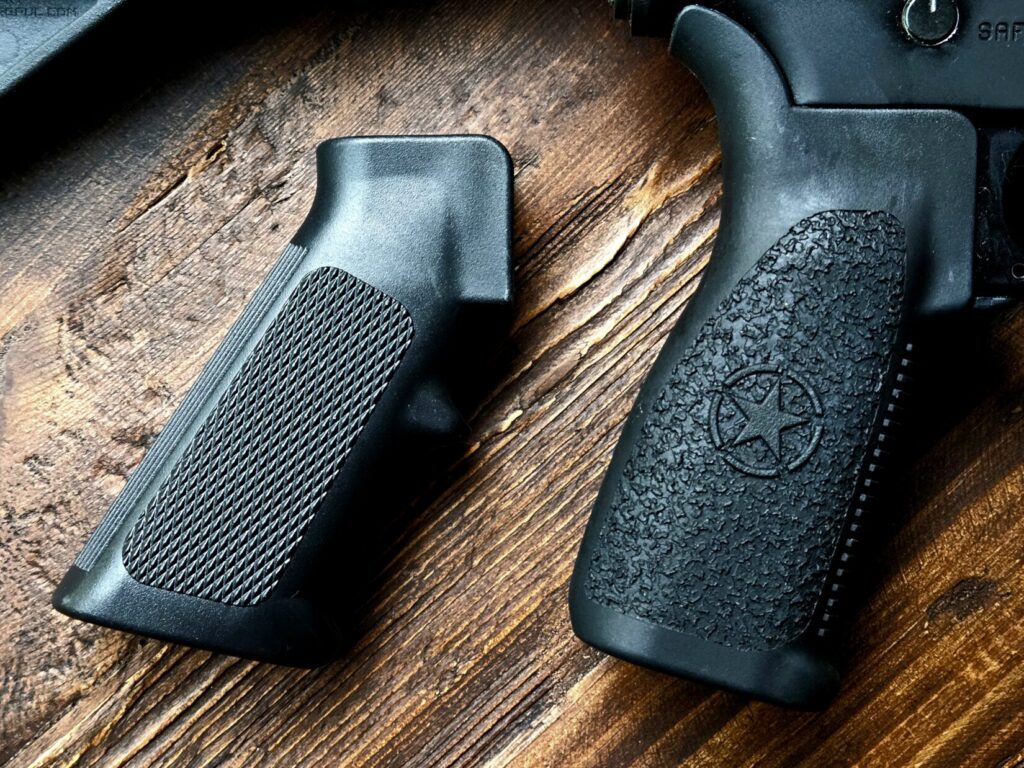
Beyond the basics, there are many changes the shooter can make to their AR-15t. Different color stocks and forends, mounting surfaces, ergonomic bits and pieces; all of these are personal preference, but they should be driven by logic.
This AR build is a hybrid BCM Lower from Brownells and an upper from Colt,and it is going to be a great loaner for guests at my house for training.
It’s important to know the why of what you have on your rifle. If you can’t explain how an upgrade provides improvement, it may not make sense to swap it out. Once the basics are covered, additional items like laser aiming devices, bipods, offset iron sights, and other parts can be added.
Perhaps the best addition to your hardware is good software. Install it by going to classes with reputable trainers. Shooting by yourself is practice. Shooting with a coach and a purpose is training. Your training will help form the logic behind the decisions you make regarding the upgrades to your firearms.