
This fact might frustrate some who are reading this, but I graduated High School in 2011. As my 15th High School reunion approaches, it feels like a lifetime ago. While much has happened since then, the trends in the 2A world have also transformed.
I should know; I’ve had a front-row seat viewing since April of 2012. Back then, I was working behind the counter at a high-volume firearms dealer. So, I’ve had the pulse on every trend since (remember the Zombie craze? Or when the world was going to end in 2012? Or when KeyMod was going to be the standard?).
While trends come and go, some have a lasting impact. During that same month in 2012, Smith & Wesson released the M&P Shield. This single-stack, striker-fired compact handgun single-handedly changed the concealed-carry landscape. Without it, do we get models such as the Sig P365, the Springfield Hellcat, the Glock 43X, and others? It’s doubtful, but something had to pave the way.
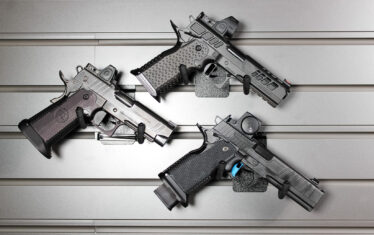
The same can be said for the Double-Stack 1911 market, commonly called 2011s. While this is a recent development, the concept dates back to the previous century (yes, it hurts my brain to write that), when these guns were made for speed. Time to dive into the history of 2011 pistols.
STI ORIGINS
2011-style pistols trace their origins to the early 1990s, when STI (Strayer-Tripp International) introduced the design around 1993–1994 as an evolution of the classic 1911 platform.
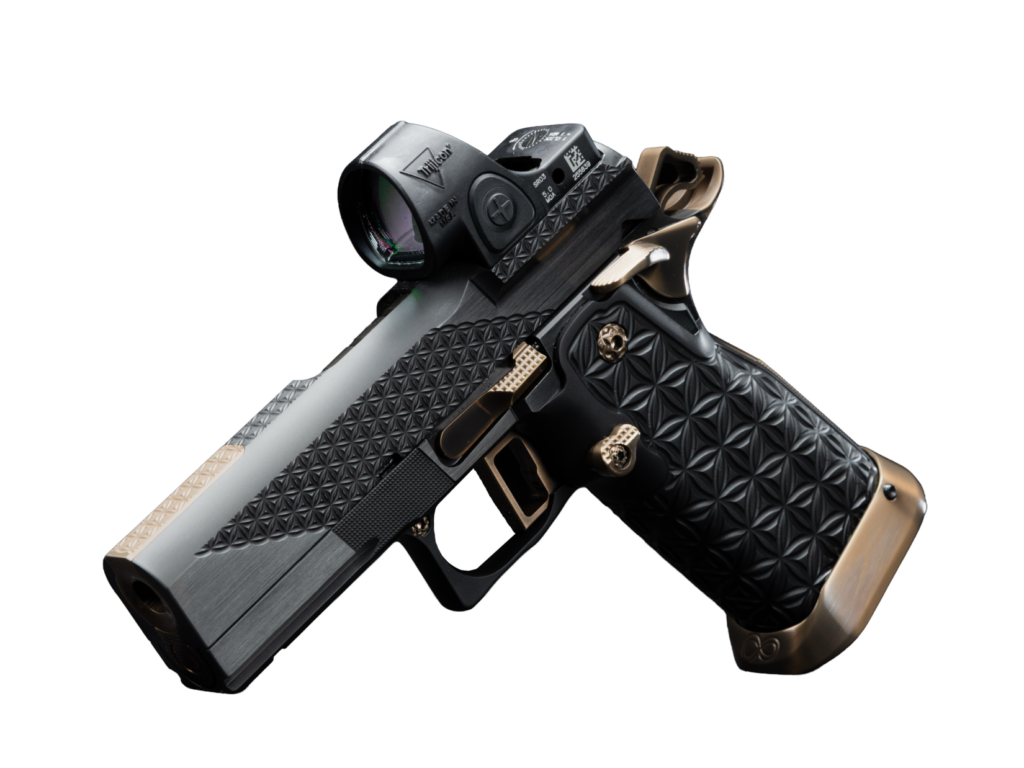
STI rebranded as STI International in 1994, with the initials now standing for Science, Technology, and Ingenuity. This occurred when Strayer moved on to co-found Strayer-Voigt Inc. (SVI) with competitive shooter Michael Voigt. That company is now Infinity Firearms and manufactures high-end 2011-style pistols. Although the two companies share a history, they are distinct entities.
2011 Characteristics
The 2011 platform, developed by Strayer and Tripp, retains the crisp trigger and familiar ergonomics of the 1911 while increasing ammunition capacity. However, the key innovation was a modular, double-stack frame that paired a steel upper, which houses the rails and slide interface, with a polymer grip module that supports high-capacity magazines.
This design quickly gained popularity in IPSC and USPSA competitions. Although STI introduced the first commercial 2011-style pistols in the early 1990s, the platform became dominant in USPSA’s Open and Limited divisions by the mid to late 1990s. STI focused on this market for nearly thirty years.
All STI/Staccato 2011 pistols have a short, recoil-operated, locked-breech mechanism similar to the Colt M1911, with a single swinging link that attaches the barrel to the frame and manages both locking and unlocking.
A key difference from the standard M1911 design is the lack of a separate barrel bushing at the front of the slide. Today, many manufacturers, especially new ones, are experimenting with linkless designs to stand out in a crowded market.
Eventually, adoption spread beyond competition, with broader use in duty, defensive, and high-end tactical roles emerging in the 2010s. Although “2011” originated as an STI marketing term and is now trademarked by Staccato, the phrase has since become a common label for modular, double-stack 1911-pattern pistols (think of the brand Kleenex being used for any type of tissue). But another type was developed around the same time as the STI 2011.
WIDE-BODY 1911s?
During the 1980s, efforts to increase the performance and magazine capacity of the M1911 platform led to the development of widened frames designed to accept double-stack magazines. These “wide-body” 1911s preserved the fundamental mechanics and ergonomics of John Browning’s original design while incorporating enlarged frames for higher ammunition capacity.
In essence, they were true double-stack 1911s—a term widely used today by manufacturers, distinct from the “2011” trademark associated with Staccato.
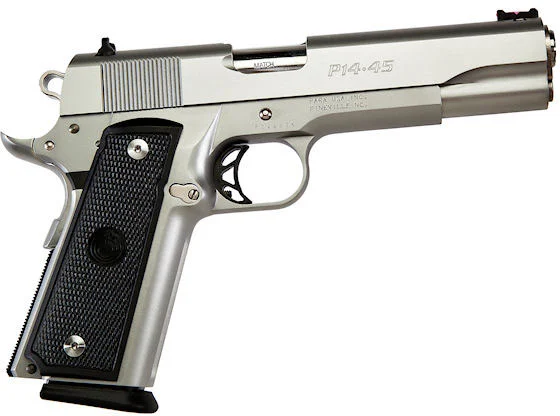
A central figure in this evolution was PARA-Ordnance, founded by Ted Szabo and Thanos Polyzos. As noted in a historical overview published by American Rifleman and written by then-Editor-in-Chief Brian Sheetz, Szabo finalized his solution by the 1988 Shooting, Hunting, Outdoor Trade Show: an extra-wide M1911-style frame and double-stack magazine kit engineered to retrofit the slide assembly of an existing single-stack pistol.
This innovation allowed shooters to significantly increase capacity while retaining much of the original pistol’s architecture.
PARA-Ordnance’s design gained widespread popularity throughout the 1990s and early 2000s (PARA eventually offered a full suite of kits and complete pistols). However, following Szabo’s death in 2007, the company’s momentum declined, and the brand ultimately ceased operations, marking the end of a significant chapter in the evolution of the double-stack 1911.
FROM STI TO STACCATO
For most of its history, STI served a niche market of competition shooters. Over time, the company expanded its offerings, and in 2019, it introduced the Model P, a flagship pistol in a new line of duty- and personal-defense firearms from STI International.
Recognizing broader growth opportunities, executives shifted focus toward personal defense and law enforcement users.
This shift was marked by the growth of models tailored to personal defense and law enforcement users, especially the Staccato-C and Staccato-P, which were designed to be practical and accessible (compared to 2011-race guns). These pistols attracted a wider audience and quickly surpassed legacy models in popularity.
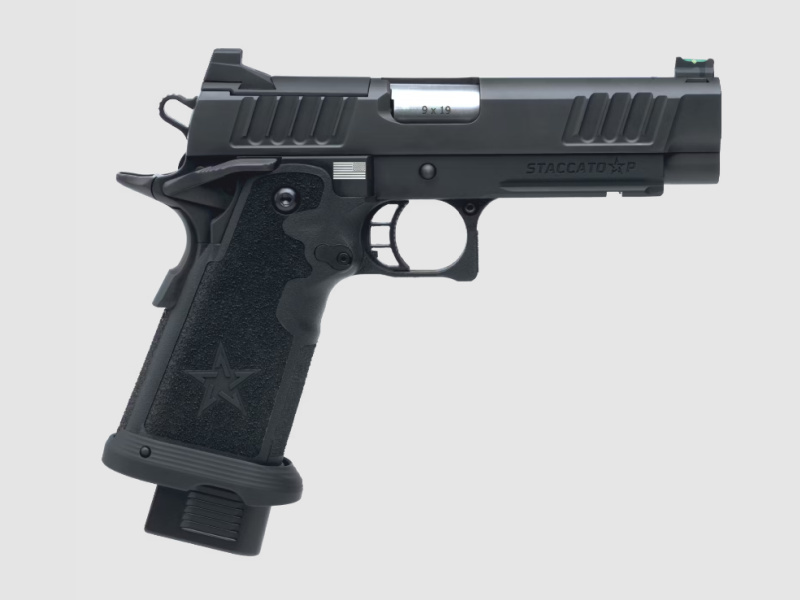
As the Staccato brand gained momentum, the company rebranded itself to position for further growth, increased visibility, and relevance across duty, defensive, and competitive shooting roles.
Then, in 2020, STI International rebranded as the now-household name Staccato. This shift aimed to expand the company’s image beyond the competition-shooting community and into the growing duty and defensive markets. But why choose Staccato?
Staccato is a musical term that describes a series of “short, sharply separated sounds.” According to the company, Staccato sounds like bullets pinging off steel targets in quick succession (a reference to their competition roots).
The term was first used in 2019 to refer to STI’s duty and personal-defense pistols. This line was well received by both consumers and professionals, leading to a company-wide transition. And that brings us to the present.
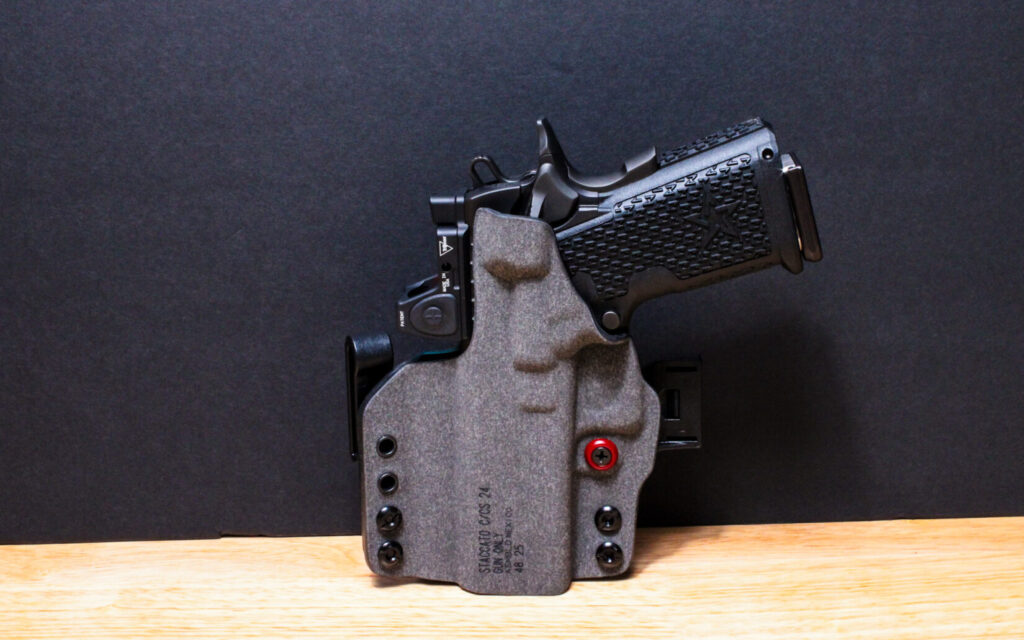
A 2011 Golden Age
In 2016, the patent for 2011s expired. However, Staccato still owns a trademark for the name. To prevent confusion, consumers might use the term “2011” generically, while manufacturers could prefer the more specific and accurate “double-stack 1911” or similar terminology.
It’s hard to argue the impact of Staccato on the current handgun market. They made 2011-style guns trendy. And did it, by targeting an unlikely market in law enforcement and personal defense users. But it’s also a pop culture phenomenon.
John Wick and other movies brought 2011-style pistols to the big screen. And more than ever, what people see in films, TV, and video games influences their buying habits.
For example, during my first year or two of sales, I had a repeat customer who purchased guns and accessories that resembled his favorite weapons in Call of Duty: Modern Warfare 2 (2009). We might deny it, but pop culture influence is real when it comes to gun buying (we’ve all dreamed of building a Gordy clone from Black Hawk Down or a TIA rifle from Blood Diamond).
Which brings me to the most interesting and difficult-to-explain aspect of the 2011 trend. These aren’t cheap guns. In fact, the “budget” options would often be the most expensive gun in many people’s collections. Still, the market has exploded.
How Do You Explain It?
This is all based on observation. As far as I can tell, no one has conducted a thorough analysis of this subject, which makes it more challenging.
First, Staccato is a major factor in this market’s success. They did an excellent job introducing 2011s to the general public. By shifting away from competition shooting, they opened up a new range of end-users—the everyday gun owner. The fact that Staccato secured LE contracts at the state and federal levels also highlighted the platform’s potential.
In 2019, the U.S. Marshals Service adopted the STI/Staccato P DUO pistol for its elite Special Operations Group (SOG). This was the first ripple. Staccato had gained a foothold, establishing a strong presence in the police market.
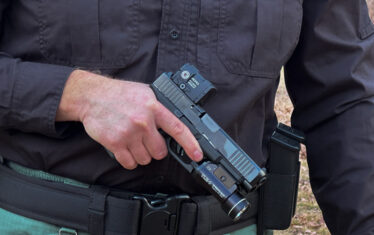
And, for a time, many elite units adopted Staccato. However, in 2023, the Ontario Police Department (California) made headlines when it adopted the costly Staccato XC with a red dot sight and an attached white light as the standard issue for all officers, not just the elite SWAT team.
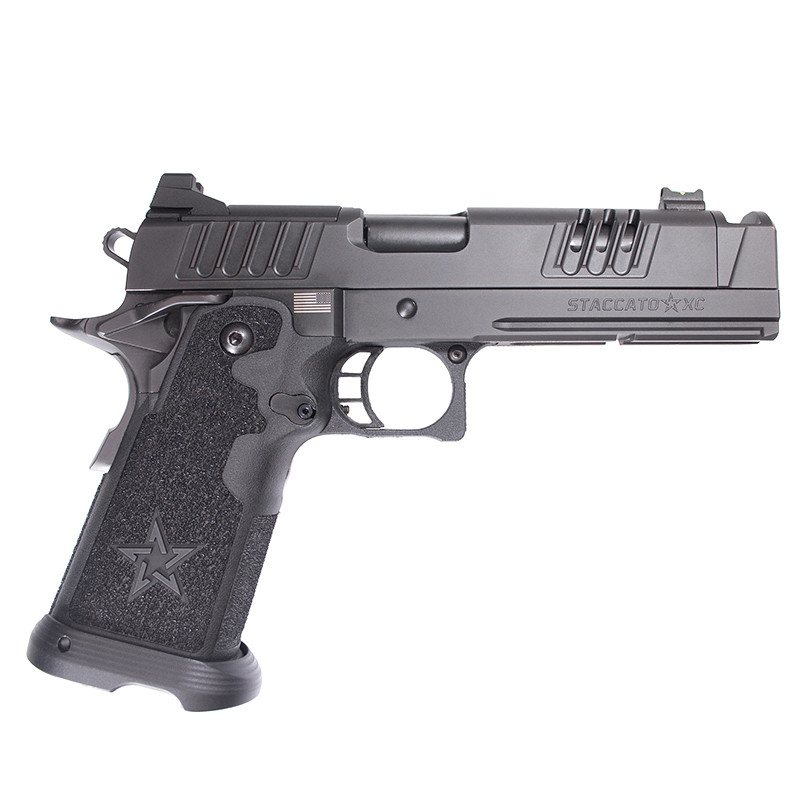
Many other agencies, which could not afford to buy so many expensive firearms for standard issue, made the Staccato optional for officers who chose to purchase and carry their own guns on duty. All of this created a watershed moment in the platform’s history—market acceptance.
That meant more people were using the gun and talking about the gun. From there, it’s a ripple effect. But that doesn’t explain the cost barrier.
Pinching Pennies Everywhere — Except on Guns
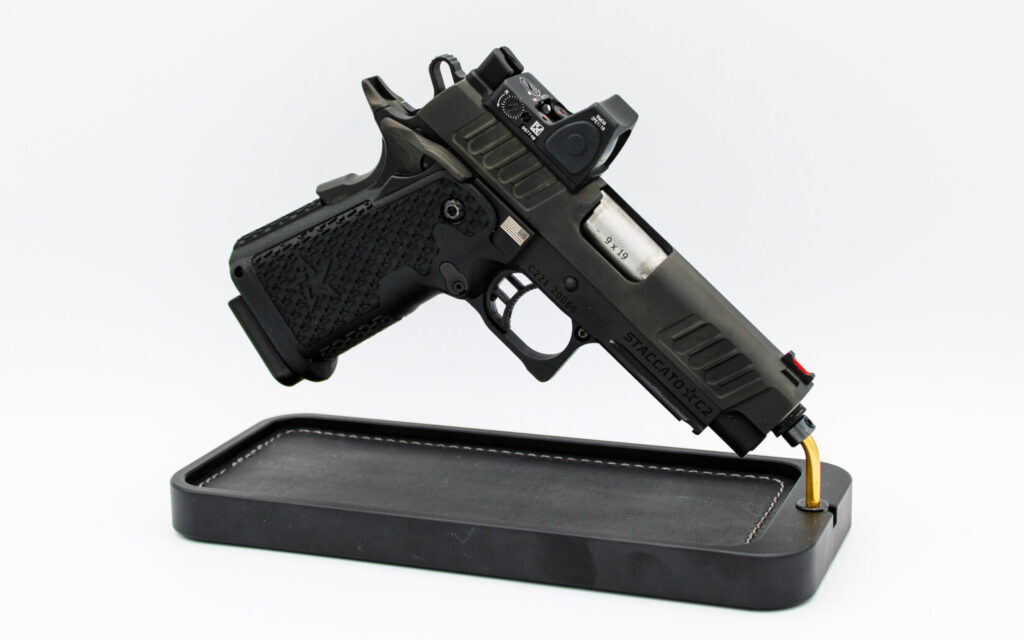
Currently, I’m testing a Staccato C2. This is a hybrid duty-and-carry pistol produced by the company. Size-wise, it’s almost identical to a Glock 19. But at $2500, it costs nearly five times as much as the polymer wonder pistol. But it’s been immensely popular. Why? Shootability.
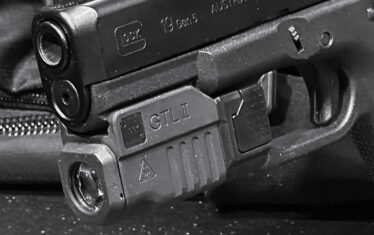
It preserves all the advantages of a high-quality 1911, such as the trigger, accuracy, and ergonomics. However, it also offers improved red-dot compatibility, greater capacity, and a light rail to meet modern requirements.
The variety and different versions make 2011 pistols exciting and versatile. Prices vary significantly, from Turkish imports beginning around $800 to custom models exceeding $10,000. The platform truly runs the gamut.
Now There Are Options
So what happens when a company makes something popular? Everyone copies. Just like when Smith & Wesson introduced the Shield nearly a decade and a half ago, the market responded with competition. The same is happening now. But unlike the Shield, the competition is coming from everywhere and across all price ranges.
The 2011 patent’s expiration in 2016 opened the competitive landscape and coincided with a surge in new gun owners and enthusiasts, many of whom were seeking affordable, performance-enhancing pistols.
Double-stack, 2011-style pistols under $1000 are coming from Turkey through companies like MAC/SDS Imports, while American companies such as Kimber and Springfield offer models in the $1000-1500 range.
Then there are companies like Fusion Firearms and Stealth Arms that produce examples using Glock-compatible magazines instead of the traditional (and expensive) 2011-style magazines. In fact, magazines are probably the biggest issue with this platform. You can now see Staccato in their new HD line, with models that accept Glock mags.
Then there’s Sig Sauer with the P211 series that also accepts P320 magazines, just like Oracle Arms is doing with the 2311. And that doesn’t even include a new wave of “semi-custom” manufacturers making 2011-style guns, such as Jacob Grey, Watchtower Firearms, and Masterpiece Arms — there are many more.
Then there’s the über-custom. The heirloom pieces. These are coming from places like Infinity, Nighthawk, and Cabot. Places where the prices can easily reach five digits.
What Does This All Mean?
Massad Ayoob wrote something I think is quite prophetic when discussing the 2011 platform. He said, “Strayer-Tripp coined the name ‘2011’ before the calendar had turned to that year. We’re now well past 2011, and the concept has held up and is thriving for good reason.”
People want something new and different. While 2011 pistols aren’t new, they are new to the broad audience. Staccato is the driving force behind this. We live in a Social Media culture where materialism and jealousy are real. We all want to be like the Jetsons. The 2011 genre is quite extensive, and it’s still surprising that it’s grown to where it is now.
In all my years in the industry, it’s rare to see one sector reach all levels. Yes, bolt-action rifles and sporting shotguns reach these levels, but this feels like an even narrower niche than those. And in 2026, it doesn’t seem like this is slowing down.
Over the course of the 2011 Project, I plan to discuss the various 2011-style pistols available. I’ll give you overviews, feature sets, and range sessions to help you identify the best one for you and your budget. While there are many reviews out there, and even comparisons (like from my friend Jake at the 1911 Syndicate), few have looked at them through the lens of “why.” But that’s exactly what I plan to do.