

Ruger has long maintained a sterling reputation for producing excellent sporting firearms. From rugged hunting rifles to versatile shotguns and their iconic line of .22 LR rimfires, the Ruger name has consistently been synonymous with American engineering excellence. However, for many shooters, the brand does not immediately bring to mind firearms that are purpose-built for the rigors of law enforcement and military service.
To find a semi-automatic handgun from Ruger designed specifically for that professional role, one must look back to 1985 and the birth of the P-series. The venerable Ruger P85 famously competed in the 1988 Joint Service Small Arms Program, standing its ground against storied offerings from Beretta and Sig Sauer.
While the P85 delivered a solid performance, it ultimately lost the contract to the Beretta 92. Since that era, Ruger’s presence in the “tactical” duty market remained relatively quiet—until now. While not specifically marketed as a “duty” gun, allow me to make my case.
Ruger’s Return to the Duty Arena
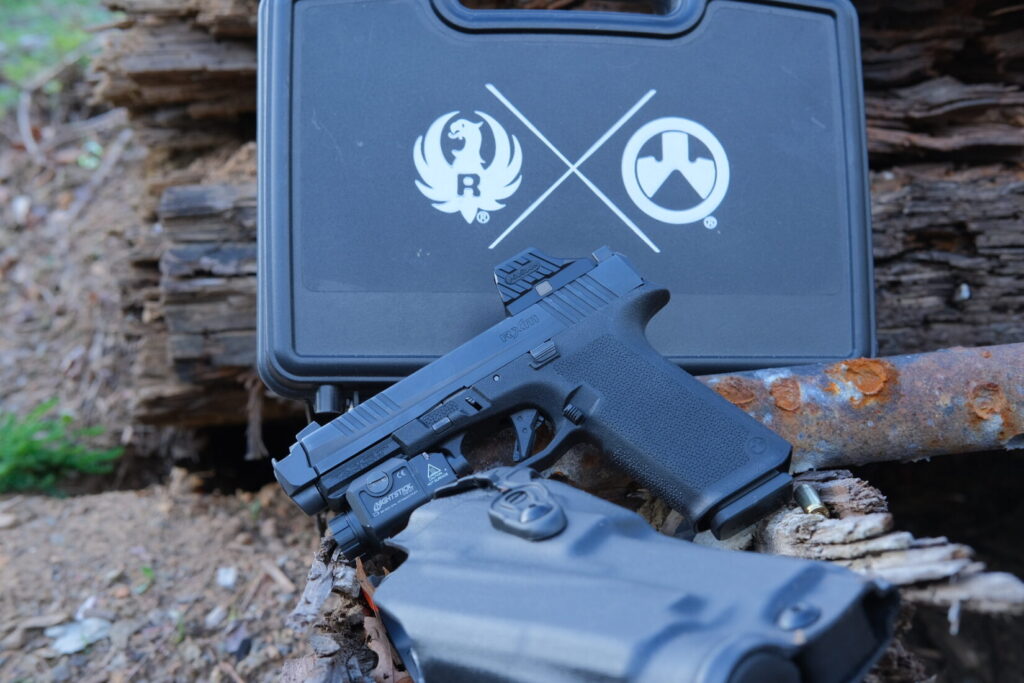
When Ruger partnered with Magpul to introduce the RXM pistol in 2024, it sent a significant ripple through the firearms industry.
Unlike the P85, the RXM was not developed for a specific military trial; instead, it was unleashed directly into an incredibly crowded and competitive civilian market. As early production samples reached the hands of “Guntubers” and industry influencers, the RXM was frequently pigeonholed with labels like “Glock Clone,” “Glock Killer,” or the ubiquitous “Good for the Money” budget option.
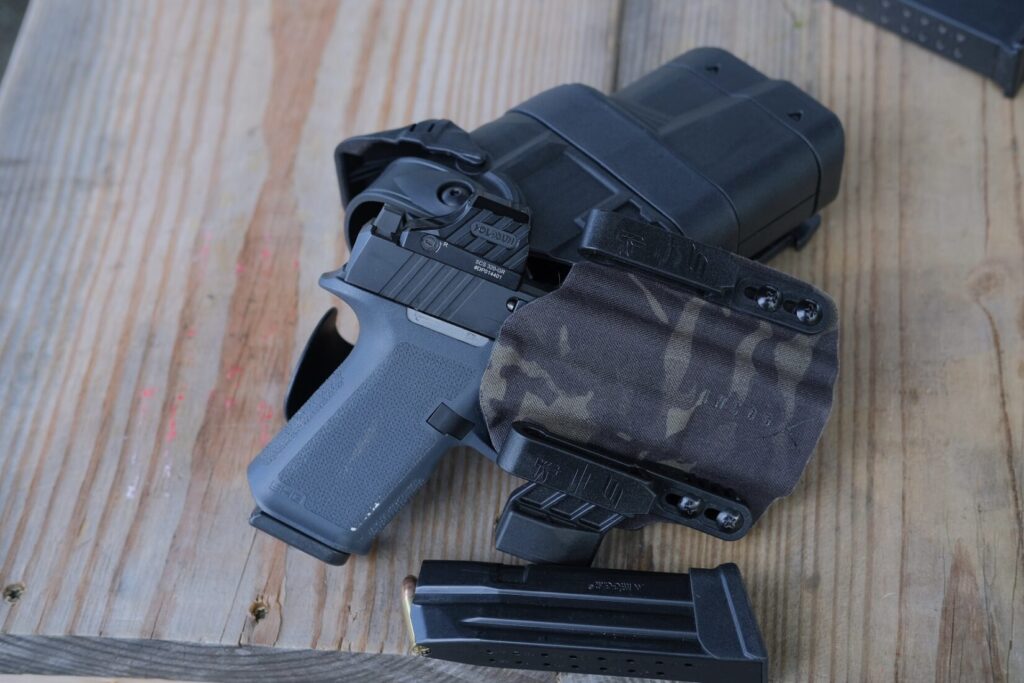
However, labeling the RXM as a mere clone is a disservice to its design. While heavily inspired by the Gen 3 Glock architecture, it is fundamentally a different beast.
The fire control system—while maintaining high compatibility with Gen 3 components—is housed within a removable, serialized chassis. The RXM chassis can be extracted and swapped into a variety of different grip modules, offering a level of modularity that the traditional Glock platform does not.
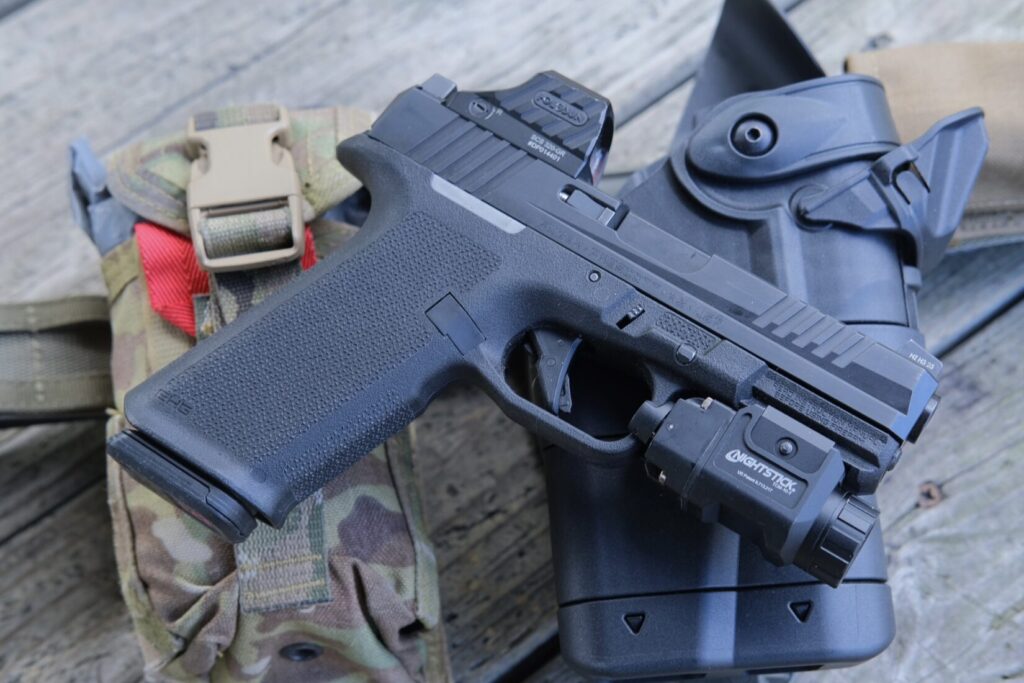
Rather than rehashing every technical specification that distinguishes the RXM in a sea of striker-fired options, I recommend reading the deep-dive article by Jason Mosher for a full breakdown of the mechanics of the RXM.
Instead, I want to focus on the practical, real-world performance of this platform from the perspective of a career law enforcement officer.
Overcoming the Glock “Training Scar”: a Professional’s Perspective
My journey with polymer pistols began at the start of my police career when I was issued a Gen 2 Glock 17. I fired thousands of rounds through that sidearm, and it served me faithfully. However, four years later, a move to a different department transitioned me into the Sig Sauer ecosystem, where I remained for the next 27 years.
Nearly three decades of shooting Sigs left me with what I call a “training scar” regarding the Glock’s specific grip angle. Because the natural point of aim differs so significantly between the two brands, I rarely chose to shoot Glocks.
When the RXM was released featuring a more relaxed, natural grip angle, my interest was immediately piqued. When I spotted one on sale, the price point was too compelling to ignore. I pulled the trigger and had it shipped to my FFL.
Since that purchase, I have put well over 4,000 rounds through my RXM. I have tested every grip frame offered by Magpul and experimented with a wide array of aftermarket accessories. My objective was twofold: to determine the reliability of the stock firearm and to discover how best to optimize the platform for professional use.
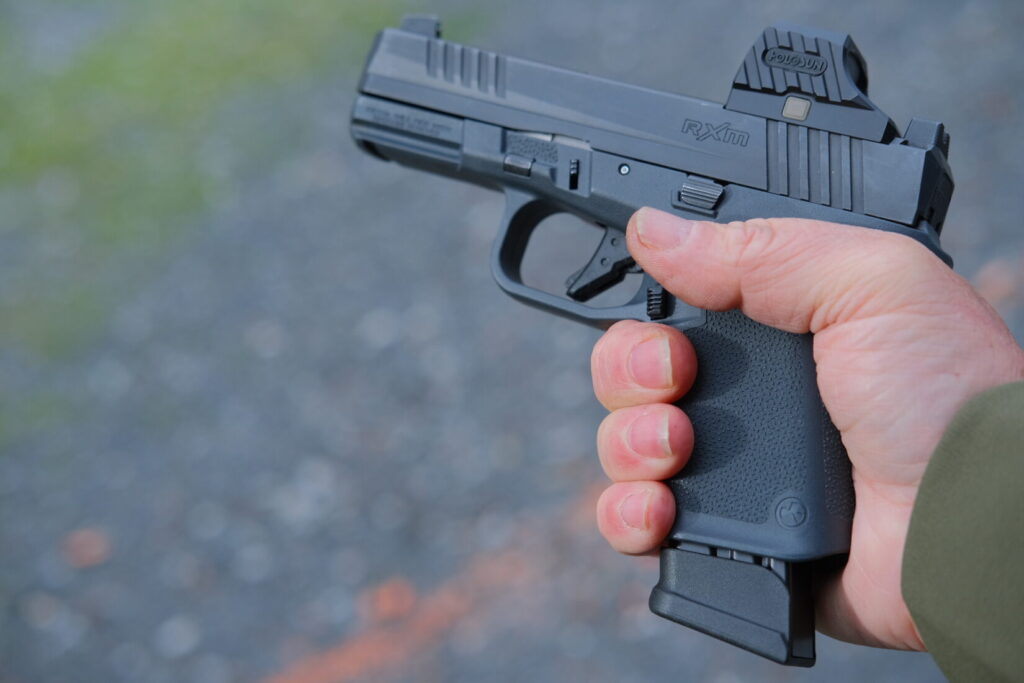
Reliability: The Gold Standard
This will be a brief section, as there is little to critique. Aside from a few predictable hiccups when testing experimental aftermarket parts, the RXM has been nearly 100% reliable. I have fed it a steady diet of PMC Bronze 115gr FMJ, Magtech 115gr FMJ, and my preferred duty load, Federal Tactical 124gr +P HST.
Whether using Magpul, OEM Glock, KCI, or Mec-Gar magazines, the RXM has proven itself to be “dead nuts” reliable. In a duty-capable handgun, this is the only metric that truly matters.
The Trigger: A Break-In Story
Out of the box, the RXM trigger was admittedly gritty. While the weight was acceptable—breaking between 4 and 5 lbs consistently—the take-up and reset weren’t particularly pleasant. I considered installing an aftermarket trigger immediately, but I decided instead to perform what I call the “Gunfighter’s Trigger Job.”
After 1,000 rounds of live fire and at least as many dry-fire repetitions, that initial grit completely vanished. The components polished themselves through use, resulting in a smooth, predictable break.
When I compare the RXM trigger side-by-side with my Gen 5 Glock 45, I can feel a difference in character, but neither is objectively “better.” Once the timer is running and lead is flying, those subtle differences disappear. While I may experiment with a performance trigger later, it is certainly not a necessity and perhaps not advisable for a defensive tool.
Optics Mounting: Simplicity and Strength
The RXM features an impressively versatile optics mounting system. Upon delivery, I mounted a Holosun SCS 320 using the DeltaPoint Pro (DPP) footprint configuration. The installation was seamless, and the optic has not budged through thousands of rounds. Because the SCS 320 sits so low, it allows for a perfect co-witness with the stock iron sights.
The fact that the system is configurable for various footprints without the need for finicky adapter plates is a massive win for Ruger.
The Grip Modules: Finding the Perfect Fit
The modular nature of the RXM is its greatest strength. I spent considerable time testing the three primary Magpul offerings:
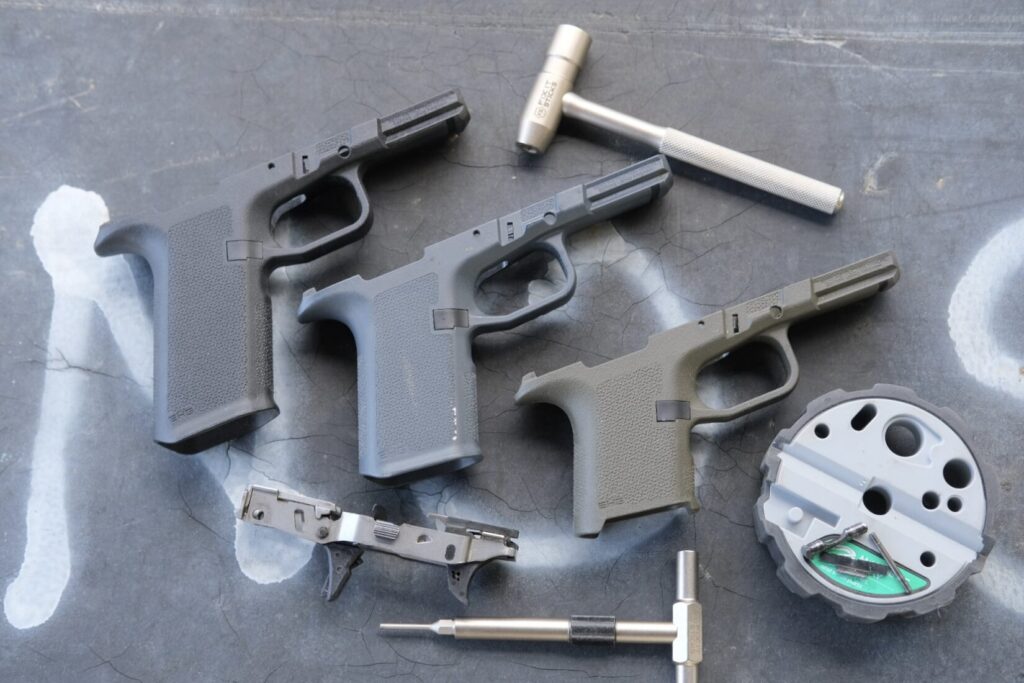
The Compact Frame: This was the launch standard, roughly equivalent to a Glock 19. I have historically struggled with the G19 because the grip is just slightly too short for my hands. However, the RXM Compact frame fits me much better. The combination of a more natural angle, a deeper trigger guard undercut, and a mildly flared magwell locks my hand into place comfortably.
The Full-Size Frame: When Magpul released the full-size module, I ordered it immediately. A compact slide mated to a full-size grip has been my favorite handgun configuration for years (the “Commander” concept). Swapping the chassis takes about five minutes once you learn the process. This configuration is, in my opinion, the sweet spot for the RXM. It balances perfectly, and I would not hesitate to carry this setup on duty.
The Subcompact Frame: This mates the compact slide to a “Glock 26” length grip. While the 10-round flush magazines are great for concealment, they leave my pinky dangling. Using 12-round magazines provides a full grip but makes magazine changes clunky. While it functioned flawlessly, the balance felt “off” to me. It’s an excellent option for those who prioritize deep concealment, but for my needs, the Compact frame remains the better compromise.
I am currently awaiting the arrival of the Mischief Machine aluminum grip frame. This “Commander” size module features an aggressive grip texture, a beaver tail, and a Gen 5-style magazine release. Most interestingly, it allows the use of Gen 5 slides on the RXM chassis with a simple recoil spring adaptor bushing. This level of cross-platform modularity is incredibly exciting for the future of the RXM.
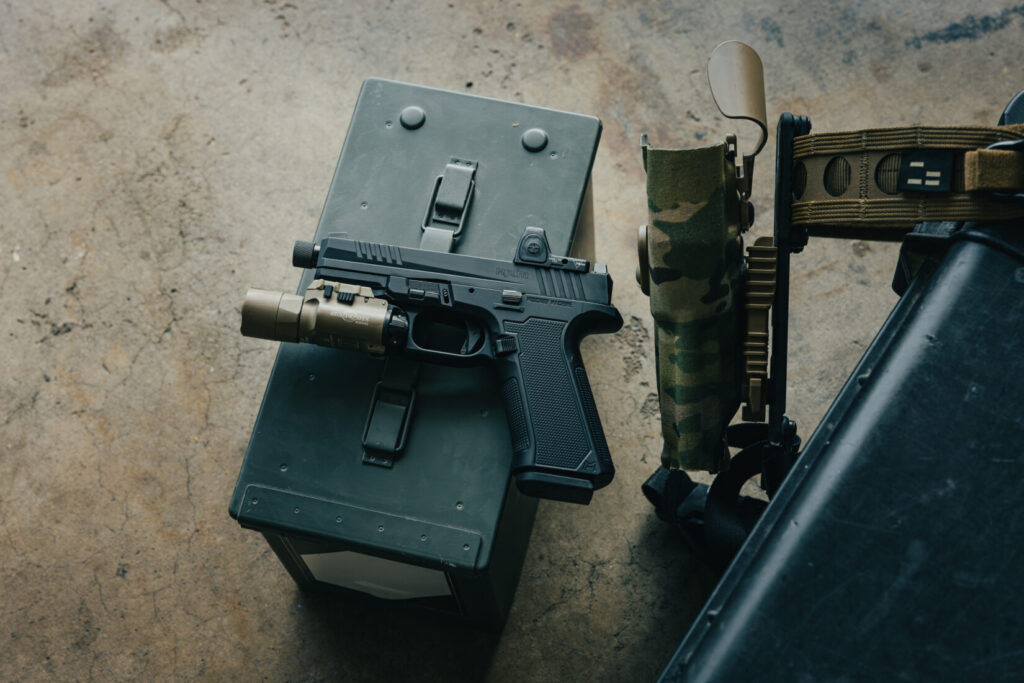
Enhancing the Cycle: Recoil and Barrels
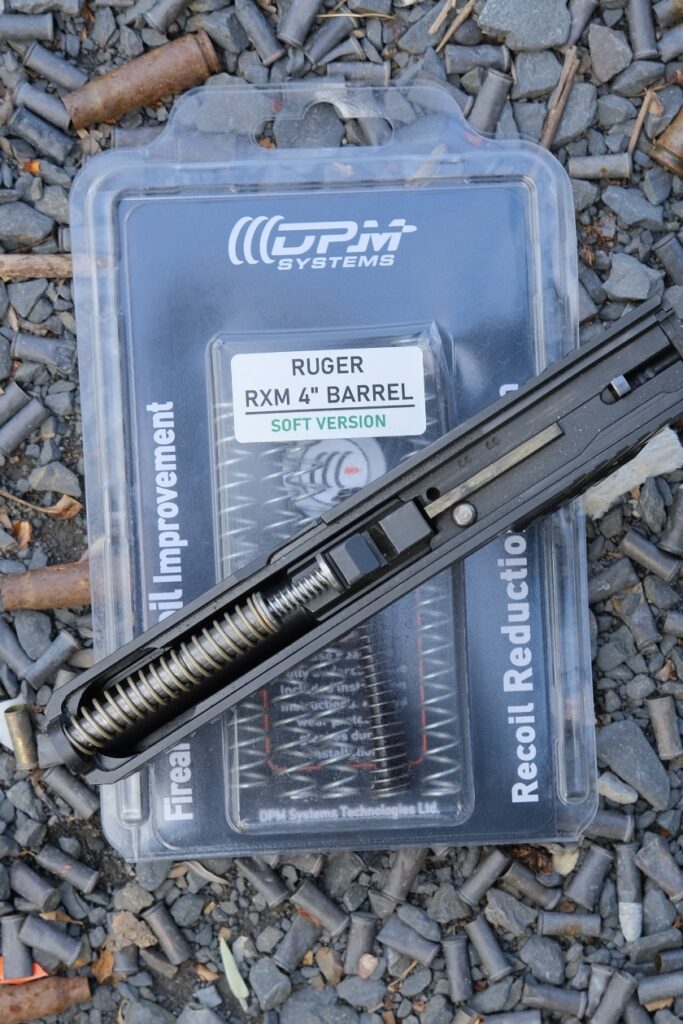
The stock RXM comes with a captive, polymer, Gen 3-compatible recoil system. It is functional and inexpensive, but I wanted to see if I could flatten the shooting experience. I installed a DPM Systems multi-spring recoil guide rod. This mechanical buffer system noticeably softens the recoil impulse and slightly reduces muzzle climb. It isn’t as dramatic as a compensator, but the difference in “feel” is undeniable.
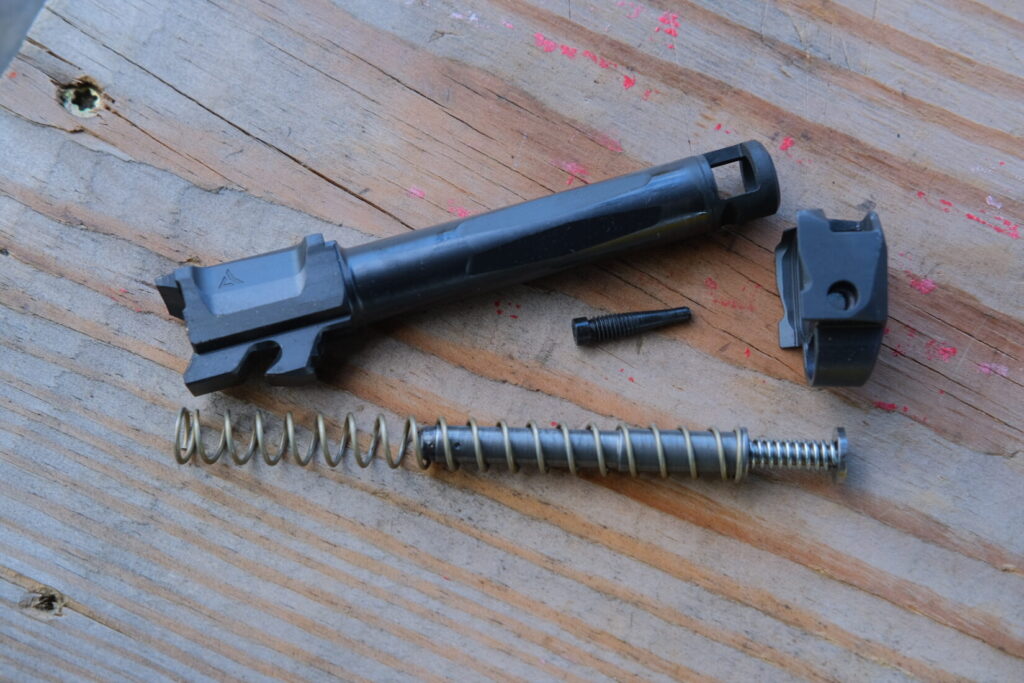
Regarding accuracy, the factory barrel provided “good” results, but I wanted “stellar.” I swapped in a Ballistic Advantage Gen 3 drop-in barrel. After a short break-in period, the RXM maintained its perfect reliability while delivering significantly tighter groups across all ammunition types.
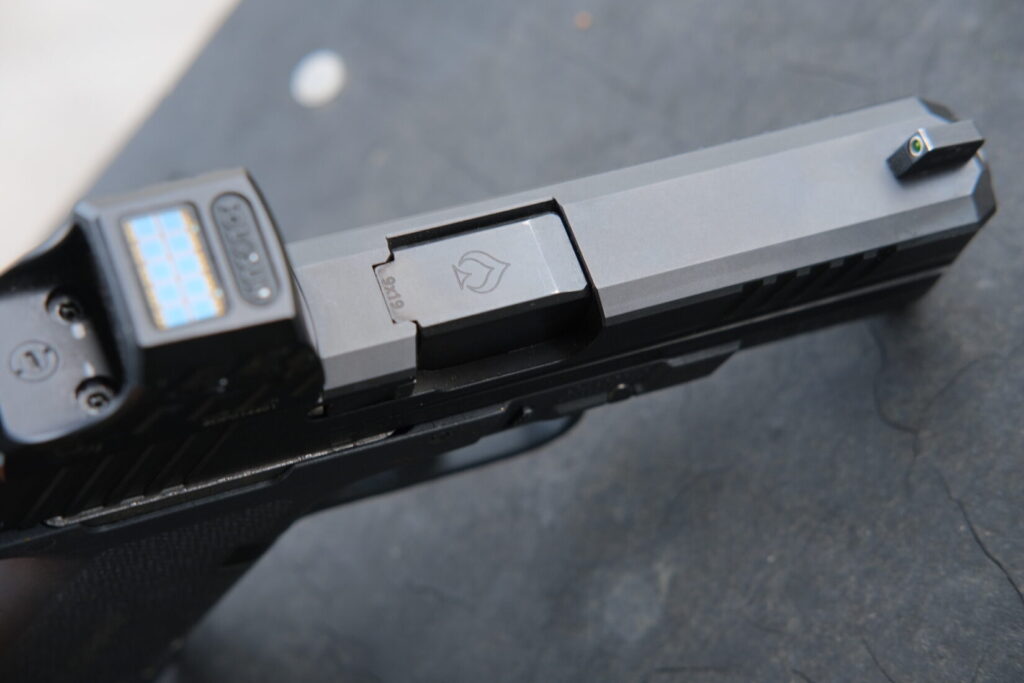
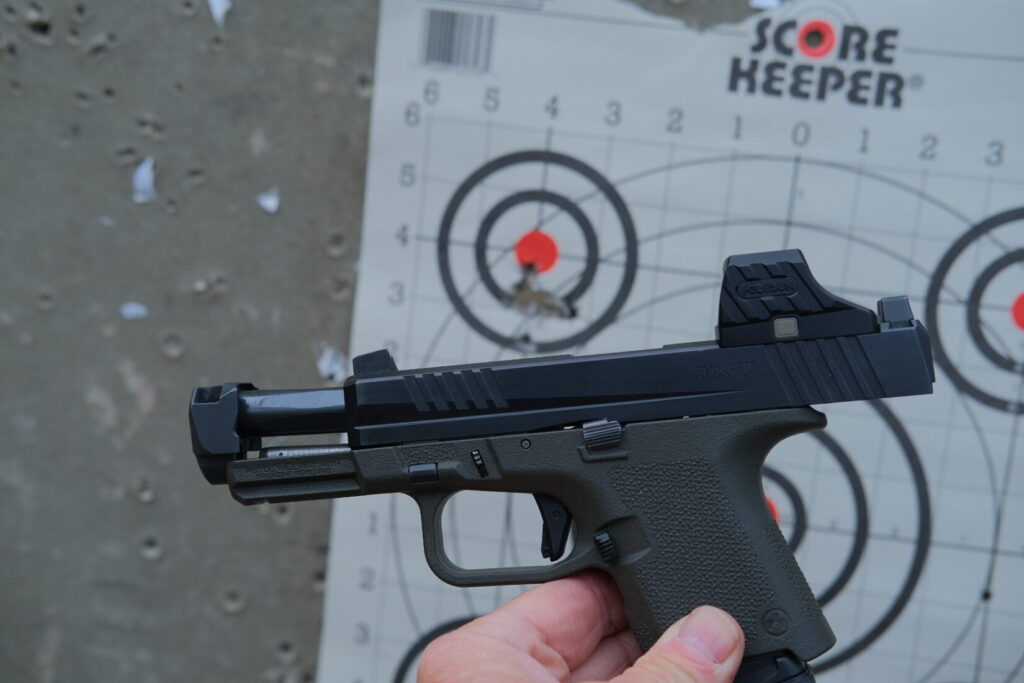
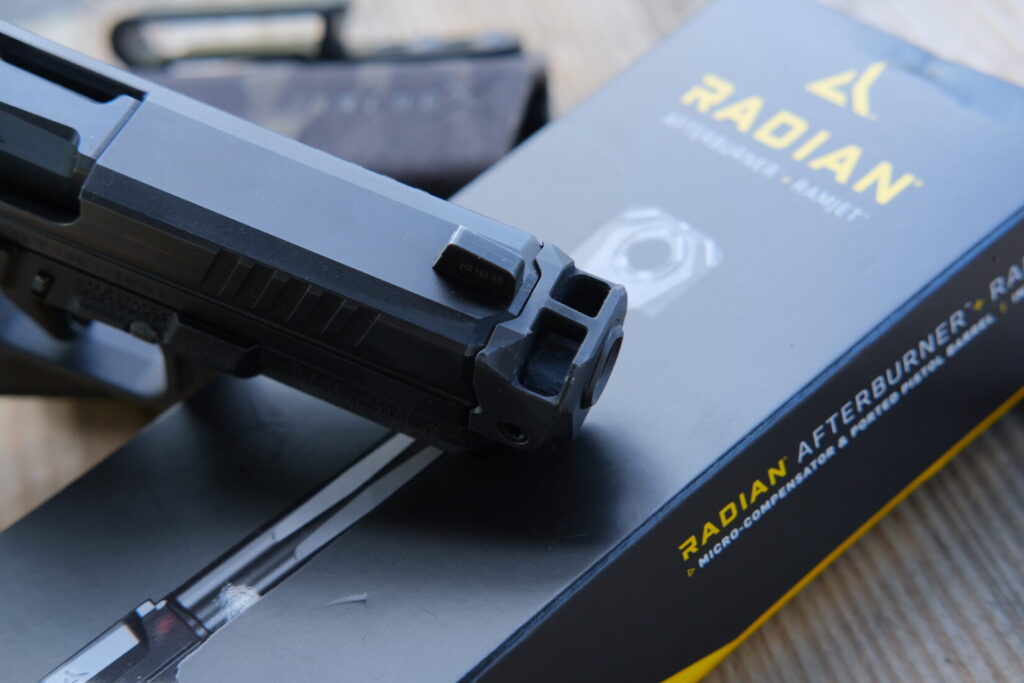
The real game-changer, however, was the Radian Weapons Ramjet and Afterburner compensator system. Though it brings the pistol to G17 length and carries a premium price tag, the performance is transformative.
When paired with the DPM “soft” springs, the RXM shoots incredibly flat—so flat, in fact, that I had to retrain myself not to overcompensate for muzzle rise. My follow-up shots are now faster and more precise than ever before, and switching back to a handgun without the Radian makes me wistful for my RXM!
Holster Compatibility: A Smooth Transition
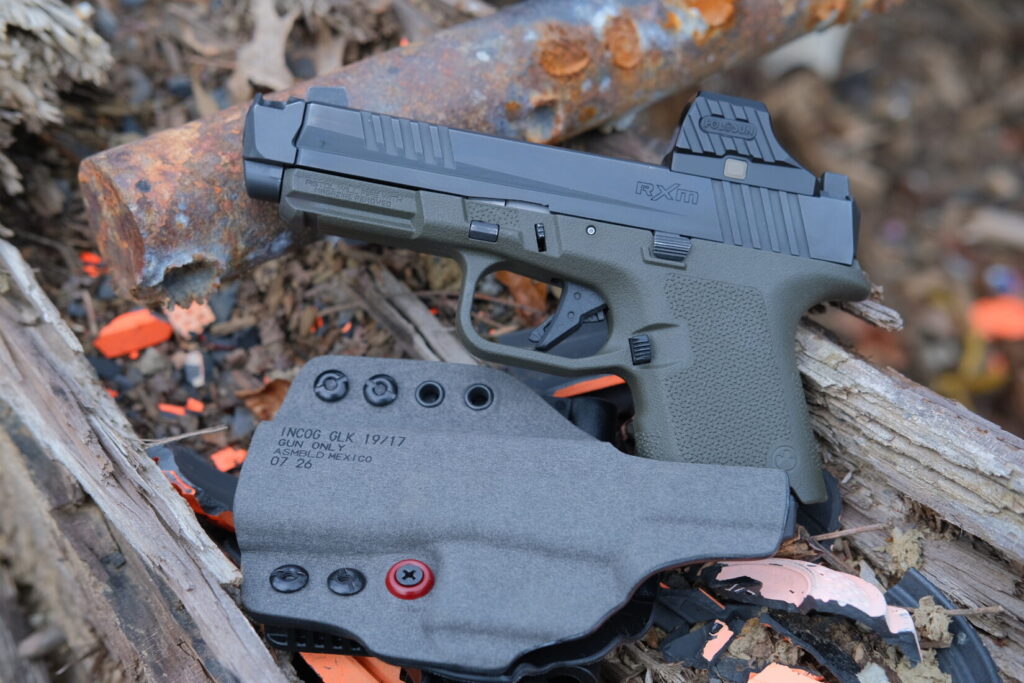
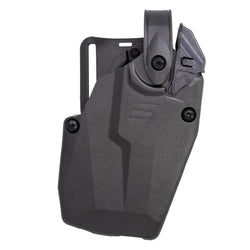
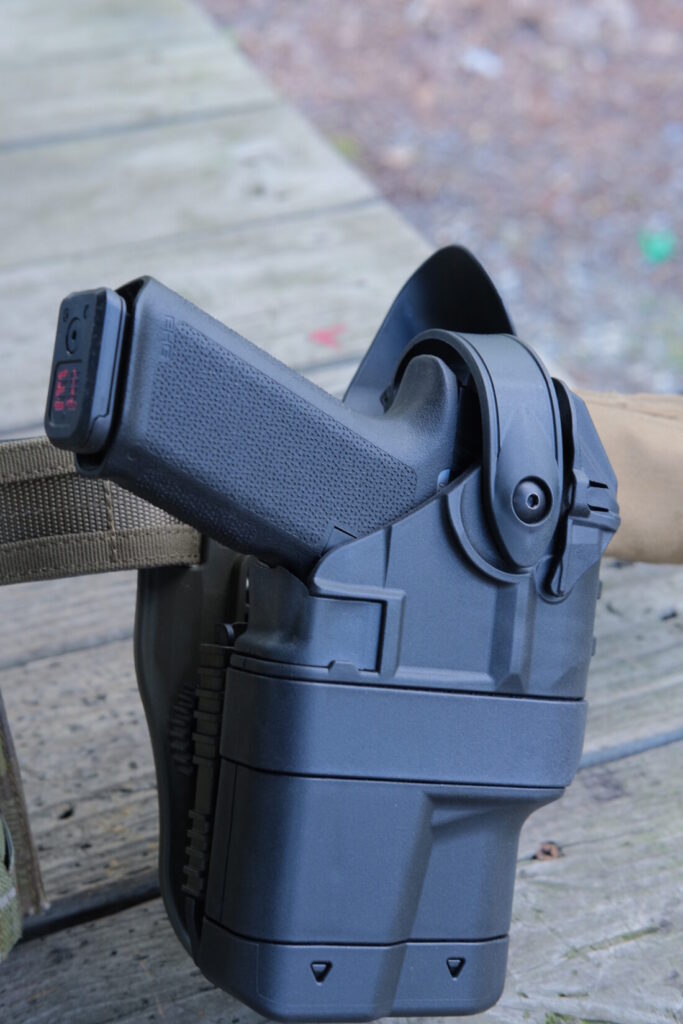
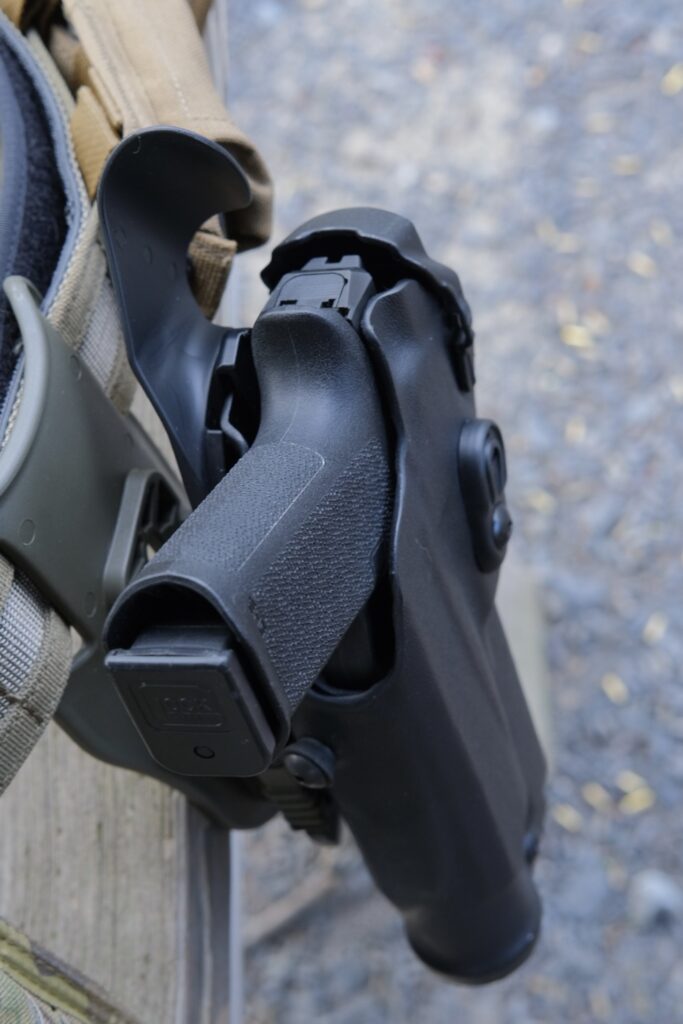
One of the biggest hurdles for new firearm platforms is holster support. Fortunately, the RXM’s dimensions allow it to fit most Glock holsters. I have successfully used it with the Safariland Incog X and duty-rated rigs like the Safariland Ballast and the Safariland 6390.
Final Conclusions
The Ruger RXM is an outstanding firearm that leverages the vast Gen 3 ecosystem while introducing modern modularity that is simply unavailable elsewhere in the Glock ecosystem.
Out of the box, it is a rugged, reliable, and capable tool. However, for the enthusiast or professional, it serves as a world-class foundation for customization.
For an officer who must purchase their own duty gun, the RXM is a solid option. The price is more than competitive, it’s made by a well-respected American gun manufacturer, and can be individually tailored to a wide variety of shooter needs.
If you are looking to buy an RXM on a budget, my advice is simple: choose the grip frame that fits your hand best and add a DPM recoil system.
If you want to “turbocharge” the platform, invest in the Radian Ramjet. Ruger has finally returned to the duty world, and they have done so with a pistol that isn’t just “good for the money”—it’s just plain excellent.