

Choosing a shotgun is easy, but there are plenty of bad options. Maybe it’s because I pay more attention to shotguns, but it feels like there is a lot of snake oil in the shotgun world.
There are a lot of weird, novelty guns that seem great, but often drop the ball. I’m not a fudd or a luddite. I like to see new and innovative designs, especially among shotguns, but just because something is new and innovative doesn’t mean it’s great.
Choosing a Gun
To make this simple, my recommendation for a defensive shotgun will not be exotic. It’s going to be a simple, traditional shotgun layout: a traditional stock and a tubular magazine in a standard configuration. I’m talking about the 590s and 870s, A300s, 1301s, and 940s, and so on.
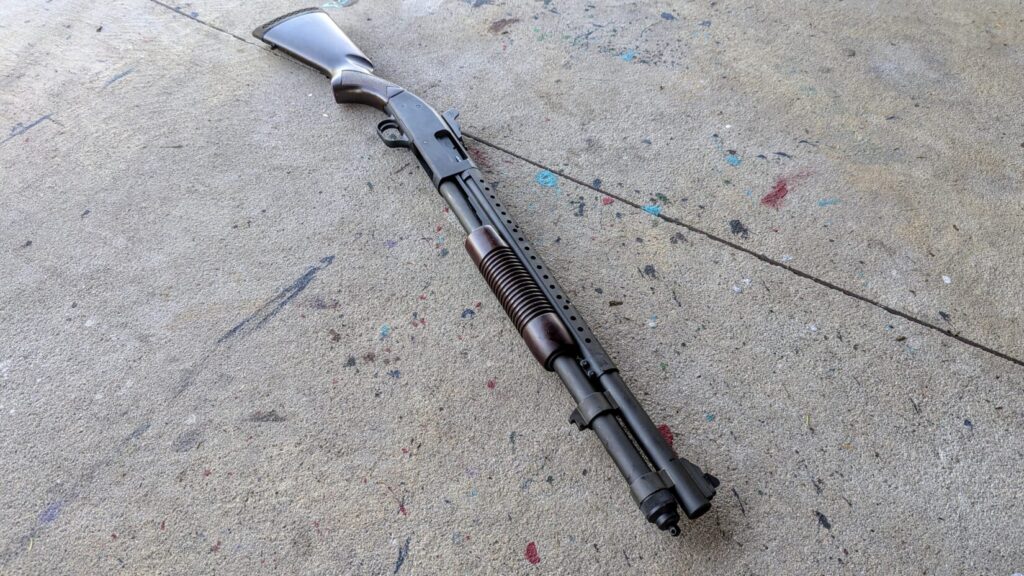
These guns are proven platforms that work. Would I like to see improvements to this traditional layout? For sure, but for the time being, they are the way to go. They offer you an expansive aftermarket, numerous models, and proven performance.
For the sake of argument, what exactly are the problems with choosing less-than-standard platforms?
Bullpups
Bullpups are much shorter than standard shotguns, so they seem to go hand in hand. Small guns work better in close quarters. Placing the action behind the trigger creates a super compact gun, which removes some of the downsides of using a shotgun, like its inherently long design.
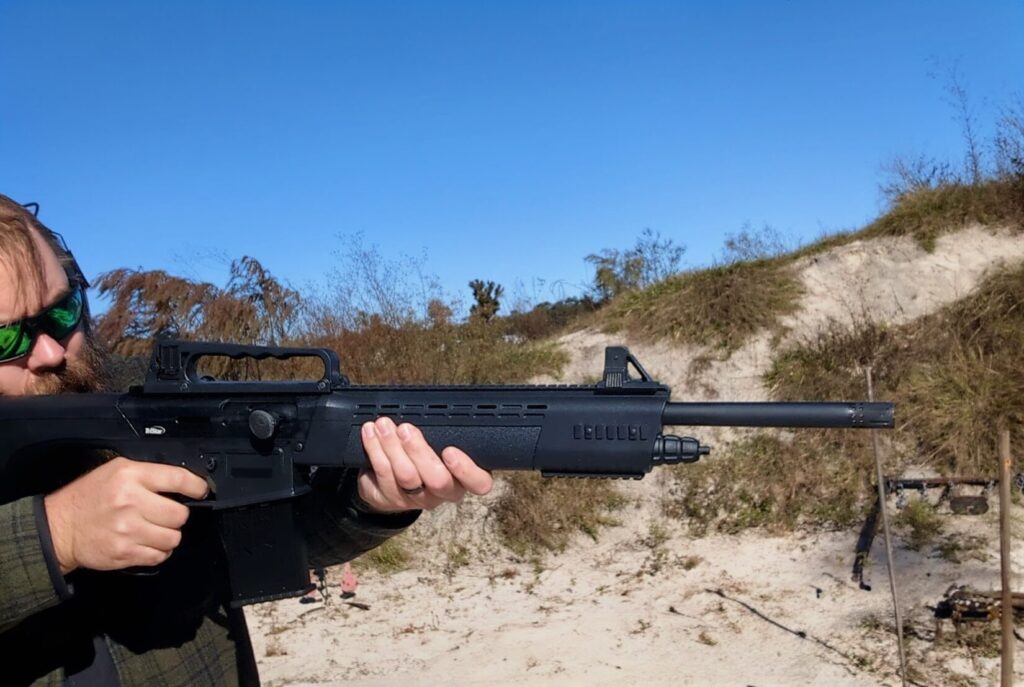
The main problem with choosing bullpup shotguns is that most of them suck. Since so many are Turkish abominations, that’s not a surprise. Guns like the KS7 and KSG are okay, but do a simple search of KS7 or KSG problems, and you’ll find a ton of them.
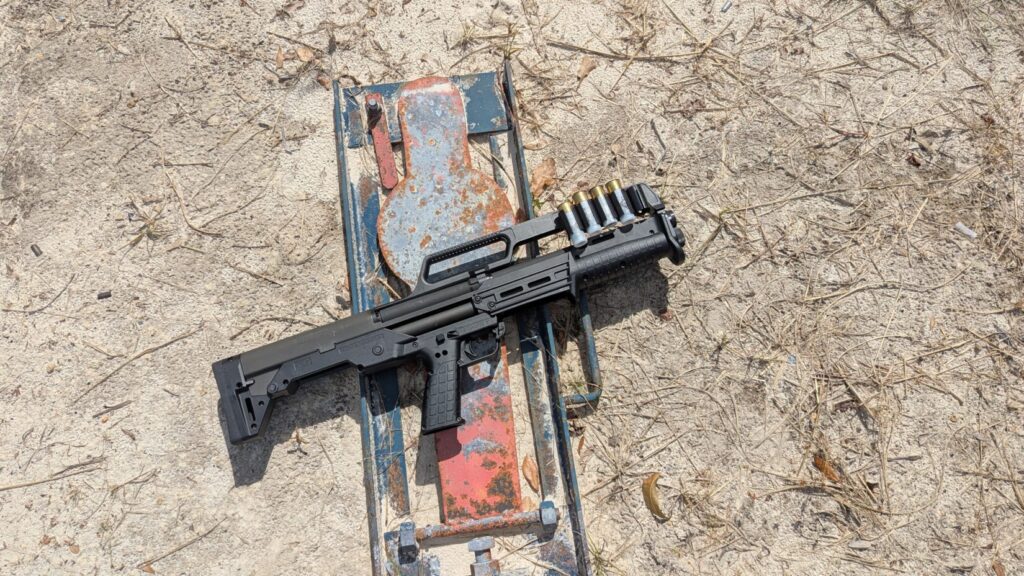
I own a KS7, and I like it a lot. Mine seems to work pretty darn well, minus the carry handle breaking. However, with all the other problems out there, it’s not one I recommend. I also have a KSG .410, which is a ton of fun, but again, not one I’d suggest for home defense due to some reliability issues.
If you absolutely, positively need a bullpup shotgun, stick to the IWI TS12 or the S&W M&P 12. Yet, even these guns have their quirks and oddities.
Even a good bullpup shotgun is going to have some issues. One of the biggest is felt recoil. The action is right by your shoulder, which gives the recoil less of a buffer before it hits your shoulder.
On bullpups, your hand sits close to the barrel, and the forward action of pumping the gun can result in your hand drifting in front of the barrel—resulting in what’s affectionately called “KSG hand.” You need a strong vertical grip, like the S&W M&P 12, or some form of strap to prevent this.
Additionally, swapping the length of pull on these guns is unlikely. They are usually fixed, and you’ll have to deal with them and make them work. Although with Keltec, the LOP is fairly short.
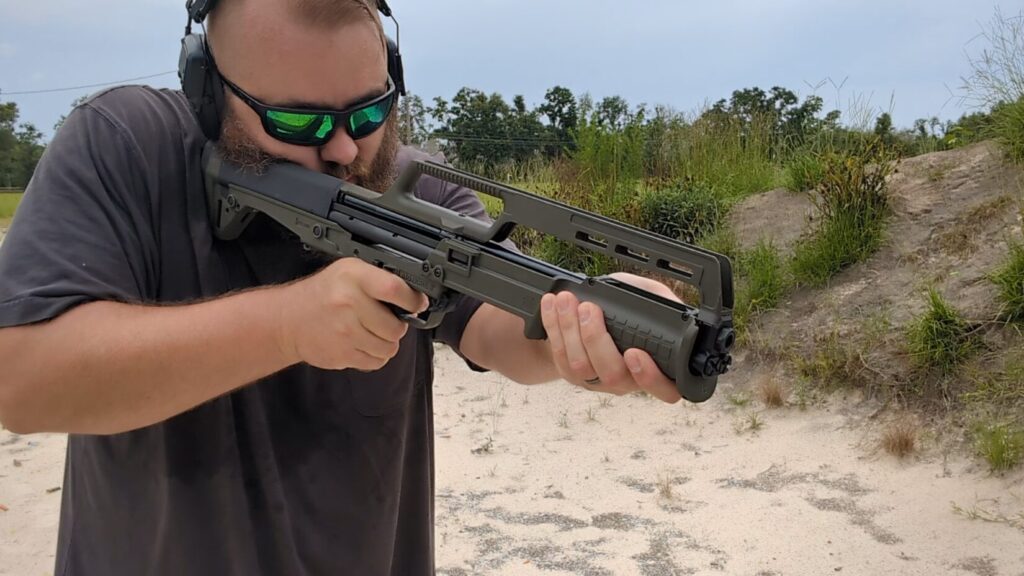
Any kind of sighting system will sit a bit higher than average, leading to height-over-bore issues. This might not be a big deal depending on your buckshot, but I personally like my sights sitting low on my shotguns.
Outside of the TS12, reloading these guns can be difficult, but I don’t think that’s as big of an issue because it’s unlikely you’ll need to reload in a defensive situation with a shotgun.
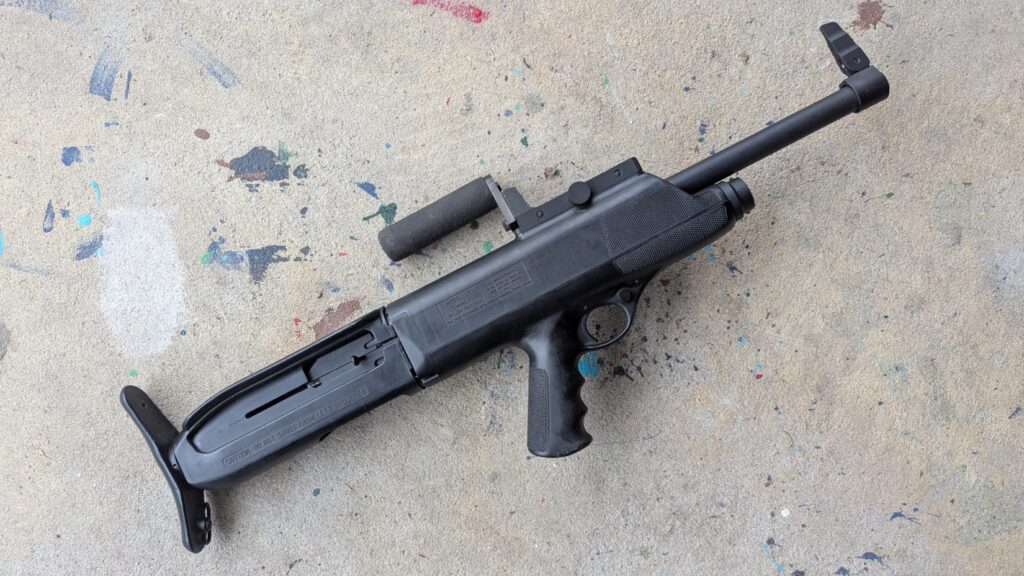
Fixing malfunctions is also a hassle because of the ejection port’s position. It’s tough to free the stuck shells. I’ve had to whip out the multitool to fix malfunctions in my KSG.
The price of some of these guns approaches that of decent-quality semi-auto shotguns, so again, it’s tough to recommend a bullpup over a more proven option. In my experience, I’m faster and more accurate with a traditional shotgun layout.
Magazine-Fed Shotguns
The shotgun’s slow-to-reload design seems easily fixed by magazine-fed guns, right? Sure, it’s an option, and outside the slew of Turkish abominations, there are good magazine-fed shotguns. Choosing the Mossberg 590M series is solid, the Genesis 12 guns are rock solid and tons of fun, and the Iron Horse Sentry 12 is a reliable shotgun.
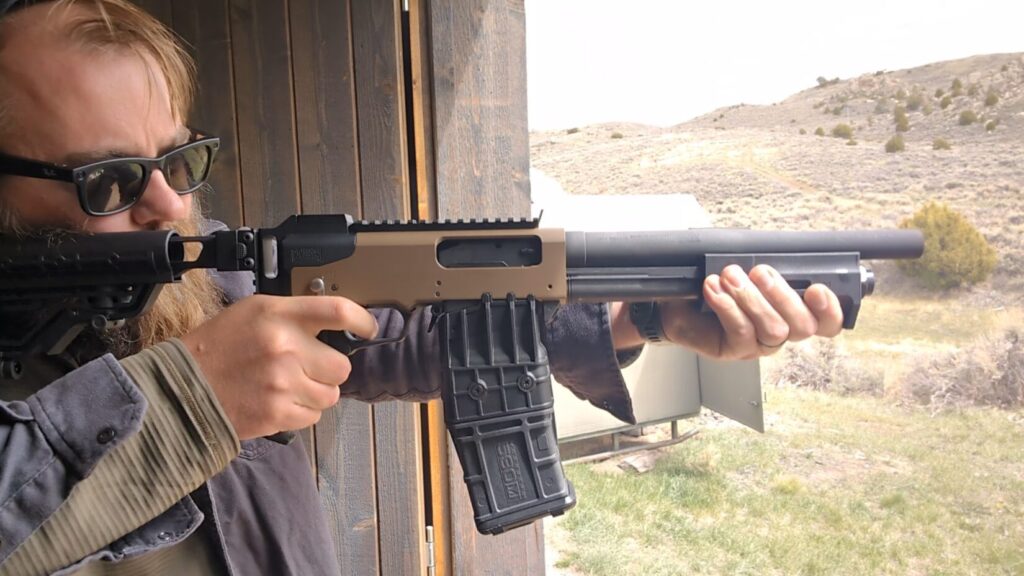
The primary problem with choosing magazine-fed shotguns is shotgun shells. They are made of a fairly flexible polymer. When left in a magazine for an extended period of time, they begin to deform. They flatten out at the bottom due to pressure from the magazine spring and the shells above and below them.
This, of course, creates feeding problems.
Shotgun shells, in general, are large and bulky, which necessitates large and bulky magazines. The good magazines are expensive and unwieldy. Even reliable, not-so-expensive magazines, like the Sentry 12 mags, only hold eight or so rounds.
“Firearms”
Certain firearms are a subset of firearms that closely resemble shotguns. Legally, they are not shotguns, but firearms since they have never had a stock. This includes the Shockwave, the Aftershock, the Mafteah, and similar pistol-grip-only guns. They come in 12-gauge, 20-gauge, and .410-bore.
These are pistol-grip-only guns, with short barrels and short overall lengths that often resemble a fairly standard shotgun. These aren’t inherently bad, but they have a very steep learning curve. They are easier to use than more traditional pistol-grip shotguns, but still difficult to use compared to a shoulder-fired firearm.
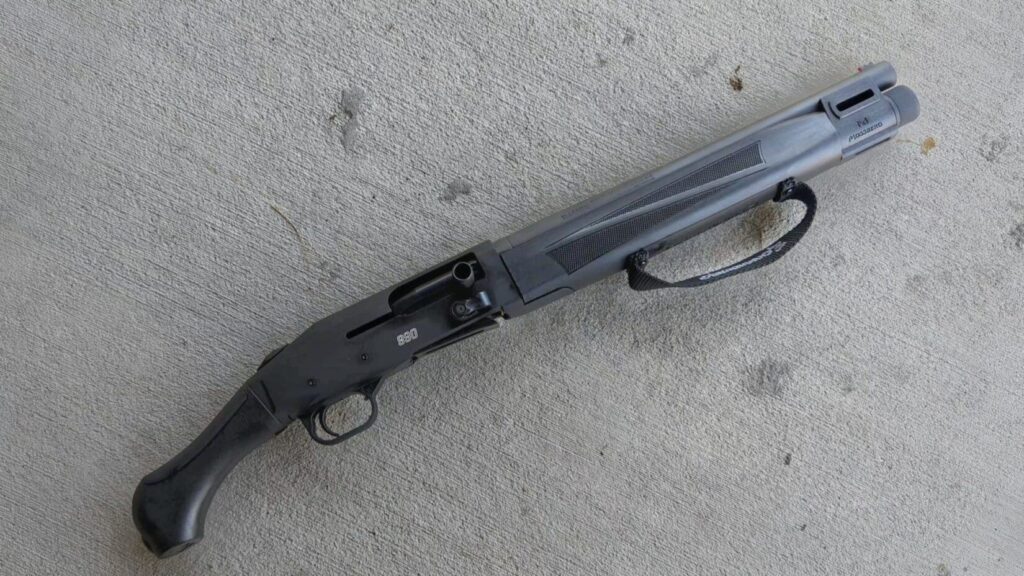
The lack of a stock requires a steep learning curve to control the gun’s recoil and shoot it effectively. The gun’s strength lies in its inherent maneuverability.
The time necessary to learn to use one of these shotguns effectively might be better spent with a standard shotgun for most people. The time and ammo required to learn these guns are high, and the skill becomes perishable, requiring a lot of practice to maintain.
If you want to go this route, be ready for a lot of dedicated practice.
Other Novelty Shotguns
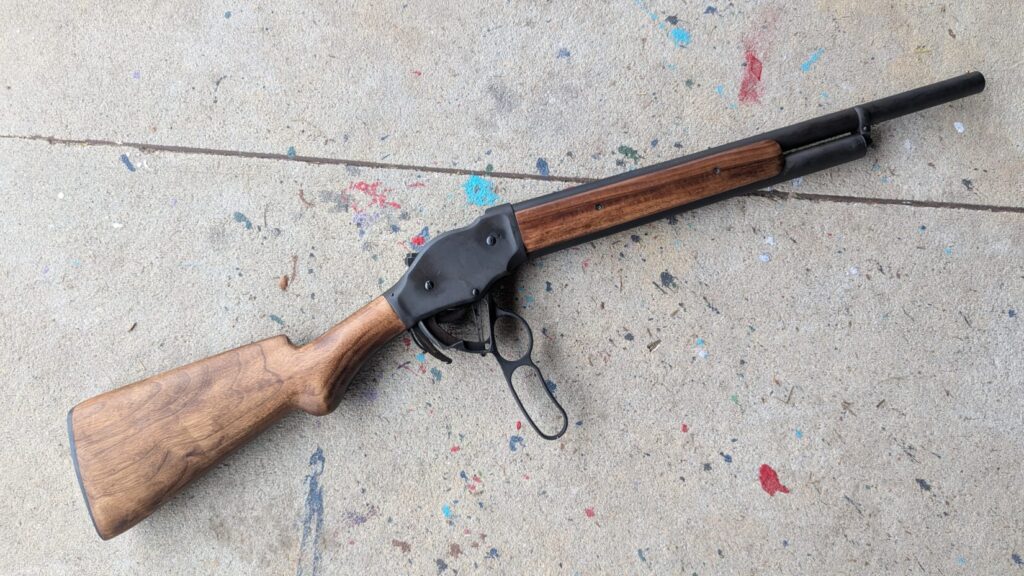
Lever actions, tactical double barrels, and similar, somewhat odd guns don’t get my recommendation.
There are too many varying levels of quality control, odd manuals of arms, tough accessorization, and no identifiable benefit. I’m sure there are exceptions, but in general, stick to a more traditional pump or semi-auto shotgun.
But Wait, There’s More
At the end of the day, what’s worked in the past still works now. I’m all about new shotguns and new technology, but I’ve yet to see anything dethrone the classics. In the next article in this series, we will discuss how to choose whether a pump or a semi-auto is right for you.