
The gun matters, the training matters, but what kind of projectile you’re using also matters. Today, we are going to break down the various types of projectiles commonly used in shotguns. This is more than a JHP vs FMJ argument, but a discussion regarding several dynamically different projectile types.
Let’s kick a hornet’s nest. We talked about cartridge size options, but what’s in the cartridge matters. In terms of projectiles, we have birdshot, slugs, novelty rounds, and buckshot. If you just want to know what’s going to work best for home defense, it’s buckshot.
If you want to know why, let’s keep going.
Why Not Slugs?
A slug is a very capable projectile. It’s solid, often quite large, and capable of creating a fairly big mess. Slugs will most certainly stop an intruder. There are different types of slugs out there, and a lot of the more common options will tend to overpenetrate a threat and keep going. They extend your effective range, but that’s not a big issue in a home defense situation.
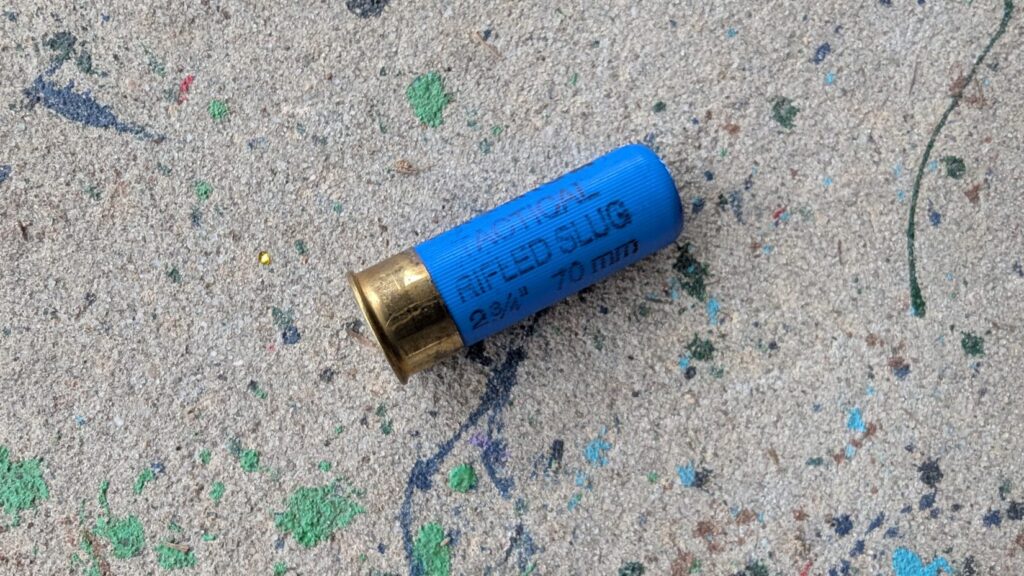
There are tactical slugs designed with hollow points or segmenting designs. I suggest a low-recoil slug of this variety if that’s the route you want to take. Purpose-built slugs are less likely to overpenetrate a threat.
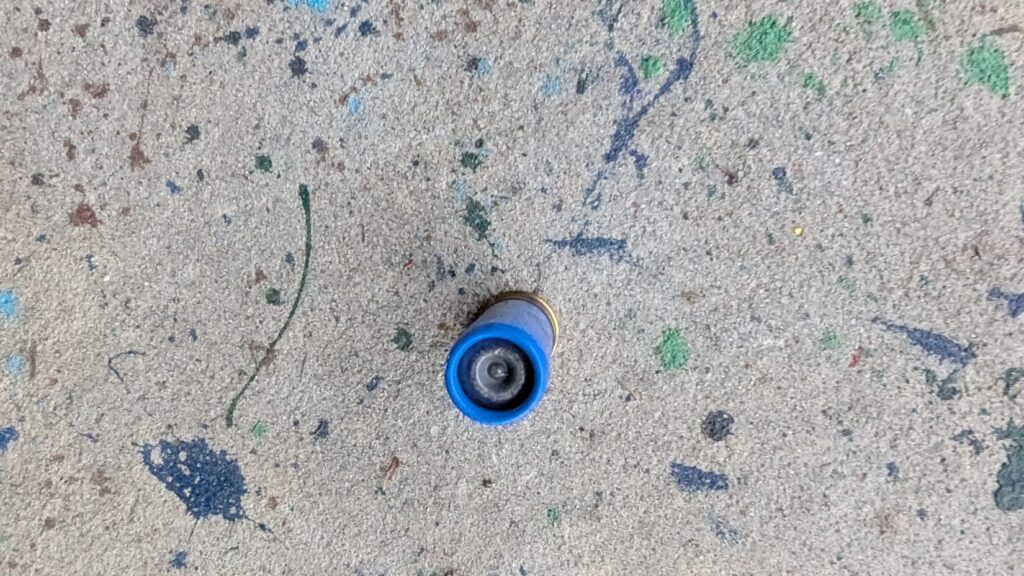
My main issue with slugs comes down to the fact that I’m using a shotgun to fire a single projectile per trigger pull. Rifles do the same thing, but better, often with less recoil, and a decent capacity. I’m trading a divided payload and giving up some of the benefit of the shotgun, which is the projectile spread inside the body that increases my chance to hit something vital.
Why Not Birdshot?
Oh boy, I promise I’m not engagement farming, but whenever you mention birdshot not being appropriate for home defense, you can max out a comments section. Can birdshot be lethal? Yes, blanks can be lethal too, but we don’t recommend them for home defense.
The problem with birdshot is that its projectiles do not penetrate very deeply. If they don’t penetrate deeply, they aren’t providing the terminal performance needed to stop a threat.
The most common explanation folks give for using birdshot is that it won’t penetrate interior walls as much. To which I have to say, if it won’t penetrate drywall that well, it won’t penetrate bad guys that well either.
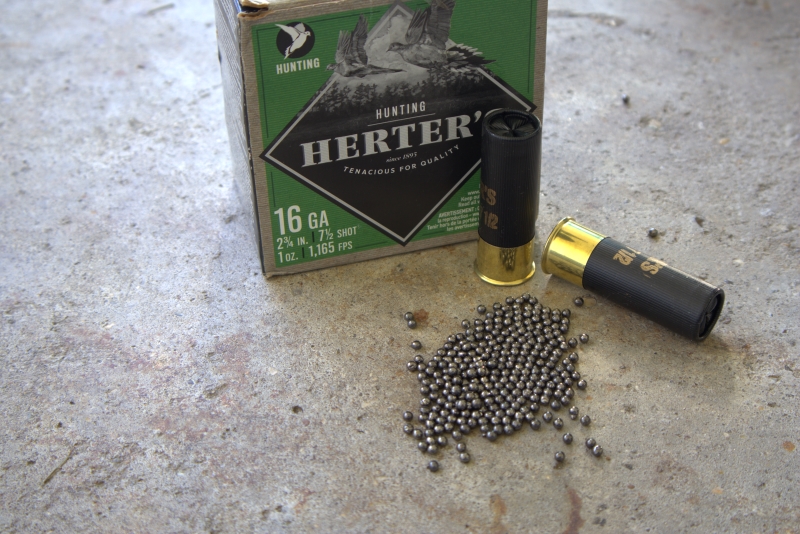
A lot of folks talk about aiming for the face, or that at contact distance it will ‘cut someone in half.’ That’s a great plan, until you remember the bad guy in the fight also gets a say in how the fight’s conducted. Everyone has a plan until they get punched in the face.
Birdshot doesn’t give us the terminal ballistics necessary to stop a threat without resorting to some preplanned, imaginary gunfight. If you have the ability to preplan the gunfight, Delta Force could really use you.
There is a video showing a bad guy on a college campus shooting a young lady at close range with birdshot. She gets hit, seems stunned, and walks away. Luckily, shortly after, the shooter is tackled and his attack is foiled.
I’ve heard the arguments that not all birdshot is the same. That’s true, there are bigger loads for bigger birds. They still don’t reach deep enough to hit the vitals, not even tungsten loads from Hevi meet the FBI Standard.
When we get into those big bird loads, we get into cartridges that recoil more than dedicated defensive buckshot. More recoil, more money, and less overall capability.
Hell, Dick Cheney shot a guy twice in the face and neck with birdshot, and the guy later apologized to Dick Cheney.
Why Not Novelty Rounds?
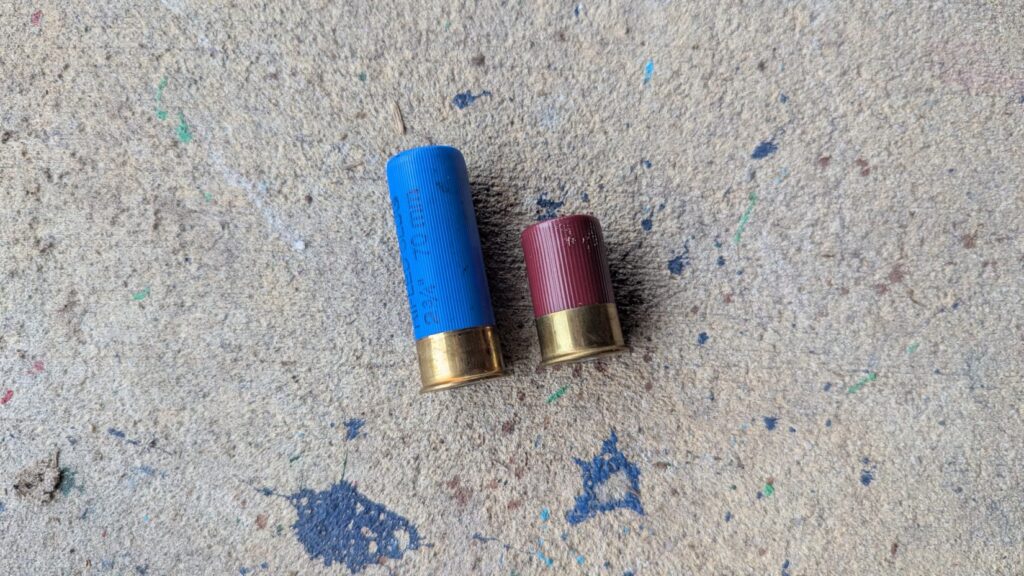
Bolo rounds, Dragon’s Breath, flechettes, and all those other silly novelty rounds are just that—silly. They look neat and can be fun, but home defense isn’t the place to be using novelty rounds. I’m sure some will stop a threat to be sure, but they don’t offer any benefit over a standard tactical load of buckshot.
Why Buckshot?
Buckshot gives us the advantages of a shotgun. Multiple rounds hitting a threat per trigger pull, dispersing through the body, and increasing our chance of hitting something vital—potentially multiple times. Most buckshot will reach deep enough to hit those vitals.
Buckshot comes in a wide variety of sizes, ranging from No. 4, which is approximately .24 caliber, to TriBall, which is .60 caliber. For purpose-built defensive loads, we are largely locked into a few pellet sizes. With 12-gauge shotguns, it’s 00. With 20 gauge, it’s No. 2 or No. 3, with .410 it’s 00 or 000.
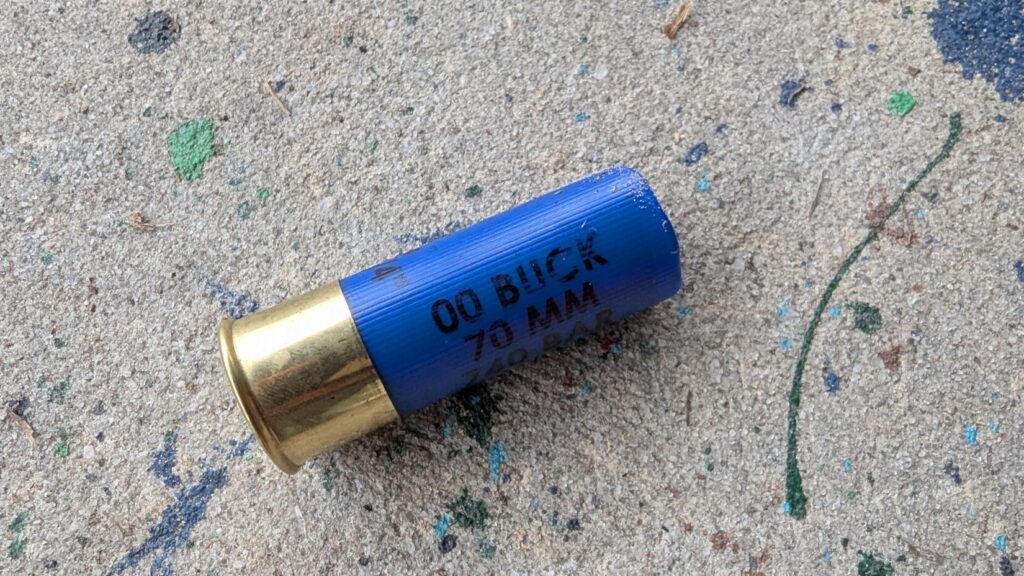
That doesn’t mean these are the absolute best options; it’s just what we have available. Sadly, Federal killed my favorite load, the No.1 Flitecontrol.
Diving into every size of buckshot pellet might be good for another article, but due to the lack of tactical, low-recoil options in other pellet sizes, we’ll stick to what’s commonly available.
Other Factors
There is more to selecting a load than just pellet size. Not all shot shells are equal.
I like copper-plated, buffered shot. Copper plating helps penetration and keeps the pellets from deforming. Buffer material, typically called Grex, also provides a layer of protection against deformation.
Deformed pellets can create inconsistent patterns and create flyers. Flyers are pellets that leave the bulk of the pattern and can become errant pellets.
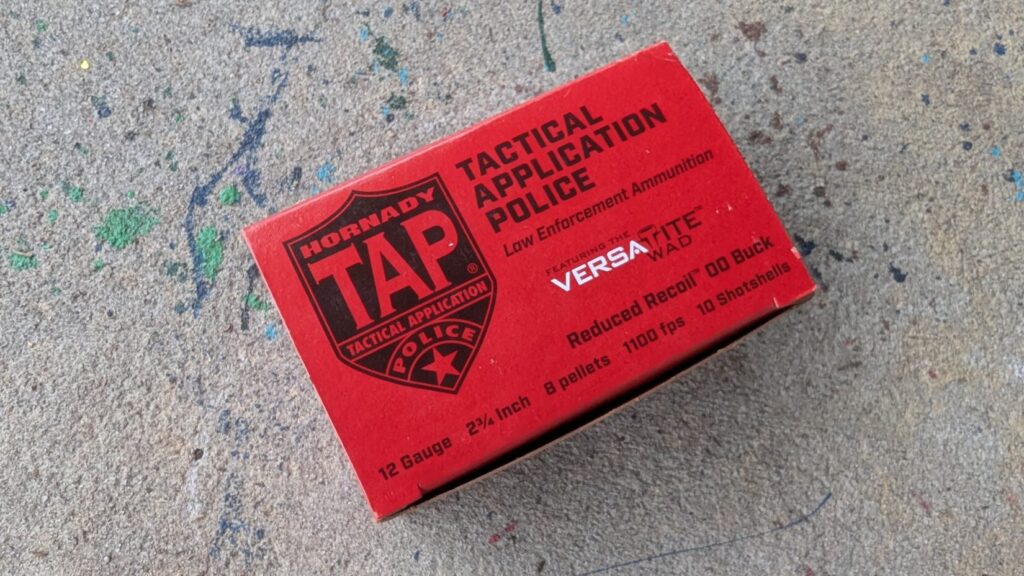
Defensive loads will be 2.75 inches long for 12 gauge and 20 gauge, but for .410, they can be 2.5 to 3 inches.
For 12 and 20-gauge, 3-inch options can stop a threat, but they remove one round from your magazine tube and create excessive recoil. These rounds are typically used for hunting rather than for defense.
For the .410, a 3-inch load can get us five pellets while keeping recoil low, but we do sacrifice one round in a tubular magazine.
My Choice of Buckshot
I’ve mentioned tactical and low-recoil a few times. Low-recoil buckshot has two purposes. Obviously, it’s to avoid thumping your shoulder and to improve your ability to make fast, accurate follow-up shots. Additionally, low-recoil shells tend to produce tighter, more consistent patterns.
I stick to Federal Flitecontrol 8 pellet 00 buckshot. It’s buffered, copper-plated, low-recoil, and uses the Flitecontrol wad. This wad stays with the shot until it leaves the barrel. Brakes then deploy and separate the wad from the shot. The end result is an incredibly tight pattern at home defense ranges.
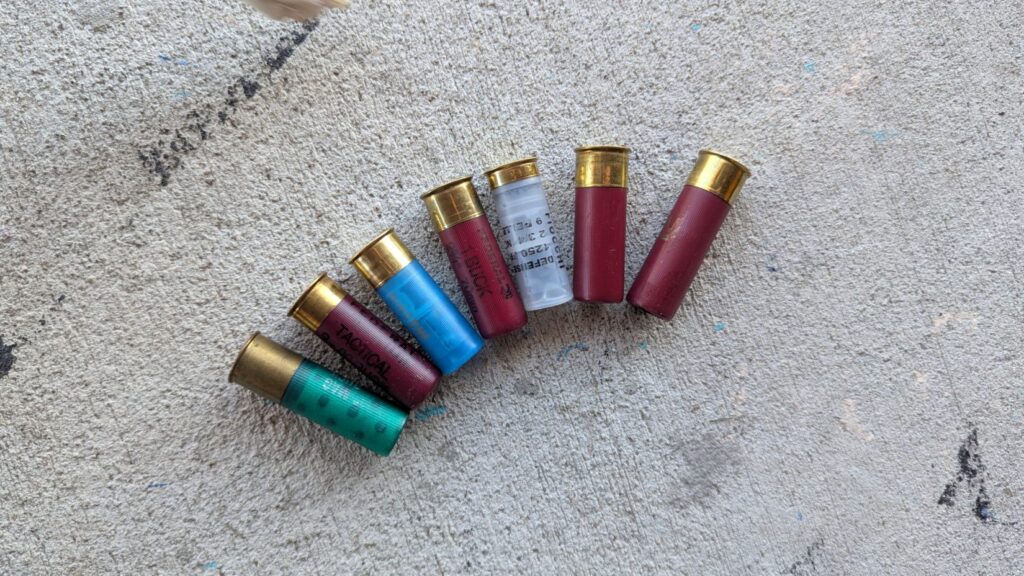
I use eight pellet loads over nine pellet loads due to flyers. Nine pellet loads are more likely to have a flyer due to how the pellets are stacked into the shells.
For home defense purposes, the tight pattern helps prevent errant pellets. At most self-defense distances, if you’re facing a threat squared up to you, most buckshot will not spread far enough to miss the target.
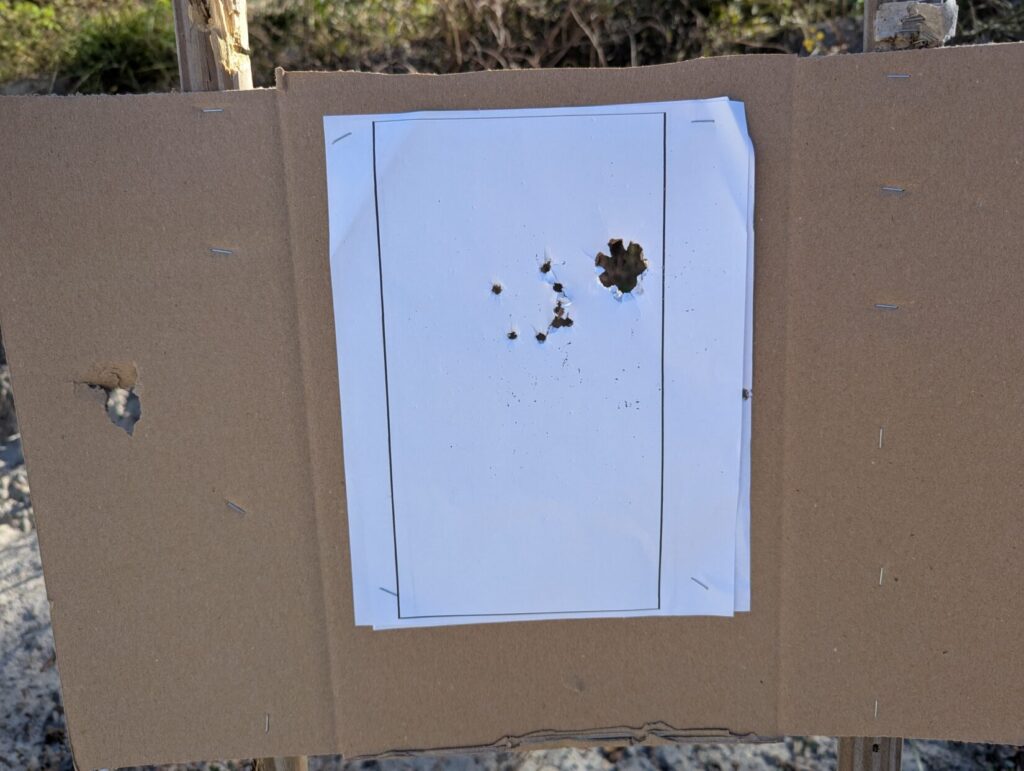
However, remember the bad guy gets a say in the fight as well. If I’m only seeing a small portion of the threat, I like the tight pattern to ensure it hits the target even when I can see very little of the target.
In 20 Gauge
With 20-gauge, there are two advertised tactical options as of this writing.
We have Flitecontrol in 20 gauge, which is ten No.2 Buckshot pellets, and Barnes, which is 17 No. 3 pellets. Both are fine, but have more recoil than the 8 pellet 1145 FPS load from Federal Flitecontrol out of most 20 gauge guns.
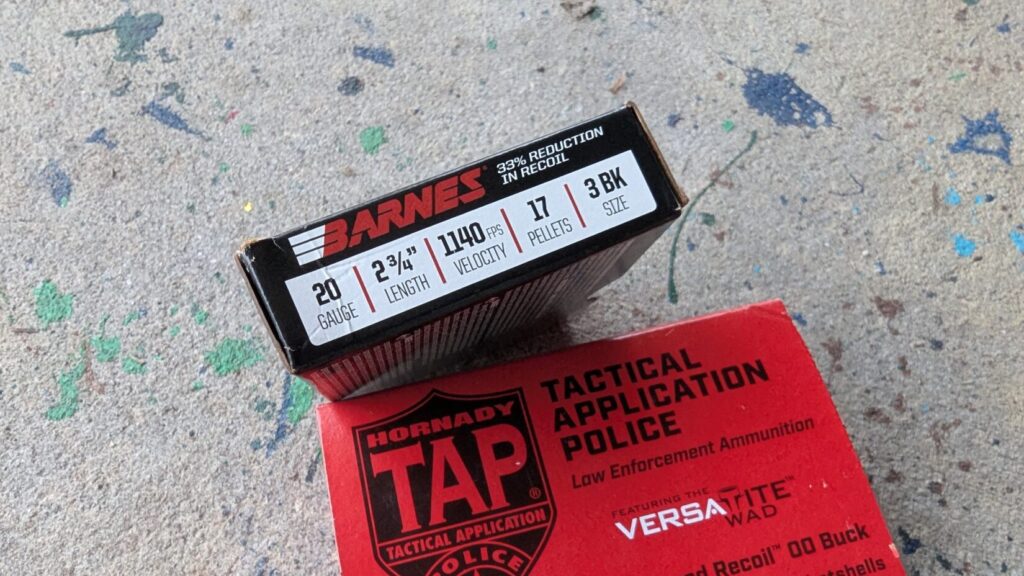
If I were using 20 gauge, I’d stick to the Flitecontrol load. Not only for the tighter patterns, but also for the bigger pellets. Bigger pellets tend to go deeper, and I want good penetration.
The Little .410
The .410 has several defensive-oriented loads. Oddly enough, my defensive .410 load of choice would be the Federal Personal Defense handgun 3-inch loads. These work fine from a smoothbore, keep a super-tight pattern, have copper-plated projectiles, and give me five pellets of 000 buckshot from a 3-inch shell.
My second favorite is the Remington Ultimate Defense .410. It has wider patterns than the Federal load, but still packs five pellets of 000 buckshot.
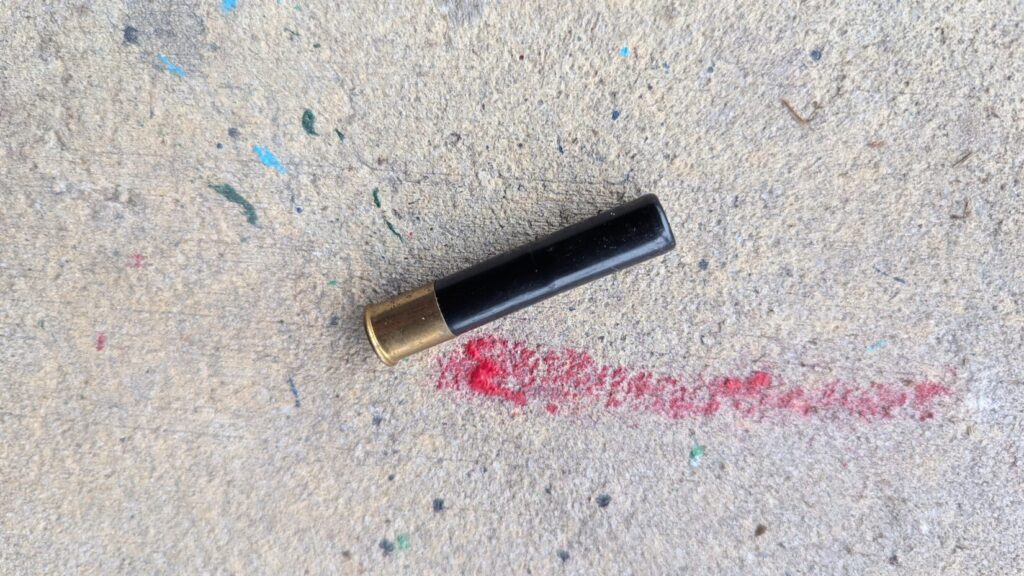
There are two other .410 defensive loads designed for the Taurus Judge and similar rifled barrels. The Winchester PDX and Hornady .410 Triple Defense.
Both work well in smoothbore barrels. I don’t care too much for the PDX load because I think the BBs behind it are silly. Three plates are fine, but I would prefer as many plates as I can get over some BB shot.
The .410 Triple Defense is fine too. It’s a slug with two 000 buckshot pellets. The slug doesn’t always reach penetration standards, but the 000 pellets do. Again, I’d rather have five 000 pellets than a slug and two 000 pellets.
Beyond Flitecontrol
There are some good arguments against Flitecontrol, specifically that the pattern is too tight and gives up some of the spread that helps cover shot placement mistakes. That’s a valid argument, and you may not choose Flitecontrol for your defensive shotgun.
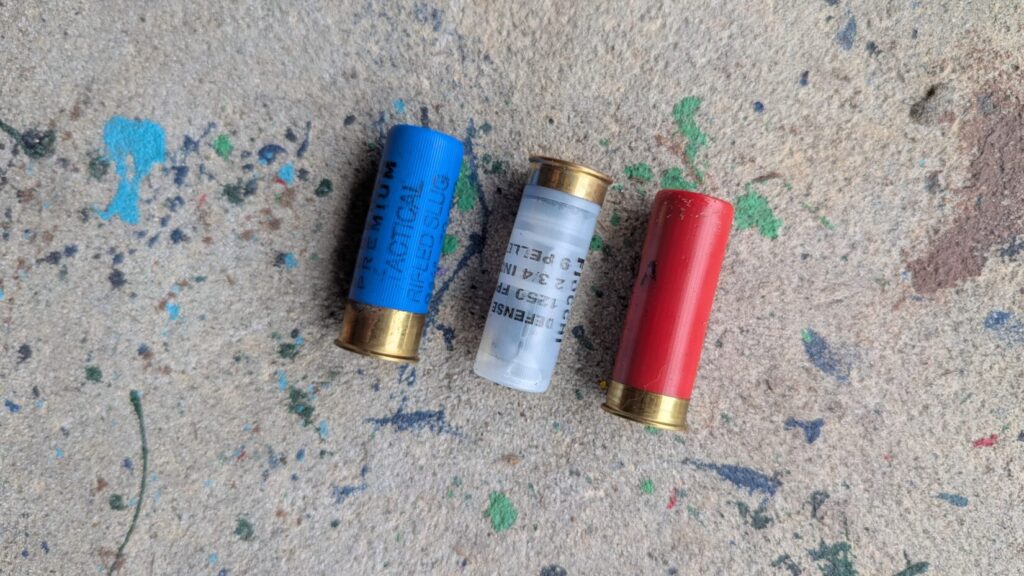
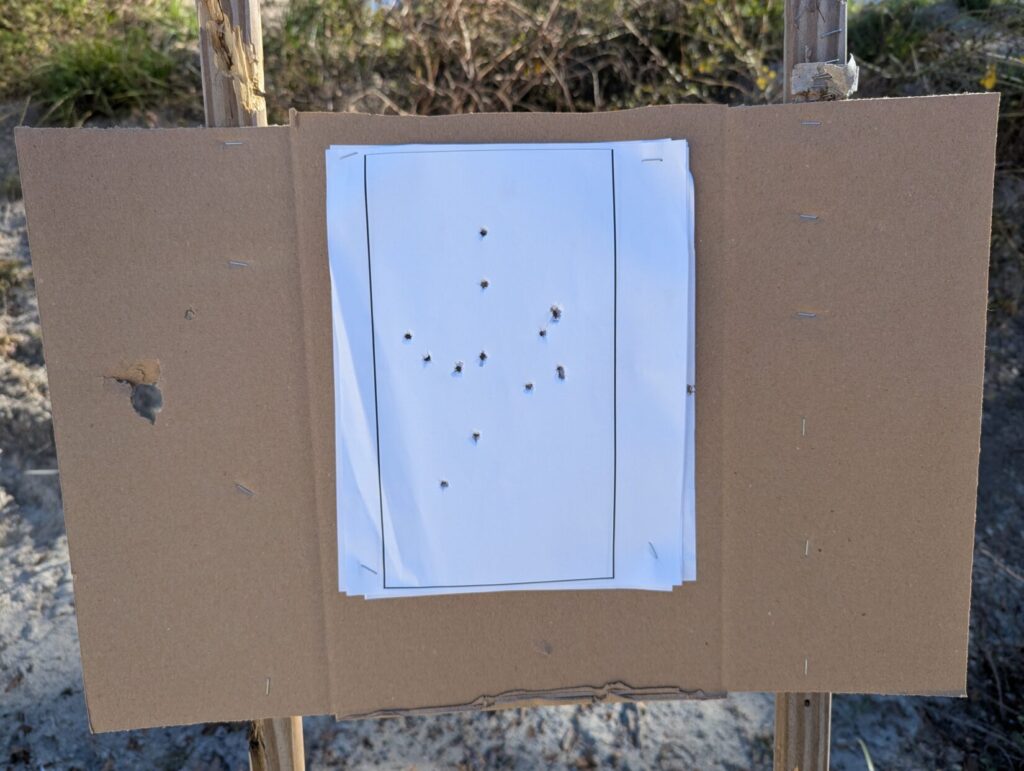
You might find the right mix of a particular buckshot, gun, and choke will give you a happy in-between. I’ve seen Fiocchi’s Defense Dynamics and Remington’s Managed Recoil do really well through guns with improved chokes. Enough to put every pellet inside the headshot area of a target at 10 yards.
My Choice
To wrap it all up, when it comes to shotgun ammo, I want a load of buckshot. Specifically, a purpose-built tactical or defensive load with a pellet size capable of penetrating deep enough to reach the vitals.
Even if we don’t want FliteControl-like patterns, we tend to want tight and consistent patterns. If possible, we want copper-plated projectiles, buffered with Grex, of the low-recoil variety to help keep patterns tight.
Stay away from birdshot and novelty rounds, and if you want to use slugs, do so with caution. That covers projectile selection. Next, we’ll dig into accessorizing the defensive shotgun.