
Properly calibrated ballistic gel has long been the standard for testing the penetration properties of handgun cartridges. It’s a deliberate, repeatable test that was established by the FBI following the 1986 Miami shootout, and has remained the standard since 1988. A new product called Intruder in A Box aims to disrupt the status quo with a new way to ballistic-test handgun rounds.
One of the primary metrics we use to judge the terminal effectiveness of a handgun cartridge is how deep it can penetrate. Compared to shotgun or rifle rounds, handgun rounds are lacking in terminal effectiveness. With a handgun cartridge, it needs to penetrate deep enough to hit vital organs, and that standard has long been 12 inches through calibrated ballistic gel.
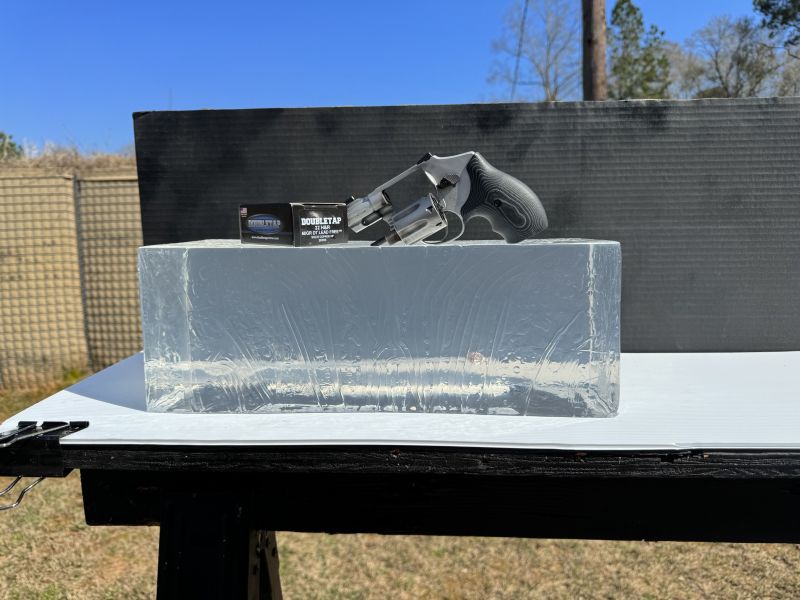
The Limitations of Traditional Ballistic Gel
While ballistic gel offers a consistent, repeatable method for testing cartridges, it is not meant to be a one-for-one stand-in for the human body. Just because a round can penetrate through 12 inches of homogeneous gel doesn’t mean it will behave identically through 12 inches of human anatomy.
Ballistic gel is calibrated to mimic the density and viscosity of human tissue, but the human body is much more complex than that. Intruder in a Box aims to bridge this gap by more closely replicating distinct anatomical layers, resulting in a more realistic backyard testing medium.
BLUF: Intruder In A Box
Bottom line up front, I’m not an engineer, a scientist, or a ballistician. I am not going to advocate for replacing ballistic gel testing with another medium until it’s been thoroughly vetted by industry experts. With that said, there are some bright minds behind Intruder In a Box.
This isn’t just a couple of dudes in a shed, like Accuracy International in the early days. The designers, Dave Giurintano and Joey LeBlanc, both hold Master of Science Degrees in Mechanical Engineering.
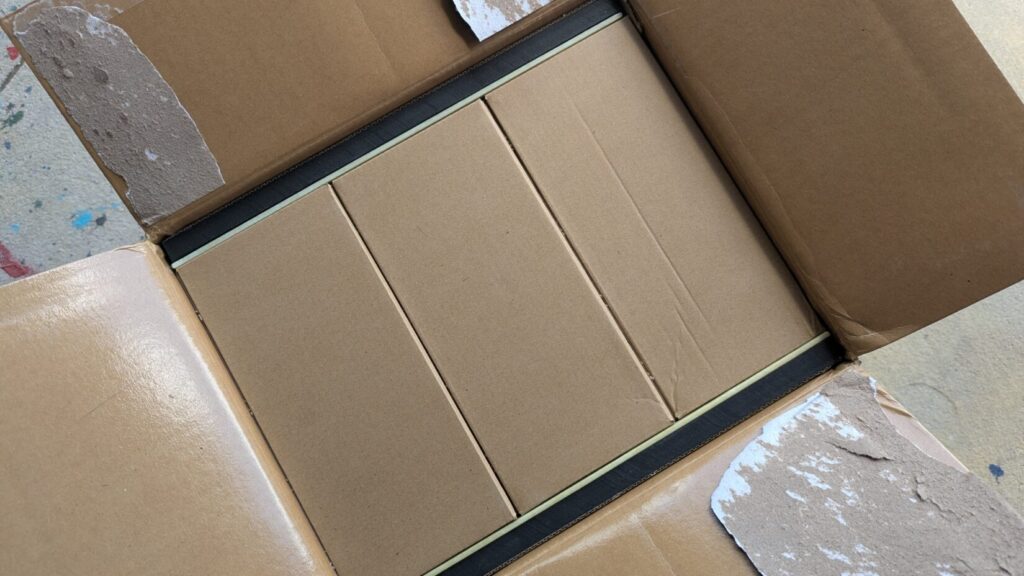
The goal of Intruder In A Box is to replicate the human body while remaining an affordable option for the average person. A block of ballistic gel costs about $100 and can only be used once. Furthermore, ballistic gel is organic, so it requires refrigeration to preserve. By comparison, Intruder in a Box is $89.99, requires no refrigeration, and can be used nine times.
The Anatomy of the Box: An Eight-Layer System
Intruder in a Box has nine external targets and nine cells of water and air layers. Hard and soft layers encompass the entire box. To simulate a center-mass shot on a human torso, the Intruder in a Box utilizes an eight-layer system constructed from varying materials.
- Cardboard: Represents the initial layer of skin.
- Flexible Rubber: Simulates dense muscle tissue.
- Hard Composite Plate: Simulates the front bone structure (sternum/ribs).
- Fluid-Filled Sack: Replicates the vascular space of internal organs.
- Air Pocket: Simulates the expanded volume of the lungs.
- Second Hard Plate: Represents the rear rib cage.
- Second Flexible Layer: Simulates rear muscle tissue.
- Final Cardboard Sheet: Represents the exit layer of skin.
The idea is to represent the human torso. This design shifts the focus away from a homogeneous gel and pushes it toward testing how a defensive cartridge behaves when transitioning through hard and soft barriers.
You can see how your hollow point, caliber, and projectile design work through a variety of barriers and in conditions separate from homogenous gel.
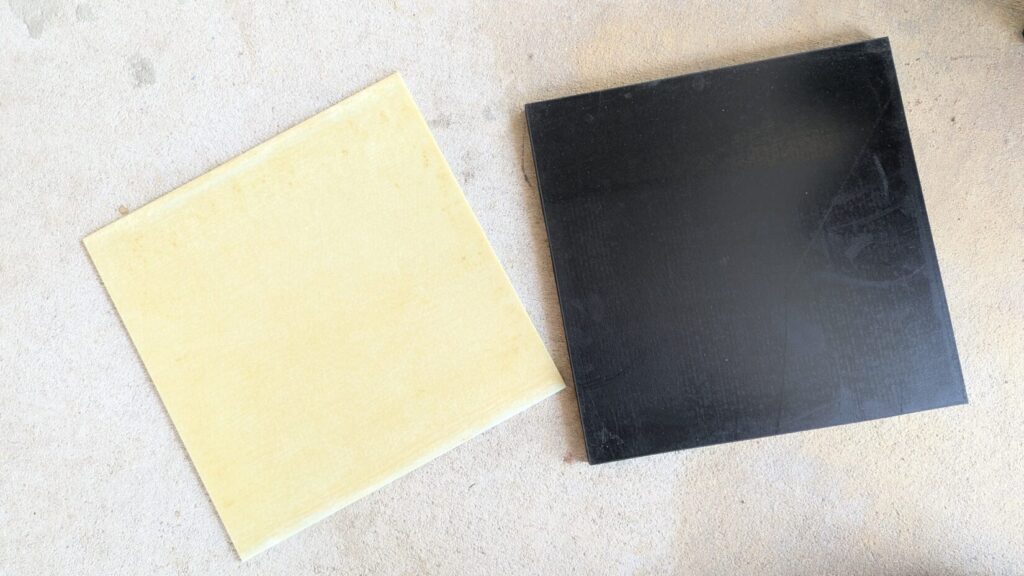
The team at Intruder In a Box calibrated the materials in the box to human bone and muscles, and internal organs. I do believe that independent testing by ballisticians, scientists, and engineers is required to ensure the accuracy of claims, but it’s an exciting concept to move ballistic testing forward.
Range Testing: Pocket Pistol Ammunition
I’m a pocket pistol fan, but pocket pistols often suffer from poor penetration. You have to be exceptionally picky about the ammunition you use to achieve proper penetration depth. With that in mind, I chose three of my favorite carry calibers and the ammo I carry for self-defense:
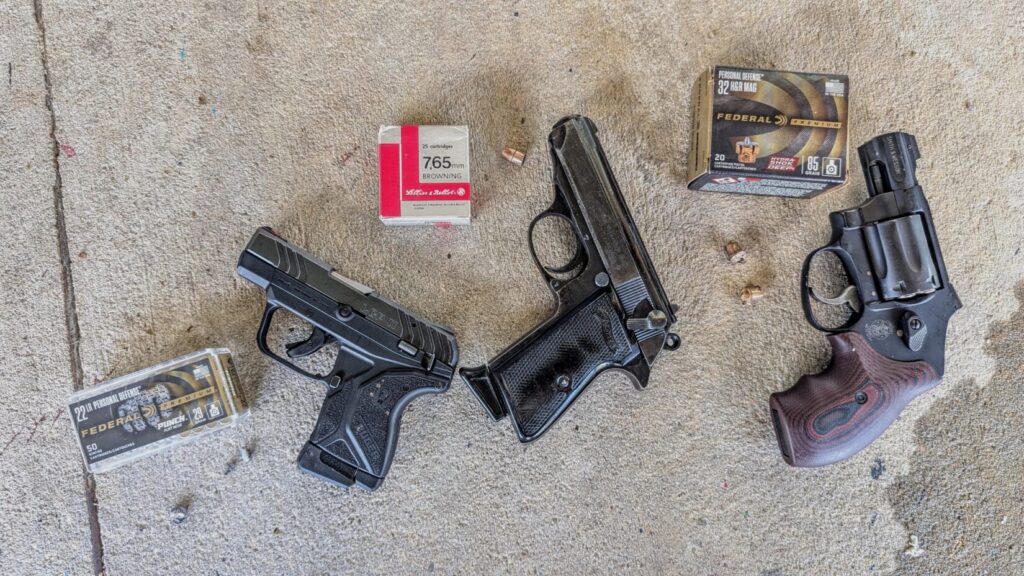
- .32 H&R Magnum: Fired from a Smith & Wesson 432 UC, loaded with Federal Hydra-Shok Deep.
- .32 ACP: Fired from a Walther PPK/S, loaded with Sellier & Bellot 73-grain FMJs.
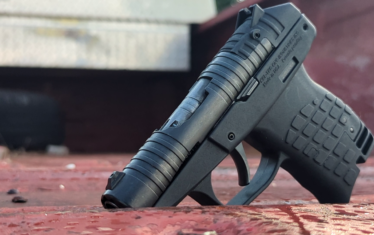
- .22LR: Fired from a Ruger LCP II Lite Rack, loaded with Federal Punch.
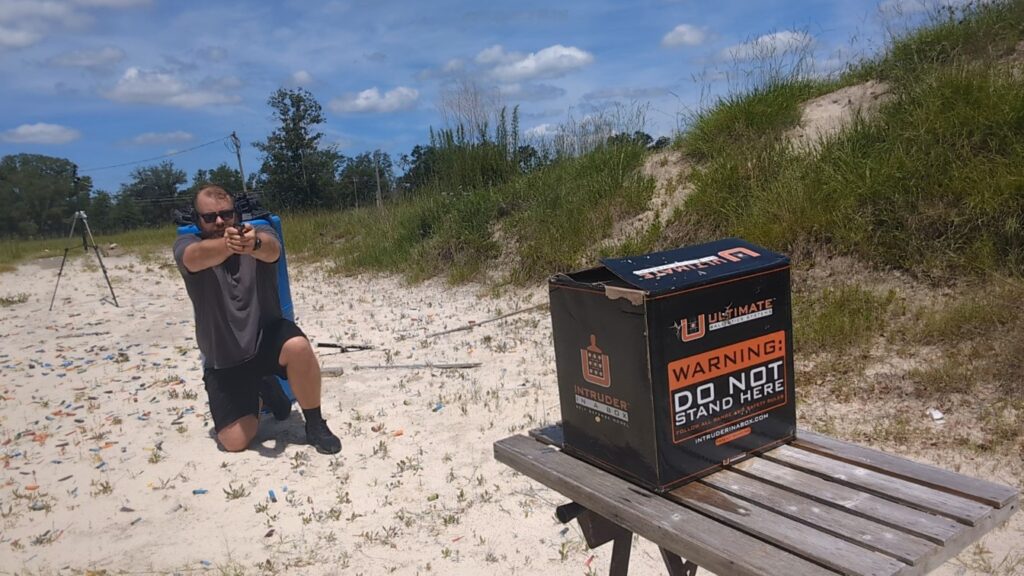
With this setup, I have nine targets total and three guns. I shot the bottom three targets at the bottom with a .22LR. The middle three targets got one round of .32 H&R Magnum each. The top targets caught the last three rounds of .32 ACP.
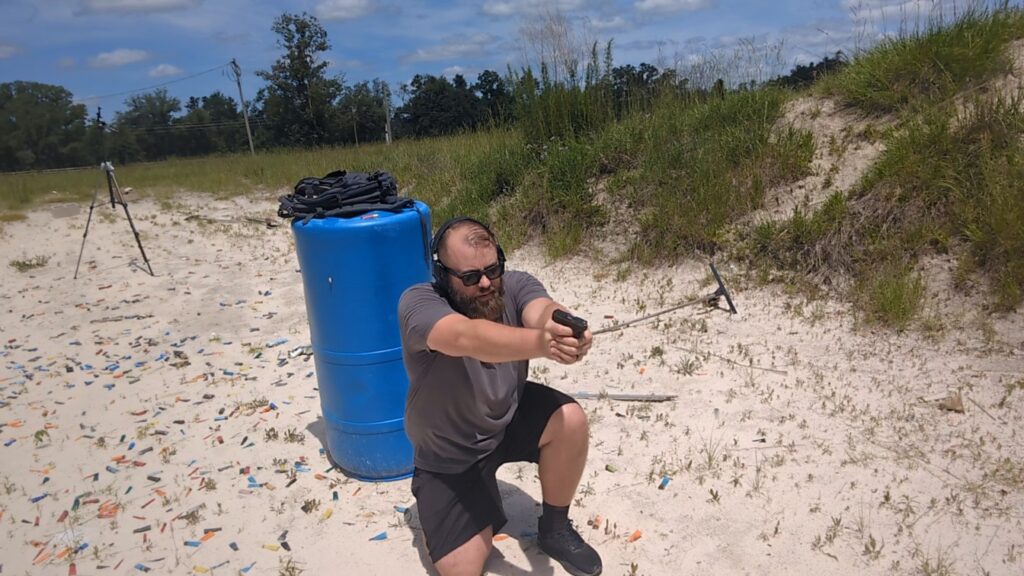
Of the nine rounds fired, only one round of .32 ACP made it entirely through the target. The goal is not to go entirely through the target. That would signify potential overpenetration of a human threat.
Dissecting the Results
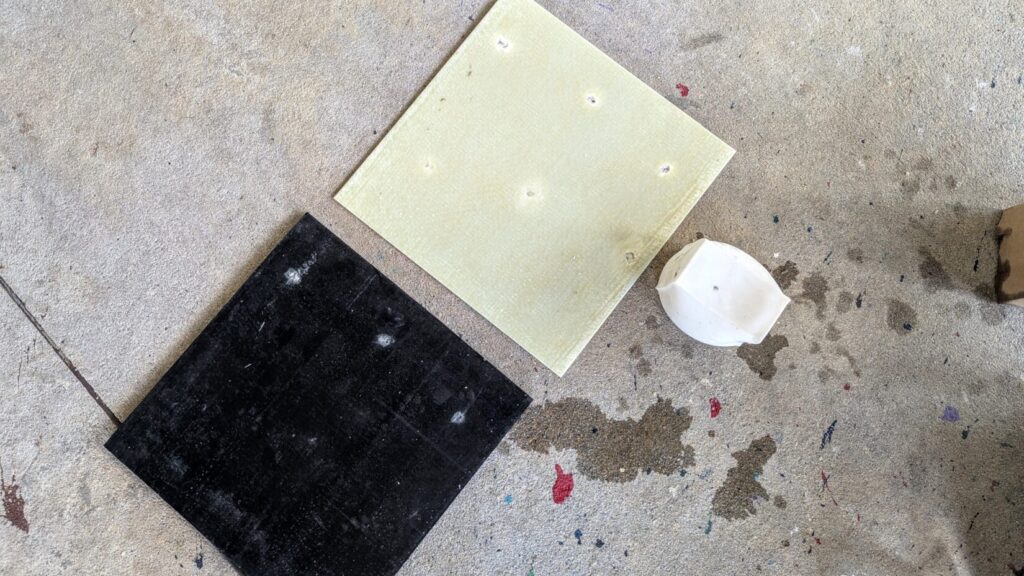
After shooting the target, I went back home and dissected each of the targets. All three calibers zoomed through the initial cardboard, soft, and hard layers. The .32 ACP punched into the second hard layer.
The .32 H&R Magnum rounds impacted the rear hard layer, but did not penetrate through the second layer.
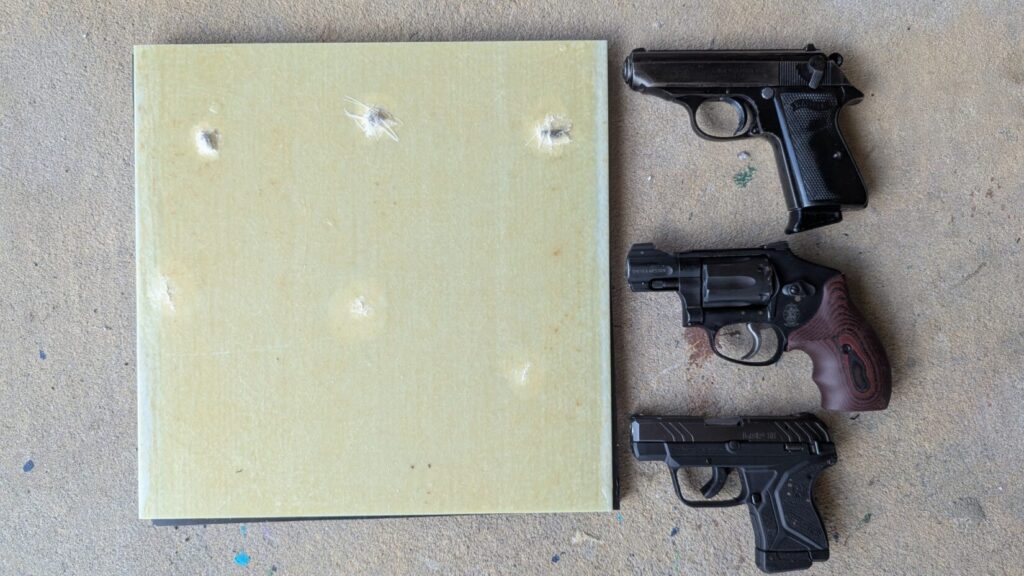
The .22LR Punch rounds punched through the water sacks and into the lung-simulating air pocket. Two of the projectiles fragmented heavily inside the fluid, while the third made it deep enough to rest against the rear hard layer.
The .32 ACP was the only round that struck into the second soft layer. Only one of the three .32 ACP cartridges punched through that soft and final cardboard layer.
Projectile Deformation Analysis
As I dissected the targets, I recovered projectiles and examined their designs.
The FMJ .32 ACP rounds remained almost entirely intact. The .32 H&R magnum rounds didn’t expand but collapsed. Two of the three Federal Punch rounds split into pieces and fragmented, with one of the rounds flattening, but remaining largely intact.
Conclusion: Challenging the Ballistic Status Quo
I don’t think an industry should rest on its laurels. I like the idea of moving ballistic testing forward and improving our ability to test cartridges. I’m not an expert enough to advocate replacing ballistic gel, but I think Intruder In a Box offers an exciting opportunity to challenge the status quo.
One of its biggest strengths is its consumer appeal. It’s an affordable, multi-use device, and it’s shelf-stable, at least compared to organic gel. The average person can test their ammo, or multiple ammo types, to find out what works best for their firearm.