
In Part I of this series, we discussed ways you can detect and identify accomplices working covertly with an overt perpetrator.
The tactics you intend to employ are a huge part of your winning mindset. In this article, the second in our series on how to counter covert accomplices, we’ll discuss proactive steps you can take to improve your odds of prevailing over a perpetrator’s incognito assistants. We’ll also drill down a little farther on identifying, ruling out, or investigating covert accomplices.
Spotting the Designated Distractor & Staying Covered
Street criminals often operate in pairs. One will get your attention while the other sneaks up behind. In Part I, we called such attention-getters Designated Distractors (DDs).
We also discussed Cover and Contact. Having a cover partner to watch your back is the single best thing you can do to protect yourself against the predations of the covert accomplice. If you don’t have a partner, you might consider asking bystanders to help (see RECRUIT ALLIES below).
If you’re off duty with a partner when a possible Designated Distractor accosts you, you can each move about 45 degrees in opposite directions until your orbit is 90 degrees apart along the arc around your suspect. This puts the suspect in the corner of an “L” between you.
How to Use The “L” Tactic
The “L” tactic is a default positioning method that has numerous other applications, from hostage rescue to “dusting tangos off the lid” of an ICBM launch facility.
The L is important enough to rate its own article, but I’ll give you the short version here. The idea is to get the subject(s) in an interlocking field of fire, with minimal chance of crossfire on yourselves. The L is not rocket science, but it needs to be rehearsed. Here’s what it looks like when practiced on a shooting range (the target on the right is the subject).
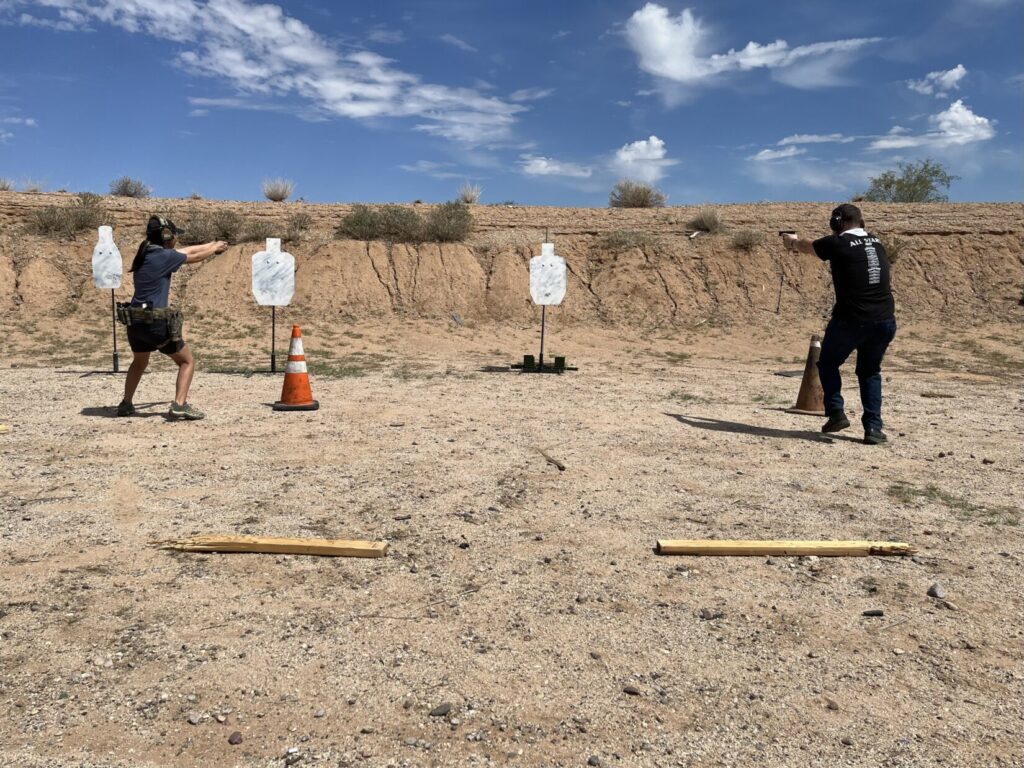
The L is still a good idea if only one, or none, of you is armed. Even if the situation has not (yet) risen to the level of guns out, you can use the L on potential Distractors.
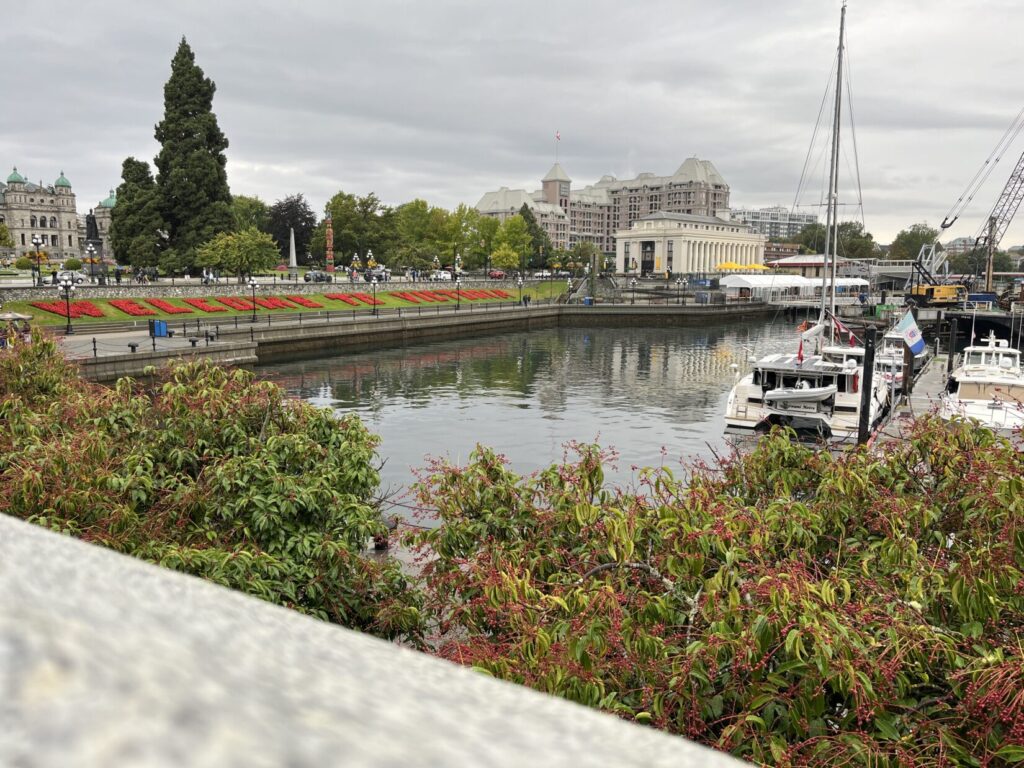
Real-World Example: Situational Awareness in Victoria, British Columbia
My wife and I were visiting Vancouver Island when a strung-out drug dealer approached us. He became agitated when I asked (OK, told) him to keep his distance. We moved 90 degrees apart, with him in the apex of a right triangle between us, so we could watch each other’s backs.
That threw him off. Packs of wild dogs surround their prey; sheep do not surround wolves.
We were in a wide-open park. Without being asked, my lovely bride of 30+ years looked around while I concentrated on him. She saw no other possible accomplices nearby. Calm, audible teamwork is not the behavior of victims either.
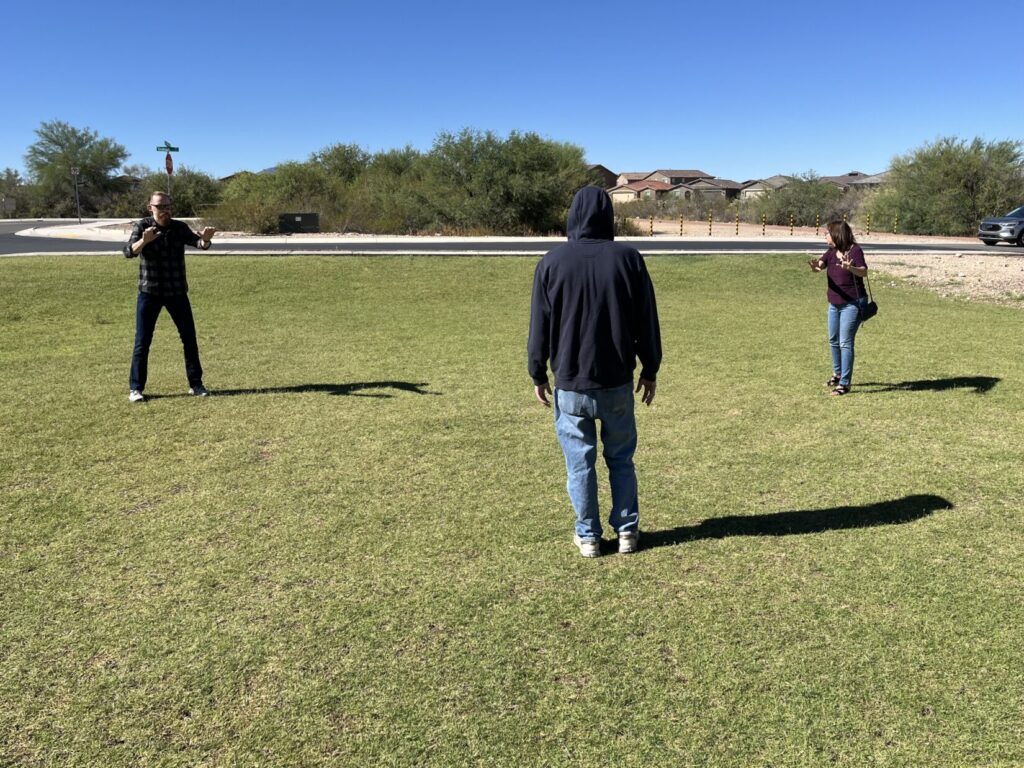
Neither of us had a gun. There would have been zero crossfire issues if we had continued orbiting around him in opposite directions till we had him in an L from behind. That would have enabled us to scan our surroundings for accomplices even better, while keeping him in sight. Alas, we were not that switched on. Fortunately, he was solo.
I’m guessing he was testing my reactions when he threw a dinner roll at me (you can’t make this stuff up). The stale projectile hit me just below the ribs, but I didn’t let my sudden hankering for lunch distract me from him. Instead, I assumed a Krav Maga-based defensive stance, putting up “the fence” with my empty hands in front of me. Think of the fence a something the bad guy has to climb over to get into your personal space.
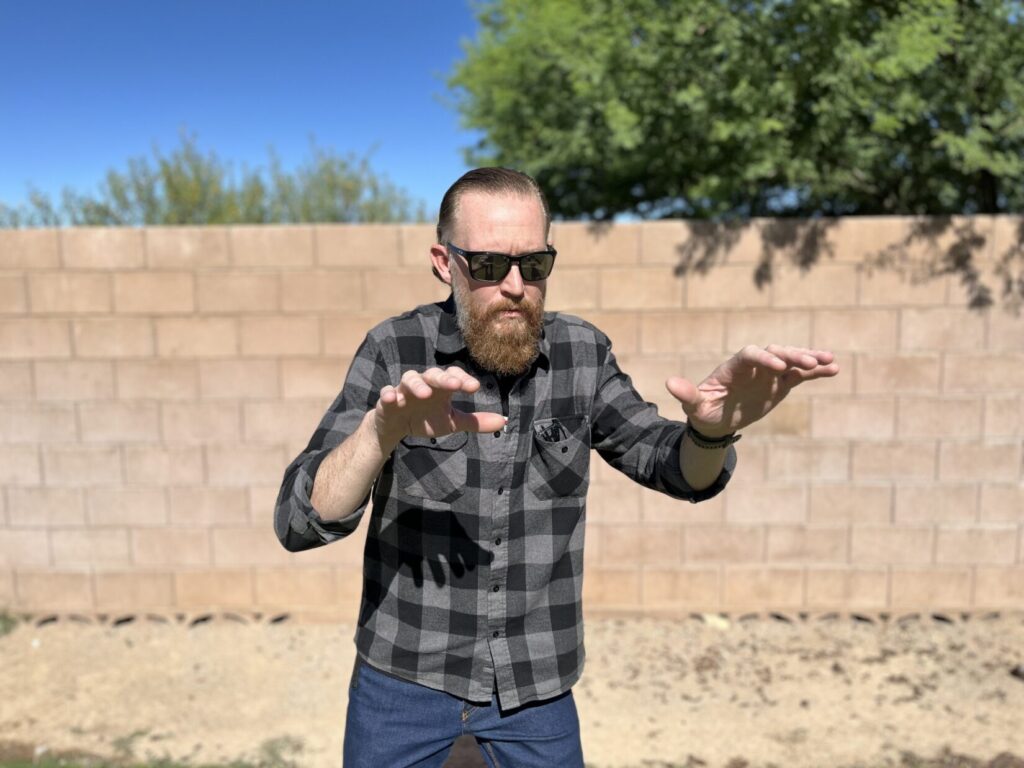
I was in my 60s. I’m not intimidating in build, nor stature, but seeing me assuming an overtly defensive stance, as if preparing for imminent combat, must’ve penetrated into the recesses of his drug-addled brain. He probably could have taken this old man, but decided the juice would not be worth the squeeze, and ambled off. The L works.
Tourists on Vancouver Island have fewer defensive hardware options than we enjoy in Arizona. After that incident, we made it a habit to carry umbrellas, even on sunny days.
Deciding Whether or Not to Intervene
If you get caught up in a robbery, the perpetrators will probably be in it for the money. The liquor store or bank is likely insured against financial loss. Your best bet, whether you are a concerned citizen or an off-duty cop, is usually tactical patience. Hang back. Be an active witness. Scan your environment for incognito accomplices. Make a plan for if things go south, because they could, fast.
There are as many different reasons to commit crime as there are criminals. In my criminology classes, much emphasis was placed on socio-economic factors and drug addiction. But often overlooked is the fact that some people think ripping people off is fun. Too many sadistic crooks love the sense of control that comes from victimizing others. It’s challenging, the money is good, and there’s far less paperwork than in legitimate jobs (a huge plus). But their primary motivation is dominating and hurting people.
So even a heist “just for the money” could deteriorate rapidly. You might have to intervene because innocents are getting maimed, molested, or are about to die. Do what you must to stop it, but then immediately apply the following positioning tactics.
Post-Attack Positioning: Put Your Back to a Wall
Watch video of the March 30, 1981, attempt on President Reagan’s life. After the killer went down under a pile of bystanders, other Secret Service agents put their backs against the nearest wall and looked around.
What were they looking for? That’s right: covert accomplices, in case it turned out to be a coordinated attack, rather than a lone wolf.
You can do the same thing. If you are solo, armed, and just had to put an assailant down, get your back to the nearest wall or SUV after you stop the attack. Scan the area for the assailant’s friends.
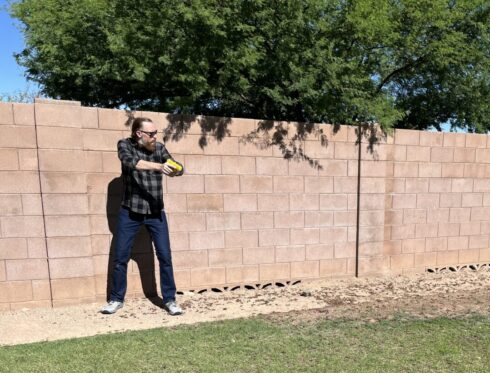
Yes, any keyboard commando can tell you that bullets skip down hard walls. Bad guys on the other side of drywall can hear if you slide along it.
We’re talking about a post-shooting scan for potential threats, not movement to contact or serving a search warrant. You must be able to see everybody else in the area, to identify potential allies of the assailant.
Having your back to a wall gives you global (or at least hemispheric) perspective, while preventing covert accomplices from sneaking up behind you.
In Tubular Spaces
If the event happened on a bus or commuter train, get to one end of the cabin. That reduces the need for side-scanning and enables you to cover more of the space with less traverse.
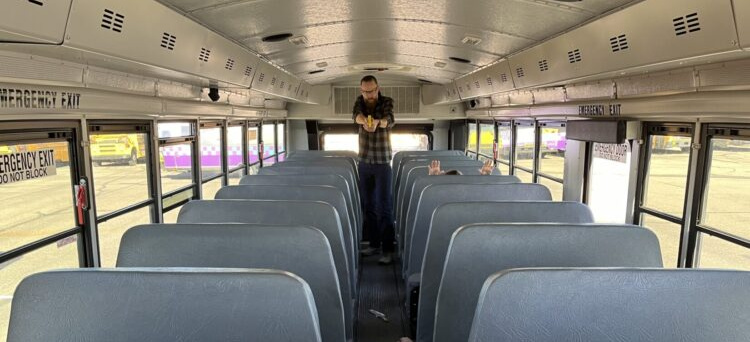
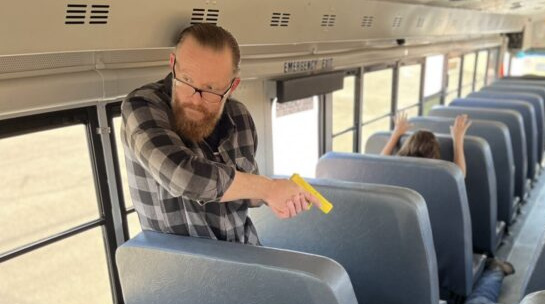
Identify yourself as a good guy or gal and have the passengers put their heads down. With taller seats (interstate buses, airlines, newer school buses), the passengers put their hands or wrists on the seat in front of them. With shorter seats (municipal buses, commuter trains, older school buses), they can brace their arms on the seat in front or put their hands in the air.
If somebody refuses, pay attention to that person. Most innocent people do what the nice person with the gun tells them to do.
Keep him covered, but look around
You’ll also have to keep the perp covered, in case they aren’t down for the count. If you’re near the middle of a crowded passenger cabin, and moving to either end would keep you from covering the downed assailant, you can jump into a row and put your back to the windows.
Back to a window may seem counterintuitive, when I’ve expended so much print telling you to watch your back. On a bus or train, we are concerned about what’s behind us out the windows. We’re a lot more concerned about other perps stuck inside the cabin with us, especially on a moving train. Many municipalities rent the sides of their buses as advertising, which makes it harder to see in, at least during the day.
The downside of mid-cabin is that you’ll have to turn your head both ways to scan for accomplices. You can’t look both ways at once.
recruit allies
Hostage rescue teams storming a stronghold with a platoon of teammates will zip tie everybody till the hostages can be sorted from the hostage takers. “Trust, but verify,” said President Reagan.
If you are solo when you stop an assault in progress, you might need some help before the uniforms get there. You may have to trust others on faith alone.
Anyone could be an accomplice, but if you need help, it’s safe to assume that the store manager or bus driver are on your side. Military personnel in uniform are a good bet. Have people who seem trustworthy and are willing to help secure the exits, to prevent a getaway driver from coming to the aid of the assailant. Tell your recruited help not to let anybody in who is not wearing a uniform and a badge.
Mas Ayoob calls that “the welcoming committee.” They keep witnesses from leaving and tell responding officers who the good guy is. If you are in plain clothes, the welcoming committee might keep you from getting shot, like Johnny Hurley was, in a tragic blue-on-blue.
Using False Witness Statements to ID Suspects
It’s not unusual for witnesses to see different things. Even sincere eyewitness testimony is notoriously approximate. But accomplice “witness” statements are often blatant lies. Their perjury is rarely prosecuted, even after they recant statements refuted by security cameras and physical evidence, which is one reason why the practice persists.
Expect it to happen. If you are a responder, put a witness whose story differs markedly from everybody else who saw it on your short list of possible covert accomplices. If you are an investigator hunting for Mr. or Ms. Whodidit, check out the associates of that witness.
Conclusion: Always Anticipate a Covert Accomplice
When a body winds up on a coroner’s slab, it gets counted. Homicide numbers are fairly reliable, as stats go. Other crimes are less consistently reported. It’s impossible to know, and therefore impossible to accurately count, how often an unidentified coconspirator cooperates in a crime. It happens more often than most people realize. Heeding Charles Remsberg’s advice from The Tactical Edge will serve you well: