
Very few 75-year-old handguns are currently being carried for self-defense. There’s an argument to be made for the 1911, and maybe the PPK, but Smith & Wesson’s J-frame snub-nosed revolvers stand in a class all their own. What keeps the J-frame in regular EDC rotation?
The J-Frame is Iconic
When most people think of a Smith & Wesson, their minds don’t settle on a snub-nosed pocket gun. The iconic Smith, for many, is the .44 Magnum Model 29 that Dirty Harry carries.
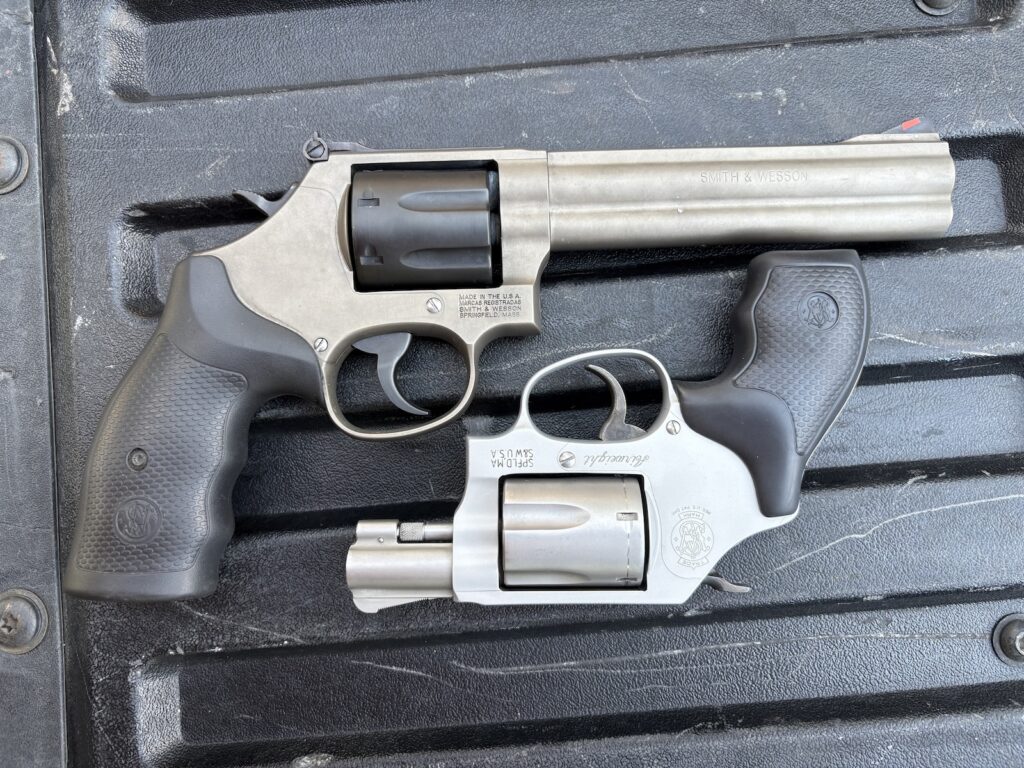
For me, it’s a Model 686 that I grew up shooting. This heavy, stainless .357 has a six-inch barrel and weighs close to three pounds.
Usually, though, the J-Frame is overlooked. And in a more literal sense, that’s its entire point; even after more than 75 years, it’s still the gold standard for a small, concealable revolver that packs a practical punch.
J-Frame history
Before the J-Frame, Smith produced two standardized sizes of swing-out cylinder, double-action revolvers: the K-frame, which has survived until today, and the compact I-Frame, now retired, which were generally chambered in .38 and .32, respectively.
I spoke with Michael Helms, Smith & Wesson’s Firearm Historian, who noted that “the J-Frame inherited 50+ years of evolution and refinement from the I frame,” meaning it was not really revolutionary, even in 1950 when it officially launched.
Is it because of the .38 Special round?
A couple of notable historical detours: The .38 Long Colt K-Frame 1899 Hand Ejector, which would become the Victory, Military & Police, or Model 10, became the most popular and was adopted by the U.S. military. After use in the Philippines showed that .38 Long Colt lacked stopping power, Smith updated the Model 1899 to fire a new round: .38 Special.
In 1950, the first J-Frame was unveiled at the International Association of Chiefs of Police conference. A hair bigger than the I-Frame and chambered in .38 Special with a 2” barrel, it was immediately a favorite among officers and was dubbed the “.38 Chief’s Special.” Shortly after, Smith responded to officers’ feedback and offered a 3” barrel version.
A few years later, Smith & Wesson shifted to using the numbered model system. The Model 1899 Military & Police / Victory became the Model 10, the Chief’s Special became the Model 36, and its stainless steel variant became the Model 60.
Carrying the J-Frame
Revolvers aren’t duty guns anymore, and pistols dominate the concealed carry market, so wheel-guns have fallen out of fashion. Yet the J-Frame still has a following.
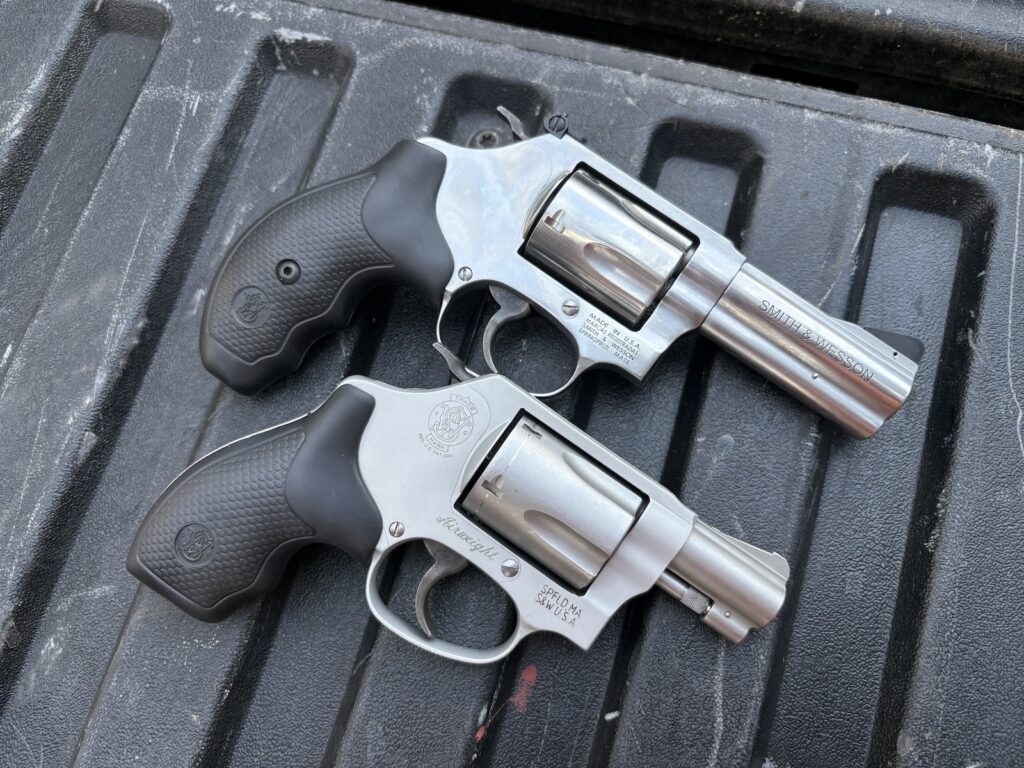
The J-Frame is easily the most versatile size of revolver when it comes to how you carry it. Most of the models have barrels in the 1.85” to 2.25” range. Most of them are carried concealed, though there are versions, like the 3” Model 60 .357, that are suited for open carry, too. Smith’s Scandium and Airweight models weigh less than a pound.
“The J-Frame is proportioned as perfectly as a gun can get for a concealed revolver,” Helms said, “while still being entirely manageable in the hand. This isn’t just a comment on shooting; it’s also manageable for reloads, for drawing and reholstering, etc. One of the first things I contemplate when I handle a new firearm is, ‘does it feel right?’, and the J frame has never failed this test.”
Outside the waistband
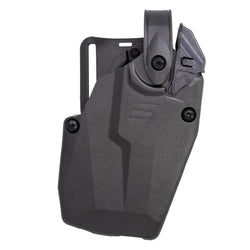
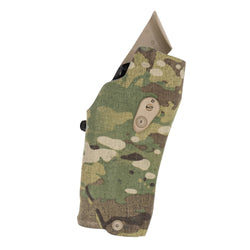
Bianchi is a classic choice for OWB carry. There are several good options, but the Cyclone is the best way to carry a J-Frame. These holsters are built from heavy cowhide and lined. The thumb-break snap will hold it secure.
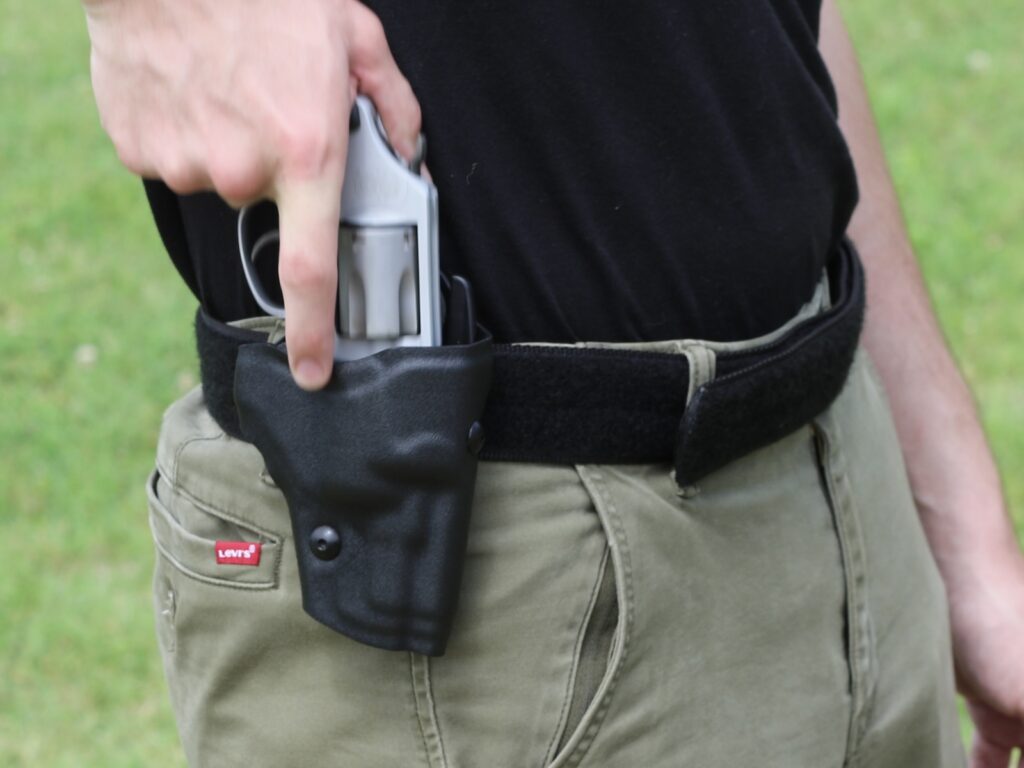
There is an ancient 6,000 Series holster, too. This 6378. It is time that Safariland revisits this design and modernizes it for all of the Smith frame sizes.
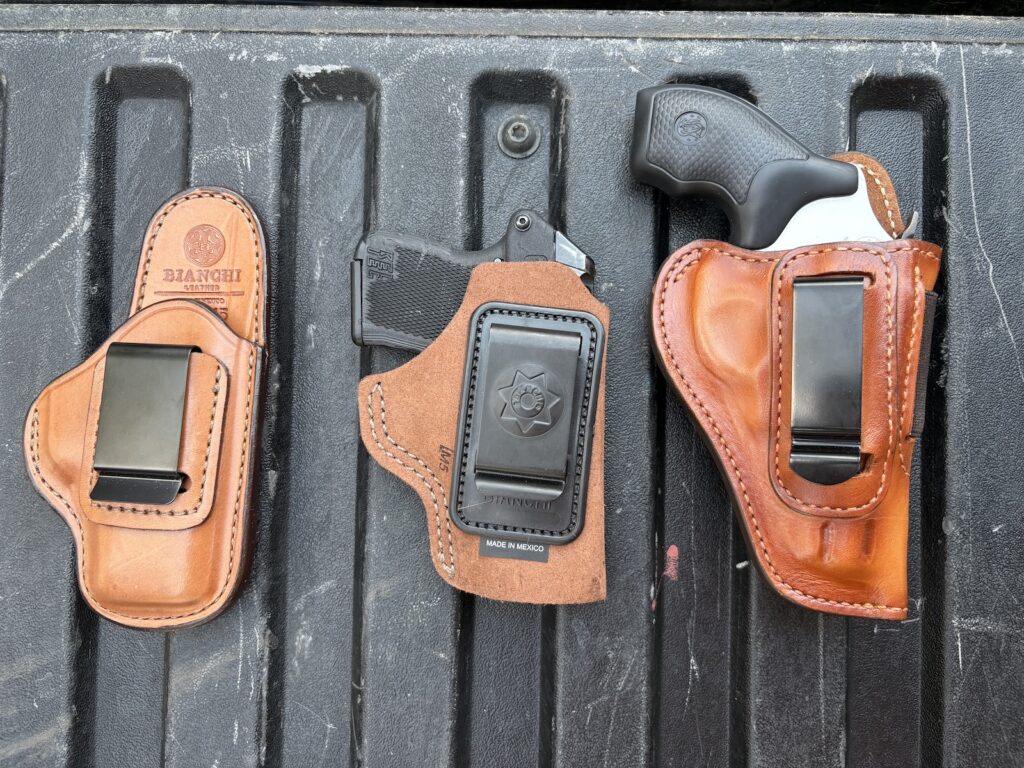
Snub-nosed J-Frames Inside the Waistband
If you carry a J-Frame IWB, this will likely make you happy. Safariland is launching a Species holster for the J-Frames. By the time this is posted, there will likely be versions ready to ship. If not, it is coming.
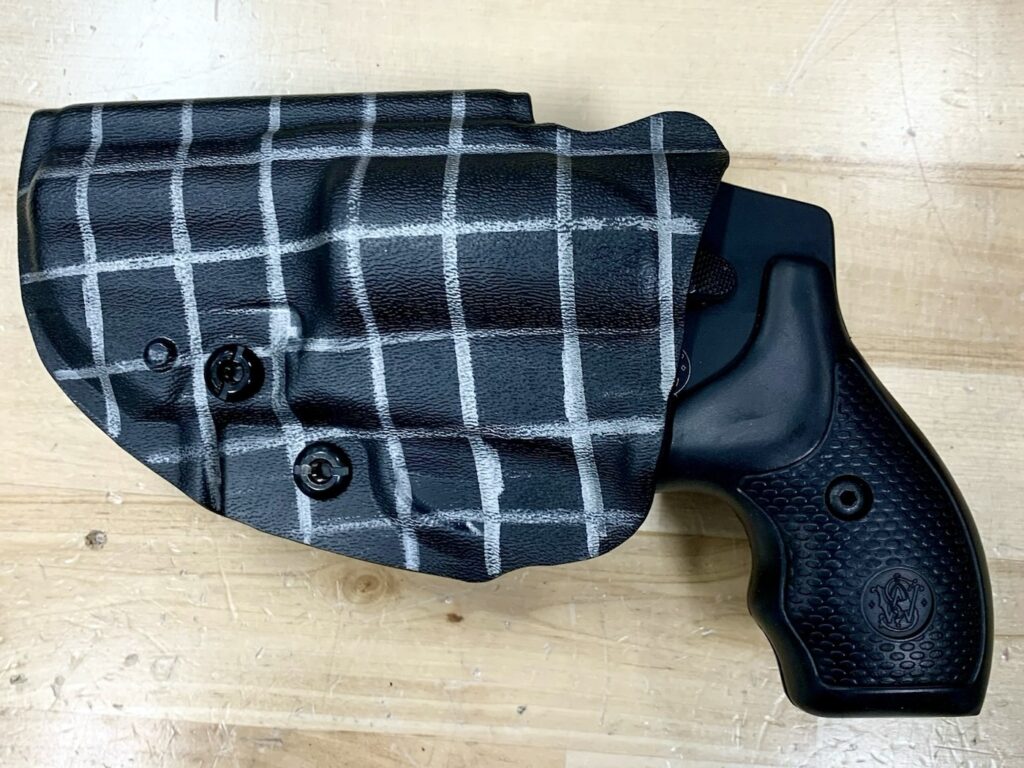
I have it on good authority that there are other options in the works, too. Schema is a skeletal design, and there are J-Frame prototypes in the works, but there’s not one common size for all of these guns. Barrel lengths differ. Even material differences, like Scandium and Stainless, have different dimensions, and Schema has exacting tolerances that make holstering both in one size complicated.
On the Bianchi side, there’s a Model 100 that works, and a Model 6.
Alternative Carry of the J-Frame
Through much of the last century, ankle carry was a go-to. I’ve never carried this way, and it seems like an awkward place to put a gun, but an ankle can provide deep concealment. If you shoot with your right hand, try carrying the revolver on the inside of your left ankle.
Shoulder holsters are a great way to carry, as you won’t have the grip or barrel of a snub-nosed S&W sticking out. But this requires a coat. And as functional as the carry style is, I don’t see many people using shoulder holsters anymore.
Pocket Carry and the J-Frame
Some Smith revolvers have locks that can be used to truly lock up the gun, but this is for storage—not for use as a safety. If you carry this gun, know that the double-action trigger allows it to fire any time the trigger is pulled. Make sure your holster covers the trigger guard. And don’t just stick it in your pocket.
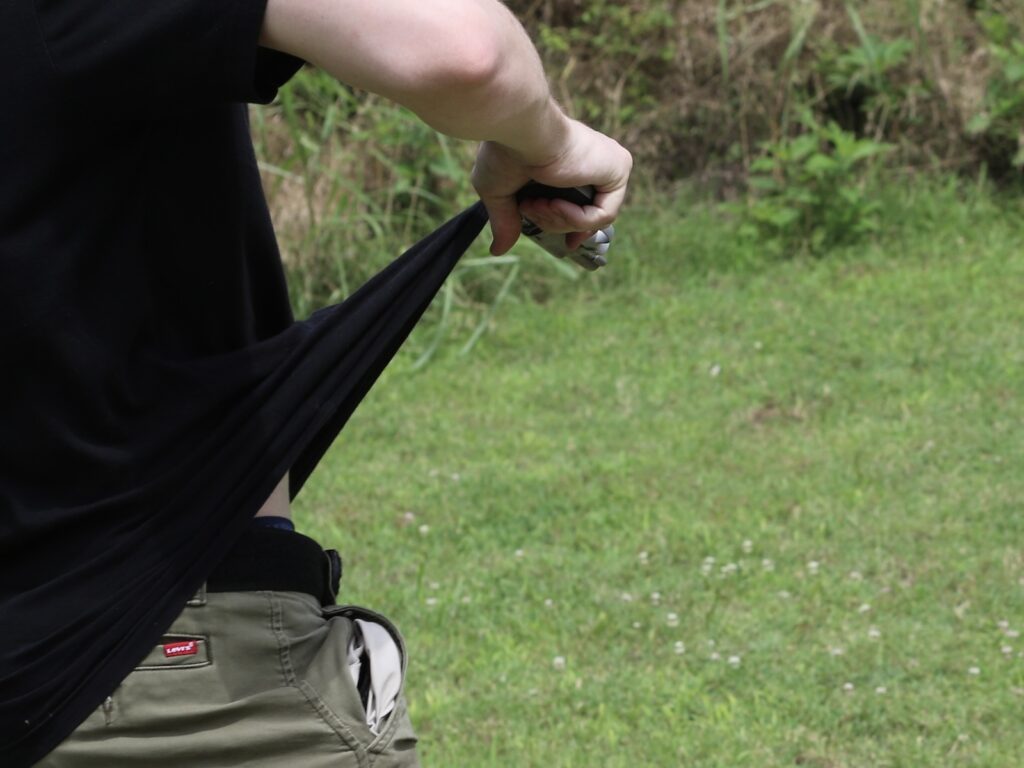
Drawing from the pocket takes practice. Check out this article for an in-depth look at the technique.
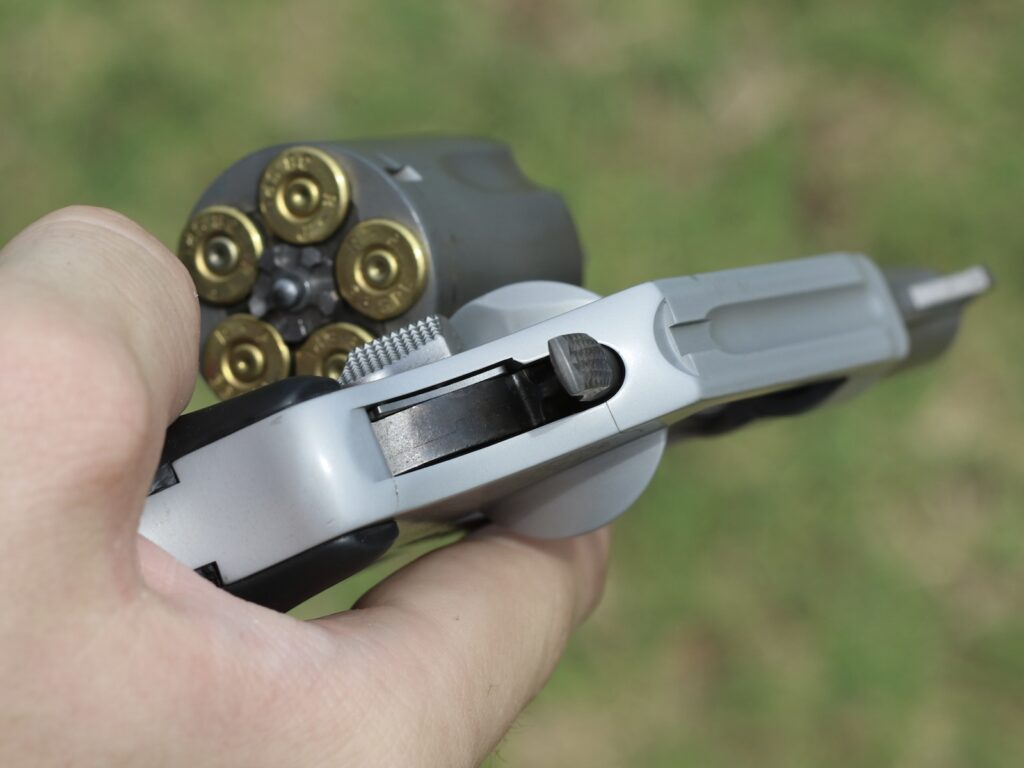
If your J-Frame has a hammer, as this 642 does, you may need to put your thumb on top of the hammer as you draw to prevent snags. If you do catch your shirt on the draw, roll the gun counter-clockwise (for a right-handed draw), and the snag should pop free.
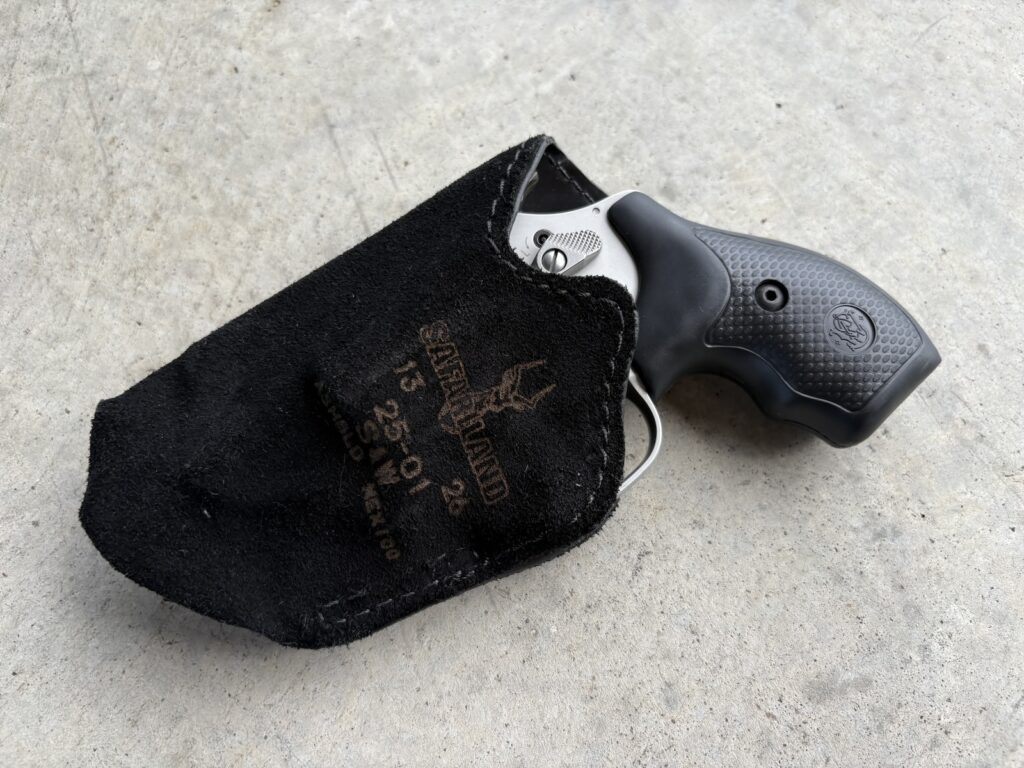
Safariland’s pocket holster: Model 25
Safariland’s Model 25 is an interesting design. It is suede-covered, which helps the holster grip inside most pockets. The inside of the holster is slick Boltaron, which allows the gun to move freely during the draw. There’s no retention or strap closure, just the friction of the gun in the pocket. Read a full review here.
Pocket carry for the J-Frame is one of the reasons why this gun has stood the test of time. It is so well suited for this. While there are arguably more capable designs for concealed carry, like pistols with optics, lights, and more capacity, there’s something simple about the J-Frame. This ease makes it popular for at-home carry or trips to the grocery store.
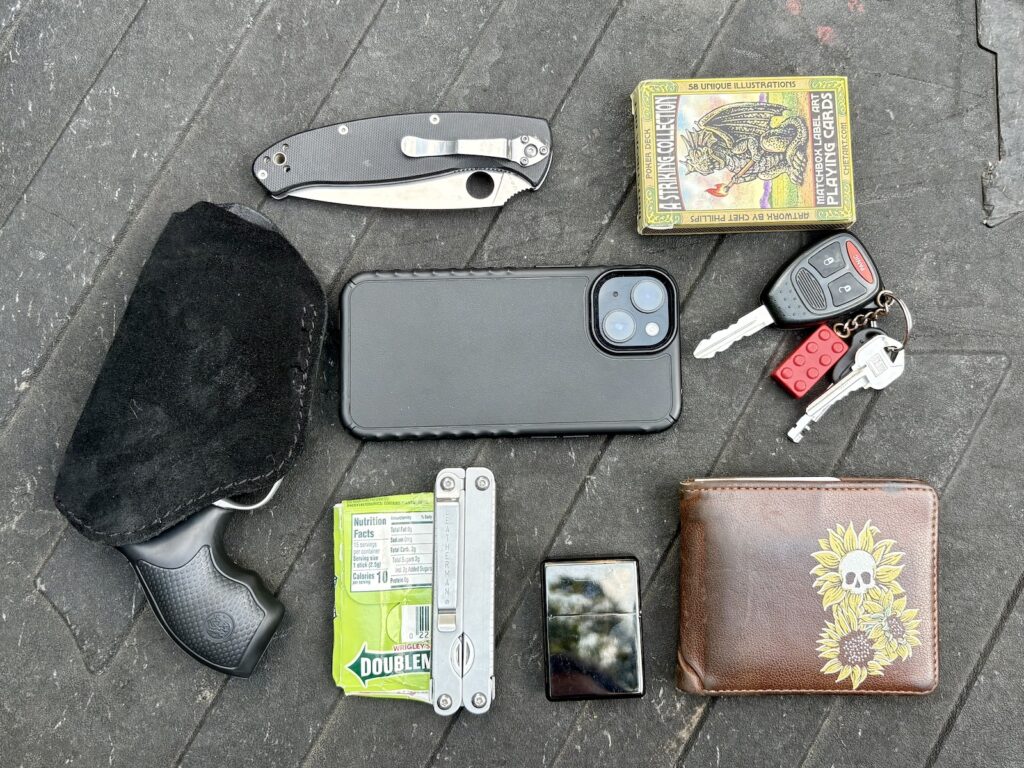
Wherever I go, I carry my phone, wallet, car keys, and a knife. If I have keys and a knife in my front right pocket, there isn’t much room for a revolver. In a coat pocket, though, it’s perfect and would actually be my preferred way of carrying a J-Frame.
If you have space in your front pocket, perfect. Your clothing will always play a part in what you can carry. If you have pants with a belt and a coat on, your options for firearm and position are unlimited. If you’re walking around in a short sleeve t-shirt and shorts, it’s a different story.
J-Frame Calibers
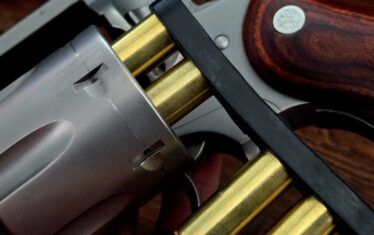
Most of us who carry the J-Frame carry a .38 Special version. These are light, compact, and modern .38 Special can provide effective stopping power, even if it isn’t as fast as 9mm. My go-to range ammo for the .38 is Remington UMC.
Smith also makes them in .357 Magnum, 9mm, .32 Magnum, .22 LR, and .22 Magnum, with multiple models chambered in each.
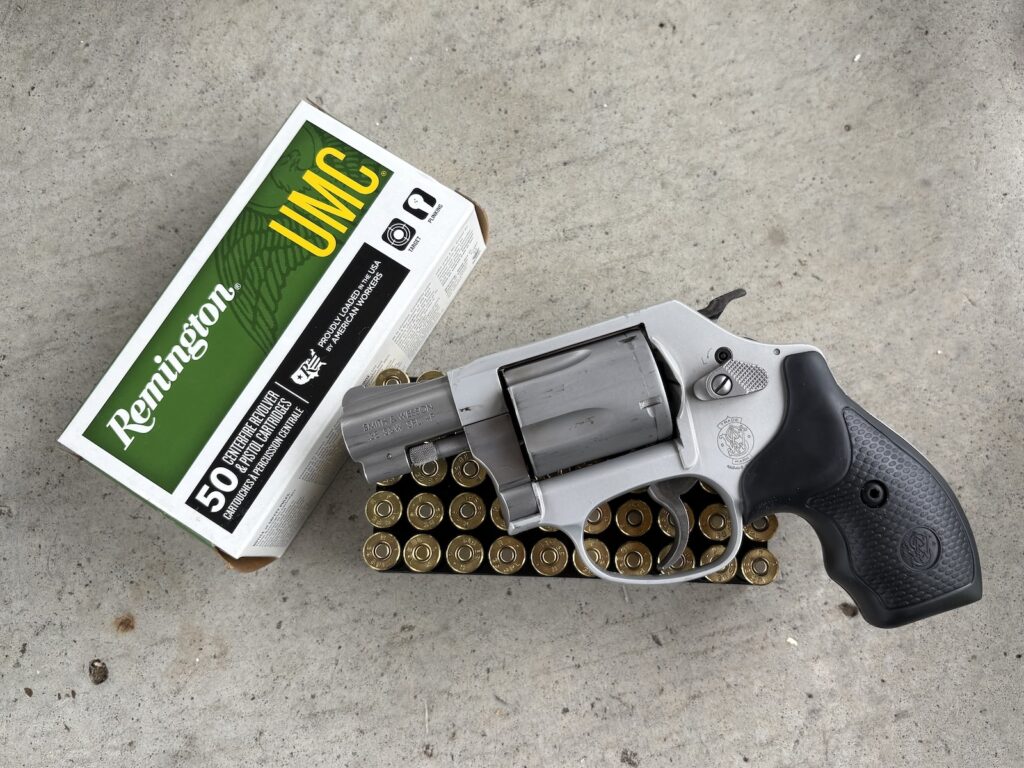
There are internal and external hammer variants of most, except for .32 and 9mm, which are currently only available with an internal hammer. An internal hammer cuts down on the risk of snagging clothing during a draw from concealment.
Most model differences, apart from caliber, come down to barrel length, grip, hammer style, finish, and weight. If you want a classic look, the Model 36 has a blued finish and wood grips. If you want something more modern, there are dozens of options with more rugged finishes and rubber grips. There are 47 variants listed on S&W’s site, and more distributor exclusives.
What’s the role of a J-Frame in a world of Semi-Autos?
Many snub-nosed guns have a heavy double-action trigger. Most rely on this to be the primary safety mechanism. Simply pull the trigger.
A revolver can’t be pushed out of battery. There’s no magazine to load or accidentally drop from the gun. While you can open the loading gate inadvertently, it is all but impossible to do while the gun is holstered.
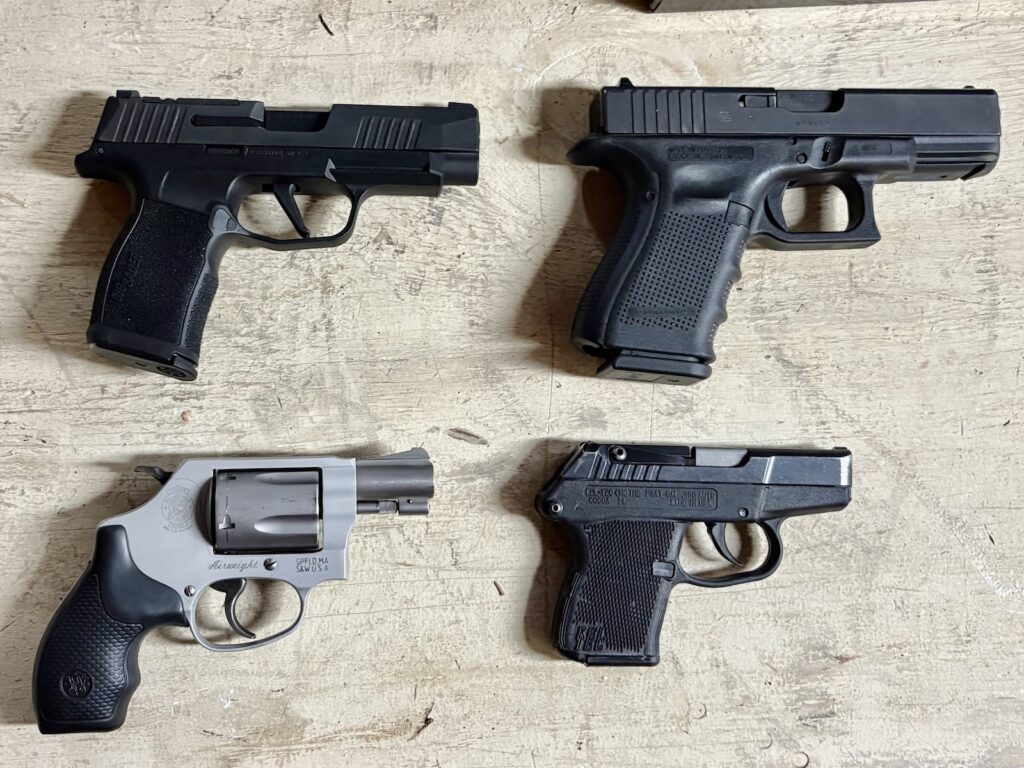
“The revolver platform,” Helms said, “has satisfying mechanical ergonomics that pistols lack. Racking a slide is always fun, but cocking the hammer of a revolver invokes a little mechanical symphony of levers and springs that are deeply satisfying.”
But there were other snub-nosed revolvers and still are. Is it the S&W brand name? Helms sees something extra in the S&W guns.
“The J frame’s smaller size adds a jewel-like feeling, since it’s a smaller revolver. In the same way that car buyers like to judge a car based on the ‘thump’ of a closing car door, I think Smith & Wesson does a particularly good job of imparting that satisfying mechanical feeling in their revolvers—and specifically in the J frame—that some of its competitors lack.”
What’s wrong with the J-Frame?
This platform is older than almost everyone alive. Some would call it antiquated. There are many guns that are arguably better suited for any job that the J-Frame does well.
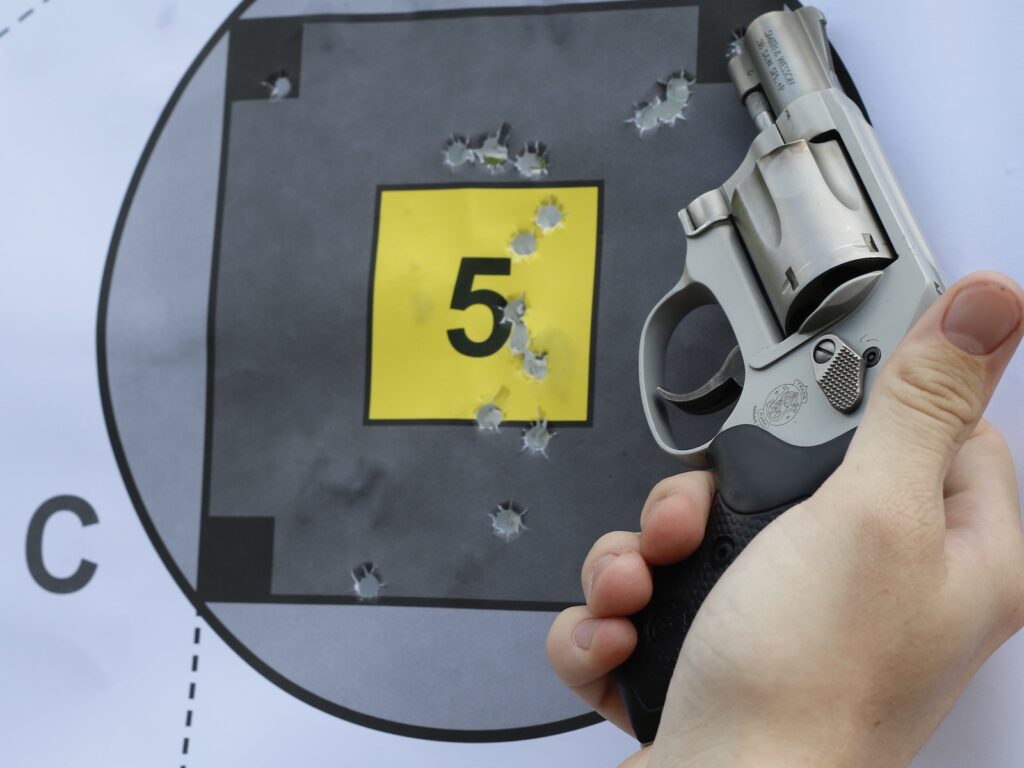
Most J-Frames are.38 Specials. From a snub-nosed barrel, many rounds barely hit 700 FPS. And you only get five shots, in most cases. To put it mildly, shot placement matters.
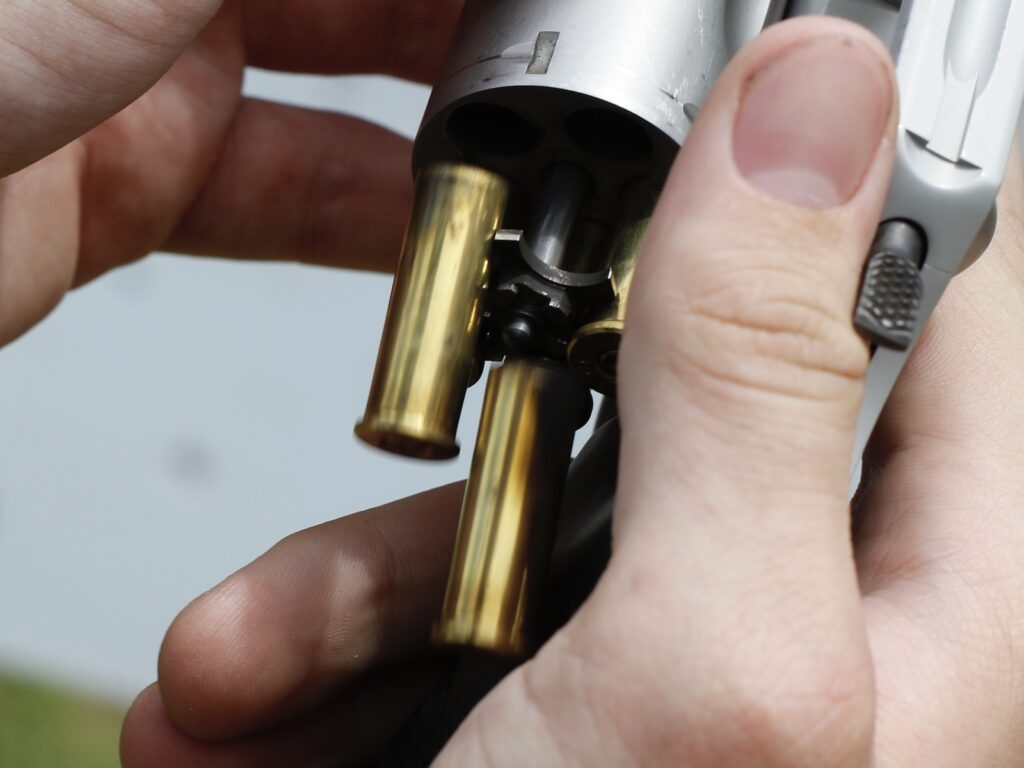
Sights on the J-Frames have short radii. More of the recent upgrades have adjustable rear sights and fiber-optic or tritium front dots. But sights are less of a concern for a gun like this that is designed to be most effective at very close range.
Some add lasers to the grips, like those from Crimson Trace, to help with aim. I don’t use lasers. But I do use lights, and those are hard to come by, too. Most lights are built into aftermarket grips and have very limited power.
Red dots are gaining popularity on revolvers, but they’re still rare. Add a red dot to any snub-nosed gun, and it will be harder to carry it in a pocket or in many holsters.
In the end
And yet, these are the very things that keep the J-frame going strong. The capacity is limited, but .38 Special has come a long way and is effective.
“The J-Frame’s longevity means that there’s a vibrant aftermarket,” Helms concluded. “Holsters, grips, spring kits, sights, and just about anything else a person could want are plentiful and readily available. This really matters.”
For me, a J-Frame’s simplicity is its strength. All you need to do is pull the trigger. Without external safeties or magazines, there’s less complexity and room for error. While it is small, the gun remains large enough to be controllable.
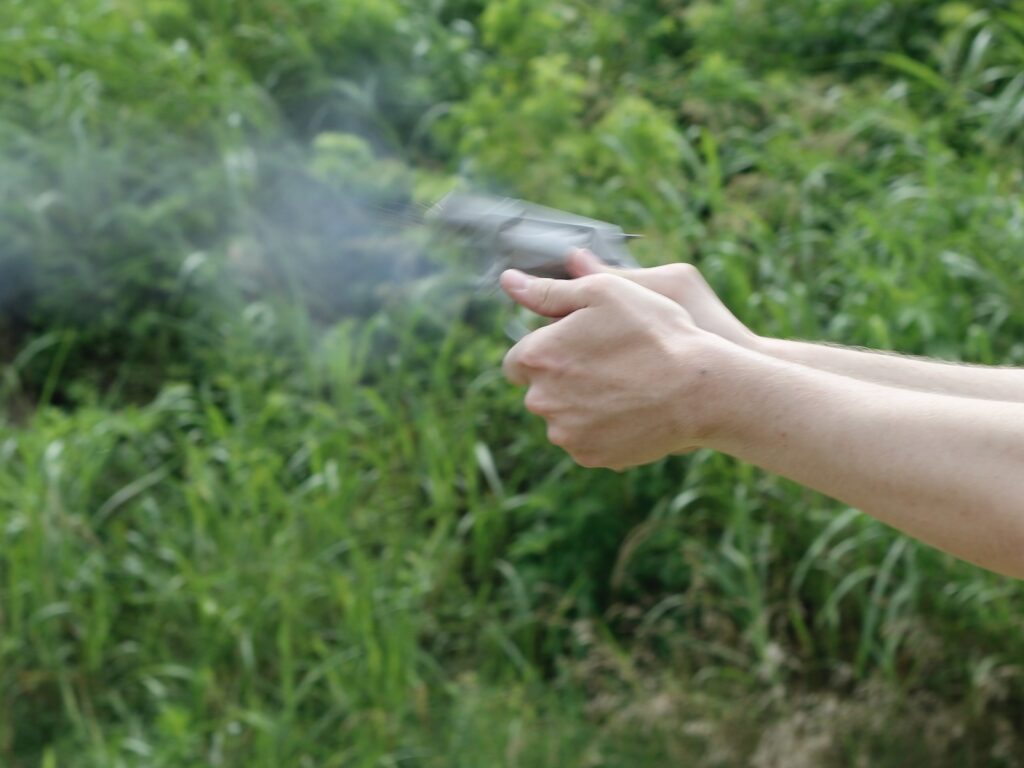
That may be it. Like this S&W Model 642 in .38 Special, J-Frames offer simplicity that equates to capability. You will sacrifice much of what makes some of the micro-compact EDC guns so functional for self-defense, but there’s so much more to consider.