We’re used to seeing hammers on guns. Some designs would look naked without them, like the 1911. Most new pistol designs don’t have a hammer and don’t look out of place. A revolver without a hammer, though, does.
Striker-fired and semi-automatic revolvers are rare, but hammerless revolvers haven’t been totally abandoned. While they’re often aesthetically challenged, the design has some practical advantages on snub-nosed guns. In this article, I’ll talk about two S&W .38s in head-to-head.
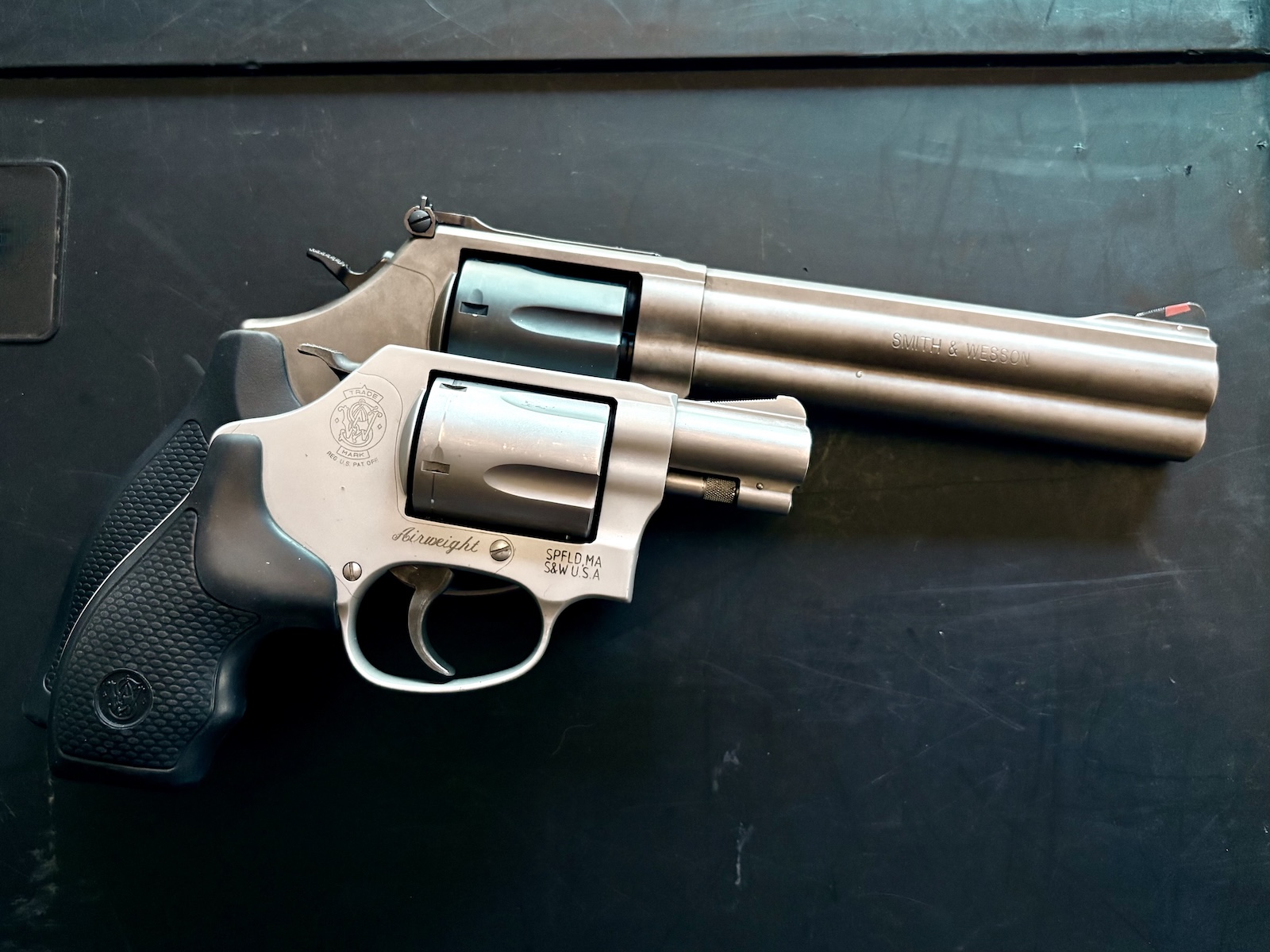
The S & W Model 637 J-Frame Airweight 5-shot .38 Special
The 637 has an exposed hammer and can be fired double-action or single-action. You can cock the hammer for a much, much lighter and shorter trigger pull.
Shooting in single-action improves my accuracy significantly because I’m not fighting a heavy trigger. Unless you’ve really gotten the hang of the gun, though, it’s also a lot slower than shooting double-action. And snub-nosed guns are rarely noted for their potential accuracy.
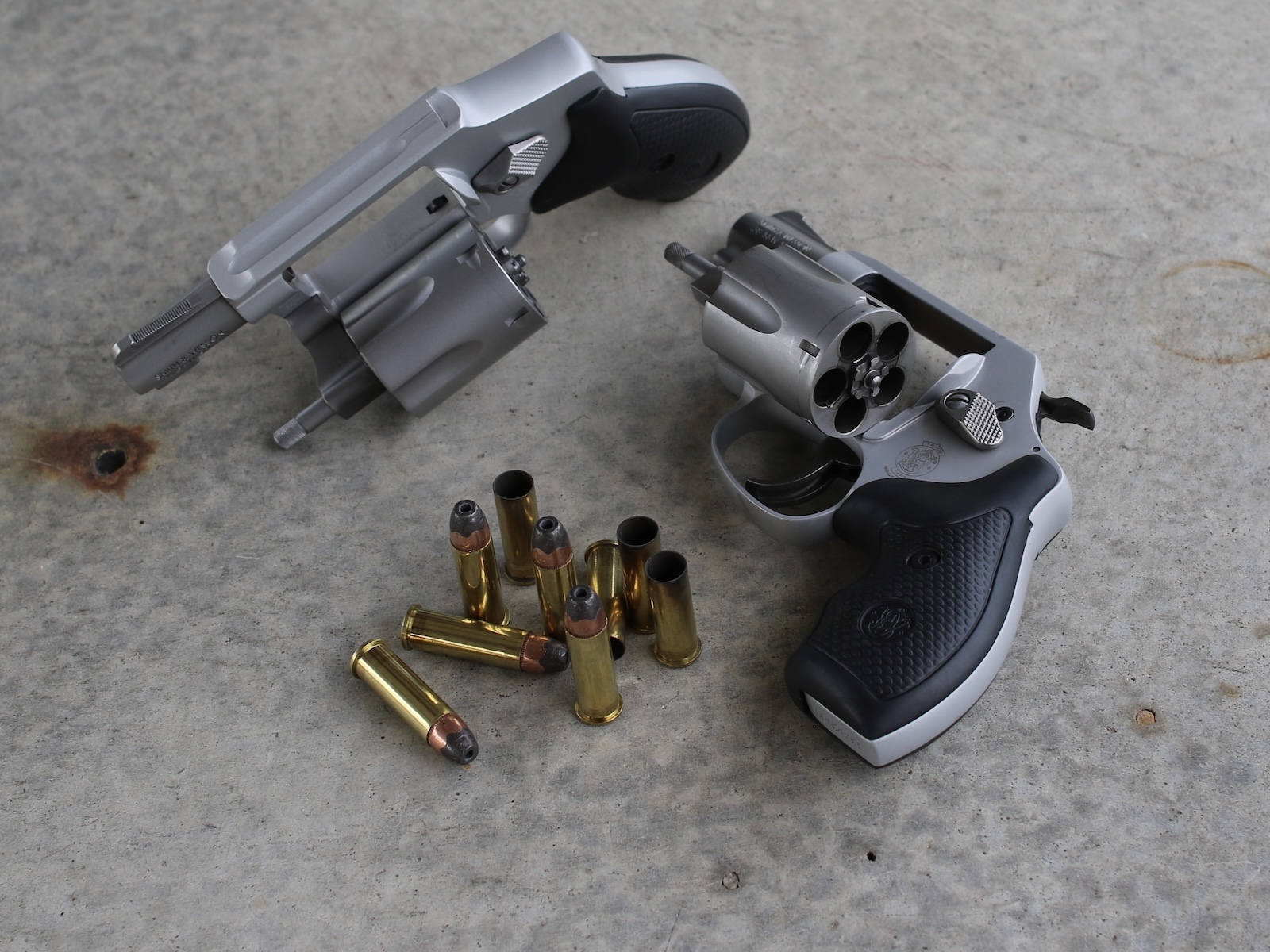
Smith’s Model 642 J-Frame Airweight 5-shot .38 Special
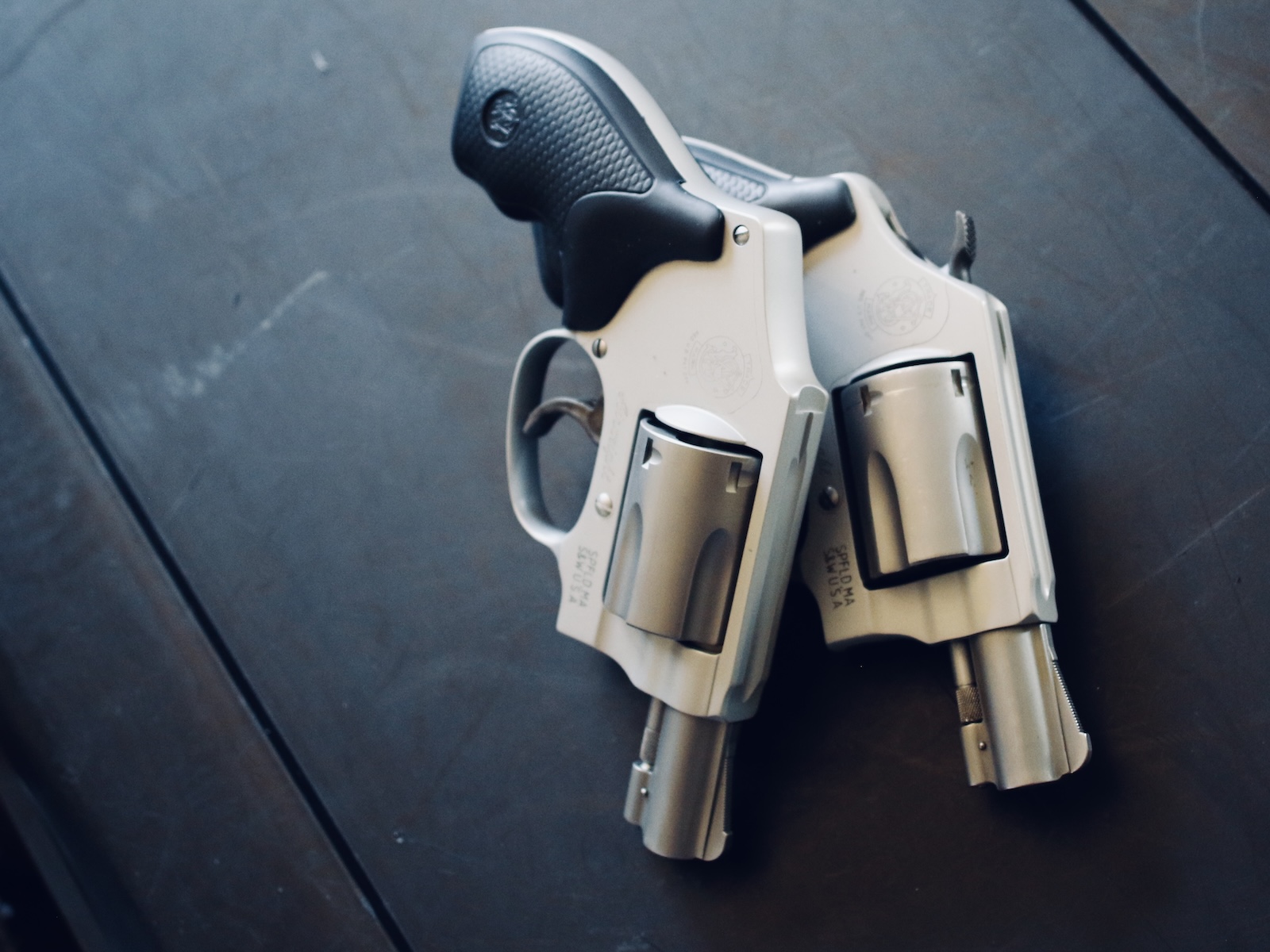
A 642 is hammerless and therefore double-action-only. In every other way, these two are visually identical. They are both using Airweight frames and have the same rubber grips. The lack of a hammer is the key element.
Does a hammerless revolver have a hammer?
Hammerless is a misnomer. A hammerless revolver still does have a hammer, but it is fully enclosed inside the frame. The hammer can only be manipulated via the trigger, so there isn’t a way to truly fire one single action. I’ll talk about that later. The S&W 642 expands the frame up to enclose an internal hammer.
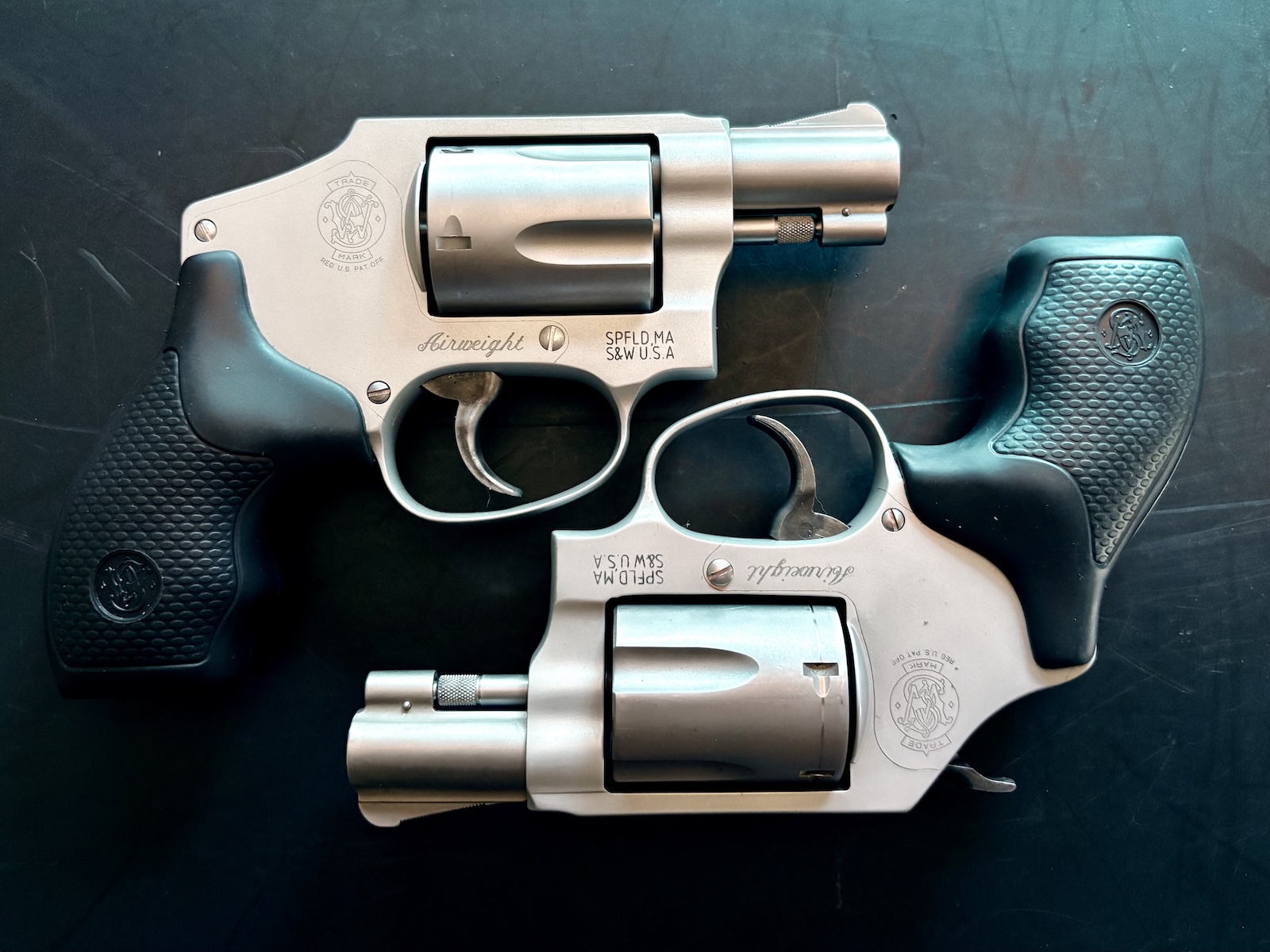
A revolver with an external hammer is fairly straightforward. It just means that the hammer is visible outside of the frame. Most external hammers have a spur so that you can manipulate the hammer with your thumb.
The vast majority of revolvers have a hammer spur, which makes it significantly easier to shoot single action but can also make a difference in drawing the revolver from concealment. Some revolvers with an external hammer (almost all of the snub-nosed variety) can be fired double action, others (like the Single Action Army and other stereotypically western revolvers, and many rimfires) can only be fired single action.
Why are there no striker-fired revolvers? Most striker-fired guns need the slide reciprocation to reset. There are some striker-fired pistol designs that use the double-action-only trigger, but the striker is still pre-cocked by the slide itself.
What about the bobbed hammers?
There is a subset of external hammers referred to as bobbed. All that means is that there is no hammer spur, but that the hammer is still external. A bobbed hammer usually sits flush or close to flush with the frame of the revolver.
They aren’t technically double action only but are usually classed as such, because to fire one single action you still have to pull the trigger slightly so that the hammer is far enough out of the frame to manipulate with your thumb. It’s a halfway point between the ease of use of an external hammer and the ease of carry of an internal one.
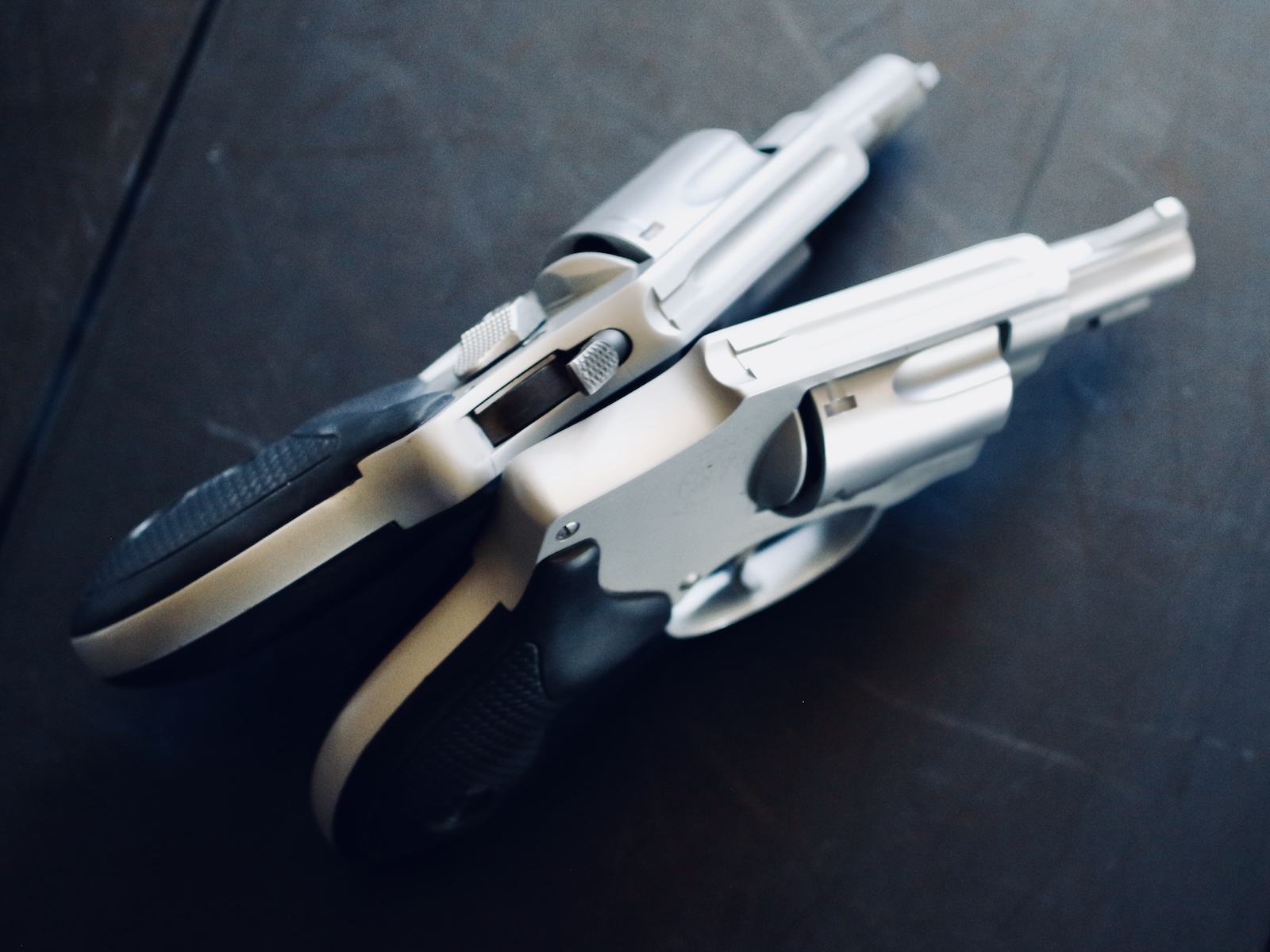
External, internal, bobbed, what else?
Smith makes a more off-putting hybrid in the form of the 638. The frame’s spine has a very pronounced hump that follows the path of the hammer spur. There is a very small external pad that can be used to manipulate the hammer with your thumb, but it is less likely to get snagged than a spurred external hammer. Smith calls it an enclosed hammer.
You’ll occasionally hear the term “concealed hammer” used as well. This can refer to an internal hammer, but more often refers to bobbed hammers. The bobbed hammer is most commonly a spurred hammer that is ground down. There are no bobbed hammers in the S&W catalog currently, though they have made them.
Too many options?
External hammers and the odd hump-back halfway internal hammer all have some option for either double or single action trigger pulls. Only the truly internal hammer variants are double action only.
Double-action trigger pulls
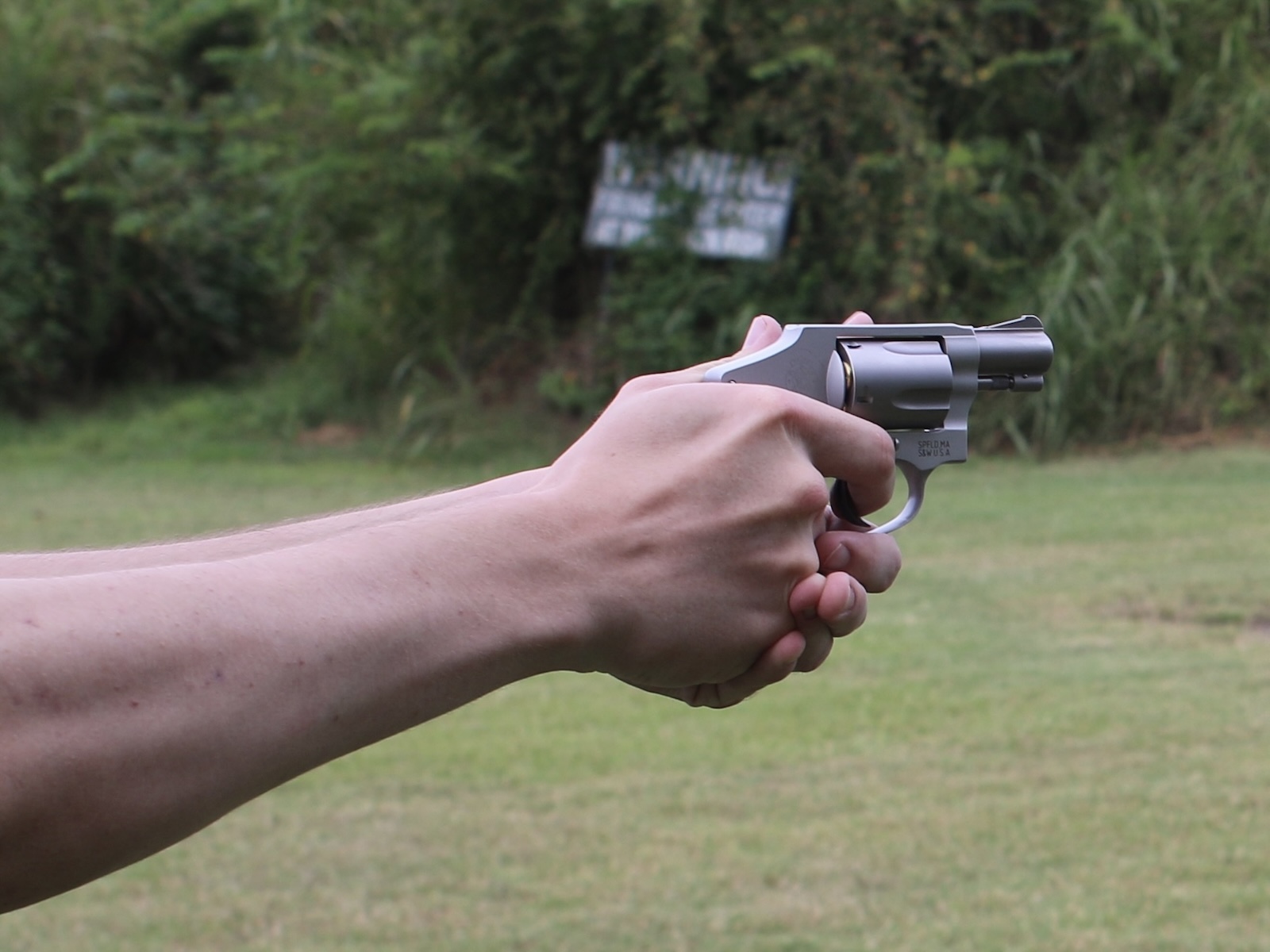
The actual length and weight of the double-action trigger pull is no different between the external hammer 637 and the hammerless 642. But because one has an exposed hammer, there could be a few perceived differences in the trigger pull even in double-action.
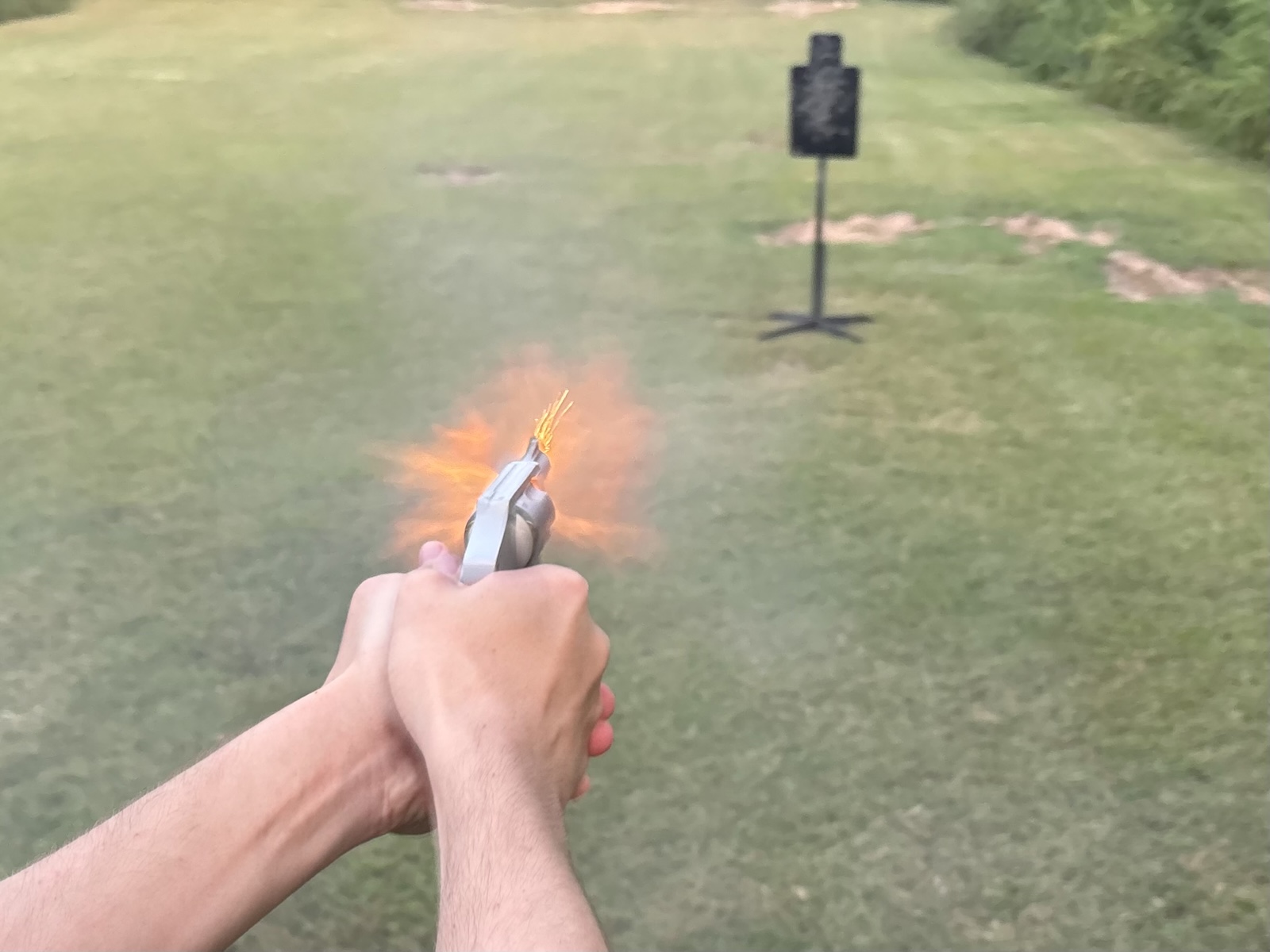
For one, with an external hammer there is a visual reference for how close to the break you are when you begin to pull back. It’s more noticeable if you’re taking your time and trying to get a controlled break to take a precise, controlled shot. You can’t visually track an internal hammer’s progress, so at first it might seem a little bit unpredictable when that break happens.
The reality, though, is that snub-nosed revolvers are rarely used for precision accuracy. A double-action pull is ideal for a gun designed to work well from concealment.
Training with DAO
If you have a revolver that can be fired single action, odds are you’ll fire it that way at the range instinctively. That’s my tendency, and the tendency of every new shooter I’ve taken to the range.
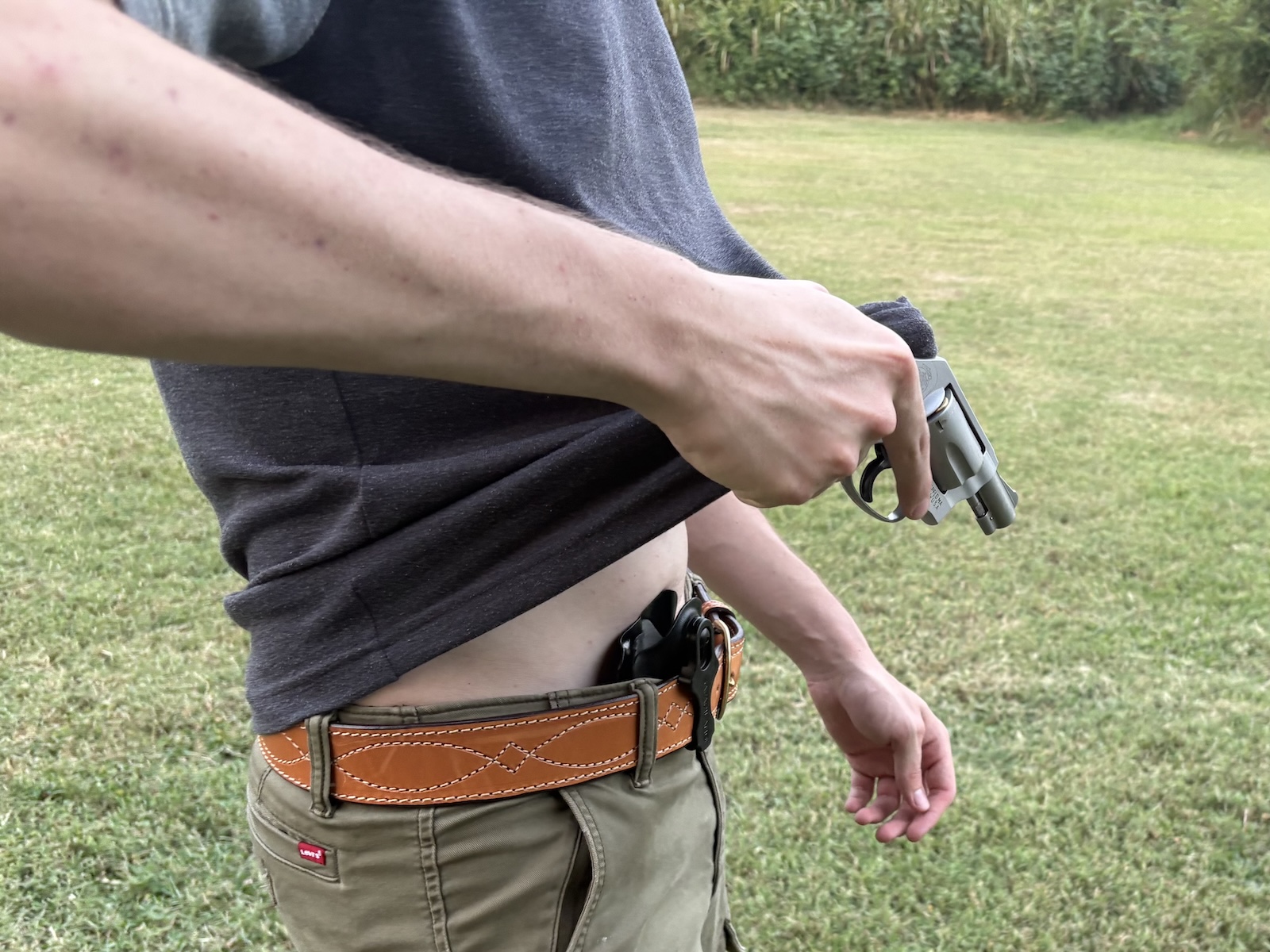
If you’re used to shooting single action, a double action pull is going to feel clunky and like it’s fighting you. It takes some time to get your shots on target at speed. If you have a double action only revolver, like one with an internal hammer, the double action trigger will feel a lot more natural to you.
If you have a revolver with an external hammer that can fire double action, you should train both ways. The better speed and accuracy you can achieve with both, the better prepared you are for a real world scenario in which you might end up using either one.
An internal hammer shines as a concealed carry option, where speed, simplicity, and reliability matter. J-Frames are a rock solid option for a carry gun, and I have another article on the blog that talks about that. But they’re most in their element inside the waistband or even better in a pocket.
What to look for in a holster
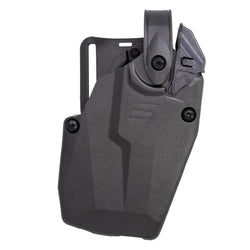
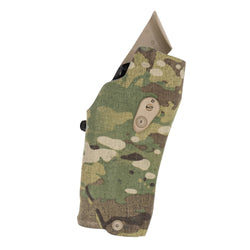
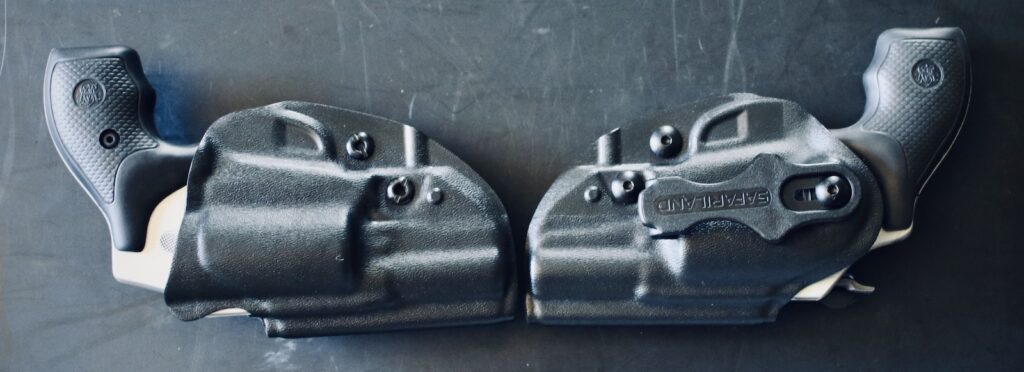
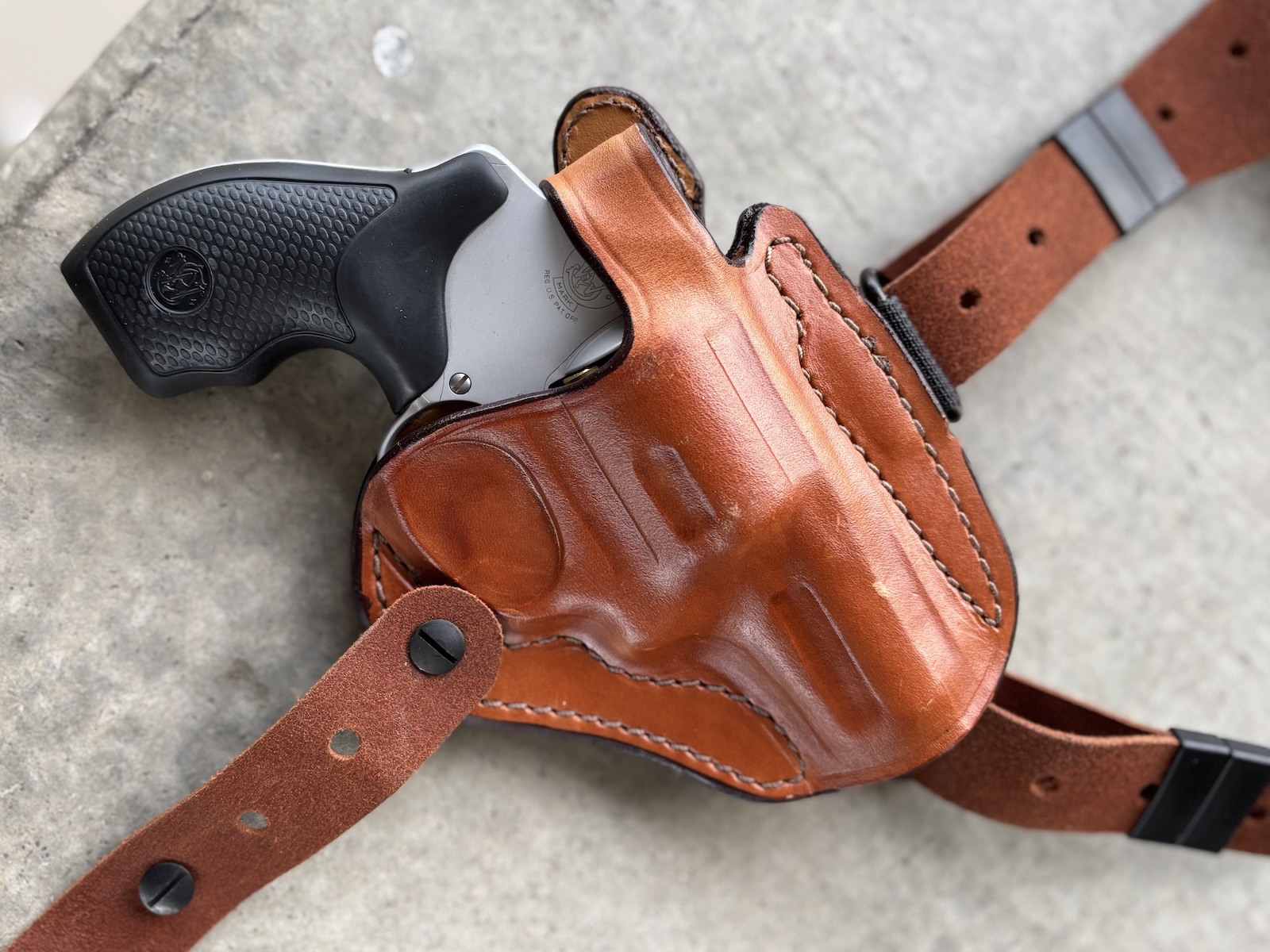
Safariand has a Species for the J-Frame. Bianchi, too, has many leather options, if you want to round out the old school aesthetic.
The important piece with a hammerless gun is the complete protection of the trigger guard. Thumb-break holsters lock down the hammer, usually, making it hard or impossible to pull the trigger. Open top holsters, though, don’t.
What to look for in revolver ammo
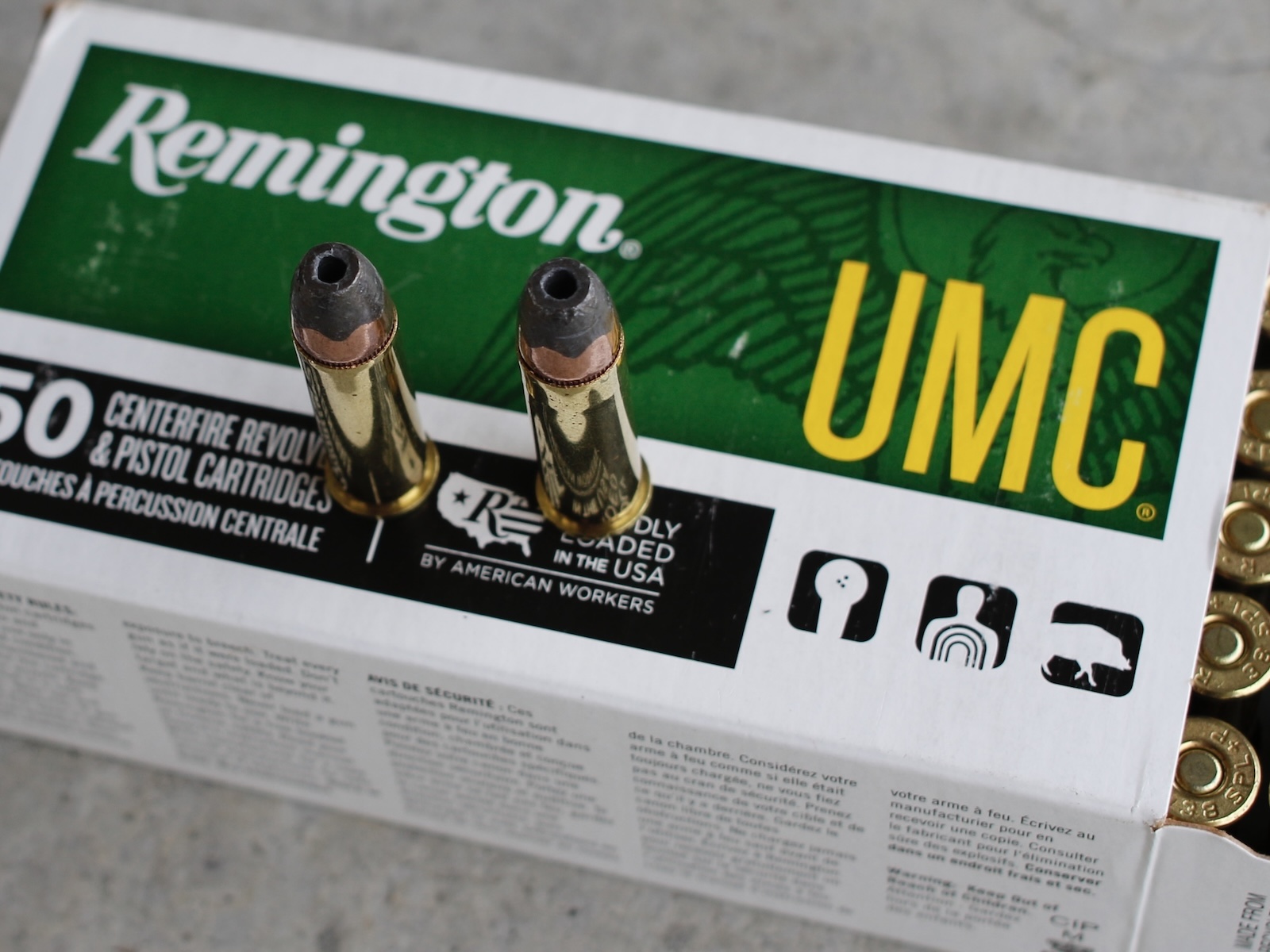
There are rounds meant for range work. Some are called wad-cutters. Conical bullets, too. One you get to the hollow point, the round may be multipurpose, like Remington’s UMC +P. It is priced low enough to train with, but will also work for carry ammo.
If you want something dedicated to effective terminal ballistic performance, I’d suggest Hornady’s Critical Defense. These rounds are plugged so the hollow point tip won’t clog and fail to mushroom on impact.
Conclusion
If I’m going to carry a revolver outside the waistband on my hip, I’d want something bigger. For hunting, everyday open carry, or rural use, I would go with a bigger .357 with 6, 7, or even 8 rounds. Or maybe a .44, depending on where I am. But for a concealed carry revolver, a little J-frame with an internal hammer would be my go-to. A J-Frame is hard to beat for an easy pocket carry get-off-me gun.
This is where an external hammer just gets in the way. Drawing from inside the waistband or from the pocket adds another layer of complexity. You have to clear any garments out of the way to effectively draw without the likelihood of getting hung up.
It’s a good practice to clear your shirt or hoodie or whatever you have to worry about very intentionally during your draw. But that isn’t always realistic in a real world scenario.
It takes two free hands and enough time and space to dedicate both to drawing your gun. An external hammer acts like a big hook on the back of your gun. If you don’t clear your shirt out of the way effectively, it has a real tendency to get hung up. Revolvers with internal hammers are next to impossible to catch on clothing.
For me, the hammerless Model 642 is about as clean and easy as you can get.