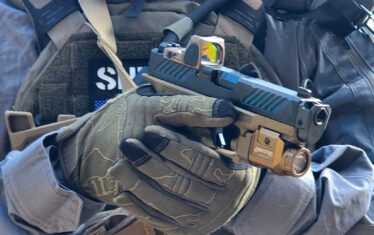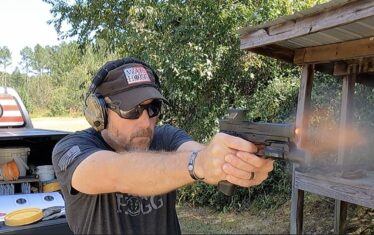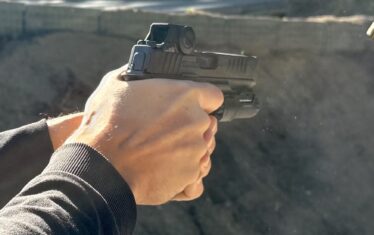

Round 2 of the 2011 Project is complete. Almost 2,000 rounds were shot, numerous drills were run, and countless groups were fired to give you the best possible informed opinion.
And this is what I found: this is the most competitive tier of 2011-style handguns. Unlike the budget-tier guns, which make trade-offs to hit a price point, this tier doesn’t miss. They might be the best “value” guns of all 2011s.
These pistols offer features often found in the high-end tier at half the price. They are for serious shooters who train, shoot competitively, or spend a lot of their downtime at the range.
In this article, I’ll go pistol by pistol through the mid-tier 2011s and recount some of my thoughts, who I think each pistol is for, and what people should look out for when making a purchase. Honestly, I’d say each of these pistols will be a good choice, but will they be the best choice for you?
That’s what I’m trying to help you decide. Let’s dive into it.
Mid-Tier 2011s at a Glance
| Pistol | Price | Capacity / Mags Included | 25-Yard Group | Bill Drill Avg. | 1-and-1 Avg. |
|---|---|---|---|---|---|
| Kimber 2K11 | $2,245 | 17+1 (20+1 extended) / 3 | About 6-7″ | 1.28 sec. | 3.36 sec. |
| Race City Defense Core | $2,995 | 17 / 1 | 2″ | 1.19 sec. | 2.9 sec. |
| Stealth Arms Platypus | From $2,345 (Comp model) | 17, Glock 17 or Sig P320 mags / 2 | About 2″ | 1.21 sec. | 2.8 sec. |
| Sig Sauer P211 GTO Combat | About $2,500 | P320-compatible 21- and 23-rd / 3 | 3.5″ | 1.14 sec. | 2.34 sec. |
| MasterPiece Arms DS9-TC Hybrid | From $3,199 (base Hybrid) | 18+1 / 2 | Just under 2″ | 1.2 sec. | 2.75 sec. |
KIMBER 2K11
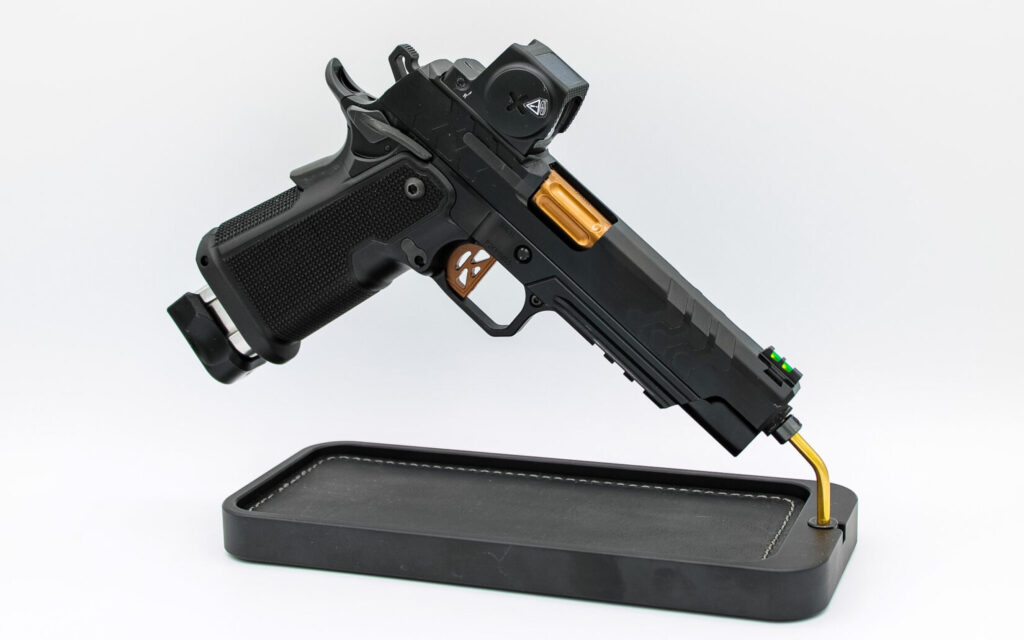
The Kimber 2K11 marks a noticeable step up from the budget-tier 2011s, offering a more refined feature set and a higher-end feel without venturing into the $4,000+ territory of the next tier.
The hand-fitted construction, aluminum grip module, excellent trigger, and 20-round capacity give it plenty of substance, while the traditional 1911-inspired styling gives the 2K11 some personality in an increasingly crowded market.
I really enjoyed this pistol, and among the pistols in this category, it’s the one I want to work on to improve. Kimber, as well as a host of other places, offers aftermarket parts—magwell, controls, etc. I think that’d be a fun winter project.
The biggest drawback is the controls. The standard-sized magazine and slide releases can be hard for people with smaller hands to reach, and the larger grip circumference doesn’t help. The optic mounting system is good, but I still prefer the AOS approach used by other pistols in this series. As I mentioned, I’d swap out the smaller magwell.
Ultimately, the 2K11 is a compelling option for someone looking to enter the higher-end 2011 market without going all the way to a custom gun. It’s accurate, well-equipped, and has the fit and finish to match its price. With a few modifications, particularly to the controls and magwell, I’d have no hesitation running one in competition.
That said, Kimber offers a ton of options, and you can regularly find them in many gun shops around the country (they are even going on the approved handgun list in California).
RACE CITY DEFENSE CORE
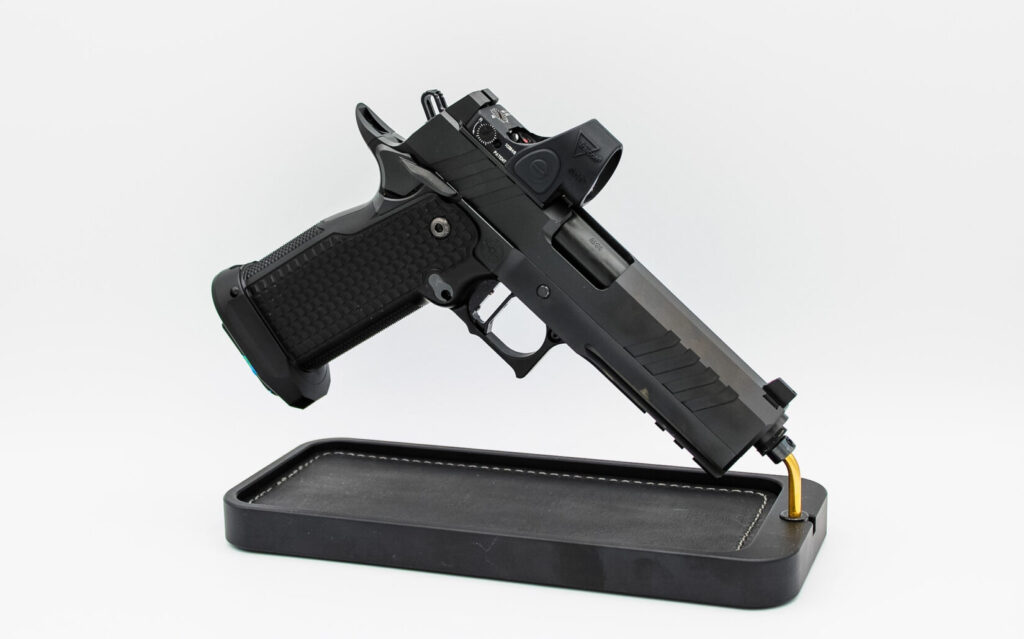
The Race City Defense Core might be the biggest surprise in this tier. Coming from a relatively new company, I wasn’t sure what to expect, but the Core quickly proved that RCD belongs in the conversation with more established 2011 manufacturers.
The machining, fit and finish, excellent trigger, aggressive grip texture, and robust optic mounting system all give this pistol a genuinely custom-gun feel. More importantly, it shoots. A 2-inch group at 25 yards and a 1.19-second Bill Drill average make the Core one of the strongest performers I’ve tested so far.
The ergonomics are another standout. The pinned grip safety and extended magazine release worked particularly well for me, proving once again that how a pistol fits the shooter can matter more than the name.
My biggest complaints are minor: I’d like to see more oversized controls, and shipping a nearly $3,000 pistol with one magazine is a real gap. I know they are trying to keep it under $3,000, but two magazines are the bare minimum.
The Core is best suited for the serious enthusiast or competitor seeking near-custom performance without entering the $4,000-plus category. The biggest challenge may simply be finding one. RCD is still a small company, but if you can get your hands on a Core, it should be considered.
STEALTH ARMS PLATYPUS
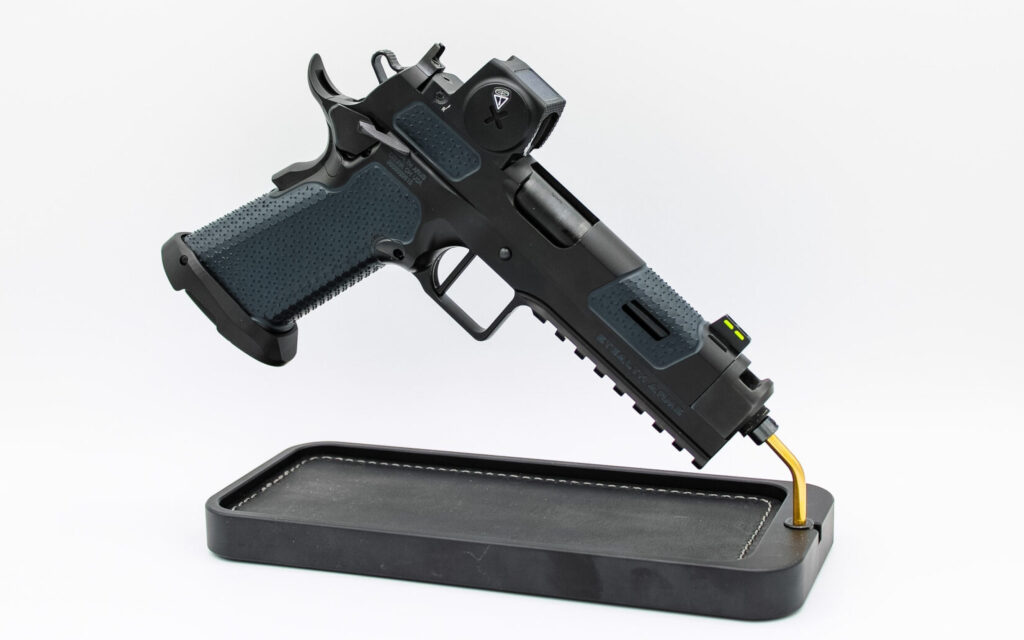
The Stealth Arms Platypus might be the most distinctive pistol in the 2011 Project, and after shooting it, I understand why it has developed such a following. The ability to customize nearly every aspect of the pistol is impressive, and the Platypus backs that up with excellent performance.
The integrated compensator works, the pistol is exceptionally fast, and accuracy was among the best I’ve seen so far. The trigger is also the standout of the group, with the competition option delivering an exceptionally clean, light pull.
Better yet, the smaller grip circumference and Glock- or P320-pattern magazine compatibility make the Platypus particularly well-suited to shooters with smaller hands. Did I mention, you can customize nearly every part of the gun on the Stealth Arms Platypus builder?
There are a few things I’d change. I still prefer oversized controls, and the magazine funnel has a small lip that can interfere with a reload when the magazine is slightly misaligned. Neither is a serious issue, and I had no major complaints about the pistol itself.
The Platypus is ideal for the shooter who wants something genuinely customized without paying custom-gun prices. It’s also a compelling choice for anyone who wants 2011 ergonomics without the bulk of traditional double-stack magazines.
Dealer availability is limited, but if you’re willing to order one, the Platypus deserves serious consideration. Simply put, I really like this pistol.
SIG SAUER P211 GTO COMBAT
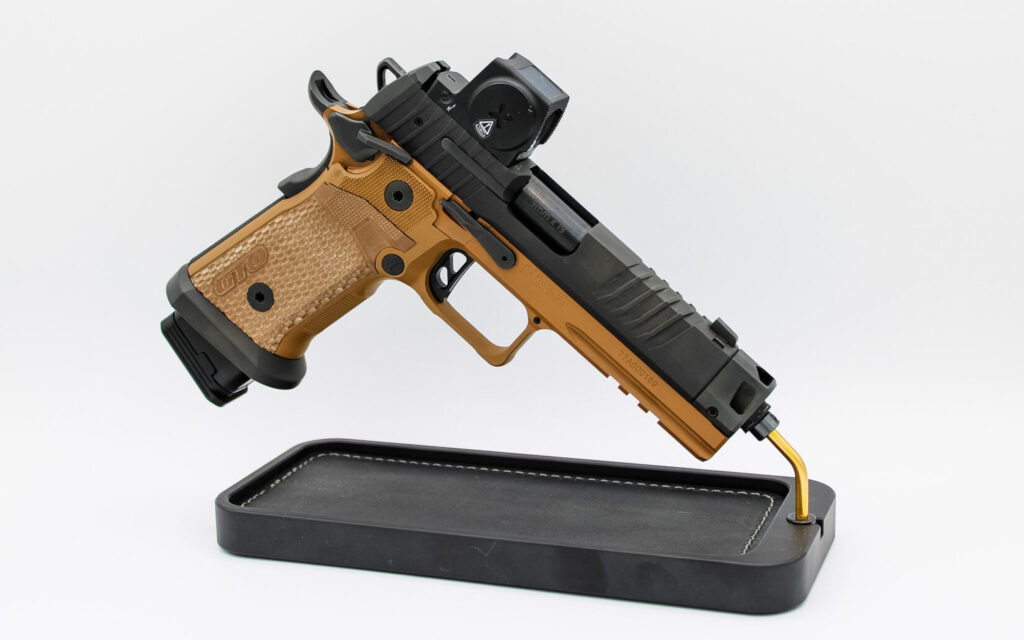
The SIG Sauer P211 GTO Combat is one of the easiest-to-shoot pistols in this project. That shouldn’t come as a surprise when you’re dealing with a 46-ounce pistol and SIG’s excellent MACH3D compensator, but the combination is almost comical.
The gun stays remarkably flat, follow-up shots are exceptionally fast, and the ergonomics make it easy to shoot well. My 1.14-second Bill Drill and 2.34-second 1-and-1 average were the fastest results I’ve posted so far, and I think that says a lot about what the P211 brings to the table. The P320-compatible magazines are another major benefit, particularly for shooters already invested in that ecosystem.
The biggest drawback is the trigger. The Series 80 system and noticeable side-to-side movement keep it from feeling like the higher-end 2011 trigger it should be at this price. The pistol is also heavy, and while that weight contributes significantly to its performance, it won’t appeal to everyone. The controls could also be larger.
Still, I think the GTO Combat is one of the strongest values in this tier. It’s ideal for Sig fans or for those who already have a ton of P320 magazines. If you’re looking for the best compensator in the bunch, this is probably it.
At roughly $2,500, it’s hard to argue with the performance, and like the Kimber, you can find it at many FFLs.
MPA DS9-TC HYBRID
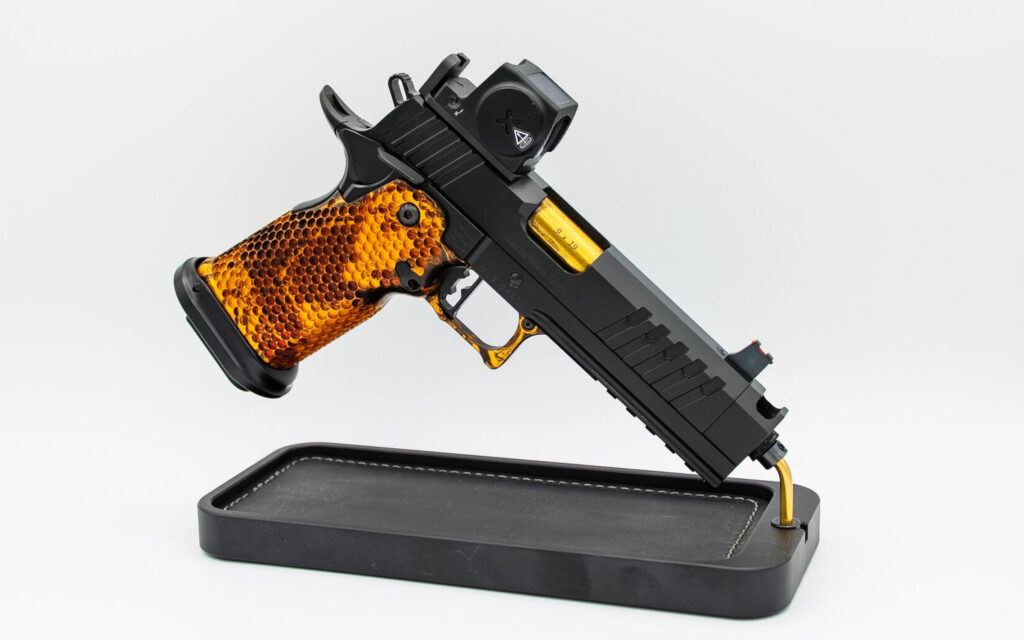
The MasterPiece Arms DS9-TC Hybrid feels like a competition pistol because, well, that’s exactly what it is. Built entirely from billet and barstock, hand-lapped, tuned, and tested before leaving MPA, it’s a serious piece of machinery.
Accuracy was excellent, with a sub-2-inch group at 25 yards, and the 2.75-second 1-and-1 average showed how well the pistol’s ergonomics work for me. The pinned grip safety, excellent trigger, well-sized magwell, and threaded magazine release all add to what is an extremely capable package.
There are a few things I’d change. The grip is slightly bulky, the factory magazine release is smaller than I’d prefer, and I wish the controls were more substantial. The sticky ambidextrous safety on my demo gun was also disappointing, though that may be specific to a pistol that has seen considerable demo use. None of these issues detract significantly from the overall package.
The DS9-TC Hybrid is best suited for the serious competitor or enthusiast who wants a hand-built pistol without venturing into the upper reaches of the 2011 market. At around $3,200 for the base model (the DS9-TC configuration I tested starts at $3,799), it’s certainly not cheap, but the quality is evident.
The bigger question is whether that extra refinement justifies the price compared with some of the excellent pistols already tested. That’s where this tier gets interesting.
Zooming Out: Which Mid-Tier 2011 Fits You?
These are all really good options. It just comes down to what you’re looking for. If you need to see it in person and get a feel for it, then the Sig and Kimber are your easier-to-find options. However, I think it’d be worth looking at the others.
I get that the MPA might be a bit too expensive for this category, but it is truly a competition-ready gun. I’ve shot a bunch of MPA rifles over the years, and I can speak to their championship pedigree. They are good at what they do.
I like what the RCD brings to the table in terms of machine quality, but it’s a “you-get-what-you-get” kind of gun. There’s no room for customization unless you want to go to the next tier. The Stealth Arms, on the other hand, is a truly custom gun you can tweak until the cows come home. The only limit is your imagination.
What’s Next for The 2011 Project?
As the 2011 market continues to grow, competition will only make these pistols better. That’s why we’re seeing so many in this category, and there are plenty more out there that I didn’t cover. That’s a win for everyone.
And while Round 2 of the 2011 Project may be over, there’s no shortage of new pistols waiting in the wings for Round 3. In the next round, we’ll talk about 2011s as duty guns for LE and the military. That tier will feature options from Staccato, VKTR, and Watchtower Defense. Stay tuned.
A Couple Things Worth Adding
Which mid-tier 2011s use Glock or Sig P320 magazines?
Two of them. The Stealth Arms Platypus accepts Glock 17 and Sig P320 9mm magazines, and the Sig Sauer P211 GTO Combat ships with P320-compatible steel magazines.
Which mid-tier 2011 was the most accurate in testing?
At 25 yards, the MasterPiece Arms DS9-TC Hybrid printed a group just under 2 inches, and the Race City Defense Core and Stealth Arms Platypus both grouped at about 2 inches.
Which mid-tier 2011 posted the fastest drill times?
The Sig Sauer P211 GTO Combat, with a 1.14-second Bill Drill average and a 2.34-second 1-and-1 average — the fastest results in the mid-tier round.