
The Safariland SAVES Club isn’t just a list of names—it’s a testament to lives protected and second chances granted. Each member has a story, a moment when the right gear made all the difference. This series introduces you to those stories.
Today’s SAVES is Sergeant Mauricio Valle of the Houston Police Department, whose life was protected by his Safariland SX SX02 Level IIIA armor and plates, worn in a Safariland SHIFT 360 carrier.
Here’s his story.
BACKGROUND: A Career Built on Street Crimes
Mauricio Valle joined the Houston Police Department and, like most young officers, spent his early years running call after call — the kind of patrol work where downtime is something you catch reports up on, not something you actually get.
In 2009, he applied for a Gang Task Force position, one of HPD’s Street Crimes Units, and got it. The job changed how he saw police work: surveillance, developing cases, chasing down the details behind a neighborhood’s worst problems instead of just responding to them one 911 call at a time.
He spent five years there before moving to narcotics for eight more. Then he took the sergeant’s exam, promoted, and went back to patrol — the standard path up. But he never stopped thinking about the unit that had shaped him.
When a sergeant’s position opened up leading a brand-new night-shift Street Crimes Unit, he took it, hand-picked his team, and built something from scratch. The trust he built with those officers — the kind where you don’t have to think twice about what the person next to you is doing in a bad moment — would matter more than he knew.
THE Ambush That Changed Everything
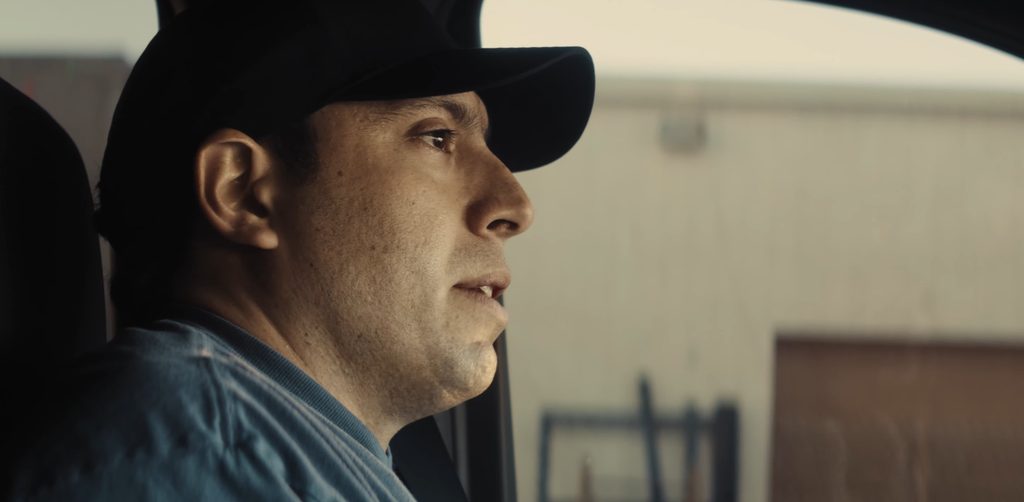
On the overnight shift of December 1-2, 2023, Valle was working with his team. They ran down a couple of open cases, assisted another unit with an arrest, and by the time everything wrapped up, it was well past midnight. He was still working — still on surveillance in his unmarked car — when everything happened at once.
A 9mm round came through the passenger window. Then another. He didn’t feel each impact separately; they came in a blur — his arms, his legs, one after another.
Valle tried to get out. He reached for the gear shift, and it stuck in park. He tried his seatbelt — a release he’d trained so many times it was pure muscle memory, something he did without thinking even in his own personal car — and in that moment, wounded and in shock, he couldn’t find it. He got hit again reaching for it.
“Every time I’m getting hit, it’s like my OODA loop resets,” he’d later say of those seconds. He was pinned, scanning, trying to reorient, while the rounds kept coming — through both arms, both legs.
What felt to him like twenty or thirty seconds trapped in that car was, by the radio log, only a few. Long enough for fear to set in. Long enough to think about his wife and kids, and the promise he’d made her: that no matter what, he’d come home.
The assailant moved from the passenger side of his car to the driver’s side, and Valle saw that he was gripping the partially concealed gun, about to pull it back out.
Valle didn’t stay pinned. Wounded in both arms and both legs, he got out of the vehicle and returned fire, ending the threat himself.
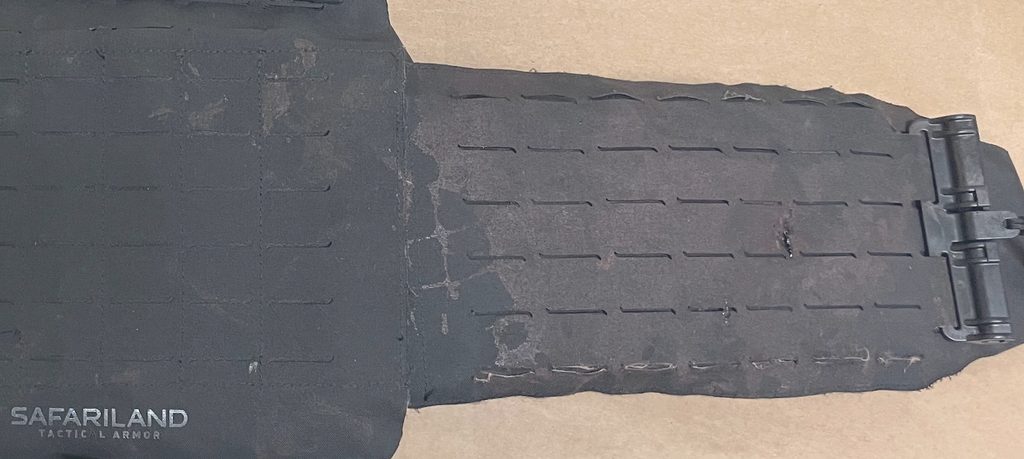
His vest and plates — a Safariland SX SX02 Level IIIA system worn in a SHIFT 360 carrier — had already taken hits along the cummerbund. He didn’t know it in the moment.
When his team arrived, they found him still conscious, still giving directions — telling them which way the suspect had run, warning them not to get ambushed rounding the corner. They got tourniquets on his arms and legs at the scene.
In the ambulance, riding alongside a teammate who was also a combat veteran, Valle felt the blood loss catch up with him — the cold, the numbness, the fading vision that made him certain, for a second time that night, that he wasn’t going to make it. He asked his teammate to call his wife. He gave him her number so someone could tell her he loved her, just in case.
He made it to the hospital. Seven rounds had hit his body directly. Four more had hit his armor and stopped there.
RECOVERY & Life After the Event
Valle spent four days in the hospital and came home to a body that, for the first time in his adult life, couldn’t do anything for itself. Both arms and both legs had taken rounds; his forearm had shattered, eventually requiring two titanium plates. He couldn’t change his own bandages, couldn’t reach an itch on his own face, couldn’t get up off the floor without help.
His wife — a nurse by training — became his full-time caregiver on top of everything else she was already carrying. She set alarms through the night to manage his medication on a schedule that would actually hold the pain back. A close friend, seeing how much strain it was putting on her just to get him upright, showed up one day with a power lift chair. Valle, by his own admission, hated the idea of needing one — until he needed one. It became the way he relearned how to stand, how to sit, and eventually, how to walk again: first around the house, then to the end of the driveway, then down the street.
The recovery wasn’t a straight line. About two months in, cleared for an early physical therapy consult and feeling optimistic, Valle couldn’t complete a single exercise they asked of him — couldn’t even grip a ten-pound dumbbell. He sat in his truck afterward and broke down for the first time since the shooting. It was, in his words, a feeling close to defeat.
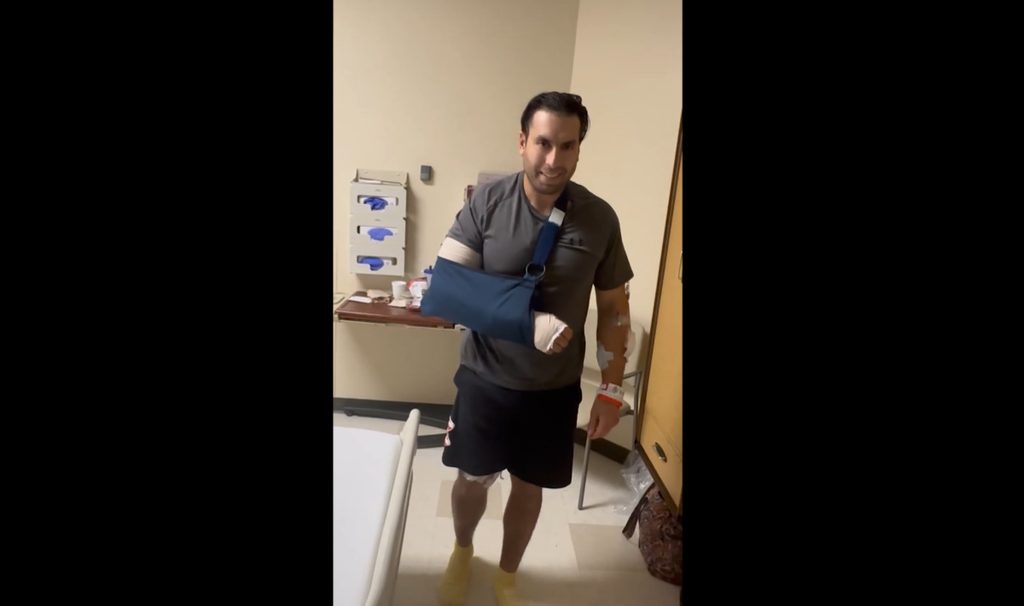
Strength came back slowly, then steadily. By the following spring, he was walking on his own, driving again, and asking his department when he could return to full duty.
Almost everyone around him expected him to take a desk job, or not come back at all — officers who survive something like this usually don’t return to the same high-risk unit. Valle went back to the exact same night-shift Street Crimes Unit he’d built from the ground up, because he wasn’t finished. He’d started something with his team, and he wanted to see it through.
A Family’s Strength
Valle’s wife remembers the call at 1:28 a.m. the way anyone would — a FaceTime she answered still half asleep, a stranger’s voice asking if she was “Mrs. Valle,” and then the drive to the hospital where she doesn’t remember getting on the freeway, only looking down and realizing she was going 120 miles an hour. She made herself slow down. I can’t help him if I don’t make it there, she told herself.
When hospital staff tried to keep her out of the trauma room, she didn’t leave. “I’m a nurse,” she told the doctor. “Let me in. I got this.” The first time Valle saw her, pale and in pain, he told her he was sorry — for not keeping his promise. She wouldn’t let him carry that. She told him, “We’re going to get through this.”
Their household absorbed the impact in ways that went beyond his physical wounds. Valle’s daughters didn’t just watch their father come home from the hospital unable to walk — they lived through the months of recovery alongside their mother, who was carrying the weight of caregiver, nurse, and single-handed parent all at once…
Through it all, his wife says what carried her was staying strong for their girls, and a marriage built on a partnership that only deepened afterward.
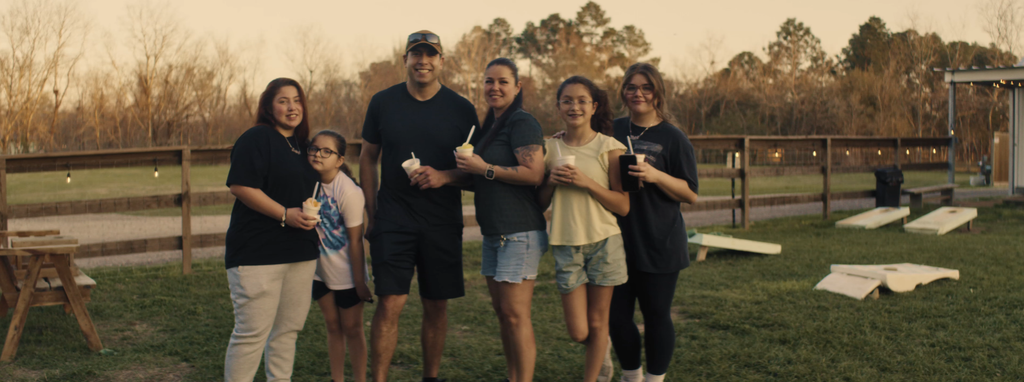
“I support him 110%,” she says of his decision to go back to the same unit. “That’s not why he became a cop — to sit behind a desk.”
Gratitude After Survival
Valle carries what happened to him without bitterness, and with a clear-eyed appreciation for the gear that made the difference between a story like this one and a very different outcome.
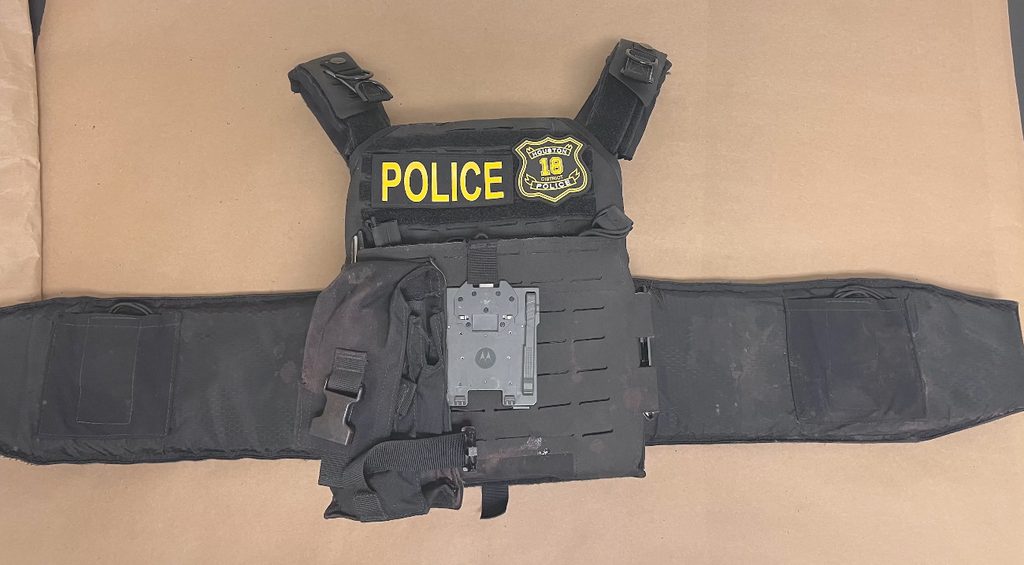
He didn’t come home with a single bruise where those four rounds landed. His family didn’t even know he’d been hit there until they saw the vest.
He’s back on full duty today.