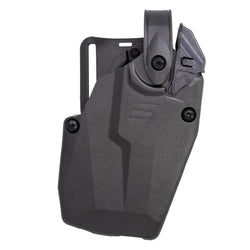
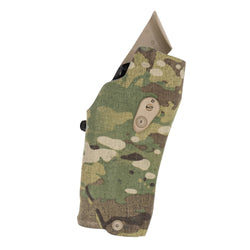

For more than fifty years, Armament Systems and Procedures (ASP®) has focused on developing tools and training programs that support law enforcement professionals in the field. What began as a small specialty manufacturer has grown into a global provider of batons, restraints, OC, lighting tools and integrated training curricula used by agencies in more than 110 countries. ASP’s reputation for durability and reliability, especially in situations where equipment failure is not an option, has made its products a trusted standard in policing worldwide.
Training remains a defining component of ASP’s mission. Each year, the company provides approximately two million dollars’ worth of tuition‑free instruction to law‑enforcement personnel. These programs emphasize practical, repeatable, and legally defensible tactics shaped by decades of feedback from working officers. Many agencies incorporate ASP’s curriculum directly into their defensive tactics and use‑of‑force programs, reinforcing the company’s role as both an equipment manufacturer and a training partner.
Principle‑Driven Defensive Tactics in Modern Policing
In today’s law enforcement environment, officers face rapidly evolving threats, unpredictable encounters, and compressed decision‑making timelines. Whether responding to a disturbance call, conducting a traffic stop, or managing a combative subject during an arrest, officers must rely on tactics that are simple, adaptable, and effective under stress.
Traditional defensive tactics programs often rely heavily on memorizing specific techniques. While techniques have value, they can fail when an officer cannot recall the exact sequence or when the situation does not match the training scenario. Under stress, the brain defaults to principles, not choreography.
Why ASP Emphasizes Principles
ASP’s training philosophy focuses on concepts that work across tools, environments, and levels of resistance. This is especially evident in their approach to modern illumination tools. As lighting technology has advanced, the tactical flashlight has evolved from a visibility aid into a legitimate personal safety device. ASP formalizes this capability through a simple, powerful framework that they call the “3D” System of Defensive Tactics.
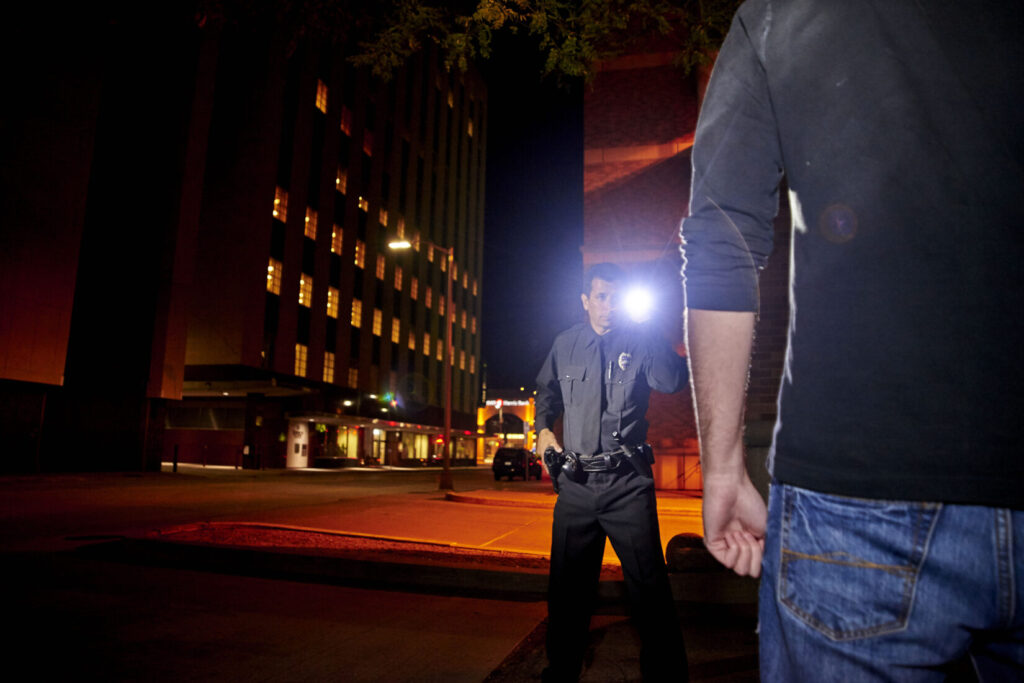
The 3D System as ASP Teaches It
According to the ASP Instructor Certification Manual, the 3D system is defined as:
- Distract: To divert the subject’s focus by using illumination techniques.
- Disorient: To confuse the subject’s spatial orientation and depth perception.
- Disable: To weaken the subject’s physical movements or actions.
These three principles form the foundation of ASP’s flashlight‑based defensive tactics. They describe how light can be used not only to see, but to control the dynamics of a confrontation—creating time, distance, and tactical advantage.
How ASP Applies the 3 D’s with Tactical Flashlights
1. Distract — Breaking the Subject’s Focus
The first purpose of the light is to interrupt intent. A sudden, high‑intensity beam forces the subject to react—shielding their eyes, turning their head, blinking, or hesitating. Even a momentary break in focus can give the officer the opportunity to:
- Reposition
- Issue clear verbal commands
- Transition to another tool
- Create distance
- Initiate a control technique
Distraction is the opening move. It creates the first sliver of opportunity in an encounter that may otherwise be escalating.
2. Disorient — Overloading the Visual System
Once the subject’s attention is disrupted, the light can be used to overwhelm the visual and neurological systems. Bright illumination affects:
- Depth perception
- Balance
- Spatial awareness
- Cognitive processing
Even a brief exposure can make it difficult for a subject to coordinate movement or mount an effective response. Disorientation reduces the subject’s initiative and increases the officer’s control over the encounter.
3. Disable — Reducing the Subject’s Ability to Act
“Disable” in ASP’s context does not mean injure. It means using the light to reduce the subject’s ability to continue aggressive or resistive behavior. With a flashlight, disabling may include:
- Breaking posture or balance
- Forcing protective reactions
- Creating openings for control techniques
- Facilitating disengagement or movement to a safer position
The flashlight becomes a tool for limiting capability, not causing harm. It is a proportional, low‑impact method of gaining control.
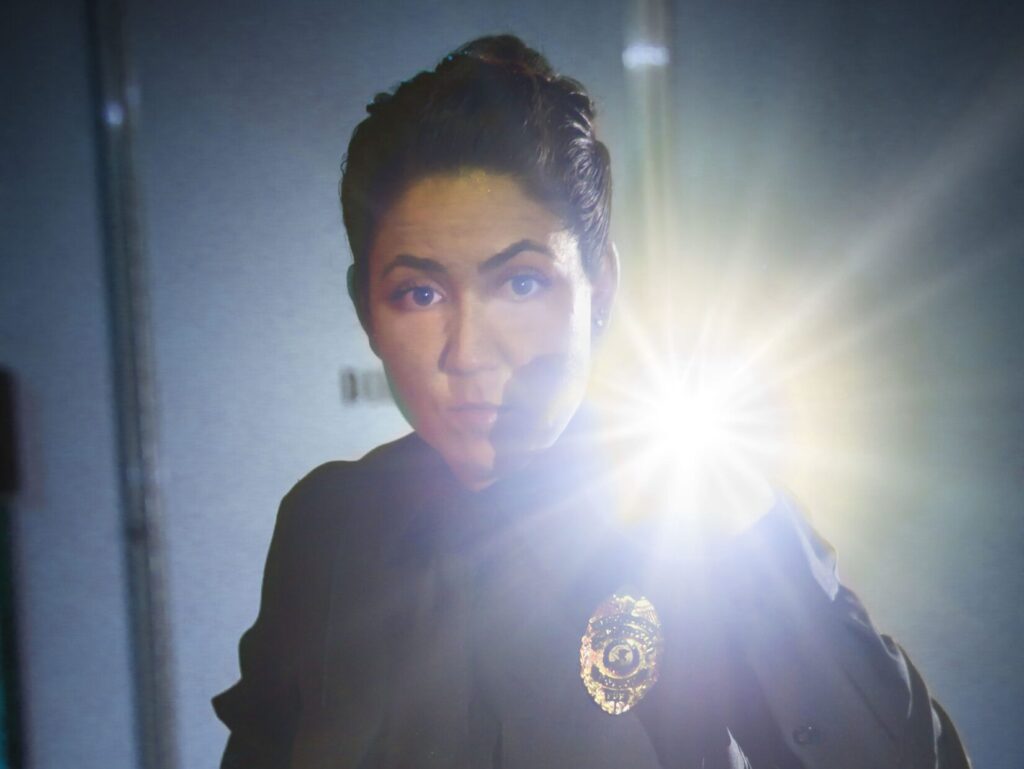
Beyond the Flashlight: How the 3 D’s Apply Across Defensive Tactics
While ASP teaches the 3 D’s primarily through the lens (no pun intended) of flashlight use, the underlying principles are far broader. They describe universal human reactions to sensory overload, cognitive interruption, and controlled force—making them relevant across many defensive scenarios.
The 3D model becomes a tactical language that officers can apply regardless of the tool in their hand.
Distraction can be created through sudden movement, sharp verbal commands, targeted empty-hand strikes, and environmental manipulation (noise, positioning, angles). Any action that interrupts a subject’s intent or breaks their focus serves the same purpose as a flash of light. Distraction buys time and creates openings.
Applying “Disorient” Across Tools and Techniques
Disorientation can be achieved through:
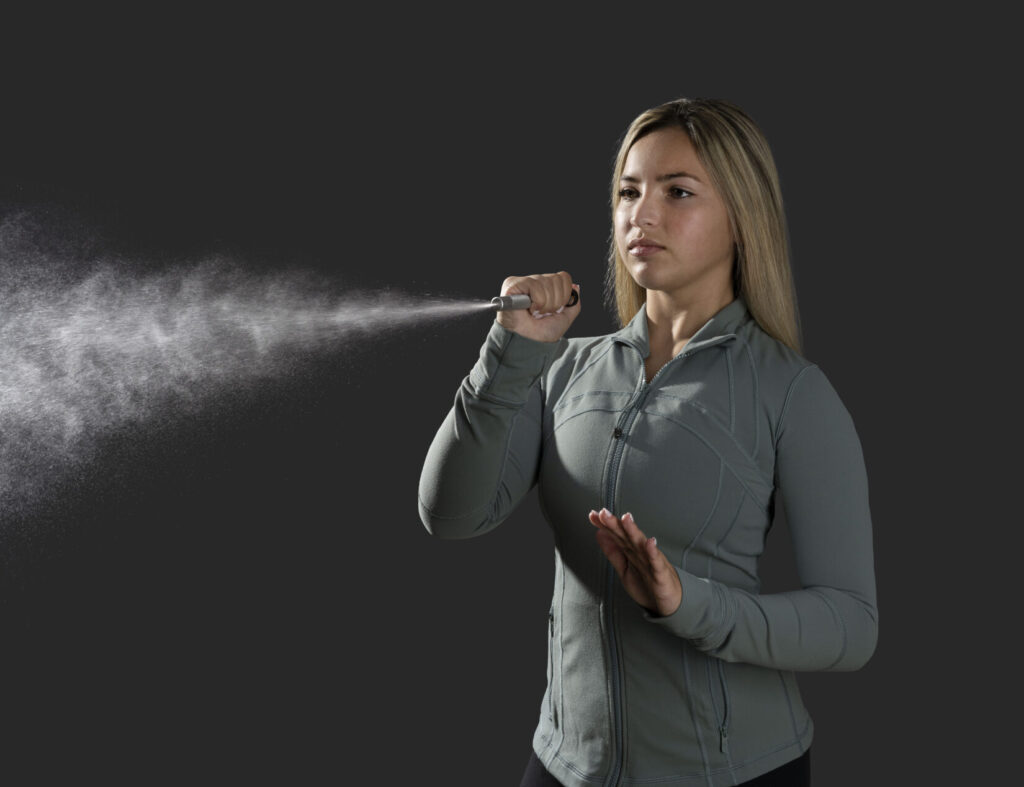
- OC spray
- Off‑balancing and mechanical control
- Diffused pressure strikes
- Rapid changes in distance or angle
- Environmental factors (darkness, noise, confined space)
The goal remains the same: reduce the subject’s ability to coordinate an effective response. Disorientation shifts the initiative to the officer.
Applying “Disable” as a Universal Tactical Objective
Disabling means stopping the subject’s ability to continue aggressive behavior. This can be accomplished through:
- Baton strikes to the weapon‑delivery system
- Controlled takedowns
- Joint control or restraint techniques
- Less‑lethal tools such as CEWs or OC spray
The principle is consistent: limit the subject’s ability to act while maintaining proportionality and safety.

Why the 3 D’s Matter for Both Officers and Civilians
Although the 3D system originates in ASP’s flashlight curriculum, the principles translate naturally into broader defensive thinking. It provides a mental model that works across tools, environments, and levels of resistance. The principles simplify decision‑making under stress and support legally defensible, principle‑driven action.
For Civilians
The 3 D’s offer a simple, intuitive framework for self‑defense:
- Distract to create an opening
- Disorient to break the attacker’s ability to pursue
- Disable just enough to escape and seek help
The emphasis shifts from control and arrest to escape and safety, but the principles remain the same.
Final Thoughts
ASP’s 3D system—Distract, Disorient, Disable—originates in tactical flashlight training, where modern illumination tools provide a powerful means of controlling encounters. But the strength of the 3 D’s lies in their adaptability. They describe universal human reactions to sensory and cognitive disruption, making them valuable across the entire spectrum of defensive tactics.
Whether used by officers in the field or civilians seeking to protect themselves, the 3 D’s offer a clear, principle‑driven framework for creating time, distance, and safety in high‑stress encounters.