
Camo is a fascinating topic. We can discuss how it works, its use in nature by animals, and its use by men and women in a variety of settings. Today, we’ll be discussing the use of camo and how the military utilizes camouflage versus how law enforcement uses it.
The police and the military have two distinct mission sets. Police enforce the law, protect, and serve. The military locates, closes with, and defeats the enemies of the United States.
The equipment used in both mission sets can be very similar, including uniforms. Police wear camo for different reasons, though, and they come down to the job and the budget.
Let’s discuss the differences between police and military use of camouflage.
Military Use of Camouflage
“All warfare is based on deception.” – Sun Tzu
It’s unclear where exactly the military use of camouflage started, but it’s noted that during the Gallic Wars, the Romans used camouflaged ships to blend in with the ocean. Since then, the world of military camo has exploded.
On land, the use of camouflage became important due to the increasing range of weaponry. Who cares about camouflage when you’re sword fighting? When you introduce guns, camo becomes a bit more important.

Camo has evolved and improved for decades, and it only gets better. Well, mostly better; the U.S. Army’s UCP (Universal Camouflage Pattern) was a clear devolution.
The military tries to camouflage everything. Every piece of gear and equipment tends to be designed to be camouflaged. This includes uniforms, but expands to vehicles, boats, rifles, generators, sandbags, and so much more.
Military forces are facing observation from planes, drones, long-range optics, and more. You want to avoid being bombed or observed, so everything gets a camo pattern.
The military use of camo at the individual level makes troops more difficult to detect and target. I remember being in a training environment and watching a platoon attack an objective from a rather long range, and I was shocked by how fast they disappeared against the desert.

Military camo allows soldiers, units, and even ships to remain undetected or hard to spot with the naked eye. In a combat environment, your situational awareness is critical, and you do whatever you can to impede your enemy’s situational awareness.
Why Do Police Use Camo?
Police wear camo for practical reasons: to blend in when a call leads into the woods or desert, and to give special teams a durable working uniform that costs nearly nothing. Your average police uniform is far from camo. It’s blues, greens, and blacks with bright badges.
It might vary, but the average officer’s uniform is meant to stand out, not blend in. So why do we see police using camouflage? It’s not a simple answer, so let’s dissect it.
Blending In
Police work can be very diverse. Police officers might find themselves in a forested or desert environment chasing a dangerous suspect. As such, they want to blend in.
Blending in helps keep them alive in these environments.
A Working Uniform for Special Teams
On the other hand, we’ve all seen police in urban environments wearing camo, so why? In some cases, it’s wise to stand out so everyone knows you’re a police officer.
This includes citizens, other police officers, and first responders. A regular uniform can do that, but in special situations where special teams are required, a normal uniform isn’t the best option. Badges, buttons, and more aren’t suited for use with plate carriers, and durability is a concern as well.

That begs the question: why use camo in an urban environment? You can always buy green, blue, black, or whatever color uniforms that do the same thing as camouflage.
It Makes Fiscal Sense
All warfare might be based on deception, but all police work is based on penny-pinching. Budgets are a real thing, and if you’re trying to equip a team with non-standard uniforms designed to function with modern safety gear and be durable, there is one surefire, affordable option.
Camo. Specifically, camo provided by the federal government through various surplus programs that allow police forces to spend hardly anything. Not only are they spending barely any money, they are also getting military-spec uniforms.
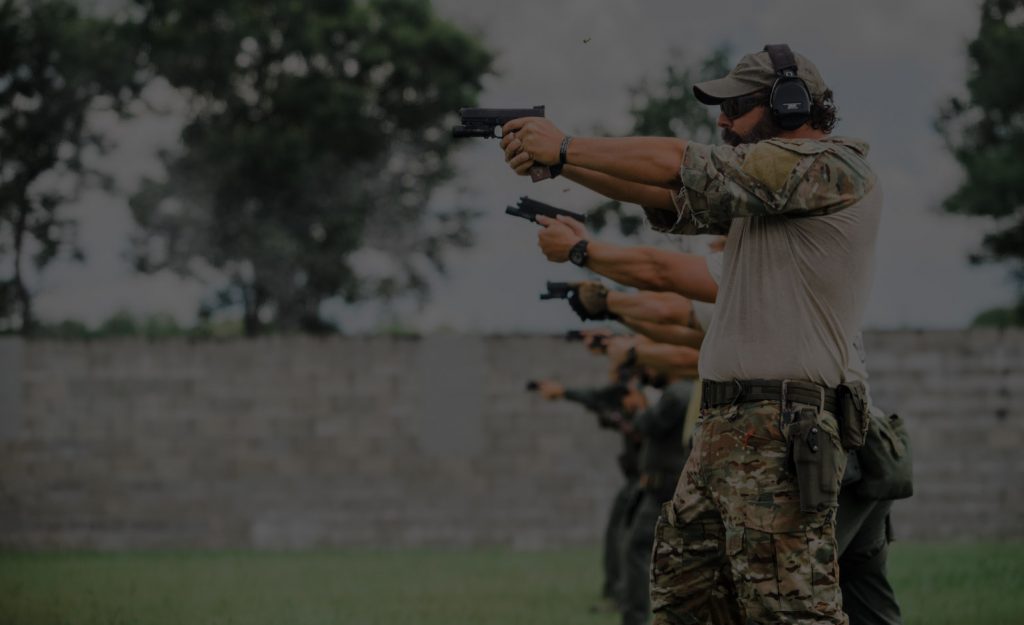
We can make jokes about the lowest bidder and mil-spec, but it’s still a spec that has to be met. This specification includes fire-resistance and a non-melting design. It’s also NIR (near-infrared) compliant, meaning it doesn’t glow under night vision gear.
For police officers, this gives them a hardy uniform designed to be used with things like plate carriers. These uniforms have additional pockets and a comfort level that’s tough to achieve in a formal uniform shirt. The low price even makes them easily disposable if they are sullied by chemical irritants, biological waste, and the like.
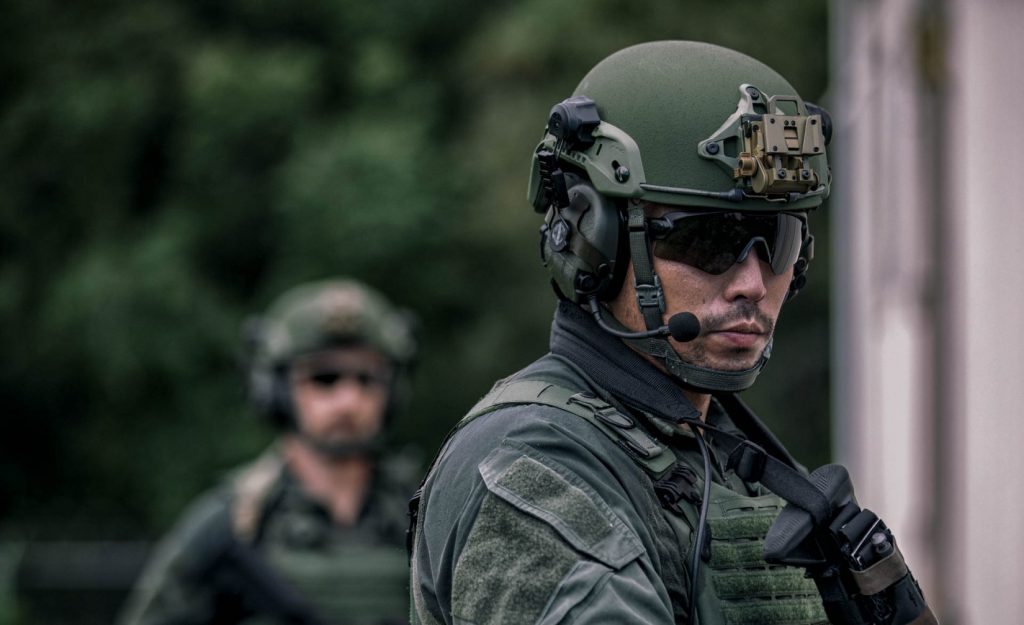
Everything about these uniforms just makes sense for police use, down to the fast-drying design and machine-washable nature. It’s plug-and-play and costs nearly nothing.
Different Missions
Military and police forces have different mission sets, but both can make use of camo. Sometimes it’s all about the practical effects of camouflage; other times, it just makes fiscal sense.