
Before you read this review, you should know off the bat I’m not a nightvision snob. I understand analog is better than digital, but I still enjoy digital nightvision. When you see optics like the DNT Optics NVMD-C200, it’s tough not to appreciate digital nightvision.
The DNT Optics NVMD-C200 is an affordable night vision device that provides a 4-in-1 design that’s effective, fun, and well-suited for a limited task range. The NVMD-C200 can be found for less than $600 and offers a bundle of features.
The NVMD-C200 can be used as a:
- Clip-On
- Magnifier
- Independent Red Dot
- Action Camera
Like all digital night vision, the NVMD-C200 is essentially a camera sensor packed into an optic. This allows for an affordable night vision optic.
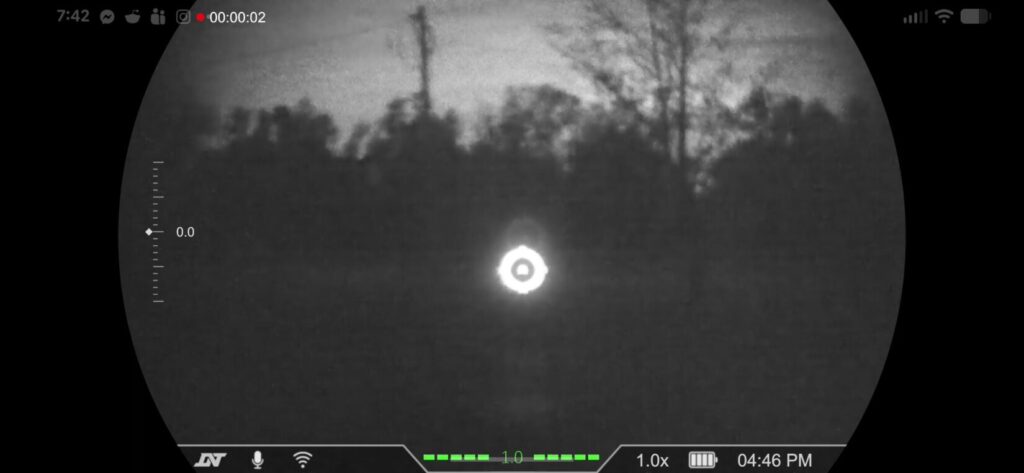
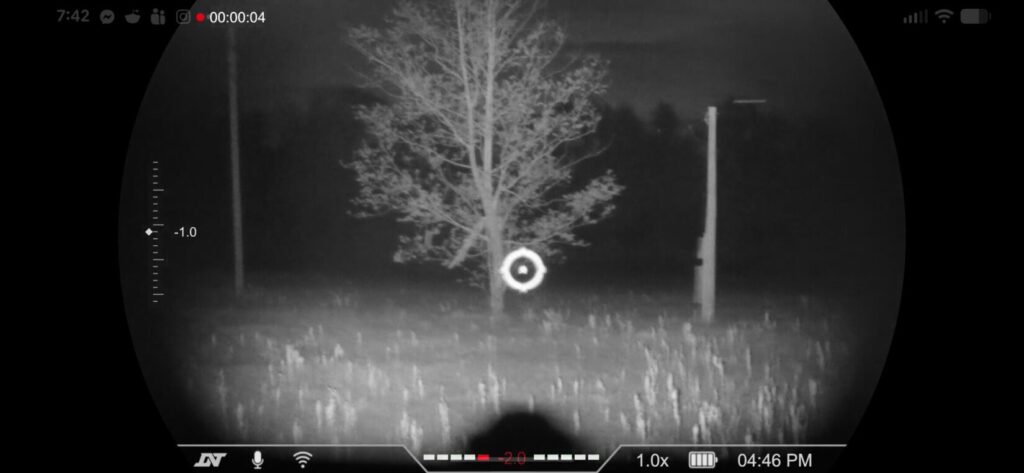
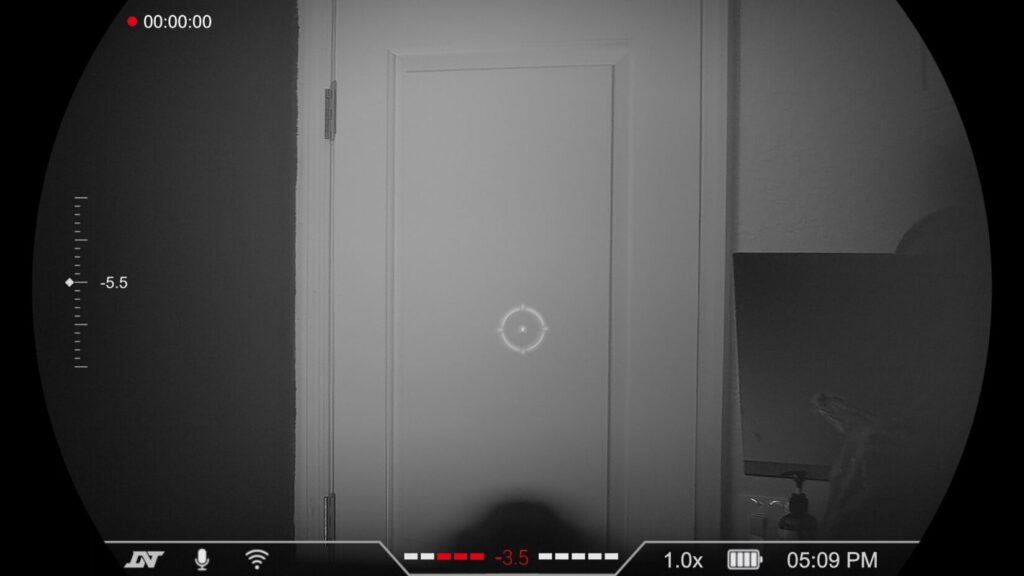
As you see the photos below of its performance, please understand they don’t do the optic justice. They are still shots from videos and don’t do a great job at portraying the optics’ clarity.
Limitations of Digital Nightvision
Digital night vision is an affordable option, but as most night vision enthusiasts would rightly point out, it’s not as good as analog. “Good” in this regard is clarity. Digital night vision is not as clear as analog devices, and won’t offer you the same low-light performance or detail-oriented picture.
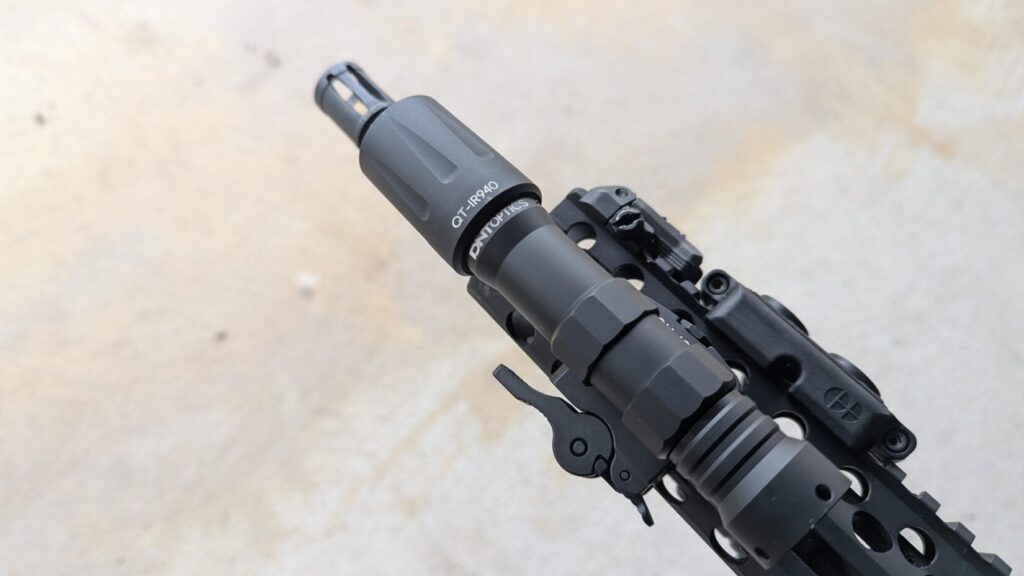
The effective range won’t be the same as an analog night vision optic. It won’t provide the same low-light performance without active IR. That said, the NMND-C200 costs about a fifth as much as a similar analog device with a few extra features.
The NVMD-C200 In Action
With four different, distinct modes, it’s best to break the optic down by each of these distinct modes. Regardless of the mode, it works best with a fair bit of moonlight or when paired with an IR light.
With poor moonlight and no IR, it’s suited to use at about 25 yards. At this distance, I can see my targets, I can see trees, I can see power poles, basically anything I need to see, but I cannot see the details of the item. With a full moon, holy crap, you can see way out there without IR.
With IR, on a poor moonlight night, the optic can easily see out to 50 yards, and even out to 75 yards with a large man-sized target.
As a Clip-On
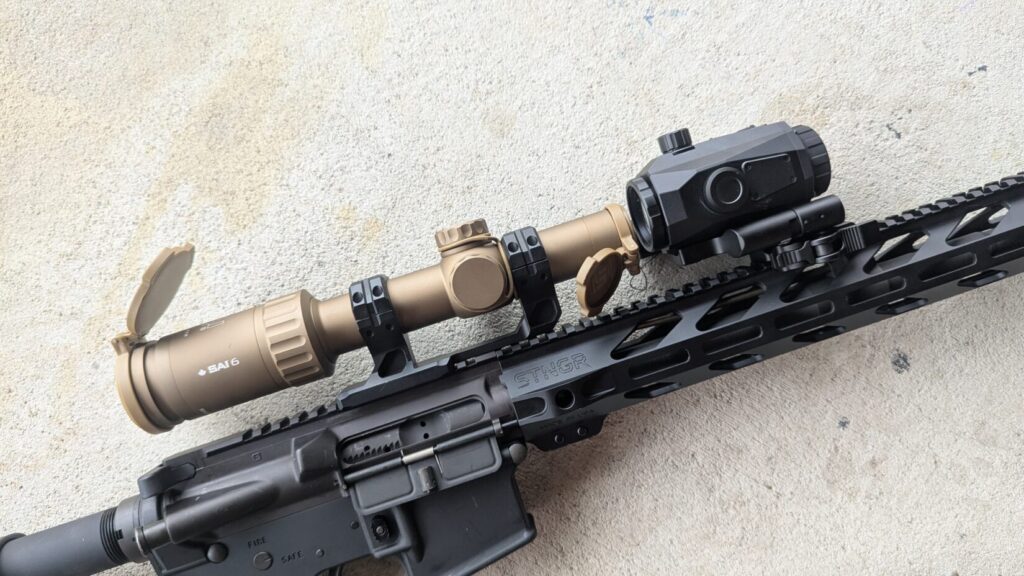
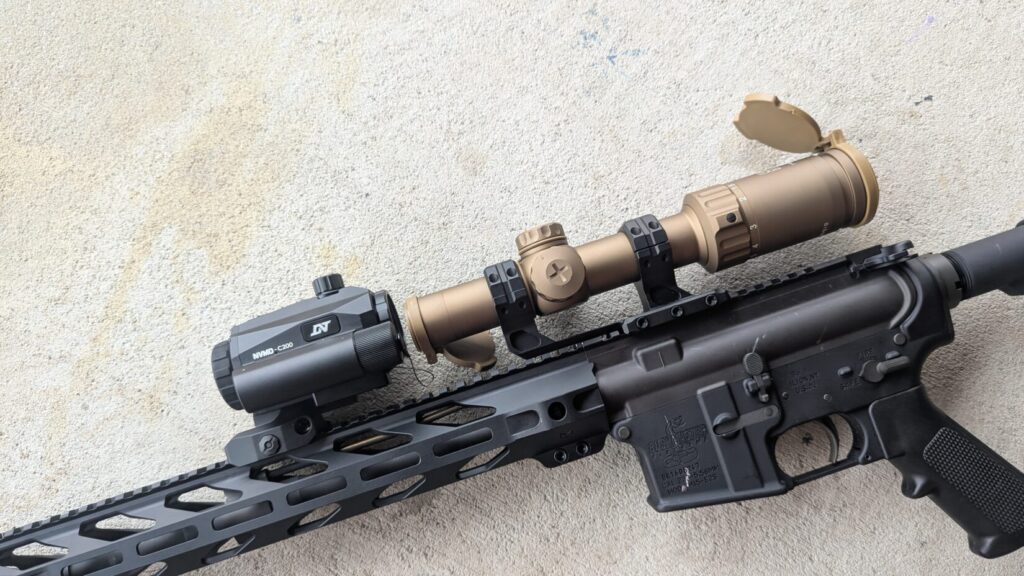
This is where the NVMD-C200 performs best for me. This is where it’s clearest and provides the best overall range. I positioned the NVMD-C200 in front of an SAI 1-6X LPVO. When looking through the optic, I can see my reticle and the targets through night vision.
As a clip-on, it provided the best low-light performance. At 50 yards, I could see my IPSC steel target without IR. Moonlight was low, with a fair bit of overcast. When I hit the IR, things predictably got a lot clearer, and I can see a lot more than just the outline of the target.
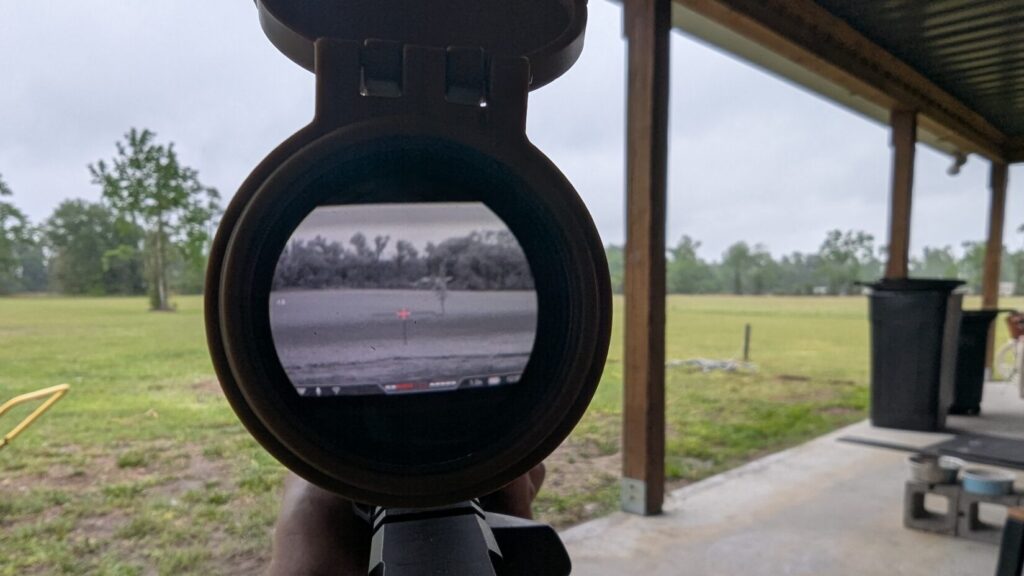
When I zoomed in with the LPVO, the image became slightly more distorted. We are zooming in on a screen, not directly to the target, so this is to be expected. What you really need to do is set the magnification to 6X, then focus the device. This makes your 1X a little blurry, but still usable up to 6X.
I had a lot of fun just watching the rabbits jump and dive at night. If I were hunting them, they would not be so rascally. I could watch them jump, run, and dive, and easily put my reticle on them with excellent clarity. For now, they wouldn’t become stew.
As a Magnifier
In magnifier mode, I put the NVMD-C200 behind a Holosun 512. The magnification is digital and can reach 6X. Again, the image becomes increasingly distorted as you jump between magnification levels.
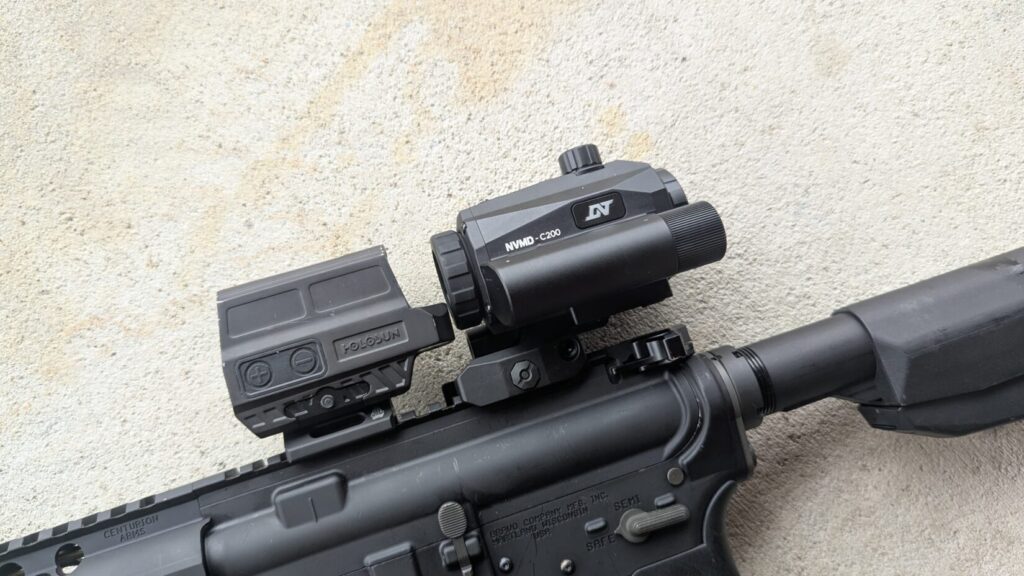
My red dot isn’t the exact same height as the night vision optic, so as you increase magnification, the reticle shifts downward. By the time I got to 6X, the reticle was barely usable. I just see the center dot.
At 50 yards, with IR light, I could zoom in on my War Hogg Tactical target and still make out its facial features and distinct body type. I had the most fun using the NVMD-C200 behind a red dot in the 1X mode. This gave me a very clear view and made it easy to navigate terrain, including inside my home. I could maintain a sight picture and explore.
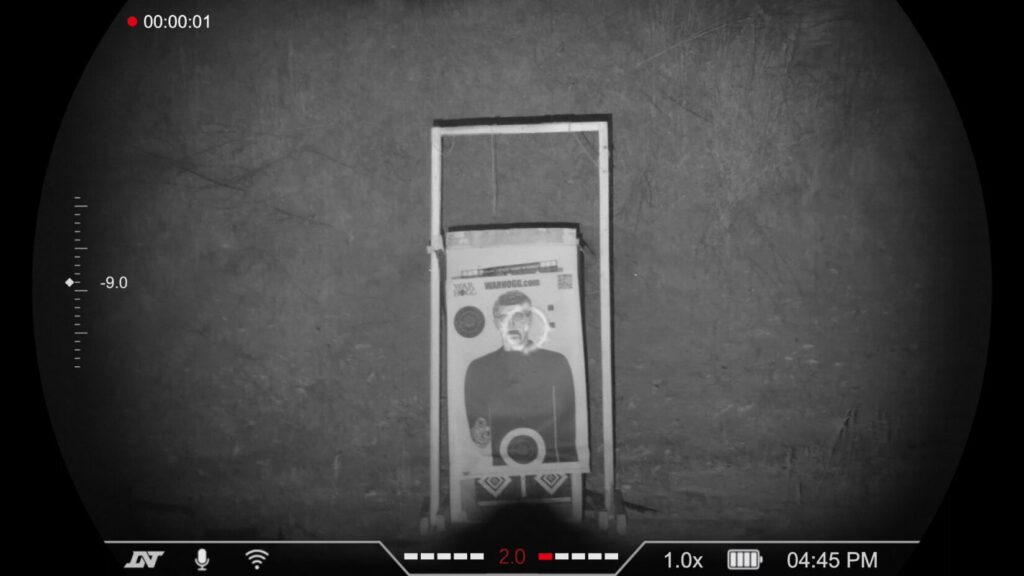
Shooting targets in this mode was a ton of fun. Pulling off some of the same drills I shoot during the day, at night, was a new thrill. In terms of clarity, the red dot you use will make a difference. The 512 is an enclosed-emitter optic with a fair amount of notch filter. This will challenge the NVMD-C200 and likely most other night-vision devices.
Beyond Fun
I can see this being a handy feature for defensive use. There is a feature that turns the optic off when it’s flipped to the side and back on when you flip it down. When flipped to the side, you can conserve battery life.
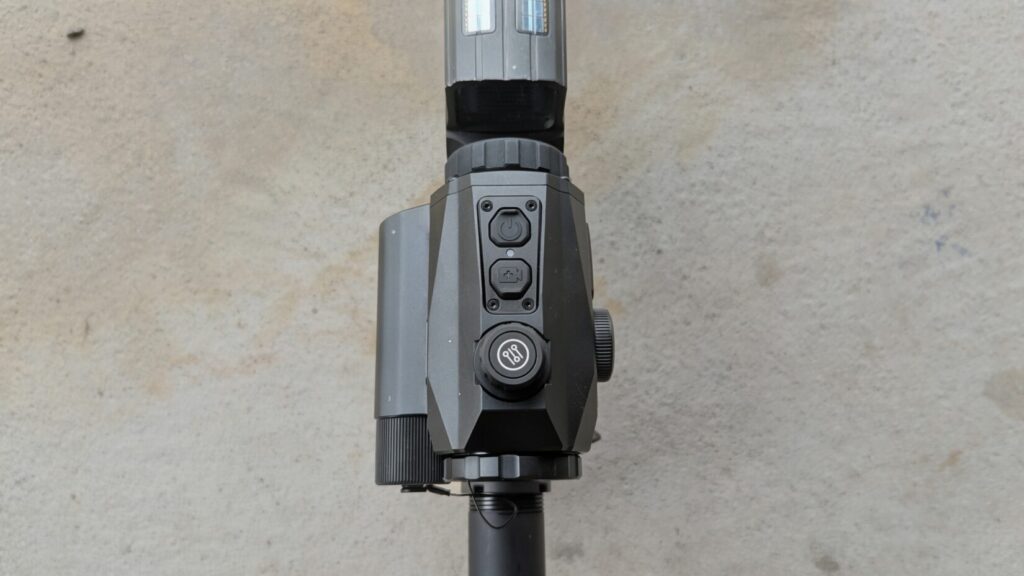
If you flip it down, it turns on, and bam, you can most certainly see quite clearly at indoor ranges, especially when paired with an IR emitter. Since it’s digital night vision, you can activate your white light without worrying about killing the optic. Although I still think a white light and red dot would be the simpler overall setup for defensive use.
As an Optic
You can turn on the adjustable reticle on the NVMD-C200 and use it as your optic. We get great clarity with this mode because we aren’t dependent on another optic’s clarity. I used this mode a bit, but it wasn’t my favorite.
The digital reticle doesn’t remain centered as you adjust it due to the design. It’s an overlay. There is a handy way to zero the optic: record your group’s position, then adjust the reticle to the group.
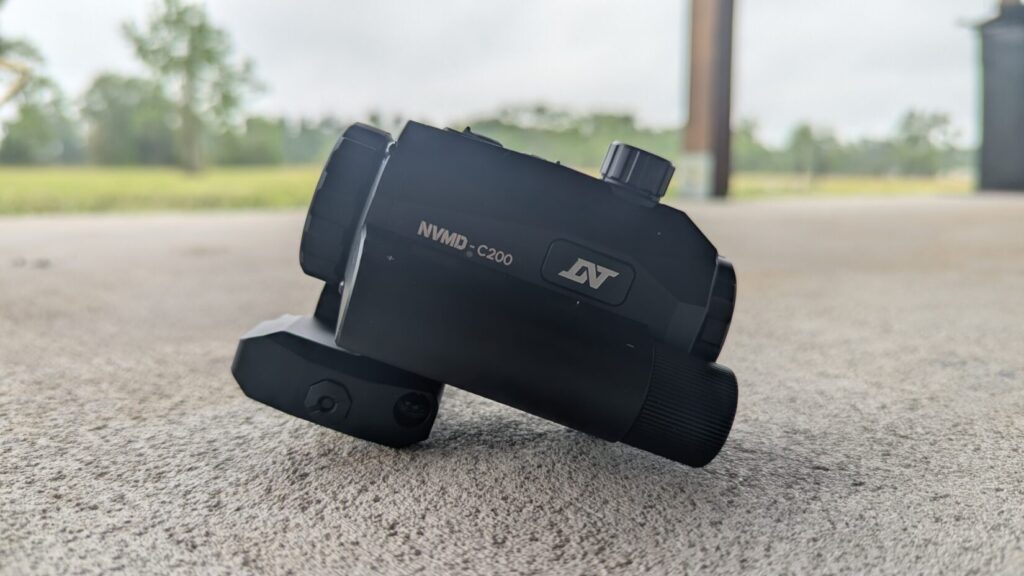
It’s simple and effective, but it’s called “one shot,” and it took me more than one shot to adjust. You have to keep the rifle 100% stable, and I don’t have a Lead Sled to do that. So I had to make a few micro-adjustments, but overall it was easy to zero in with the one-shot technology.
As an Action Camera
I don’t think people will buy the NVMD-C200 as a camera, but will appreciate it as a feature. It works day and night, so you can record first-person footage regardless of lighting conditions. You can record hunts, range sessions, and just get cool footage.
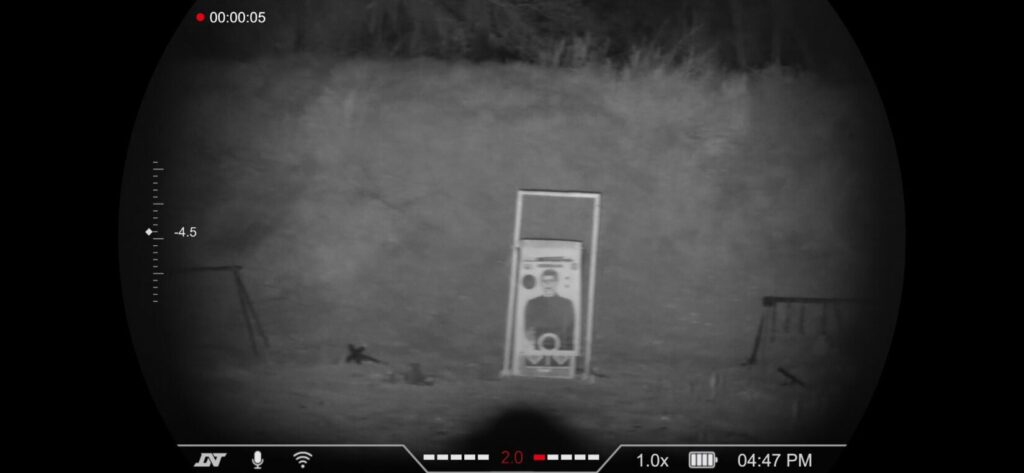
You can even flip the device to the side and have it function as an action camera. It doesn’t need to sit on the gun to record footage. Dismount it and bam, you have an action camera. It’s neat and lets me take screenshots from the videos I record.
Running and Gunning With the NVMD-C200
Digital night vision is often plagued by something called latency. Because it’s a camera, you can have lag as you move and shoot. The NVMD-C200 delivers 50 frames per second, helping reduce latency.
The lag I noticed was motion blur. As the optic moved rapidly, the image became slightly more distorted, and once I stopped moving, the blur disappeared. Across an open field, it’s a lot less noticeable than across a tree line. The trees blur and blend into each other, but the field remains open.
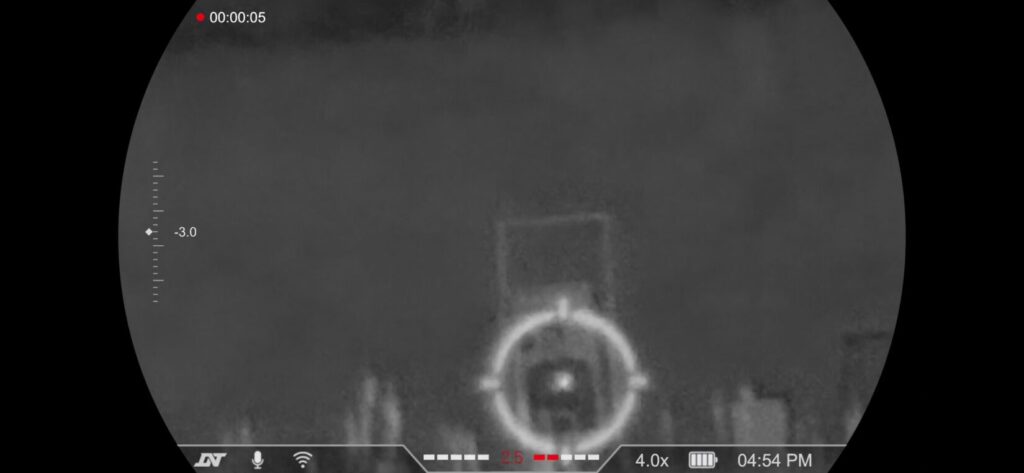
When moving between targets at 25 yards, I can still see the outline of the target, but can’t quite make out the mustache.
Everything Else
The optic uses a rechargeable 18650 battery with a six-hour battery life. That’s not the longest life, at least compared to analog, but it’s fine for most of us. There are six brightness levels, and at the highest one, it can make your eyes itch.
The NVMD-C200 has 32 gigs of device storage. You can remove videos via the app or hook it to your computer. The resolution is 1920×1080, providing a high-definition view.
We have 2.6 inches of eye relief, so it’s not bad, but it’s not fantastic either. It’s roughly the same as most prism optics. The optic comes with a QD mount, and a flip-to-side mount can be purchased separately.
Who Is This For?
I think most people will use the NVMD-C200 as a fun optic—an intro to night vision without spending a few thousand dollars. It can be used in a few different roles and is quite handy in each.
Most states have some night-hunting restrictions, but in Florida, I can hunt hogs at night on private property because of their invasive nature. I think the NVMD-C200 will be fantastic for hunting, and since it records, I can capture those hunts.
Beyond utility, it’s just fun. If you want to shoot in the dark, the NVMD-C200 is an affordable way to have a little fun.