
At Range Day during SHOT Show 2026, fellow firearms writer Travis Pike and I explored the latest wares. Travis had particular enthusiasm for the FN 309 MRD pistol, and those feelings were contagious.
Later, my local shop took one in. I exchanged plastic for plastic and brought home the FN 309 MRD for an honest test.
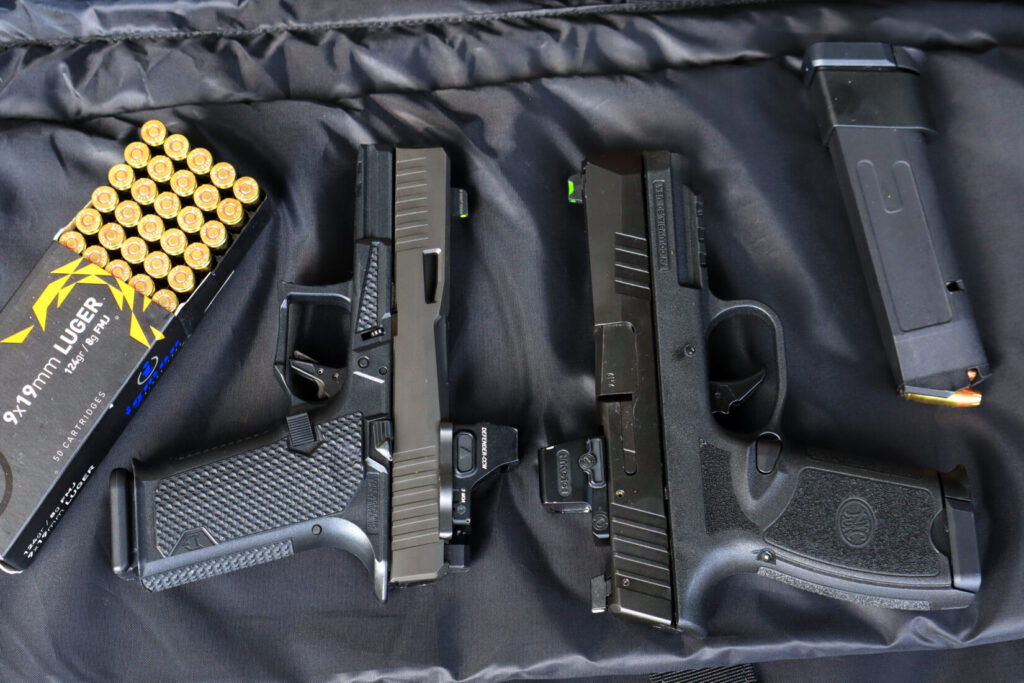
FN 309 MRD Features
Fabrique Nationale has stood at the forefront of pistol technology since its founding, but that pursuit can lead to unusual and expensive designs that suit some at the expense of others. In recent years, FN has started going back to its roots.
Like the FN Model 1900, which helped popularize the automatic pistol, the FN Reflex, and now the FN 309, are made for mass appeal. The 309 is a compact, optic-ready double-stack 9mm pistol with an MSRP of just $549—markedly below FN’s other offerings.
Yet, on the showroom floor, the only giveaway of a cheaper design was the use of polymer magazines. I had to ask, what else is there?
In the age of the microcompact 9mm, the 309 is a conventional double-stack model with a 3.8 inch barrel and a 16-round base magazine capacity. It is sized large enough for professional work and just large enough for those put off by the diminished real estate and snappier recoil of a micro gun.
To suit modern tastes, the MRD is optic ready. Rather than including plates or making you order your own, the pistol is made for a direct DeltaPoint Pro or Shield RMS mount.
To reinforce the universality of the design, the FN 309 has a reduced-power recoil spring that cuts slide racking effort by an advertised 25 percent compared with the FN 509 Tactical. As mentioned, the 309 uses all-polymer magazines. The pistol ships with one flush-fit 16-round magazine and a 20-round extended magazine with spacer.
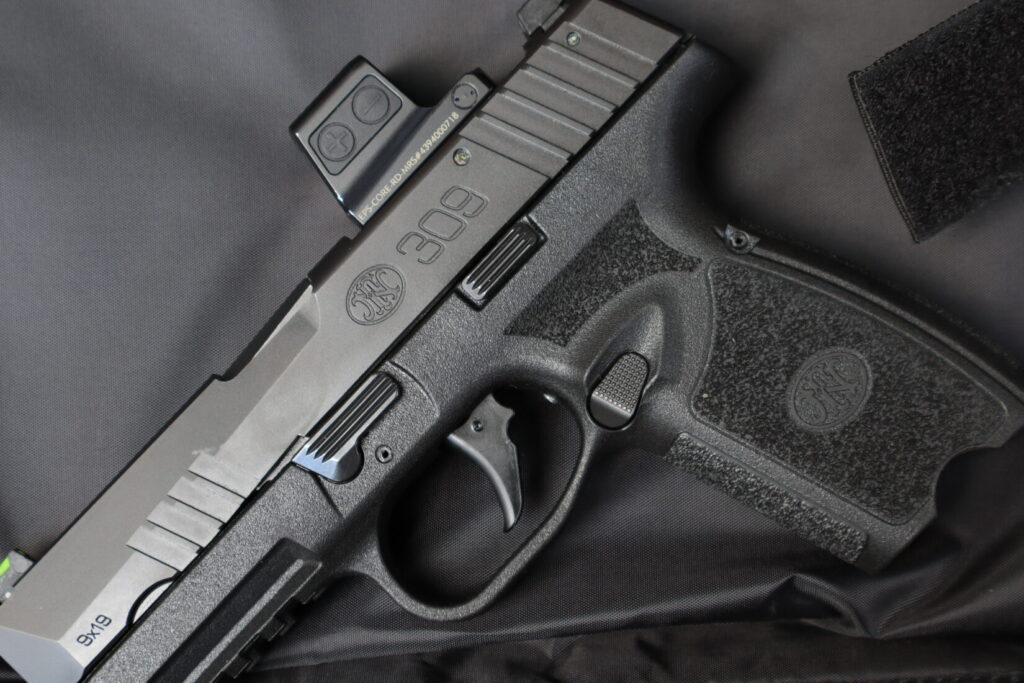
Otherwise, the 309 MRD is more pedestrian. The polymer frame does not even have finger rests or a squared-off trigger guard, like most modern pistols do. Instead, the usual universal light rail and coarse grip panel stippling give the 309 a look that seems to blend in on the store shelf.
Aside from a well-rounded magazine release that is reversible, this is a right-hander’s pistol. The other controls are a standard-sized slide release and a take-down lever out front.
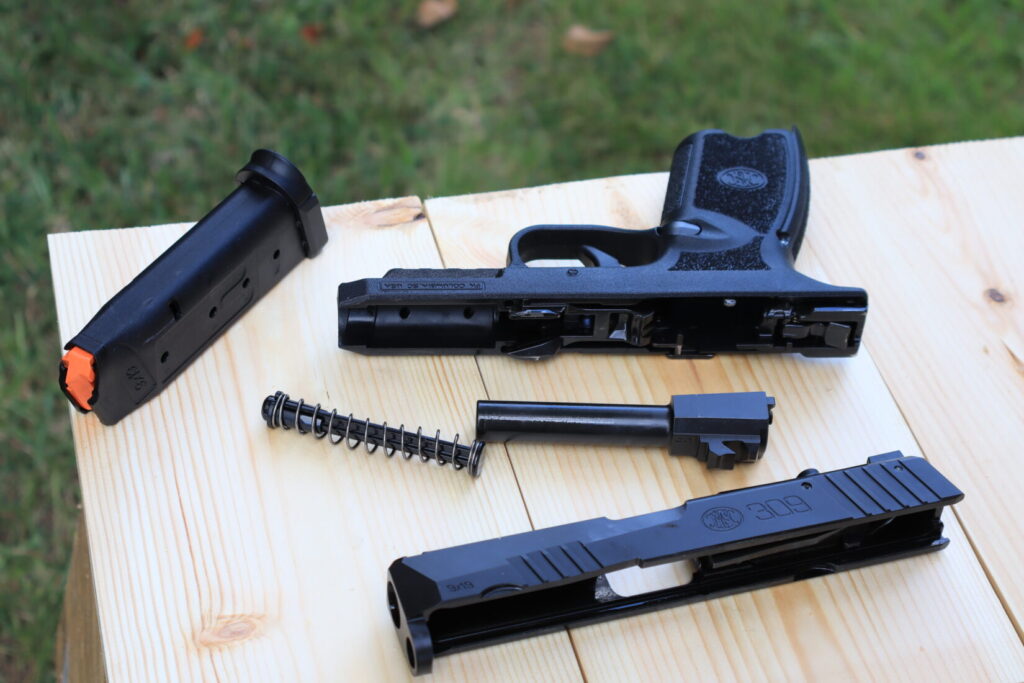
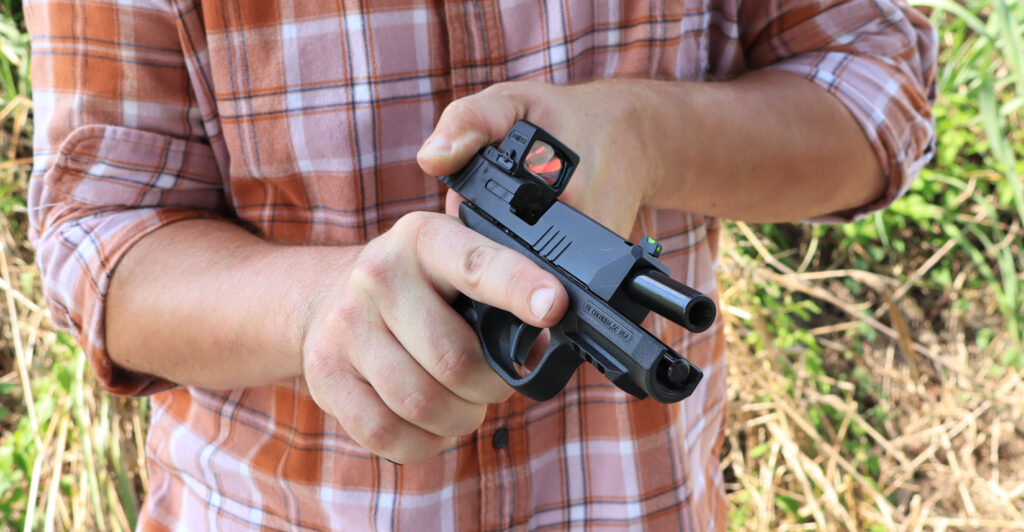
Drawing down the lever and pulling the slide forward reveals the action. The 309 is a tilting-breech design that uses an internal hammer, although it looks like any other striker-action pistol from the outside.
The pistol has a polymer guide rod, which is par for the course with many pistols out there. But the recoil spring looks dainty. Small wonder that the 309 is marketed as a slide-friendly design.
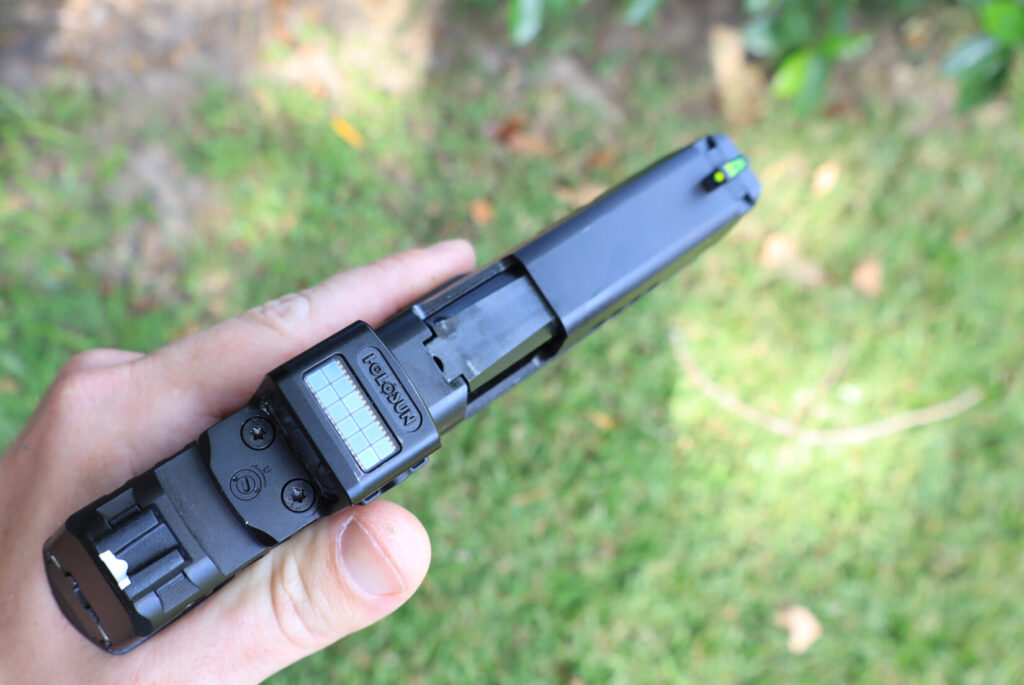
Speaking of the slide, it is coated carbon steel with forward and rearward cocking serrations and triangular milling at the front. The pistol mounts standard 509-style polymer sights, with a green fiber-optic front and a white U-notch rear.
| Spec | Detail |
|---|---|
| Caliber | 9mm |
| Action | Internal hammer-fired, single-action only |
| Trigger Pull | ~5 lbs. (FN spec); 3½ lbs. measured on test sample |
| Capacity | 16 or 20 rounds |
| Magazines Included | One 16-round, one 20-round extended |
| Barrel Length | 3.8″ |
| Overall Length | 7.4″ |
| Height | 5.4″ |
| Width | 1.26″ |
| Weight | 22.5 oz. (FN spec); 31 oz. loaded, as tested |
| Sights | Drift-adjustable polymer; green fiber-optic front, white U-notch rear |
| Optic Mounting | Direct mount for DeltaPoint Pro and Shield RMS footprints |
| Controls | Reversible magazine release |
| Slide Effort | 25% less slide resistance than the FN 509 Tactical |
| MSRP | $549 |
The FN 309 After 300 rounds
All handguns I test go through a 300-round battery of range tests. This nominally includes a 10-yard off-hand accuracy test. That is then followed by a combination of paper and steel-related drills stretching from seven yards out to 50 yards to judge ergonomics and initial reliability.
But in the case of budget-friendly guns, the initial impressions tend to weigh more heavily than with premium offerings. In terms of performance, the FN 309 is a Grade A shooter that went 299 for 300, with one errant failure to feed that occurred while shooting single-handed with my non-dominant hand. With that said, the shooting hardened some initial opinions and softened some others.
What’s to Like?
The Hammer-Fired Action
It can be hard to power through a bad trigger in order to connect consistently with a target. I was initially confident in the FN 309 since I picked it up almost solely on its trigger.
Mine gives a clean break at 3.5 lbs, which rivals my broken-in Colt Series 70 Government model. Thankfully, the FN’s trigger is much longer and has a travel of about 6mm whether or not you shoot to reset. That is a good safety margin and it provides for a readily predictable break of the trigger. All of this translates to excellent accuracy.
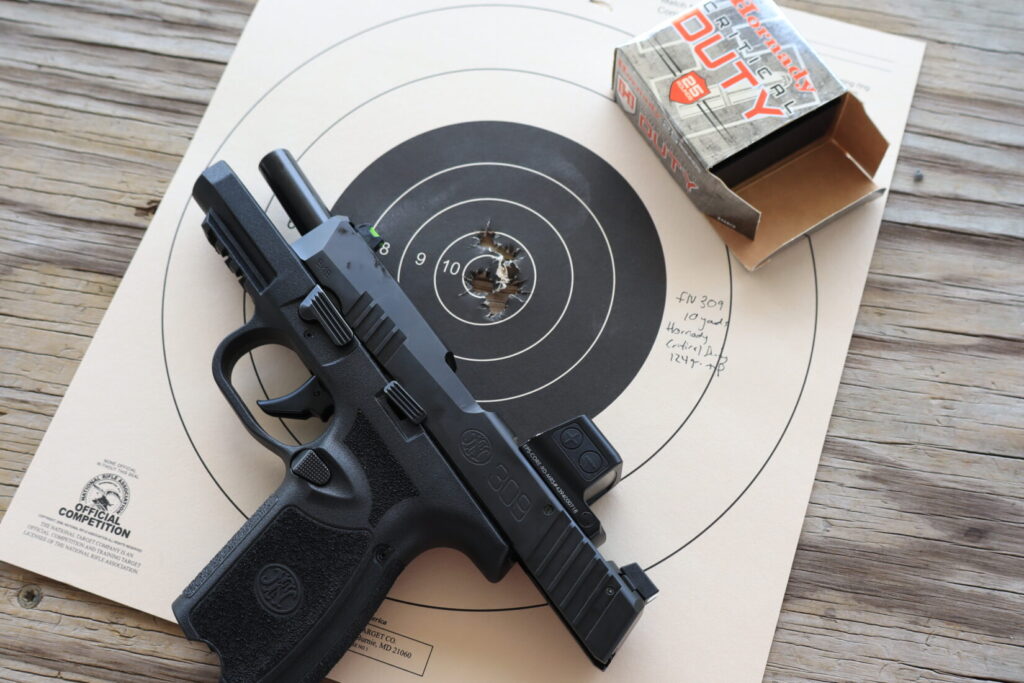
I was hard-pressed to tell the difference between one-hole groups posted at 10 yards. It was true with premium hollowpoints like the Hornady Critical Duty 124 grain +P, Speer Gold Dot 135 grain, and Winchester 115 grain loads as well as my standard Igman 124 grain FMJ practice round. The Igman round could do the very best at ¾ of an inch, depending on how you measure the group.
The Controls
As a converted southpaw, I don’t normally deduct points on a handgun meant for a right-handed shooter only. But fully ambi controls are quickly becoming universal along with optic cuts. With that said, what FN does on a budget is quite good.
The magazine release is big enough to hit but shallow enough to not accidentally release. The slide release is instinctive to use, even with my short thumbs. It is also refreshing to have a takedown lever that requires no dry-firing or lingo from a manual in order to disassemble the handgun.
The slide serrations are generous enough for sweaty hands, and the polymer sights have taken a few table whacks without issue.
The Universal Light Rail
European companies were known for a time to use proprietary rail systems. It is nice that it is dispensed with here.
The Light-Racking Slide
The marketing material points distinctly to an easy-to-rack slide as the 309’s peak control. It is easy to go through a few boxes of rounds at a time without slide manipulation becoming a chore.
It is superior to something like a Glock 19 in terms of manipulation effort and about on par with 9mm versions of the S&W EZ. The lack of effort may assist the parallel cocking serrations in being more effective than they look.
What’s Neutral?
Size and Weight
Unless you squint, the FN 309 looks like a typical compact 9mm pistol. But only after I shot it next to my Rainier Dusk 19, which has identical proportions to a Glock 19, did I notice the slide and grip are longer, and the pistol is wider at 1.26 inch diameter.
Likewise, the breech of the barrel is weighty. Small wonder FN was able to lighten the slide’s rack without increasing recoil forces.
What’s to Dislike?
On first inspecting and outfitting the 309 MRD, I became more leery about the execution of some of the pistol’s features, even taking budget build quality into consideration. None of the sore spots proved to be a failure point on the firing line, but one could definitely be improved.
The Magazines
Aside from the magazine spring, the FN 309’s magazines are all polymer: the body, the follower, and the baseplate. It’s an inexpensive and easy construction that would, ideally, mean more magazine availability and cheaper magazines from FN.
Magazine availability has not caught up yet, and the magazines themselves can be cause for concern. Loading them to capacity gives more flex in the hand than a rimfire ProMag. The magazines do work well and release convincingly out of the pistol, but do not inspire confidence.

The Polymer Frame
The polymer frame has fewer features than some contemporary pistols, and that is okay. I was a little more surprised by the thinner construction of the grip panel section where the magazine resides.
It is similar in construction to the old S&W SD9 budget pistols. I do not see how much one saves on construction by doing this, but FN did it anyway.
The Optic Cut
The hard search for improvement will come with the way the optic cut is set up. Going for a direct cut is good for economy so the user does not have to chase down plates to fit the footprint. The 309 is set up to take an RMS or DeltaPoint Pro optic. One out of two I had on hand fit, and it fit tightly.
The only locking surfaces are threaded nubs where the cover plate’s blind screws were tapped. Although this arrangement held zero and took some table whacks, I can see an optic failure for a lack of other supporting surfaces in the cut.
The FN 309: An Unrealized Good Pistol
It seems I have spent much of this review beating up on the FN 309, but I want to emphasize my own experience has been overwhelmingly positive. In truth, it is difficult to build a pistol with attributes that have not been tried before and not expect some teething issues initially.
That is the case with the polymer magazines. We are used to polymer construction in magazines, but going all polymer is an adjustment to make. Only the optics cut, in my opinion, is the Achilles’ heel that can use a 2.0 modification.
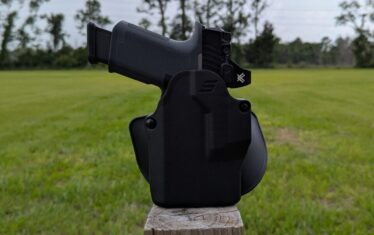
But on the whole, the 309 is an easy shooter that is still too new to be fully realized. It is a less expensive handgun unrelated to the well-known 509. It does not share magazines or holsters. And, finding 309 holsters is a rarity. So too with those advertised cheap magazines. But given time and some refinements, the 309 will probably be among the best in FN’s lineup.
FN 309 MRD Questions, Answered
The FN 309 MRD is FN’s internal hammer-fired budget 9mm pistol that uses all-polymer magazines.
9mm Luger
Width: 1.26 inches; Length: 7.4 inches; Width: 1.26 inches; Height: 5.4 inches; Weight: 31 oz. loaded.
It can directly mount a Shield RMS or DeltaPoint Pro footprint optic.
One flush-fit 16-round magazine and one 20-round extended magazine, both all-polymer.