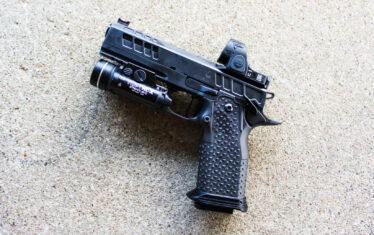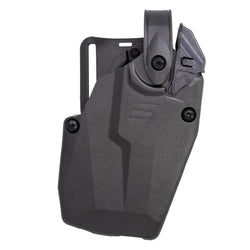
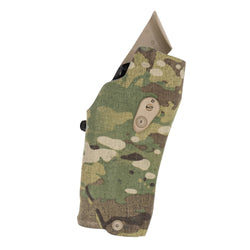

In early June, I had the opportunity to visit the Smith & Wesson facility in Maryville, TN. It is home to the production factory, corporate offices, and the new Smith & Wesson Academy.
Safariland was invited to the media event in a support capacity, letting the invited writers from various outlets try out the new Haley Strategic Baseline belt, pouches, and holsters for the Smith & Wesson M&P pistols. I was invited as a Safariland writer and one of the shooters on the line to get a sneak peek at the training as the program grows.
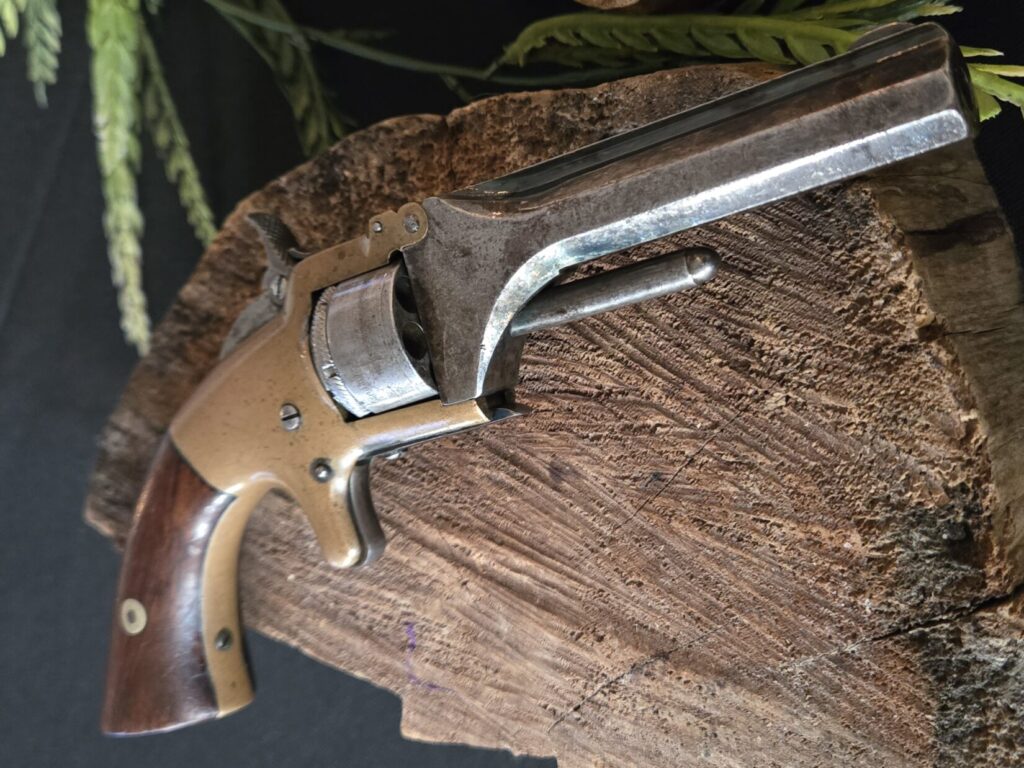
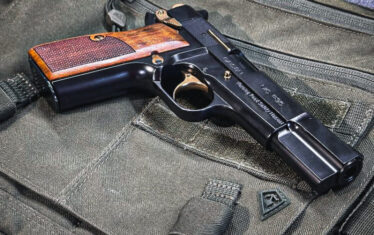
We were treated to an exclusive look at the facility and a chance to handle some extremely collectible firearms, new releases, and speak with the product design team.
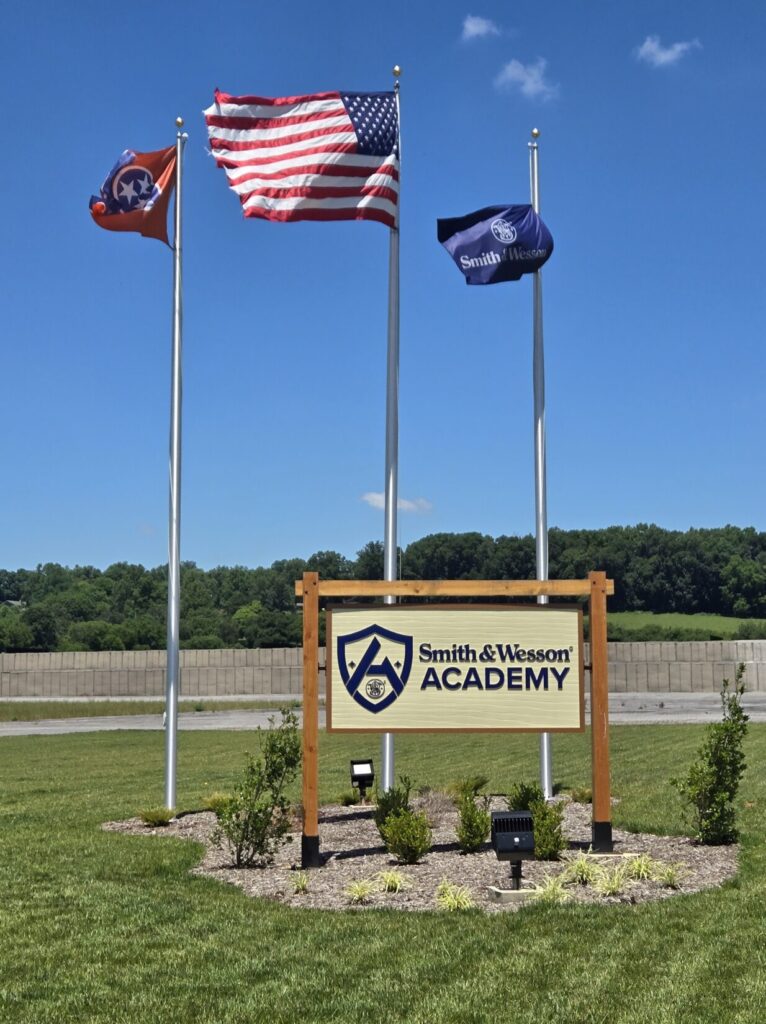
On the second full day at the facility, we assumed the role of students. The Academy’s lead instructor, Mark “Coch” Cochiolo (@practicalfirearmsinstruction), provided us with an overview of the program he has built and what we would learn.
Coch is a retired Navy SEAL who has 37 years of combined active-duty experience and multiple training roles. He provided us with a hybrid training day with pistol and carbine instruction. With a wide range of skills and comfort levels in the class, Coch made sure to drive home the fundamentals. It doesn’t matter how skilled you are; fundamentals matter.
What follows are some takeaways, paraphrased and presented from Coch’s perspective, that may reinforce what you already know.
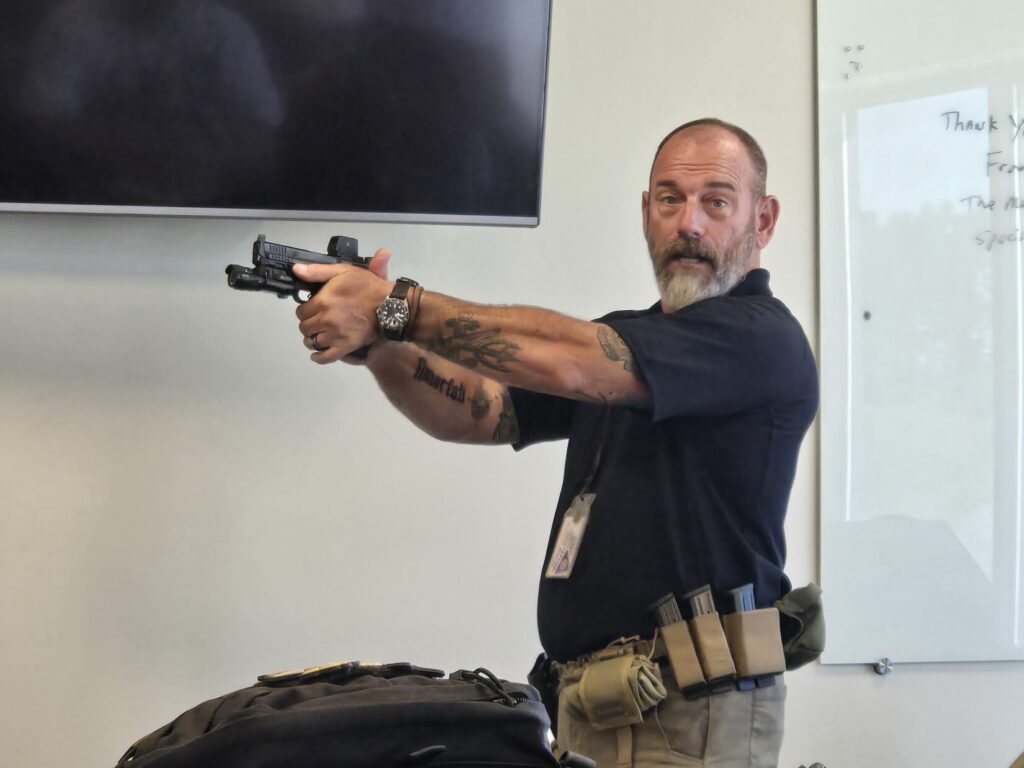
The Draw Support Hand
When the pistol is drawn, the support hand needs to find a reference point before the hands come together. Some new shooters may want to find their support hand out in front of their body in an inconsistent place as their shooting arm is extended. Instead of finding the support hand further from your body, the support hand should be placed with the thumb to the sternum awaiting contact from the shooting hand.
This hand placement is repeatable and with practice it is easy to find it with subconscious competence. This tactile reference point mates the two hands for a strong shooting grip early and it is repeatable rep after rep. Consistency helps with efficiency and the more efficient the process, the smoother and quicker the presentation.
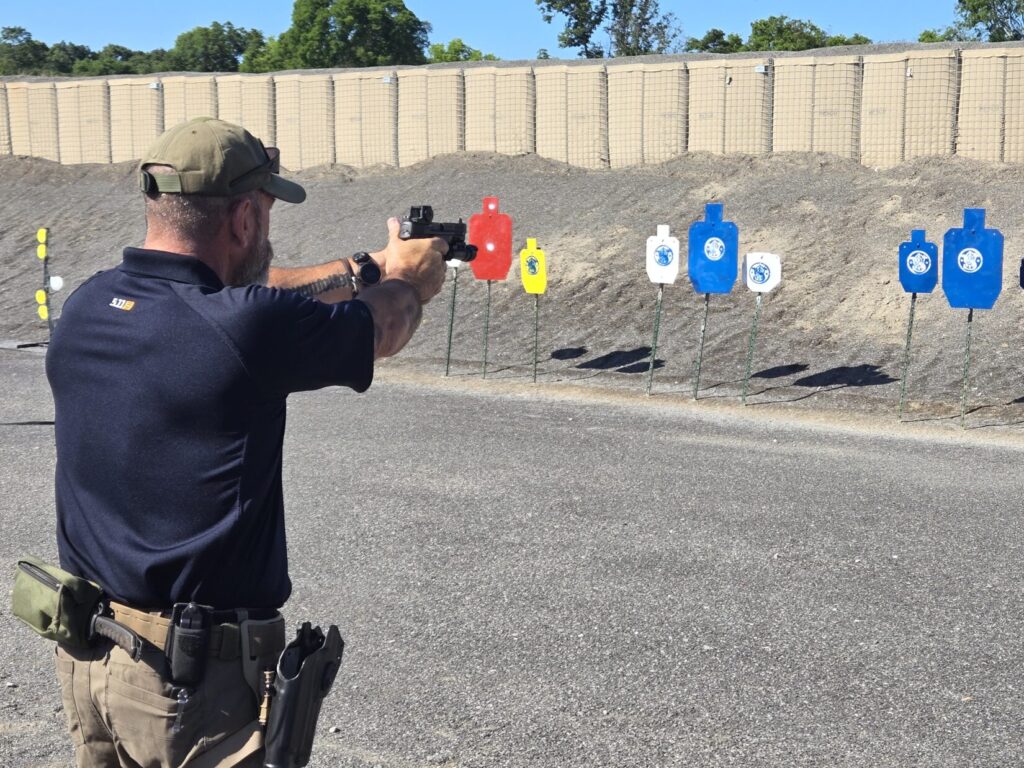
“Wanna See My Gun” Presentation
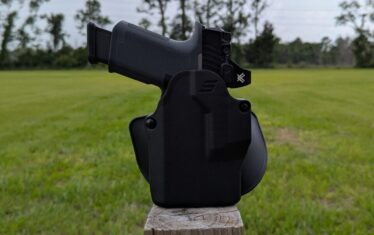
During the course of instruction, students had the opportunity to use the Safariland 6000 series and SafariVault holsters. These holsters securely held the Smith & Wesson 4.25-inch M&P pistols used. Some students were not familiar with the ALS locking system, but after a brief introduction, they learned to operate the holsters and work on their draw stroke.
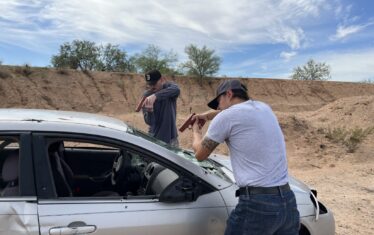
Coch mentioned the “Wanna see my gun” presentation and how presenting the pistol in a single swinging up motion is a quick way to marry it with the support hand. We have all seen this presentation when someone has a firearm they are anxious to show off, and you can likely envision this movement. This technique is not the “bowling” motion typically avoided, and it does work extremely well.
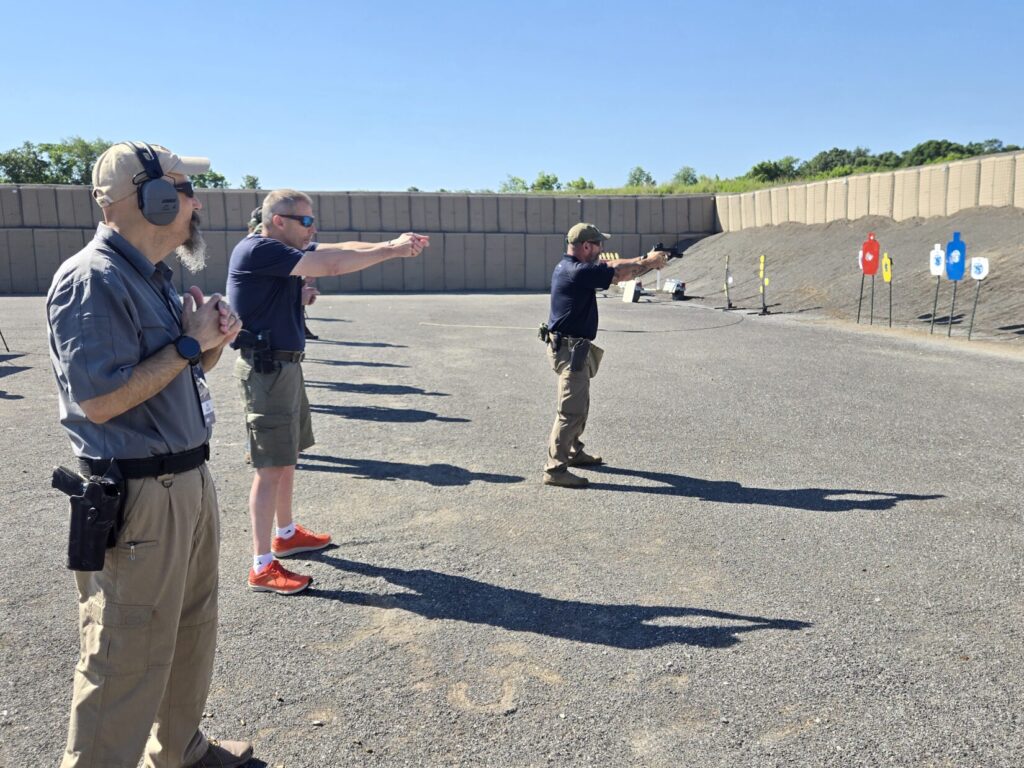
Grip Details
One of the most important fundamentals of handgun shooting is a proper two-hand grip.
After achieving a good master grip high on the back strap, Coch explained the role and position of the support hand thumb running parallel to the frame. He emphasized the ability to point shoot at a target inside of 10 yards using this method. He showed the class the way the support hand fills the gap left by the firing hand and how the hands work together.
Everything he explained, he demonstrated with live fire on the range. Students were then encouraged to try it the way he taught, and he walked the line to coach everyone along the way.
Coch had a unique way of describing the grip pressure used with both hands. The firing hand provides front-to-back pressure, and it should feel “like you’re the date meeting the dad.” He said the support hand provides left-to-right pressure, and it should feel “like the dad meeting the date.”
Tap Rack Details
The loudest noise a person can hear is a click instead of a boom or a boom instead of a click. The latter is typically the result of a negligent discharge, and the other is something that requires immediate action.
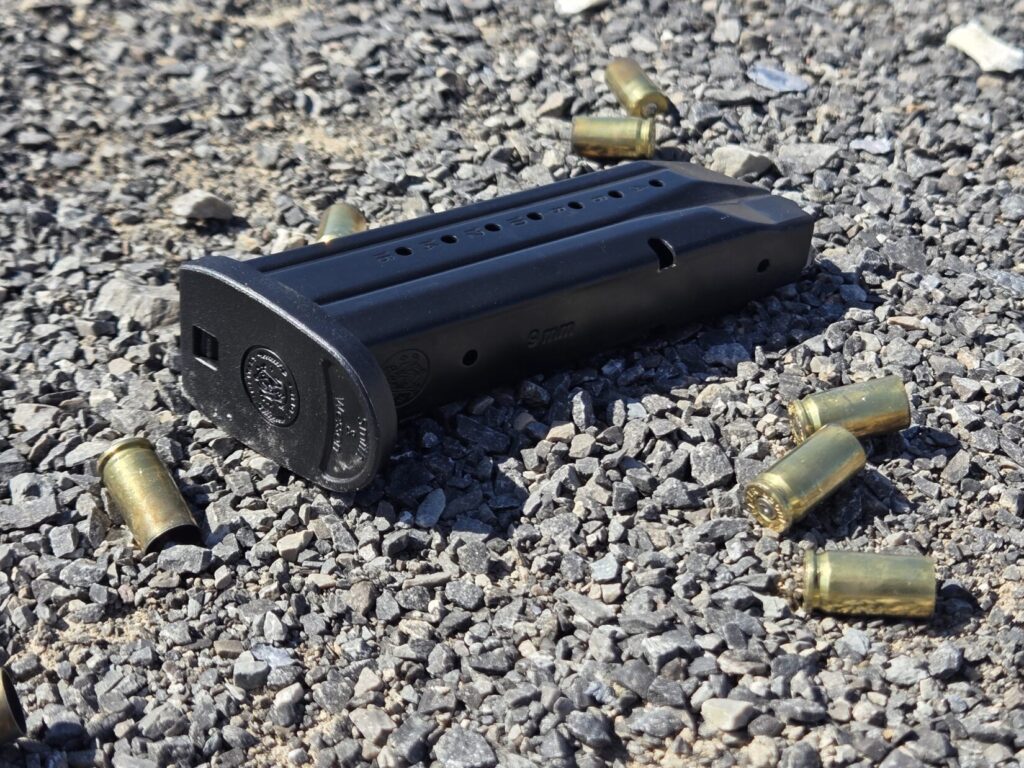
To address a failure to fire, students are taught the tap rack immediate action drill. Coch instructs the students to perform the tap rack with arms extended to eliminate unnecessary movement before reacquiring the two-hand grip. He teaches this method over the powerstroke, as some additional problems can be created if the ejection port is covered and a round isn’t ejected. Turning the pistol inboard allows the user to watch brass eject and new brass load.
Cheek to Shoulder
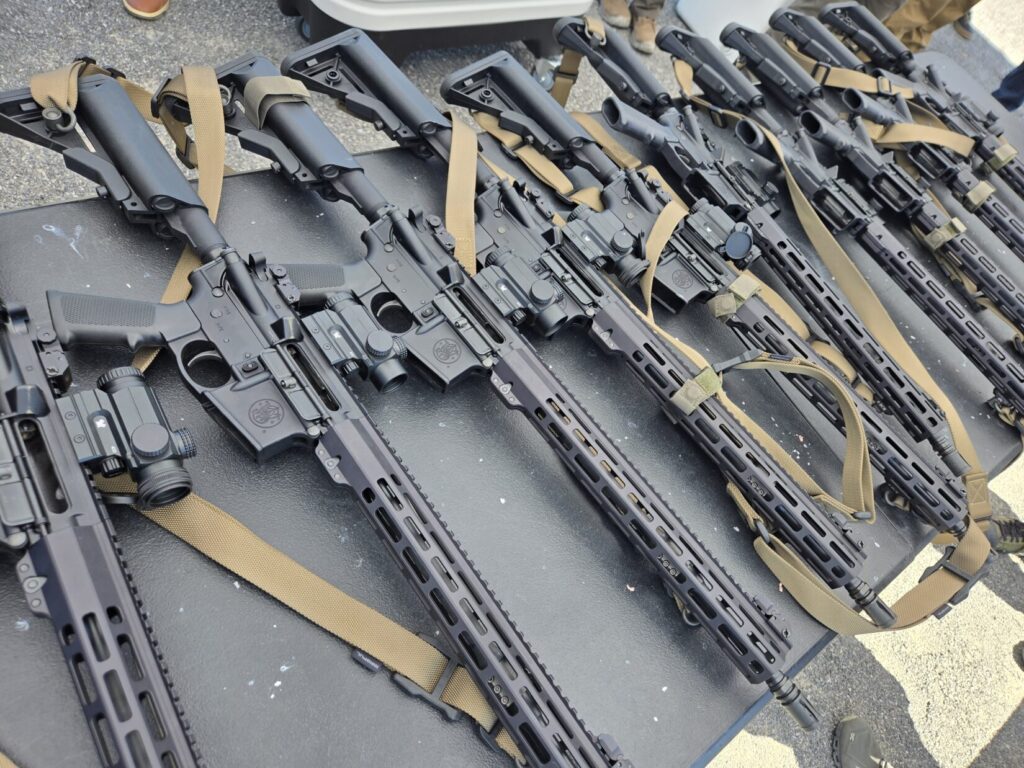
After a lunch break, the class transitioned to using the M&P rifles with Vortex SPARC II optics. Much like creating a consistent draw point for the pistols, Coch explained his preferred way to mount the rifle. We worked from the low ready position with the muzzle pointed down at 45 degrees to the target.
We were taught one of the best ways to ensure a consistent placement of the rifle on the shoulder without craning your neck: have the buttstock make contact with the cheek before dropping it down on the collar bone and chest.
By tilting the head or straining the muscles in the neck, you create a failure point instead of keeping your head in a natural upright position. He explained the lack of real recoil in the AR platform and how placing the entire buttstock on the body isn’t essential to mitigate it.
It was clear that Coch had a lot to share from his experience wearing a uniform and serving our country. He has worked with many SEAL candidates and has developed a solid training program for those attending the Smith & Wesson Academy.
We had a great time, and there were many laughs on the firing line and while jamming magazines. We also provided some feedback to help improve the student experience at the academy, and how the academy will grow to meet the needs of the students who attend it.
From what I saw and what I was told, the Academy is going to be a great training destination in the Southeast, where others can glean great advice from Coch and level up in the process.