
I’m far from a boomer, but I do have some boomer tendencies. Call me “old-fashioned,” but I like wooden furniture on rifles, leather gear, and I have a thing for revolvers. Compared to a modern striker-fired pistol, revolvers are said to be “double the difficulty” thanks to the double-action trigger press most have.
Revolvers have lost ground to semi-automatics on public ranges, but for hunters and some concealed carriers, they still earn their keep. I know my revolver can more easily accommodate longer dangerous game cartridges than a pistol magazine. I also recognize that revolvers can be incredibly accurate for hunting when used in single-action.
If you decide a revolver works for your mission, you need to understand how to reload it, and this takes practice and some nuances.
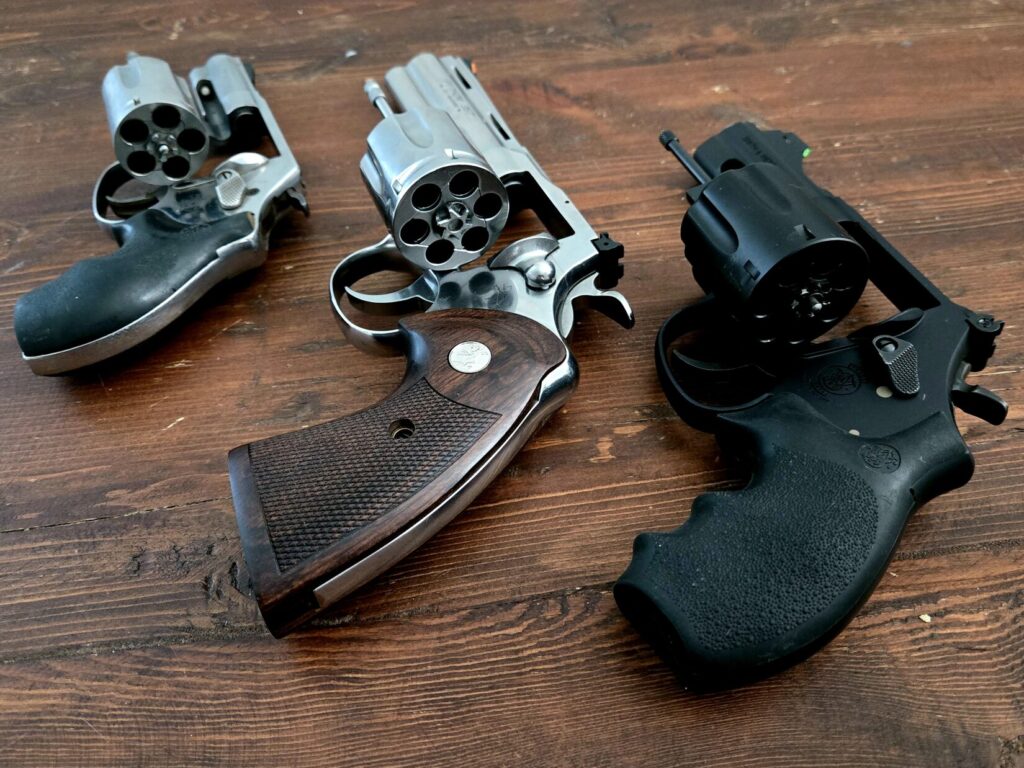
Clearing the Cylinder Before You Reload
When it comes to reloads, the average person will find it easier to load an autolading pistol than your modern DA/SA revolver. A pistol magazine requires aligning one object with a single opening versus 5 to 10 objects with the same number of openings. That’s a real trade-off — giving up capacity for the power, simplicity, and durability they offer.
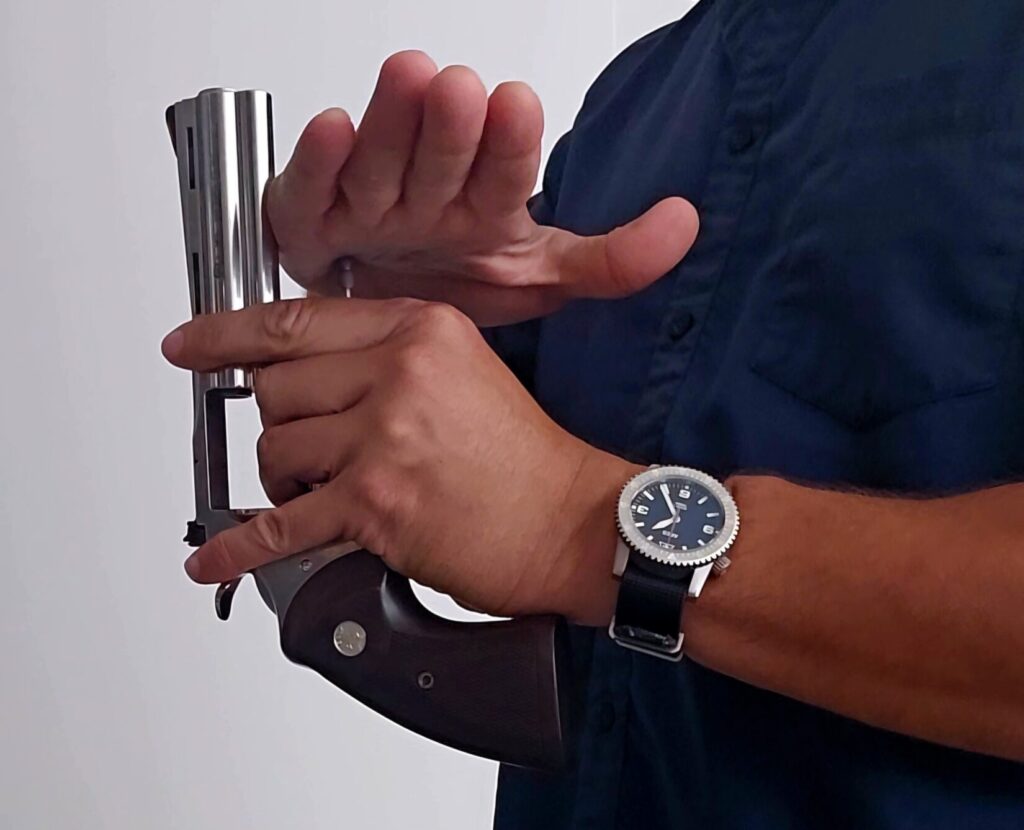
Before loading live rounds, you have to clear the cylinder. The traditional way to clear out a revolver is to tilt the barrel up, open the cylinder by pressing the cylinder latch with your strong hand while your support hand cradles the frame, and push down on the ejector rod with the strong hand while the revolver is pointed upward. This last step lets gravity do the work removing cartridges.
What’s the Best Workspace for a Revolver Reload?
One of the simplest nuances of revolver reloading is discovered when a revolver is held in the same workspace used for pistol reloading. The cylinder is angled downward, which is good for clearing out spent cartridges but not for reloading new ones.
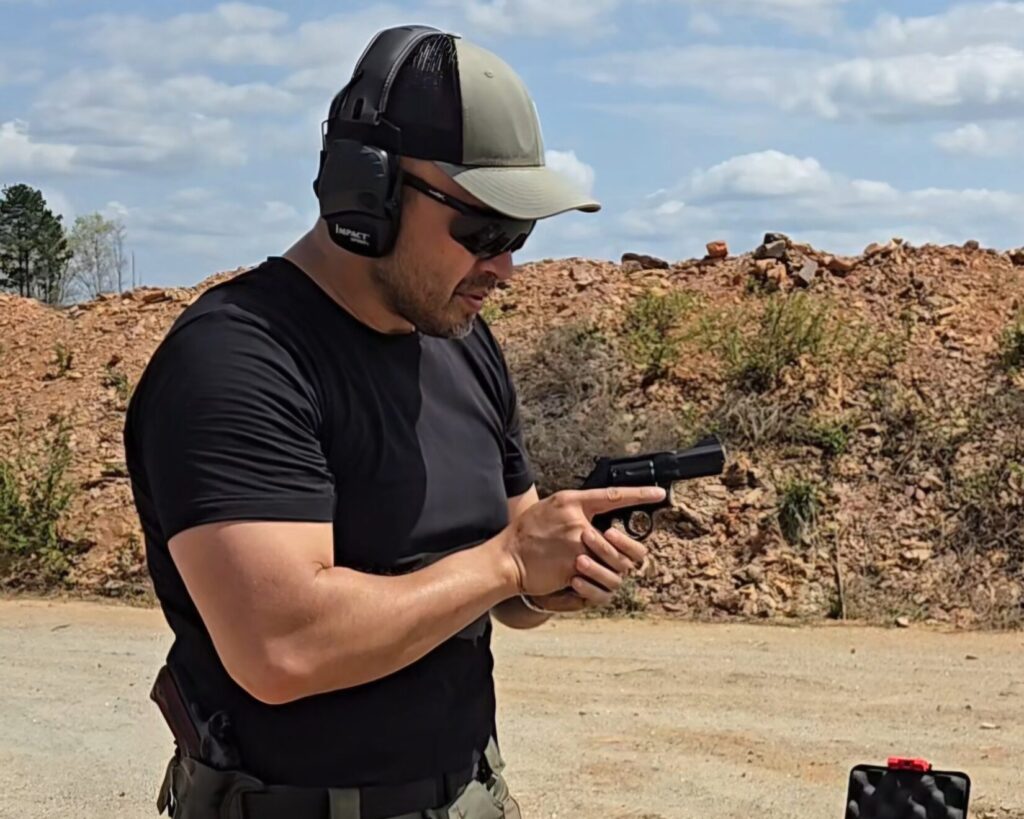
A better revolver reloading position is lower and just above the belt line with the muzzle pointed down and the revolver held in the support hand. If the revolver is held too high, the reload becomes awkward, but there is a sweet spot for all shooters that combines convenience, comfort, and situational awareness with the head up.
The Three Ways to Reload a Revolver
There are three main methods: single index, speed strips, and speedloaders — each with its own speed and bulk trade-offs.
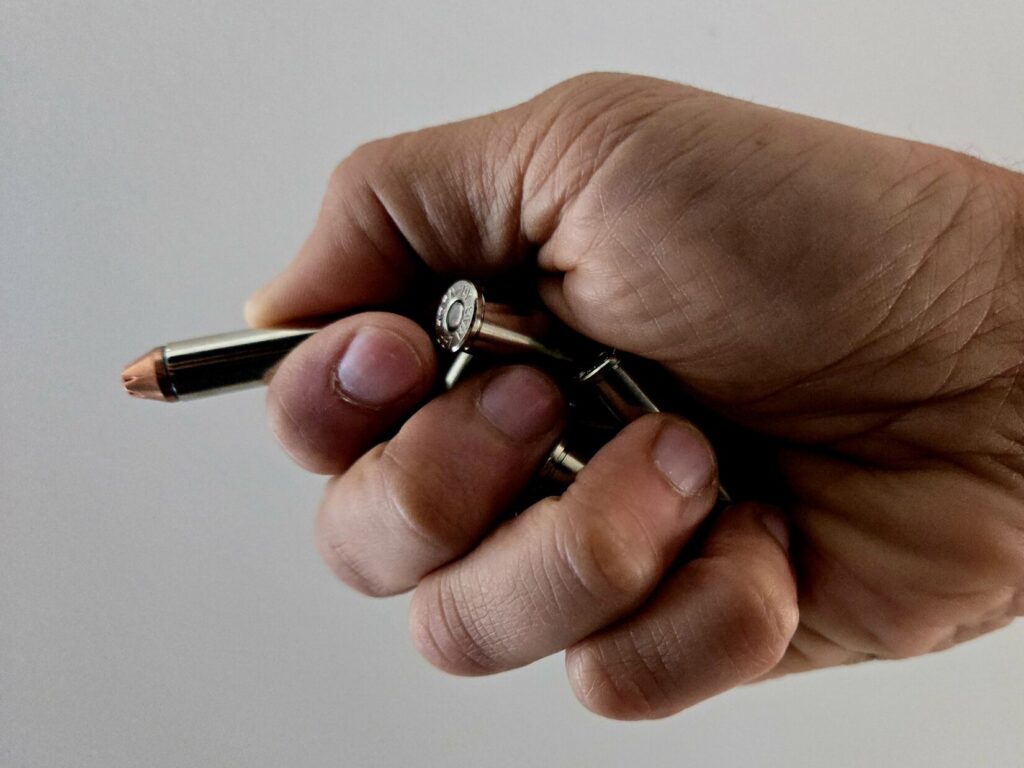
Single Index
The least expedient way of reloading a revolver is single indexing of each cartridge. This requires movement from the belt or wherever the cartridges are held, to the cylinder and back again, for each of the empty chambers. If you can avoid excessive movement and “trips” back to your ammo carrier, you can speed up your reload.
To improve single index reloading, avoid carrying rounds loose in a pocket. Elasticized sleeves will hold the cartridges in the same orientation for consistent index. This eliminates fumbling with each cartridge to get it positioned correctly in the hand.
From a handgun hunting perspective, the single index may make the most sense since the pistol is used for a non-self-defense activity. You can top off with less stress before blood-trailing game or holstering up for the walk back to camp or vehicle.
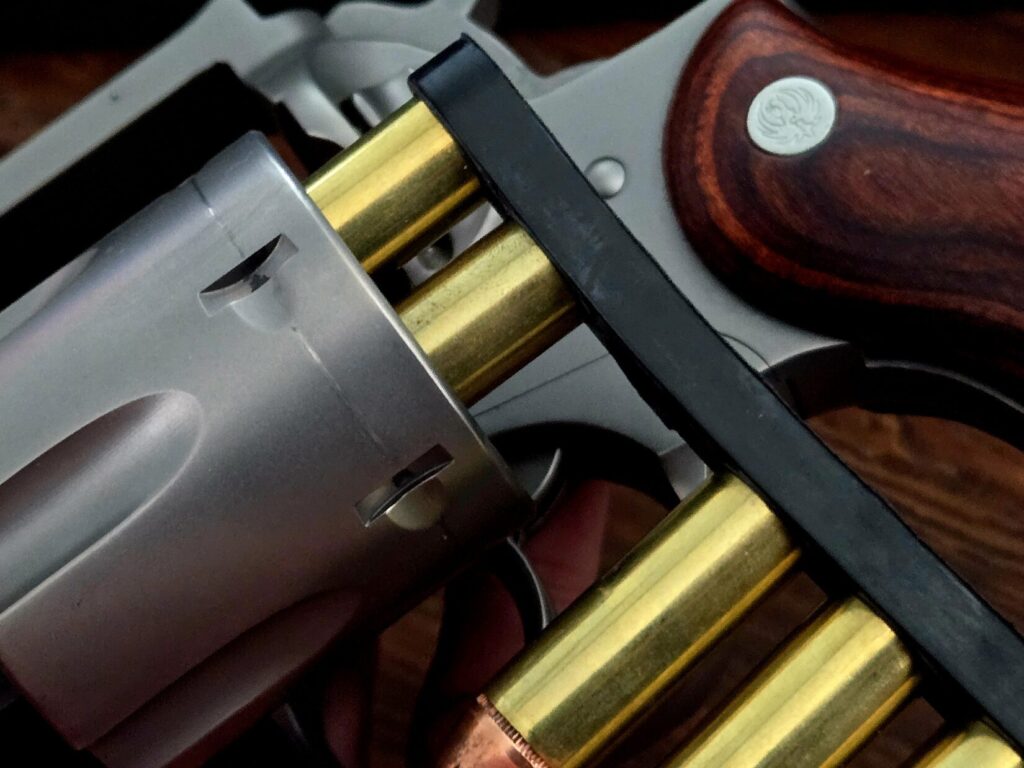
Speed Strips
Speedstrips contain your spare ammunition in a polymer housing. They can be used for single-loading chambers or double-loading. The speed strip allows the shooter to handle the full-cylinder’s worth of cartridges in one convenient package.
Depending on who you train with or how they were taught, you may elect to fire two rounds, eject those two rounds, load two more, and repeat the process. This, of course, is done from cover when the situation dictates it.
For the traditional six-shooter, some will purchase eight-shot speedloaders and skip one space between every two rounds. This creates more room to maneuver the speed strip into position and twist the ammo out of retention. Others will use a seven-shot speed loader with five live rounds, an empty space, and one extra round to quickly load a specialty round like snake shot if the threat is mixed two-legged and no legs.
Speedstrips are great for carrying mixed loads and keeping them organized for ready access.
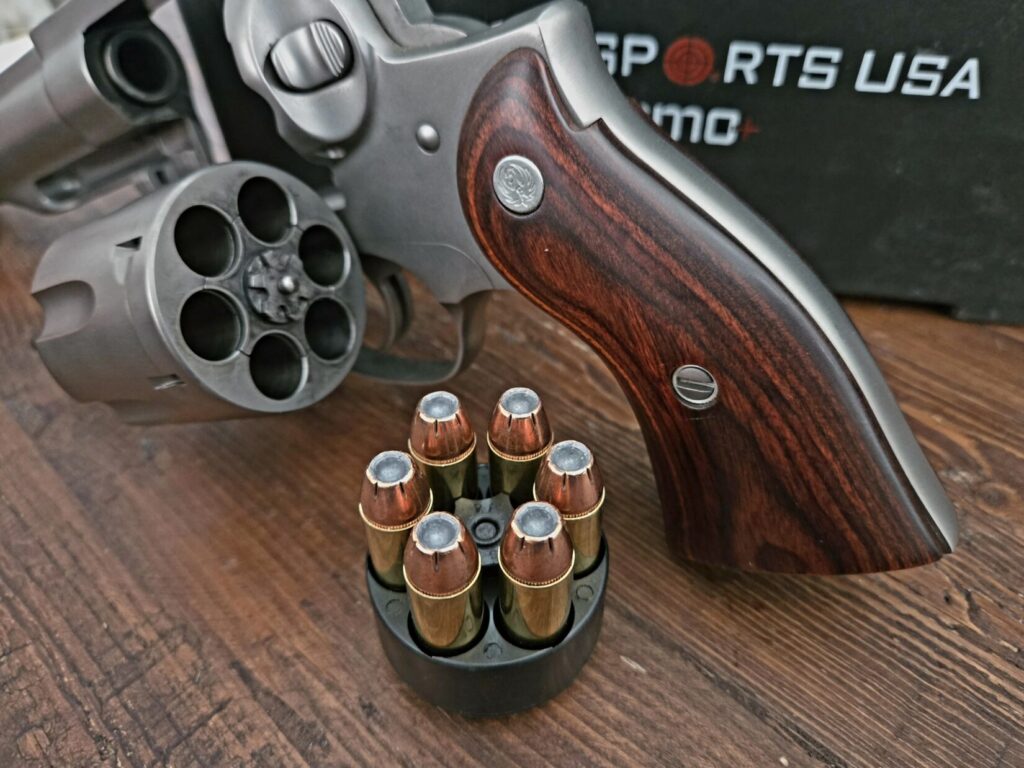
Speedloaders
By far, the quickest reload comes the way of the speedloader. Designed to load all cartridges in line with the cylinder, speedloaders require lining up the rounds and either pushing or twisting them to release the cartridges into place.
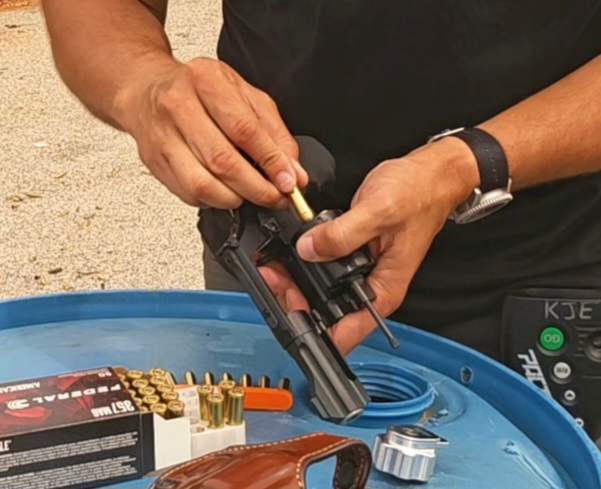
Just like the single index, speed loaders should be oriented on the duty belt or backcountry rig for consistency and efficiency. Since they are loaded with the right hand, speedloader pouches should be carried forward of the revolver on the strong side and opposite from where pistol magazines are typically carried on the support side appendix.
Don’t confuse speedloaders with moon clips even though they have the same general idea. Moon clips retain the cartridges even after they are fired, and not all revolvers have recessed cylinders to accept them.
The New York Reload, Explained
The “New York reload” was derived from a time when the NYPD opted to draw a second loaded revolver instead of attempting to reload their primary. There are some incredible historical accounts that come out of that department, and I’d suggest readers of this blog hit up my friend, fellow CADRE Dispatch contributor, and former NYPD LEO Kenny Stretz to hear more from his training and the guys he rubbed elbows with over the years.
The New York Reload isn’t necessarily a bad idea, but for the average civilian concealed carrier, it does require adding additional gear to your loadout.
Finding a spot for your primary concealed carry pistol or revolver is easy when you have unused “real estate” on your person. When you add a second handgun, you either clutter the belt on the strong side, load down your strong side pockets, or you need to learn to shoot your backup well with your support side. You will want to carry it in a holster that you can access cross-body with your strong side as well as your support side.
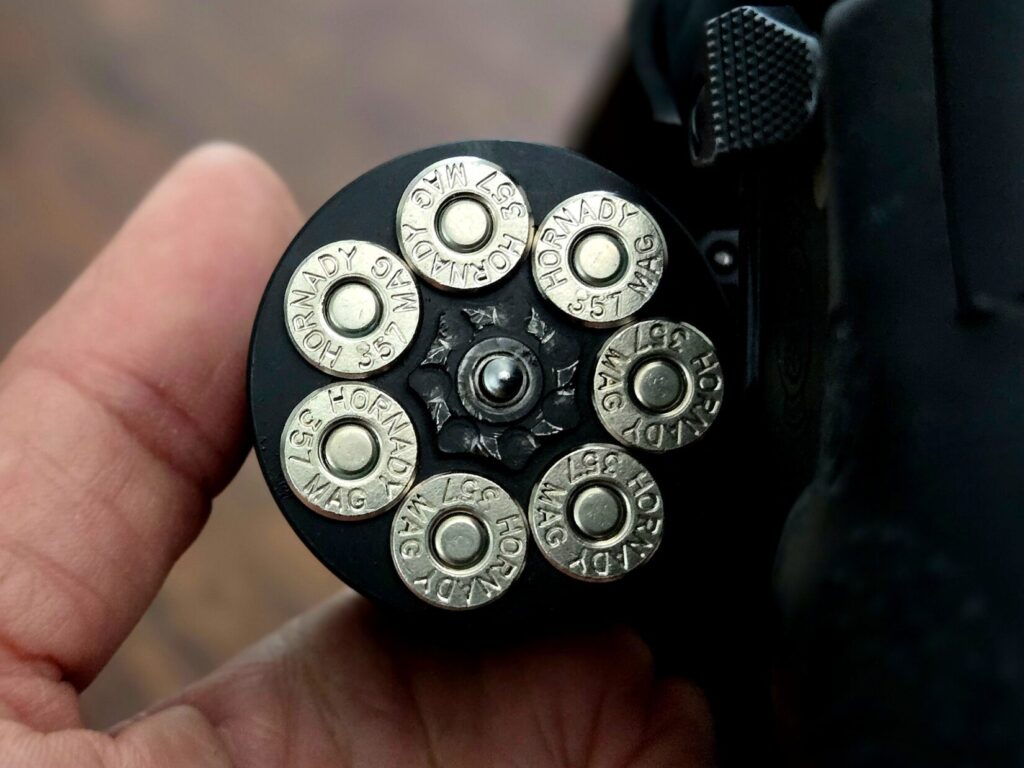
Practice
It’s simple; perfect practice will improve your reloading skills. This can be done in the comfort of your home with dummy rounds if you can’t make it to the range.
Even the fastest method of reloading can be problematic if repetitions aren’t trained. Learn to load your revolver with single rounds at a time as well as with speed strips and speedloaders. Revolvers don’t have the greatest capacity, and they tend to run out of ammunition quickly. How quickly they get back online is up to you.