
The current go-to shotgun for the United States military is the Mossberg 590A1. Sure, guns like the Benelli M1014 and various incarnations of the Remington 870 serve too, but the 590A1 leads the charge. The Mossberg 590 has been serving with military forces since 1987.
Before the 590 series, Mossberg had the Mossberg 500. The military liked the gun, and it tested well, but lacked a few features the military wanted. Mossberg made some changes, swapped some things, and eventually the M590 came to be.
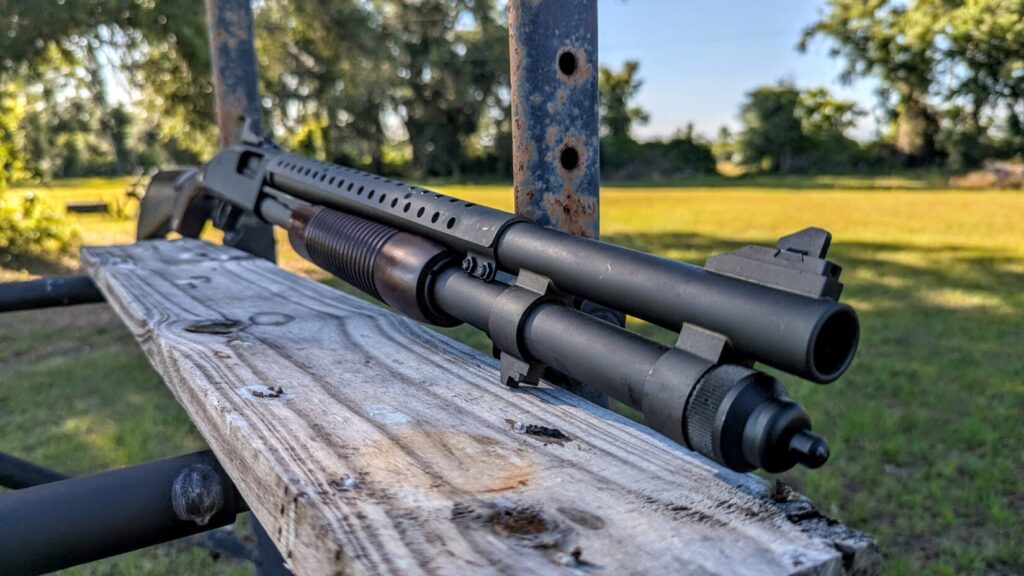
As the gun underwent numerous improvements, it became the Mossberg 590A1. The Mossberg series shares a few common traits with the 590A1.
These are all pump-action shotguns; they feature tubular magazines mounted beneath the barrel and have ambidextrous tang safeties. Additionally, they use aluminum receivers and dual-action bars for increased reliability.
All Mossbergs are going to be stout and reliable guns, but the 590A1 pushes robustness to the next level.
What’s A Mossberg 590A1
The Mossberg 590A1 is a combat shotgun at its core. The big evolution for the 590A1 was the addition of a heavy-walled barrel. The heavy-walled barrel made the shotgun more robust for military use. Trust me, an E1 can break anything.
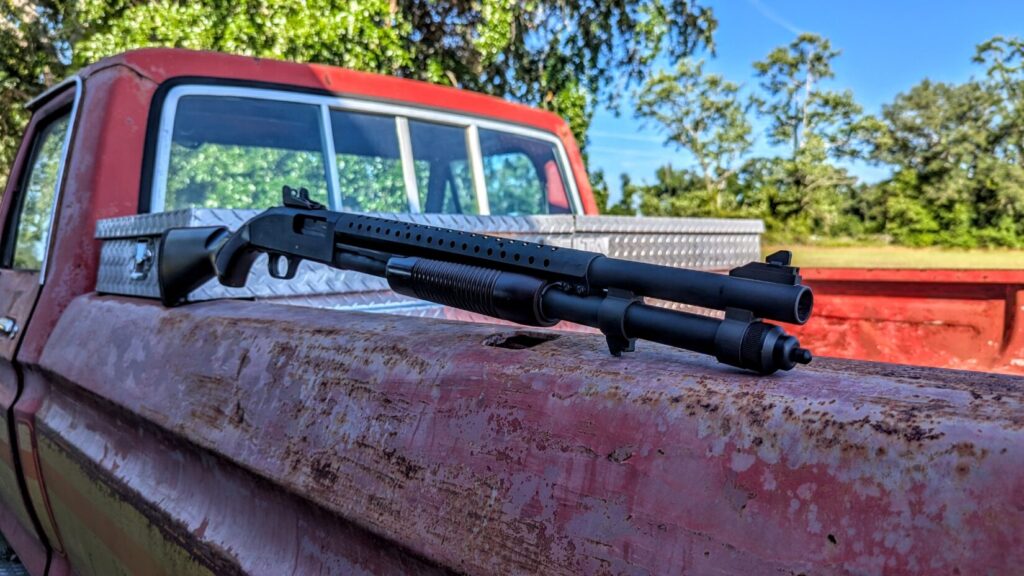
The heavy-walled barrel wasn’t the only change. For the military, the 590A1 featured an extended magazine tube capable of holding eight rounds plus one in the chamber. They added a heat shield and, of course, a bayonet lug.
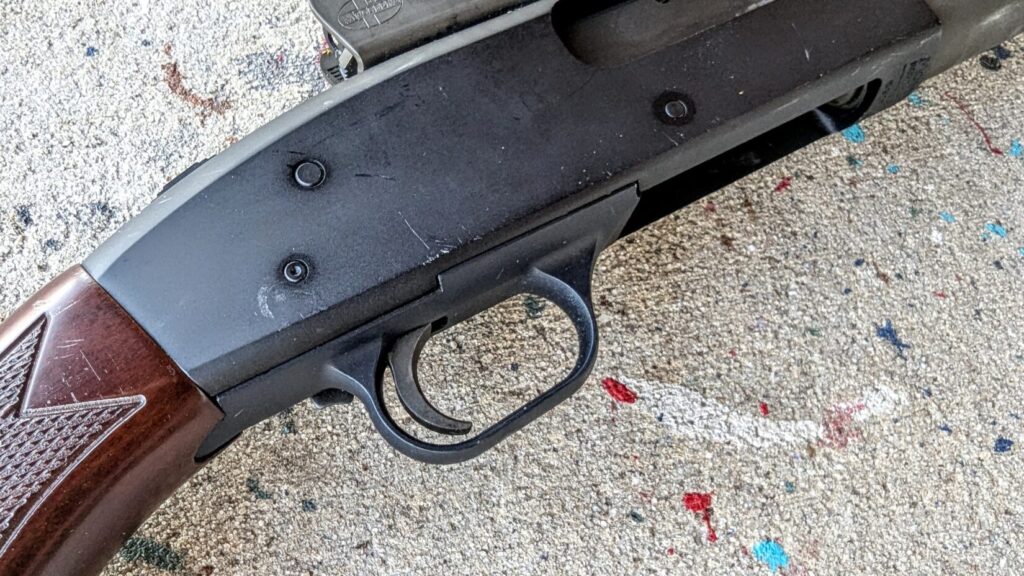
Military Mossbergs all have metal trigger guards, whereas most civilian models use a polymer trigger guard. All 590A1s come with the metal trigger guard.
The 590A1 isn’t exactly isolated to that description. As the years passed, Mossberg produced a ton of different variations of the shotgun. The one feature they all share is the heavy-walled barrel.
Variations might have shorter barrels, lower capacity, no heat shield, or no bayonet lug, but they’ll still have the heavy-walled barrel.
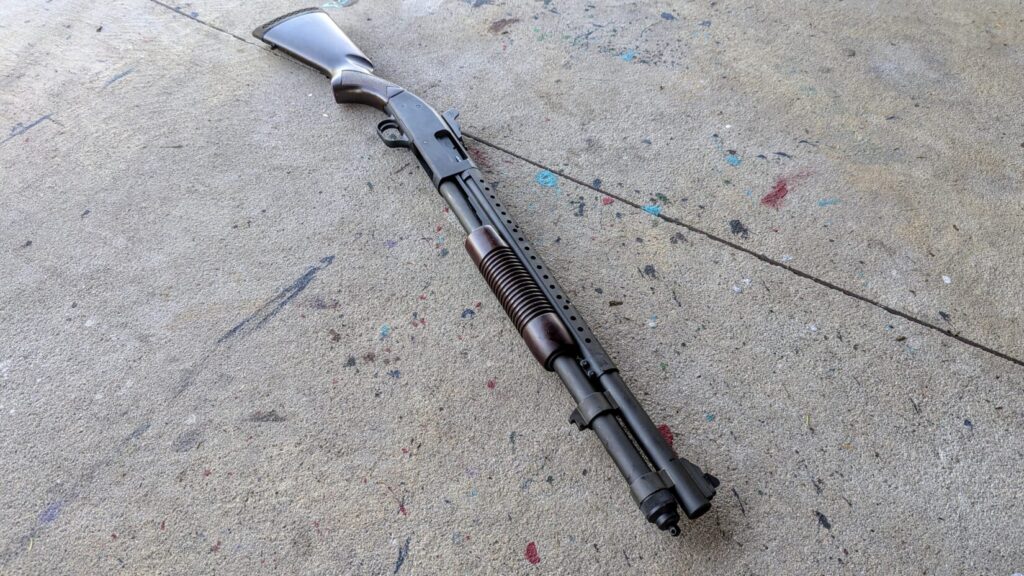
While the 590 might have dipped into 20 gauge and .410 as of late, the 590A1 is a pure 12-gauge gun. The capacity ranges, but my selected model is the 590A1 Retrograde, which features an eight-round magazine tube, a bayonet lug, a heat shield, and a set of ghost ring sights.
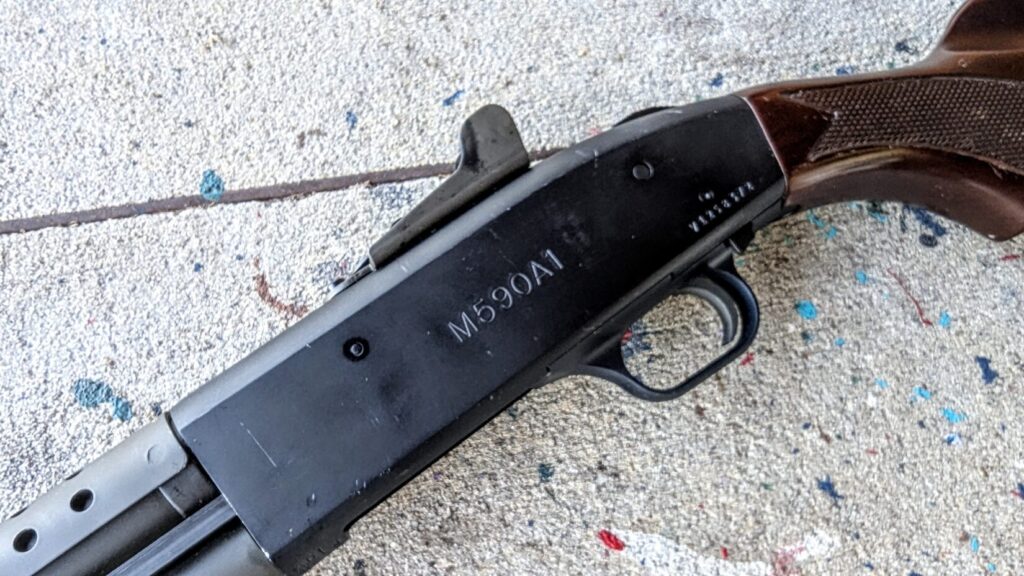
The Retrograde model also comes with wood furniture and a parkerized finish that gives it an old-school look mixed with modern pump shotgun design.
Throwing Shot With the 590A1
If the majority of your shooting involves AR-15s and polymer-frame pistols, the 590A1 will feel hefty. The long 20-inch, heavy-walled barrel makes the gun front-heavy, and 12-gauge guns are always a little hefty due to their size.
Mossberg lists the unloaded weight at 7.25 pounds, and you feel it. As you jam eight 2.75-inch buckshot rounds into the tube, the gun goes from front-heavy to feeling like the low side of a seesaw. It’s hefty and front-heavy, but fear not, there is some benefit to heft.
12 gauge isn’t a tame beast; it’s rather feral. They are famed for their recoil, which can be mitigated through proper shooting technique. A good stance and a little push/pull go a long way toward reducing shotgun recoil.
Another way to make a shotgun more controllable is by weight. The more a gun weighs, the less you feel recoil. If the gun’s front heavy, the muzzle rise is tamed a bit. In a rifle, this kind of weight distribution makes off-hand shots a lot harder, but with shotguns, that’s not a concern.
The weight of the gun might be a pain on a long foot patrol, but it’s really not a huge problem. It helps you control the gun, making repeated fast shots a bit easier. With the 590A1, I can put two rounds of buckshot into an A-zone in less than a second at 10 yards.
That’s 18 pellets of 00 applied judiciously and with quickness. The action isn’t ball-bearing smooth, but it’s slick and fast. It might have some grit, but there isn’t a point where it binds or becomes difficult to move.
The Ghost Ring Sights
Ghost ring sights aren’t my favorite option on shotguns. They work fine, but I prefer red dots or rifle-style sights. The ghost ring rear sight aligns with a massive orange front blade-style sight. I do like the big blade-style sight and find it fast and easy to pick up.
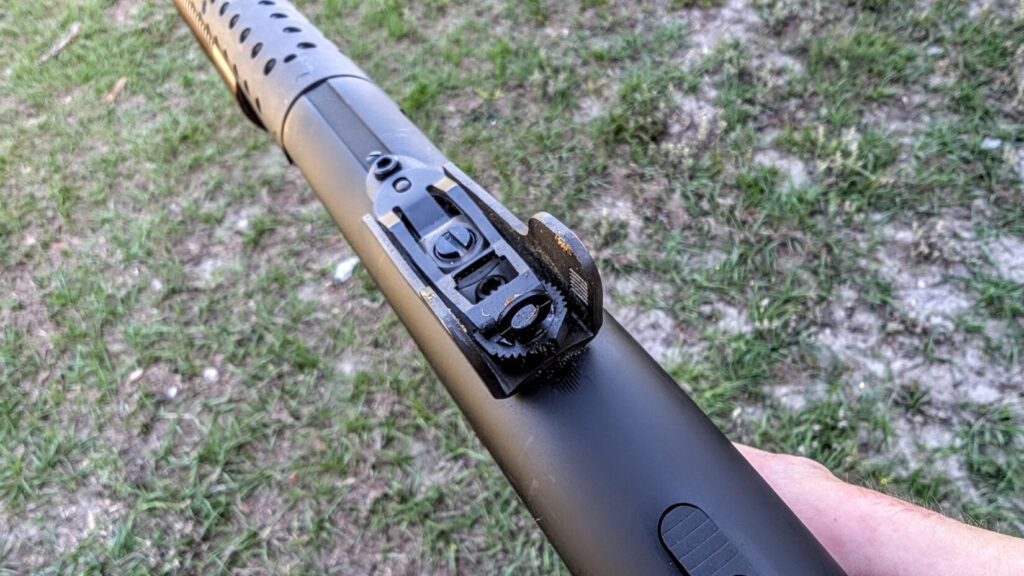
Mossberg’s ghost rings are a bit complicated to adjust. If you’re zeroing them for slugs, then be prepared to break out the manual. To adjust windage, loosen one screw and tighten another. To adjust for elevation, you loosen one windage screw and spin the wheel.
It’s overly complicated, but it is a fairly robust set of sights. Luckily, if you don’t like them, you can replace them with a red dot by just removing the Ghost ring. The top of the gun is drilled and tapped for an optic mount.
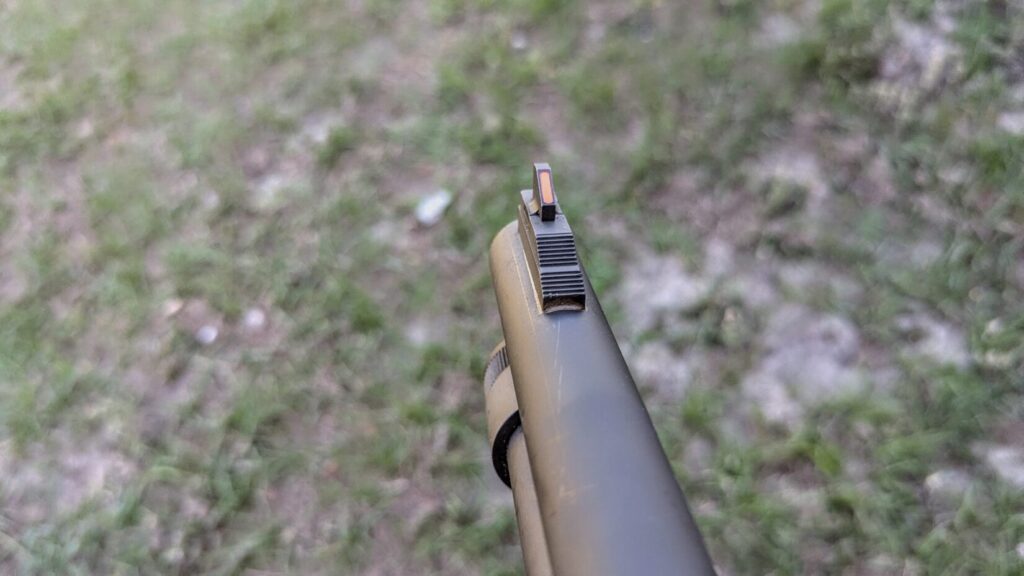
Once adjusted, I didn’t have any issues hitting the target. My problem with ghost rings is that they feel a bit counterproductive for buckshot. It’s a little faster to use a more open sight system, and while ghost rings are precise, I don’t find myself needing their precision at buckshot ranges.
At the end of the day, I can still put plenty of lead on target quite quickly.
The 590A1 Effect
One of the best parts of using a 590A1 is how tight it patterns with a cylinder bore. Something about the heavy-walled barrel, and maybe even the bayonet lug, makes tighter patterns. They are about 50% tighter than a standard Mossberg 590.
The 590A1’s pattern with standard buckshot is quite tight. It falls somewhere between a cylinder bore and an improved choke. My patterns with the cheapest buckshot I own were about seven inches at 15 yards.
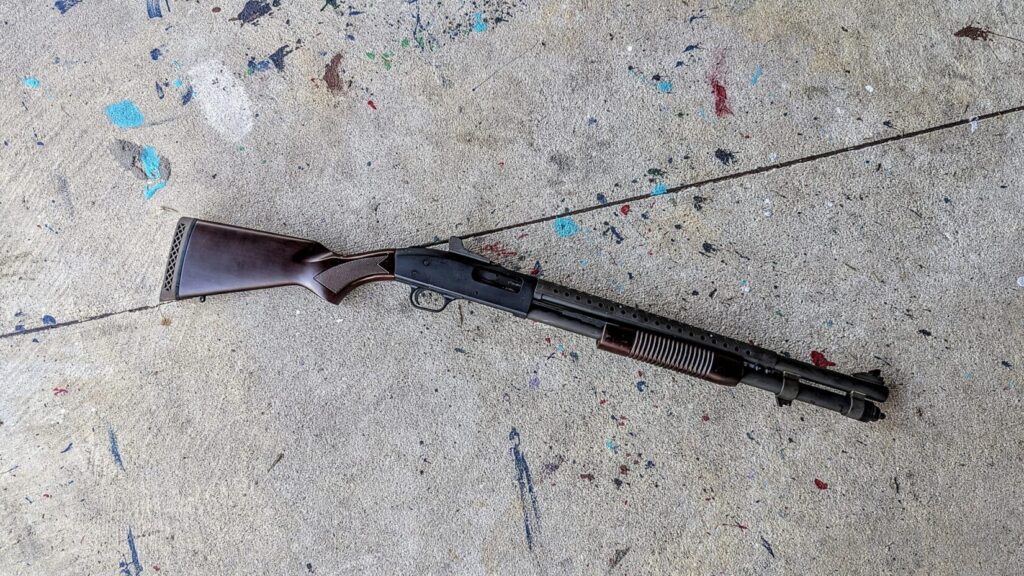
For a military shotgun, this is valuable because the bare bones Olin buckshot the military uses throws crappy patterns. For the rest of us, who doesn’t appreciate a tight pattern?
The Pump Action Effect
The reason why pump-action shotguns have stuck around for so many years is that they work. Their reliability under a heavy load keeps them in the running as a competent defensive firearm. The 590A1 cycles everything without issue.
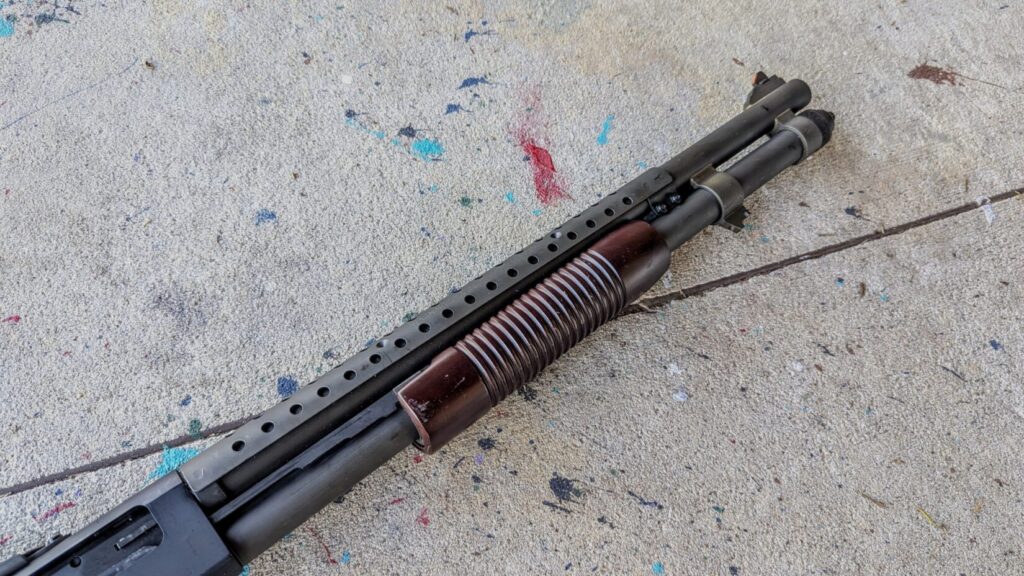
High brass, low brass, and with an adapter, it can even use mini shells. Pump-actions eat everything, and the 590A1 is not different. It’s a powerful, reliable, and capable tool for defensive use.
The 590A1 might be the peak of defensive pump-action shotguns, and it’s a gun you just gotta experience to appreciate.