If you’re a soldier or a Marine serving on some faraway battlefield, your country requires you to be flexible. “Semper Gumbi” was what we used to say. In the field, that meant one thing: improvise, adapt, and overcome.
This is a common trait among good troops. You won’t always have what you need, so if you can turn an old Hesco barrier and some chicken wire into an anti-grenade and RPG cage for a turret, you get it done.
That’s your usual improvisation, but sometimes improvising goes a little further.
Believe it or not, military leadership frowns on you improvising weaponry, and you are not allowed to make major modifications to your issued rifle. Attaching a flashlight is fine, but trimming the barrel is a no-go… most of the time.
Today, we are going to look at historical examples of soldiers taking their issued equipment and applying a little improvisation and adaptation to overcome challenges.
The Periscope Rifle: Shooting Over the Trenches at Gallipoli
Troops fought World War I across a massive trench line that scarred Europe, but this story starts at Gallipoli, in what is now Turkey.
Trench life wasn’t easy, and troops lived in constant fear of trench raids—both conducting and resisting them. In May 1915, one enterprising Australian Lance Corporal sought out a way to engage the enemy without having to peek his head above the safety of the trench.
Soldiers had implemented periscopes to see over trenches safely, and when the enemy was sometimes as close as 50 meters, you didn’t want to poke your head over if you could avoid it.
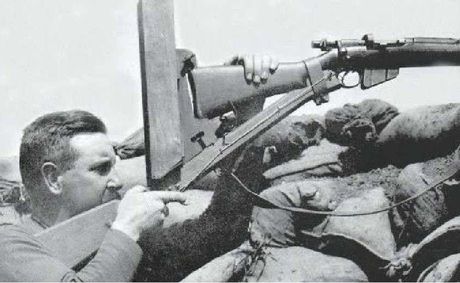
Lance Corporal William Beech, a builder’s foreman, decided that attaching a periscope to his Lee-Enfield could give him and his allies a distinct advantage.
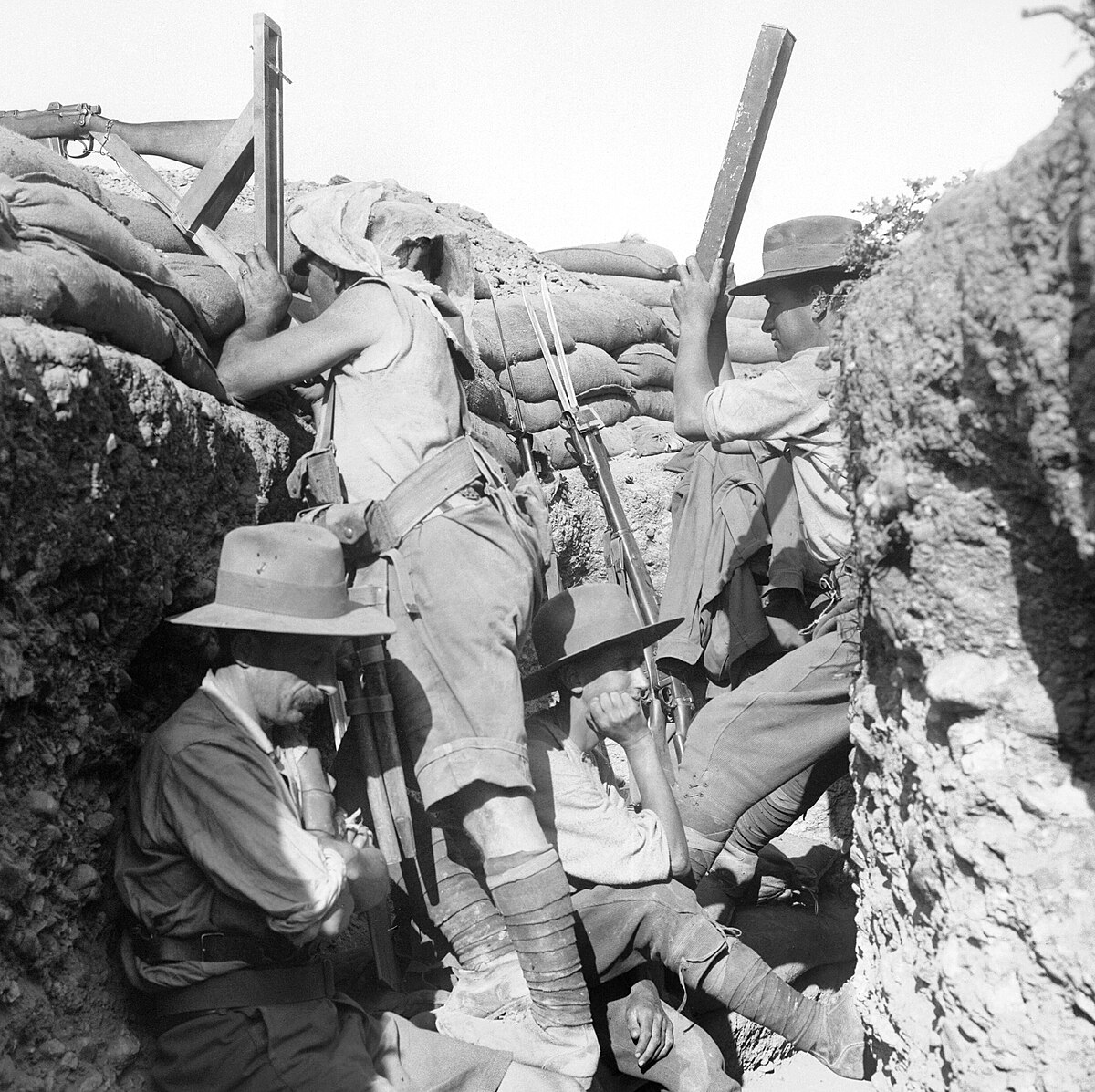
The periscope was aligned behind the rifle’s sights, and a lower mirror made it possible for the soldier to look through the sights without breaking the trench line. The rifle’s stock was cut in half and fit in a special wooden frame.
A string pulled the trigger. The rifle had reduced range, but due to the closeness of the lines at Gallipoli, this wasn’t an issue. Beech’s rifle would be replicated by ANZAC forces and became a popular option during the Gallipoli campaign.
The M2 Stinger: Marines Turn Aircraft Guns Into Infantry Weapons
Marines in the Pacific were a crafty bunch, and during their time fighting the Japanese, they decided their machine guns weren’t putting out enough lead and they wanted more. Two Marines, Sergeant Mel Grevich and PFC John Lyttle, had a solution.
The standard machine gun of the era was the M1919 in various configurations, which offered a rate of fire of around 600 rounds per minute. This machine gun was also used by aircraft, but aircraft M1919s, known as the AN/M2, offered a firing rate of 1,200 rounds per minute and weighed about seven pounds less than the standard M1919.
Marines would harvest these machine guns from damaged and downed aircraft. These machine guns were named the M2 Stinger. Early models were simply the AN/M2 with a bipod, but later models used a bipod and rear sight from a BAR, a stock cut from an M1 Garand, and an improvised trigger that replaced the aircraft gun’s spade grips.
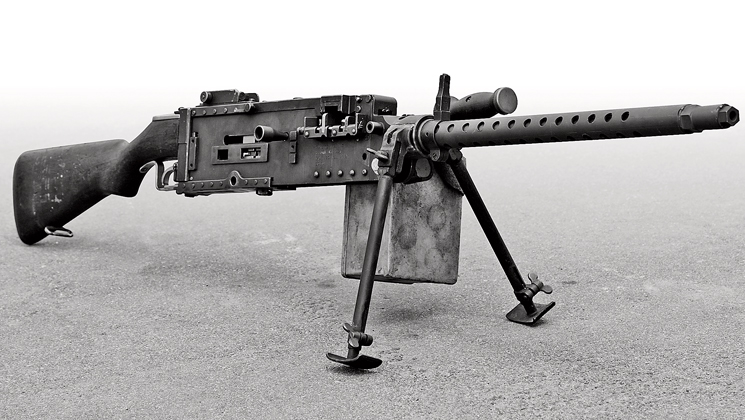
Six Stingers would be produced and used by Marines in World War II. The Stinger concept offered Marines a lighter, fast-firing machine gun and was proven to be highly effective. (You’ll find the Stinger alongside other oddities in the Marine Corps’ more unusual weapons.)
Corporal Tony Stein earned the Medal of Honor, wielding an M2 Stinger on Iwo Jima on February 19, 1945, as he provided highly effective cover fire for his platoon and eliminated 20 enemy combatants.
Sadly, as the war ended, the six Stingers were presumably destroyed, and the concept faded from the Marine Corps’ memory.
The SEAL’s Point Man Ithaca 37, “Sweetheart”
In the book Point Man, Navy SEAL Chief James “Patches” Watson tells his story from his time in Vietnam as a SEAL point man. He recollects a famous story when he accidentally discharged both a 40mm grenade launcher and an M16 when he ran into a hive of red ants. After that, he was assigned a shotgun.
That shotgun was an Ithaca 37, a shotgun famous for its use in SEAL Teams thanks to its sealed design. Patches carried several Ithacas and, over time, improvised the weapon into exactly what he needed it to be. At Frankford Arsenal, they extended the magazine tube to hold seven rather than four.
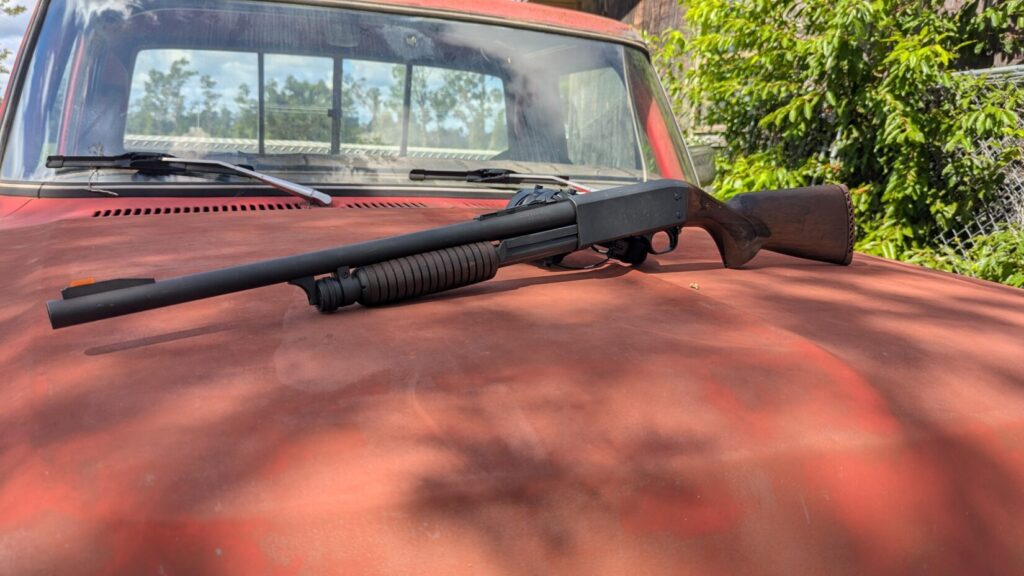
The gun was also fitted with a duckbill choke, which spread shot horizontally rather than vertically. They designed the duckbill choke for jungle warfare and No. 4 buckshot. Patches would later trim the stock into a pistol grip and equip the gun with an improvised one-point sling.
He’d carry this high-powered, highly maneuverable shotgun as a point man for two tours in Vietnam. It became his favorite gun and was nicknamed “Sweetheart.” It’d often be employed at close range in a point-and-shoot manner.
Sweetheart is currently on display at the Navy SEAL Museum.
MACV-SOG’s Chopped RPD Machine Guns
World War II jump-started modern special operations, but the war in Vietnam would go on to define special operations capability. The men of MACV-SOG, which stands for Military Assistance Command, Vietnam – Studies and Observations Group, were famous for their daring nature and dangerous missions.
They improvised when necessary, and that included using enemy firearms. One of their most famous improvised enemy firearms was the RPD. Specifically, the Chinese-made Type 56-1 LMG, a clone of the Russian RPD. The RPD was a light machine gun firing the 7.62x39mm round and was significantly lighter than the American M60.
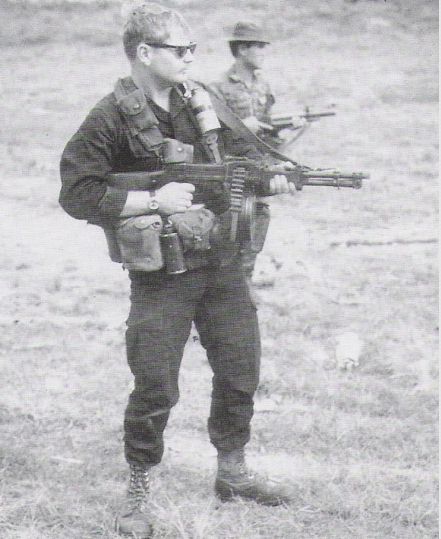
MACV-SOG commandos would capture RPDs and trim the barrel at the gas tube, which also sacrificed the bipod. These special operations teams would also line the drum with cloth to keep the belt of ammo from rattling around. These guns offered the MACV-SOG teams a lightweight and compact weapon for jungle warfare.
With the front sight removed, it was a “spray and pray” machine gun that would be well-suited for counter-ambushes. The chopped RPDs would also confuse the enemy, since the RPD and the American M-60 sound distinctly different: a chopped RPD sounded like one of their own guns, not an American M60, which made it harder to tell who was firing and from where. This slight advantage went far for men deep behind enemy lines.
Improvise, Adapt, Overcome: The Common Thread
Being able to improvise, adapt, and overcome is the sign of smart soldiers. You won’t always have the tools you need, and you go to war with what you have. Being able to adapt to your environment goes a long way.