
Submachine guns have largely fallen out of favor due to the popularity of short carbines, so when new SMGs hit the market, it’s big news. In 2009, the CZ Scorpion arrived and did exactly that.
While it didn’t quite change the submachine gun market—the short carbine was still the preferred choice—it changed the civilian market. By 2015, CZ and SIG had both brought out submachine gun-sized large-format pistols, and they gathered lots of hype.
The CZ Scorpion helped ignite the love of pistol-caliber carbines, further fueled by the advent of pistol braces, which helped stabilize these large-format pistols. Since then, the CZ Scorpion has been a big hit ever since and has continued to evolve and grow.
History Of the Scorpion
The Scorpion name is a throwback to another famed Czech submachine gun, the Vz. 61 Skorpion. The two guns don’t have much in common, but it’s smart and catchy marketing. The full name of the modern gun is the CZ Scorpion EVO 3.
The original Skorpion was the EVO 1, and the EVO 2 was an adaptation of the Skorpion, but in 9mm. That was too expensive to produce and a bit out of date, so the EVO 3 was born.
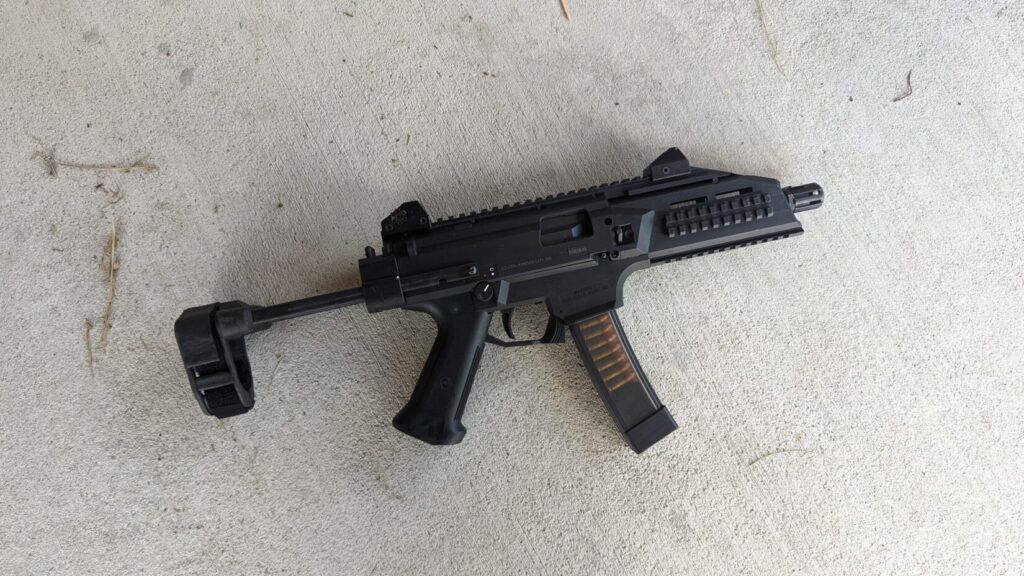
Laugo Arms began designing the Scorpion in 2001. After a few years of development, CZ purchased the project and hired Laugo Arms to finish the design. This resulted in the Scorpion EVO 3 and all the many variations and evolutions of the lineup.
The EVO 3 submachine gun proved to be extremely successful. The Czech Republic adopted the gun, but so did more than a dozen different military and police forces. Today, the Scorpion EVO 3 is widespread and serves everywhere from Canada to Egypt.
Breaking Down The CZ Scorpion
The CZ Scorpion is available in several configurations, ranging from the select-fire SMG variants used by military and police to the much more accessible civilian semi-auto versions. These models are both rifles and pistols, along with a bullpup kit for the rifle versions.
Over the years, CZ has expanded the lineup to include standard, micro, and integrally suppressed models, along with versions featuring faux suppressors. Hardware options have evolved as well. There are models with M-LOK handguards and Picatinny handguardsand a variety of furniture, including standard CZ and Magpul stocks.
It’s tough to pigeonhole the Scorpion, as CZ has created a configuration for almost every type of shooter. While the guns may differ in size and shape, they are all the same inside.
The Scorpion series are direct blowback guns. This means the breech is unlocked, and the weight of the bolt and recoil spring keep the action closed until the projectile leaves the barrel.
The rifle versions come with a stock that both collapses and folds for a compact design. SBR variants can also make use of this stock. For pistol-only variants, you can toss one of many different types of braces on the gun.
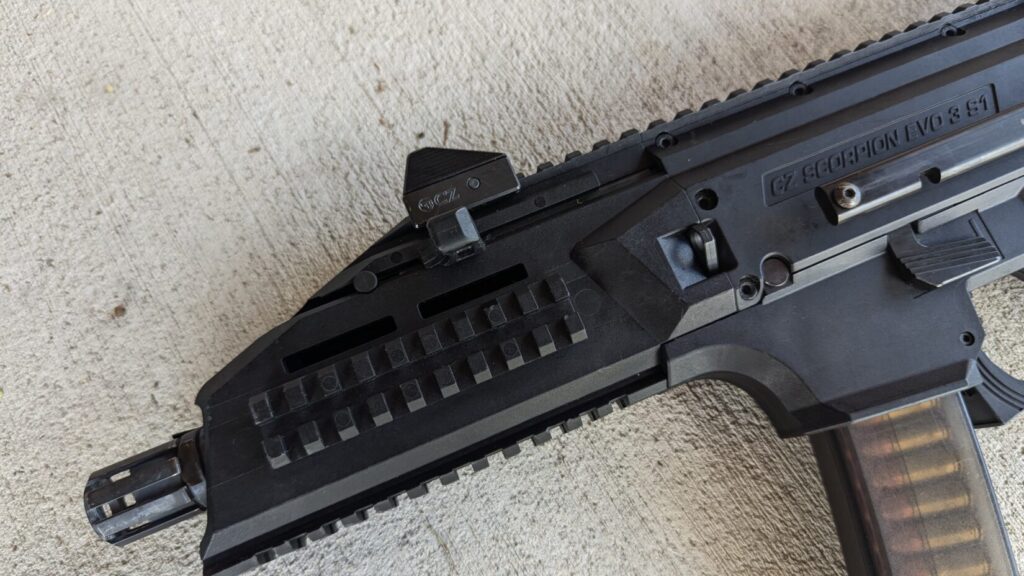
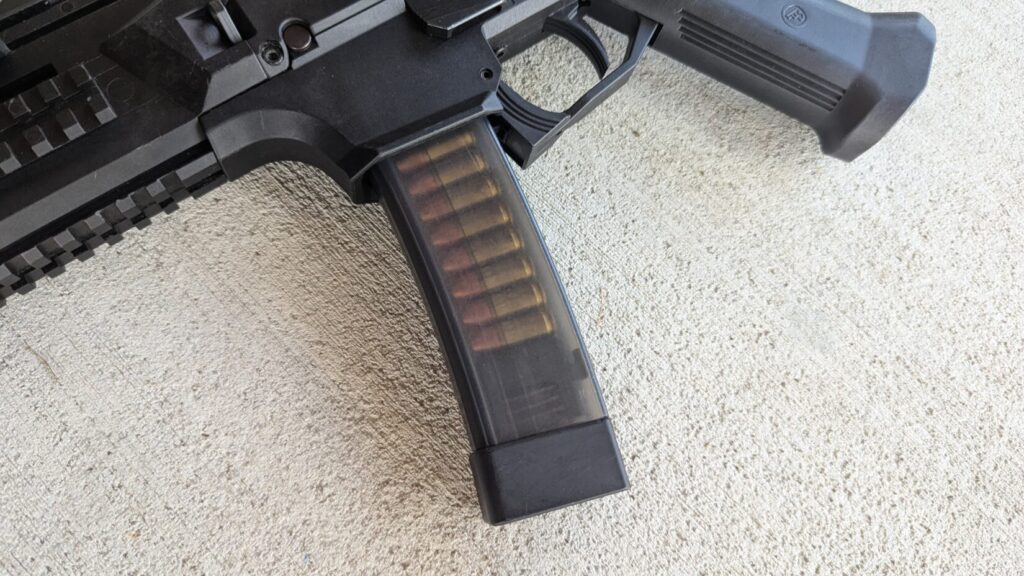
The Scorpion uses a proprietary magazine that’s proven to be robust and affordable. Early models had problems with the feed lips, but CZ has long fixed those problems. The magazines are polymer, and there are even several aftermarket options from companies like Magpul and ETS.
Ergonomic Examination
The CZ Scorpion incorporates modern ergonomics to make the gun fairly easy to handle. Some controls are ambidextrous, like the safety and magazine release. The magazine release is very “AK-esque” and sits right in front of the trigger.
The charging handle sits over the barrel and can be reversed for lefties. However, the bolt release/lock is only present on the left side of the gun, making it easily accessible for right-handed shooters but requiring a different manual of arms for southpaws.
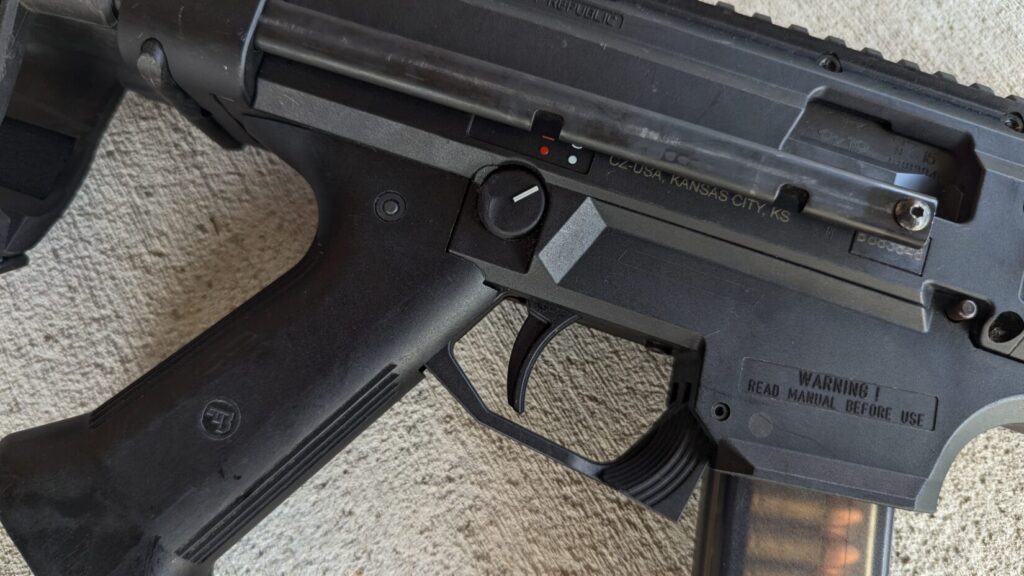
The Scorpion’s ergonomics can be deceiving. The ambi safety sounds great, then you start shooting. The safety is positioned so that it impacts your finger with every shot. It gets downright painful, so a safety delete or a Dremel is often used to fix this.
Additionally, the heavy bolt and recoil spring make this thing hard to rack, especially with the stock micro-sized charging handle. Other than that, there are no major problems ergonomically, just some annoyances you’ll have to deal with.
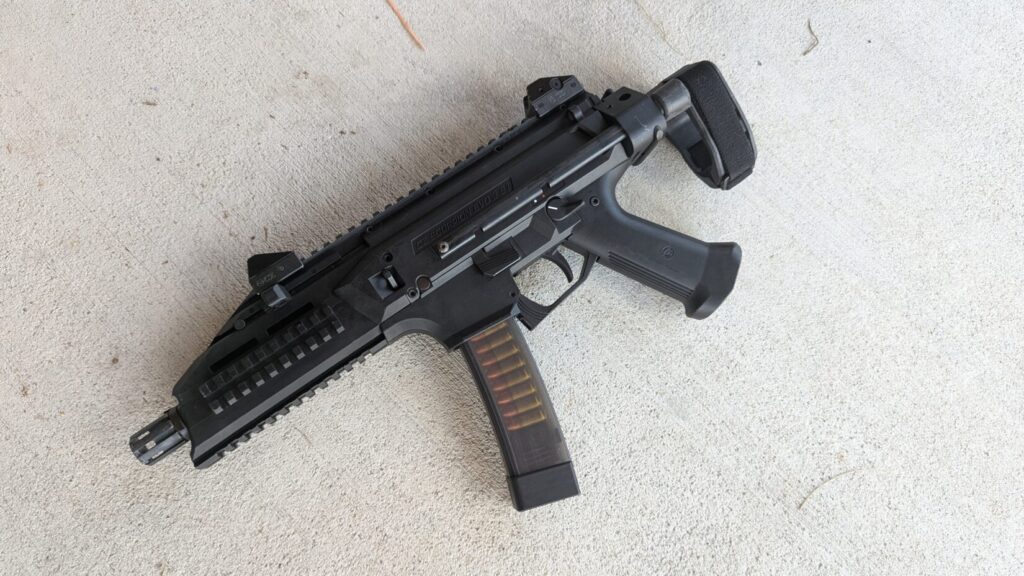
Even with the annoying safety, everything clicks and pops well. The bolt locks open when the last round is fired, and the bolt release is generous. The magazines drop free, and the magazine release is perfectly placed for quick reloads.
Shooting the Scorpion
One thing you’ll notice right away is the recoil. It’s more than you expect from a little 9mm snub gun. This is due to the use of a blowback action. Blowback actions are notorious for excessive recoil.
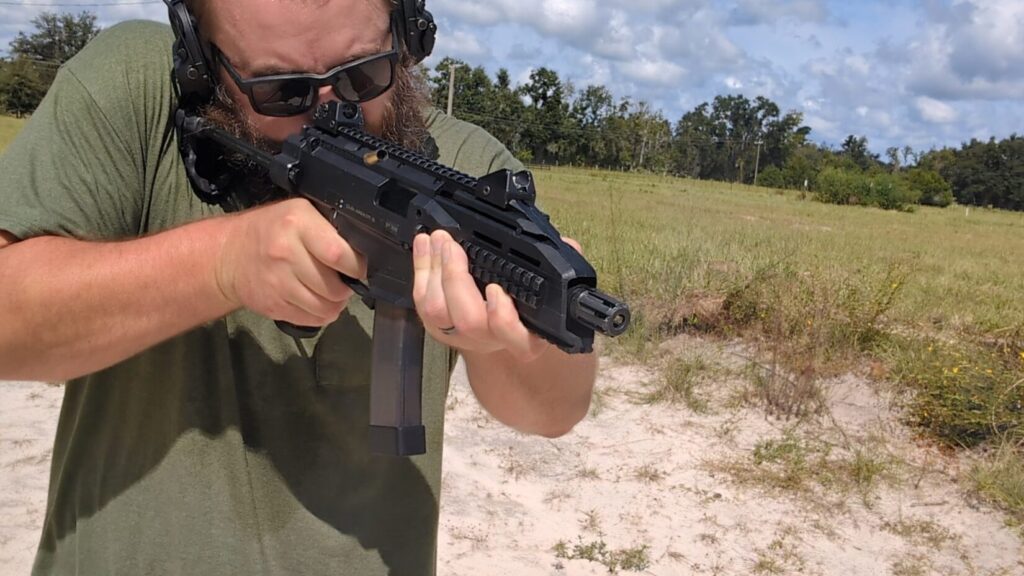
The use of a heavy bolt means you’ve got mass coming at your shoulder with every trigger pull. That’s not to say it’s like a 12-gauge shotgun, but it’s more like a 5.56 rifle. That’s not a lot of recoil in the grand scheme of things, but it’s more than you expect from a 9mm carbine.
Overall, the gun’s easy to control. You can snap out rapid-fire strings of fire without any great difficulty. I nailed a Bill Drill cold at 1.78 seconds and got it down to 1.59 seconds after a few warm-up runs.
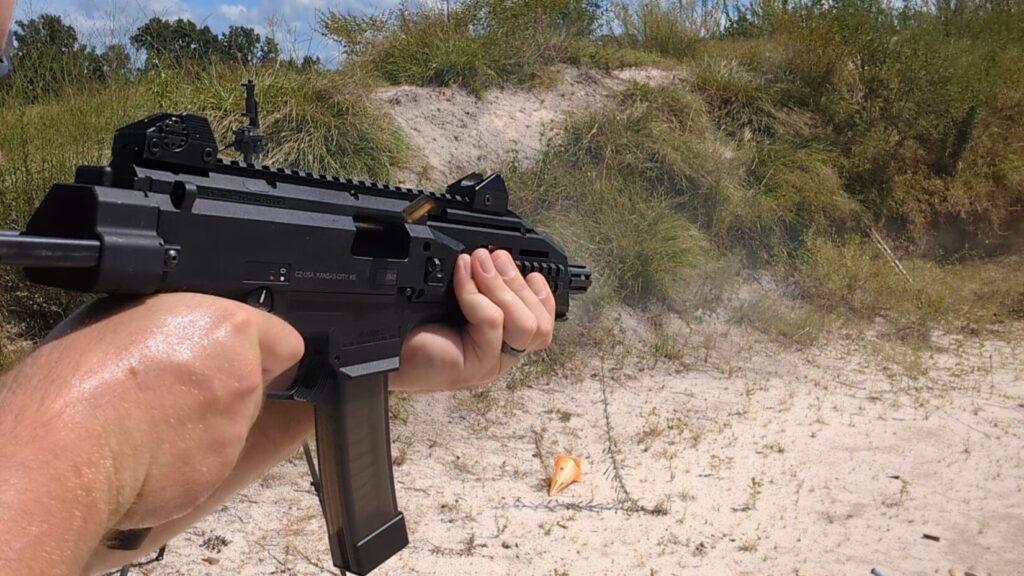
You can nail quick double-taps and drive the gun from target to target without much difficulty. The pistol variants are extremely handy and maneuver easily in and around cover.
Straight Shooting
The trigger sucks. It’s long and spongy and stiff, with a distinct plastic-on-plastic feel as you pull the trigger. It sucks, but it’s not bad enough to mess with your accuracy, at least at typical PCC distances.
Set up in a rested position with a red dot, I can shoot two-inch groups at 25 yards. At 25 and 50 yards, I have no problems hitting steel goons that range from 10 to six inches, and I can consistently ring a steel reduced-sized IPSC target.
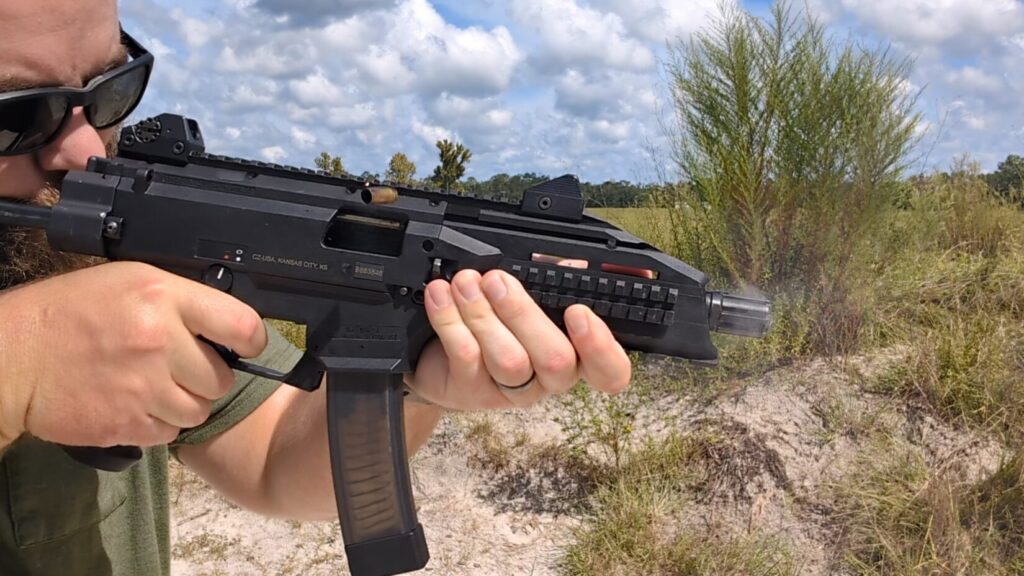
If I trot my butt back to the 100-yard line, I can still hit an IPSC-sized steel target with boring regularity. It delivers that satisfying ding with every press of that terrible trigger.
Sticking to 100 yards, I printed an 8.5×11-inch Sage Dynamics Thoracic target and placed it at 100 yards, and shot my patent-pending Minute of Bad Guy test. I fire seven rounds at 100 yards at my preferred slow pace, and if most hit the target, it’s minute-of-bad-guy ready.
I hit five out of seven, with one admittedly barely making the cut. It’s still Minute of Bad Guy accurate!
Blowback Has Advantages
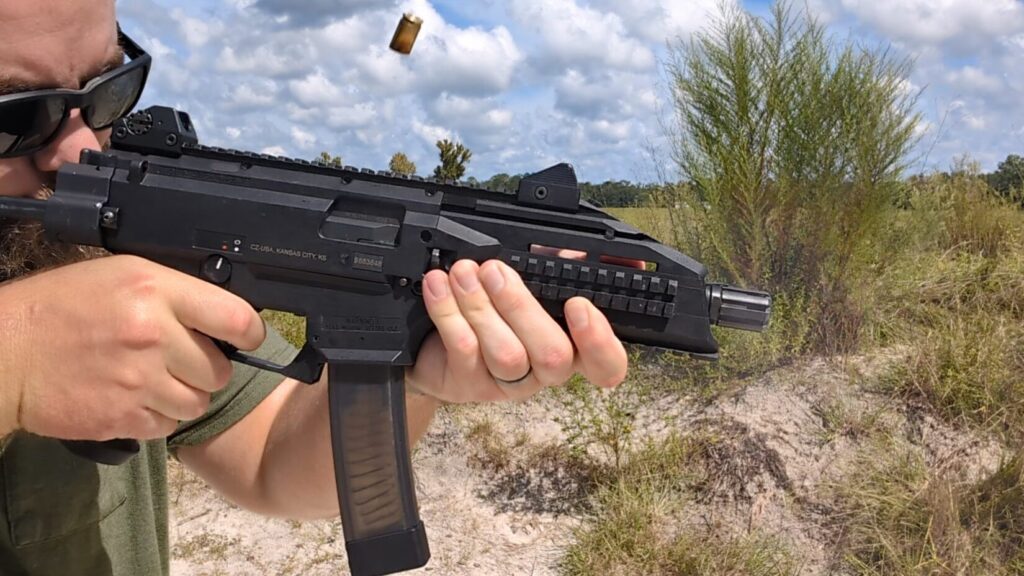
Blowback systems work reliably. They aren’t ammo-sensitive and don’t require small parts and pieces. It’s just raw reliability.
The Scorpion works and isn’t maintenance-sensitive. I’ve owned a Scorpion since they launched, and I don’t think I’ve ever cleaned it. In fact, I’ve never cleaned any of my Scorpions, and they all run reliably.
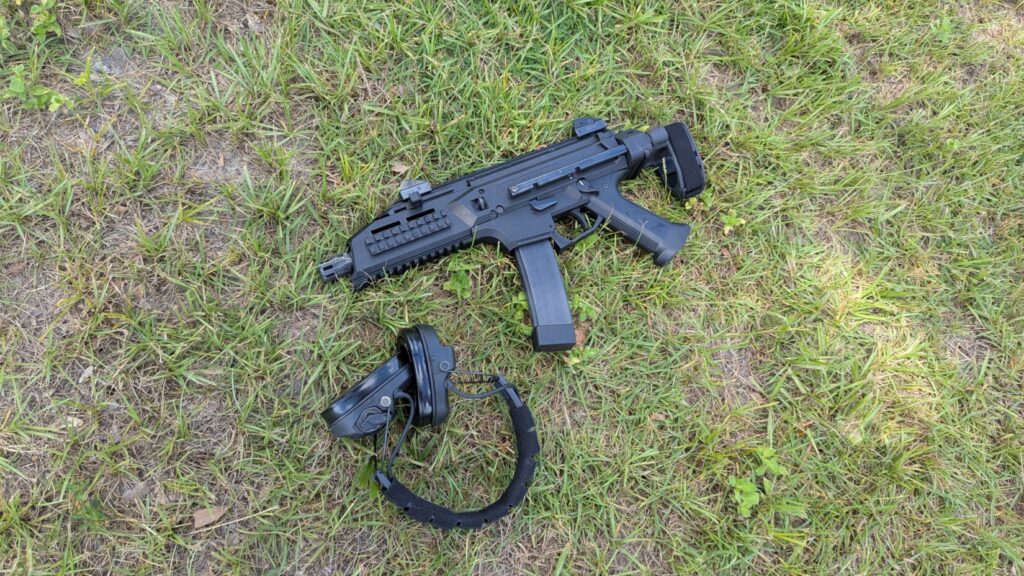
The magazines are well-sealed against dirt and debris and load with ease. I stick to the Magpul mags these days because they offer 35 rounds and tend to be a little cheaper than OEM magazines. Plus, they have a drum option.
The Scorpion Has Sting
The Scorpion series is tons of fun to shoot. They are reliable, accurate, and mostly ergonomic. The blowback tosses a little extra recoil at you, but it’s not a big deal.
The Scorpion could be a great home defense firearm. If the AR feels too big, then the Scorpion might fit you a little better. It’s more maneuverable and easier to wield, especially for small-framed shooters. 9mm is a lot cheaper than 5.56, so it also offers you more opportunities to train. Finish it off with a suppressor, and you’d have a great defensive platform.
The Scorpion EVO 3 is a fantastic firearm. It’s worth a spin.