
The concept of a bug-out bag (BOB) or get-home bag (GHB) is simple, right? Pack it full of items you need to make it from your home to an alternate location. Or in the case of a GHB, the stuff you need to get home from wherever you happen to be when an incident occurs.
Most people include common things like a first-aid kit, food, water, and a flashlight. Many people like to add camping or survival gear to these kits as well. But communication methods are often overlooked.
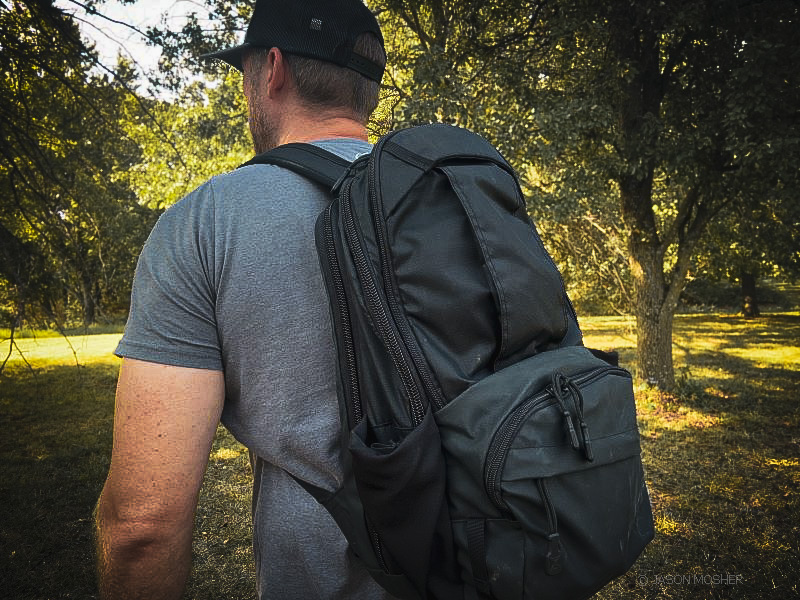
If you are with a group, do you have a way to communicate if you are separated? Or what if you need to send some type of signal to people further away? Communication doesn’t have to be a phone call or text. There are multiple forms of communication, and it’s a good idea to have several of these in your bag.
Let’s look at some of the most common forms of communication during an emergency.
Types of Emergency Communication
Communication can involve several different forms and methods. It can be a simple one-way signal or a complex two-way conversation. Understanding the different types will help you select the right gear for your bag.
One-Way Communication (receiving)
This is about receiving official alerts and news. For local or large-scale emergencies, you want to stay informed about what’s going on.
Broadcast Media is the most common form of one-way communication people use during emergencies. I like to keep a small hand-crank radio in my bag. With it, I can hear AM/FM broadcasts but also tune into the “NOAA Weather Radio All Hazards station.”
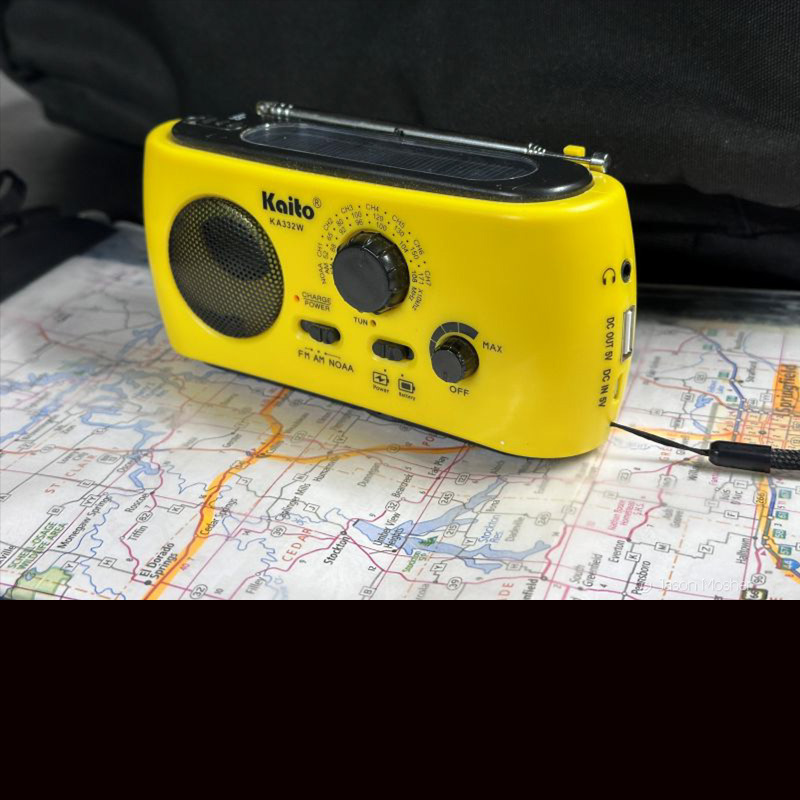
NOAA Radio broadcasts constant weather information and alerts, but it is also a network of radio stations that is dedicated to providing information for ALL types of hazards. Should there be a nationwide incident, this channel would be used to send alerts, at least as long as it’s up and running.
You can also purchase a scanner to listen to local emergency traffic. This will often shed some light on what is going on and what officials are doing about it.
Keep in mind that most agencies are now switching over to digital radios, which means a scanner would need to be digital. Digital scanners are more expensive than broadband scanners, but worth it. The best kind will broadcast both broadband and digital traffic.
One-Way Communication (Sending)
Another form of one-way communication is to send a signal to others around you. Depending on the type of incident, you may need to alert others of your location.
When we talk about “communications,” most people automatically think of phones and radios. But if you don’t have a radio on you, there are other ways to communicate with others.
Smoke Signals
You just need a fire source (lighter, matches, ferro rod) and material to create thick, colored smoke.
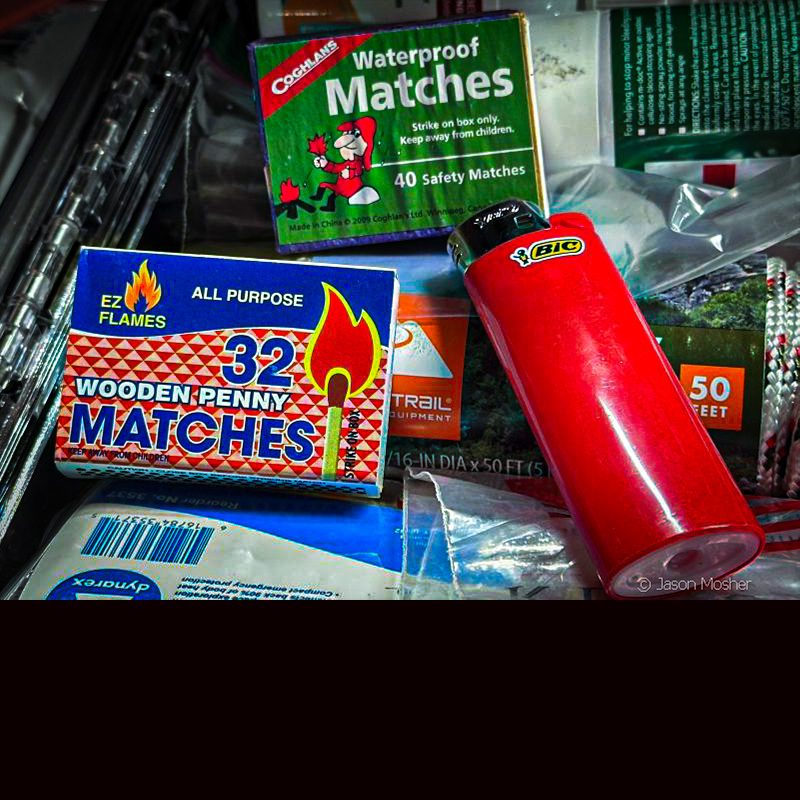
In a survival situation, a large, visible column of smoke serves as a distress signal. Use green or wet, oily material to create highly visible, dark smoke that contrasts with the blue sky. The standard three fires or columns of smoke in a triangle is a universal distress sign.
Visual Reflection
A signal mirror can be a small, inexpensive, polished piece of metal or glass. With this, you can direct a beam of sunlight for many miles, even over the horizon.
If you use a signal mirror that was made for that purpose, it will have a small built-in sight or sighting hole to accurately aim the flash. Flash the beam three times in succession as a signal.
Illumination
A powerful flashlight or headlamp is something you probably already have in your bag. If needed, you can use this at night to alert others of your location.
Use the beam to flash the S.O.S. code (three short, three long, three short) toward any distant lights or noise. A bright, constant light can also mark your position clearly.
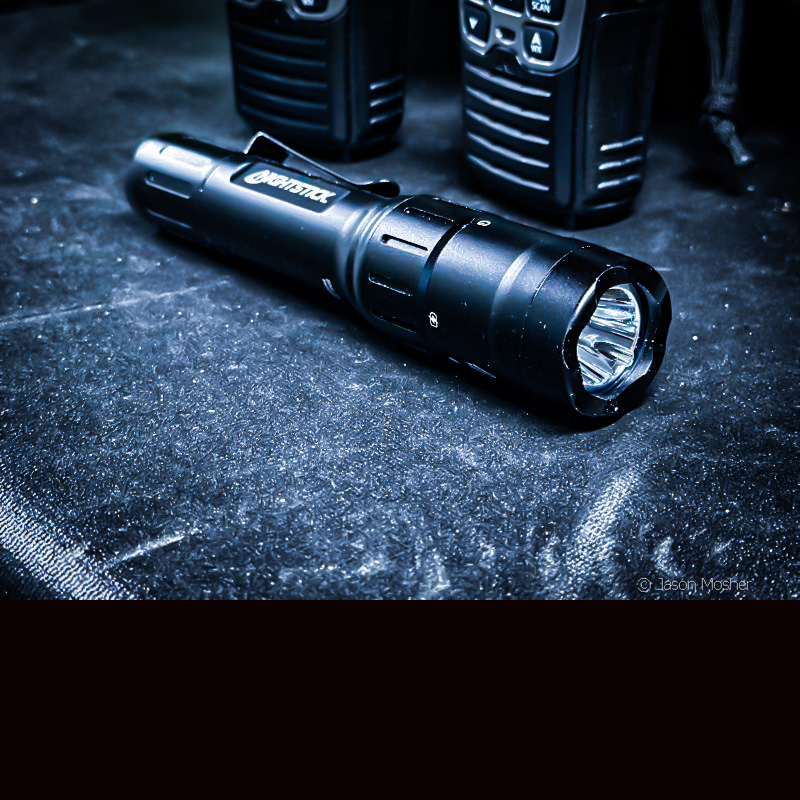
One of my favorite lights to keep on me is the Nightstick BARRAGE. You can easily change this light from white to red or green.
Audible Sound
A quality whistle produces a sound that is much louder than a human shout and requires less energy. Use it to signal group members who may be out of sight. Remember the three-blast distress code for maximum recognition.
Two-Way Communication (Sending and Receiving)
This type of communication is the most common, but in some cases, it can be the most complicated in large-scale emergencies. Two-way communication includes:
- Voice: Talking directly to someone using a radio or phone.
- Text/Data: Sending short messages or location information, often via satellite or specialized radio.
- Visual Signals: Using lights or smoke to send messages over a distance.
- Audible Signals: Using a whistle or other noise to transmit a distress code like S.O.S.
When setting up your emergency bag, it’s best to include multiple forms of communication. I like to use a whistle, NOAA Radio, and a Walkie Talkie.
If you have not used some type of two-way radio before, there are several things to consider.
Two-Way Radios and Licensing
Two-way radios are probably the best for group communication, aside from phones. You can stay in contact with family or an entire group. These devices function without a vulnerable public network.
Family Radio Service (FRS)
FRS radios are small, easy-to-use handheld units. They are perfect for short-range communication within a group. The range is typically under a mile in dense terrain, but they are reliable. An FCC license is not required for FRS.
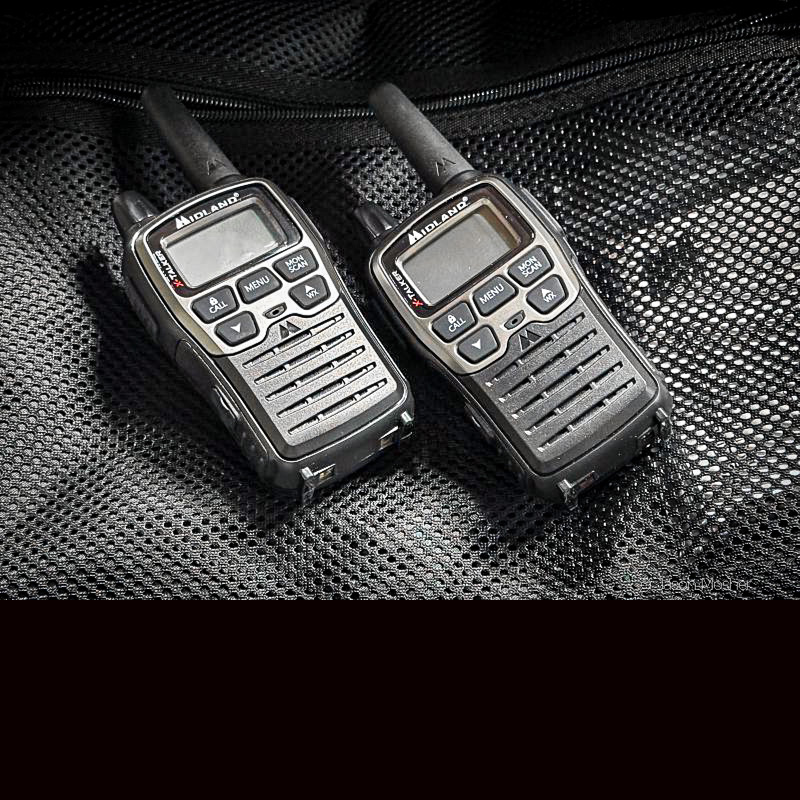
With these types of radios, designate a specific channel and privacy code for your group. Always keep spare batteries or a way to recharge them.
General Mobile Radio Service (GMRS)
GMRS radios are more powerful than FRS units, which means they have a longer range. They can also use repeaters to significantly increase distance. This is a great choice for communicating across several miles.
The downside is that an FCC license is required. It is valid for 10 years and covers the licensee and their immediate family. There is no test needed, just a fee and an application.
Amateur Radio (Ham)
Ham radio is the ultimate tool for long-distance, self-reliant communication. Licensed operators can contact others across the country or even the world. The Amateur Radio Emergency Service (ARES) offers vital disaster communication.
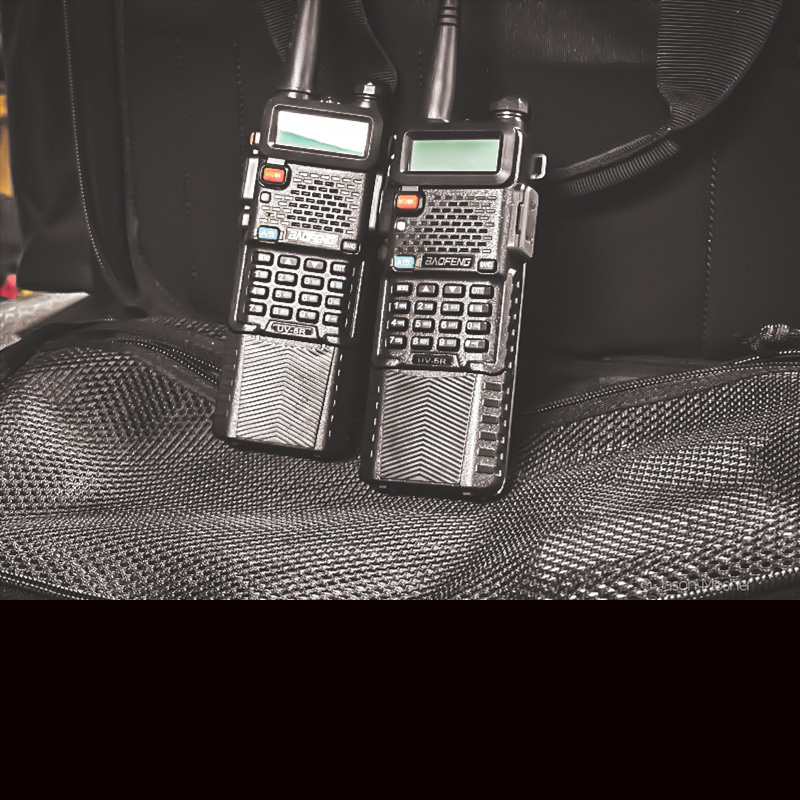
And as you can guess, an FCC license is required. You must pass a written examination to obtain it.
Using this type of radio takes practice, so it’s important to practice before an emergency occurs.
Power and Redundancy
A communication system is useless without power. Always pack multiple, redundant power sources. Include extra batteries for all devices. Consider a portable power bank for recharging phones and small radios. A solar charger is a great option for extended incidents.
In the end, each person will need to choose the best form of communication to use. Even when I’m traveling alone, I like to keep a set of radios in my bag. You never know when they will come in handy. For me, a weather radio is a must-have for any type of emergency bag. It’s even smart to have those in your home and vehicles.
Like anything else, decide what works for you and start implementing it. The only thing you can do wrong in this case is nothing at all.