
Author’s Foreword: In 2020, I started down a real rabbit hole: the scout rifle concept. I had previously hunted with one, but I wanted the scout rifle Jeff Cooper designed. Specifically, I wanted the Steyr Scout. I purchased one in the first quarter and trained with it relentlessly.
In 2020, I attended Gunsite for the first time and immediately booked my next class for the following year: 270 Rifle. The Steyr Scout accompanied me there, where I earned the “Duck of Death” challenge coin for one student competition and the silver raven in the final course shoot-off. Since then, I’ve taken an aoudad barbary sheep on one hunt with it and have used it on multiple trips.
My love for the Steyr Scout hasn’t waned as my bolt has become slicker with regular use. I’ve spent a good amount of time with the Scout and feel confident comparing version 1 to version 2.
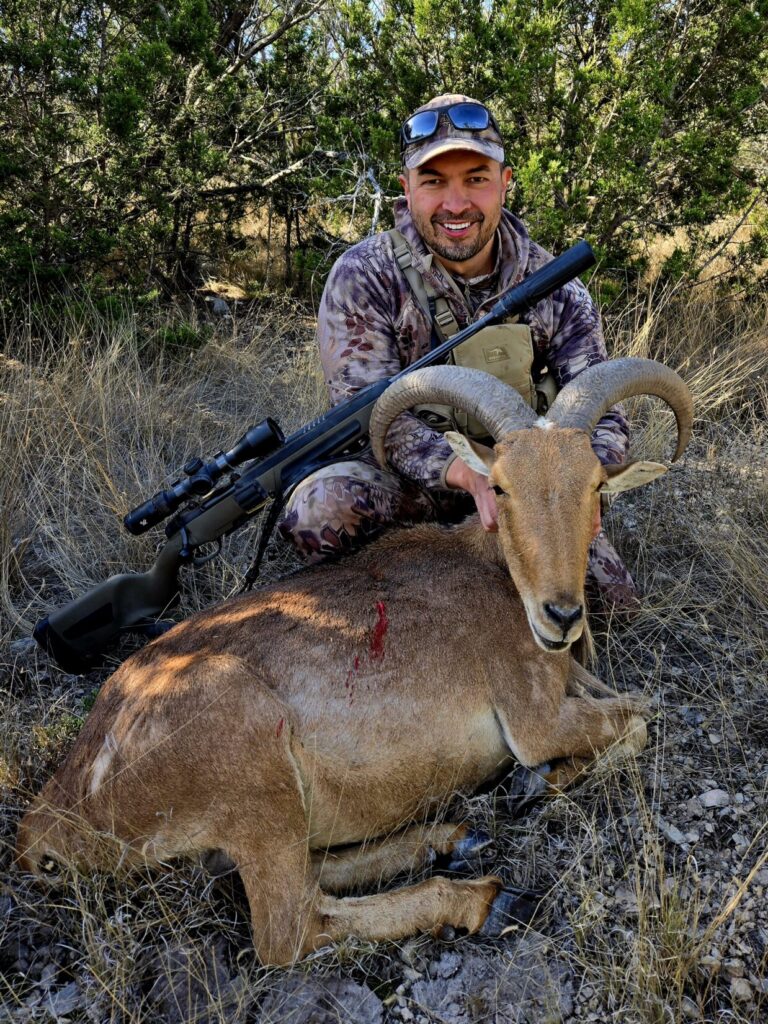
(Photo Credit: Kevin Estela, LLC)
The Steyr Scout
The Steyr Scout is a rifle with a cult following. According to Jeff Cooper, the scout rifle was meant to be a general-purpose bolt-action rifle in .308 that measures in under 39 inches and weighs less than 7 pounds. Equipped with a detachable five-round magazine and a spare in the buttstock, the rifle packs a good amount of firepower with rapid reload capability.
The scout rifle and the marksman behind it were expected to be field-accurate, and that accuracy was meant to be practical for hunting and defense out to 200 yards.
The Steyr Scout was created in the 1990s, eventually being offered in multiple calibers, including 7mm-08, .243 Winchester, and 6.5 Creedmoor.
Despite the features, the clout of the Steyr brand, and the approval of a shooting legend like Jeff Cooper, the Steyr Scout never really caught on with as many followers as some other centerfire rifle platforms. It was surprising, to say the least, to hear Steyr released an upgraded version.
Barrel Threading
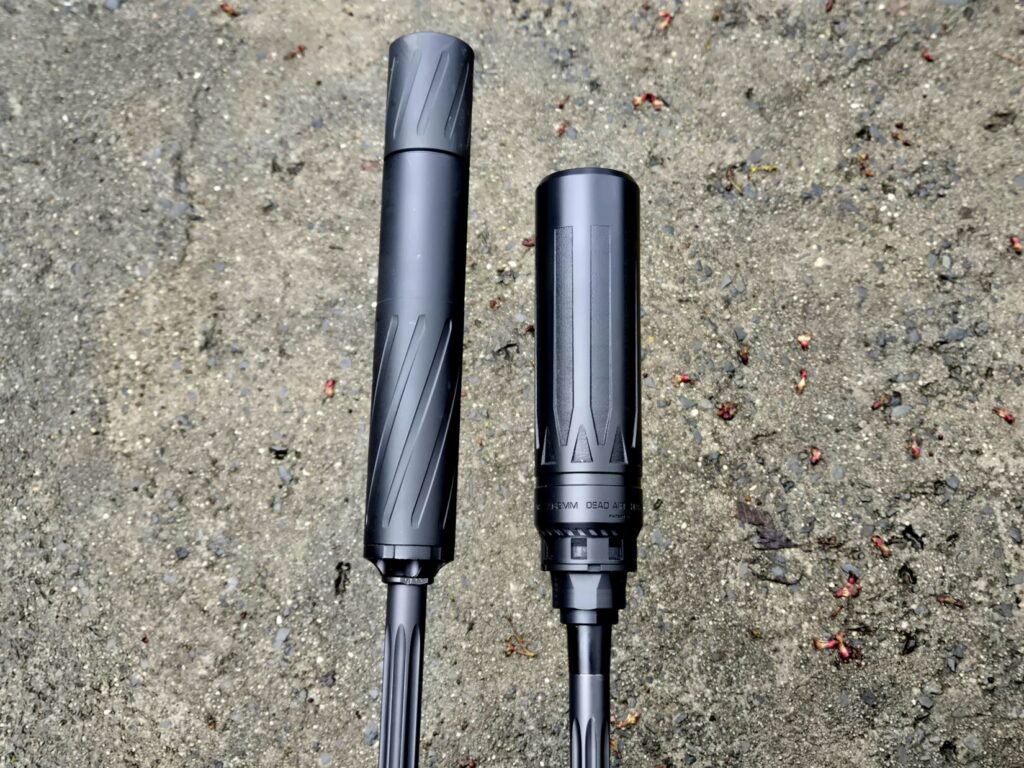
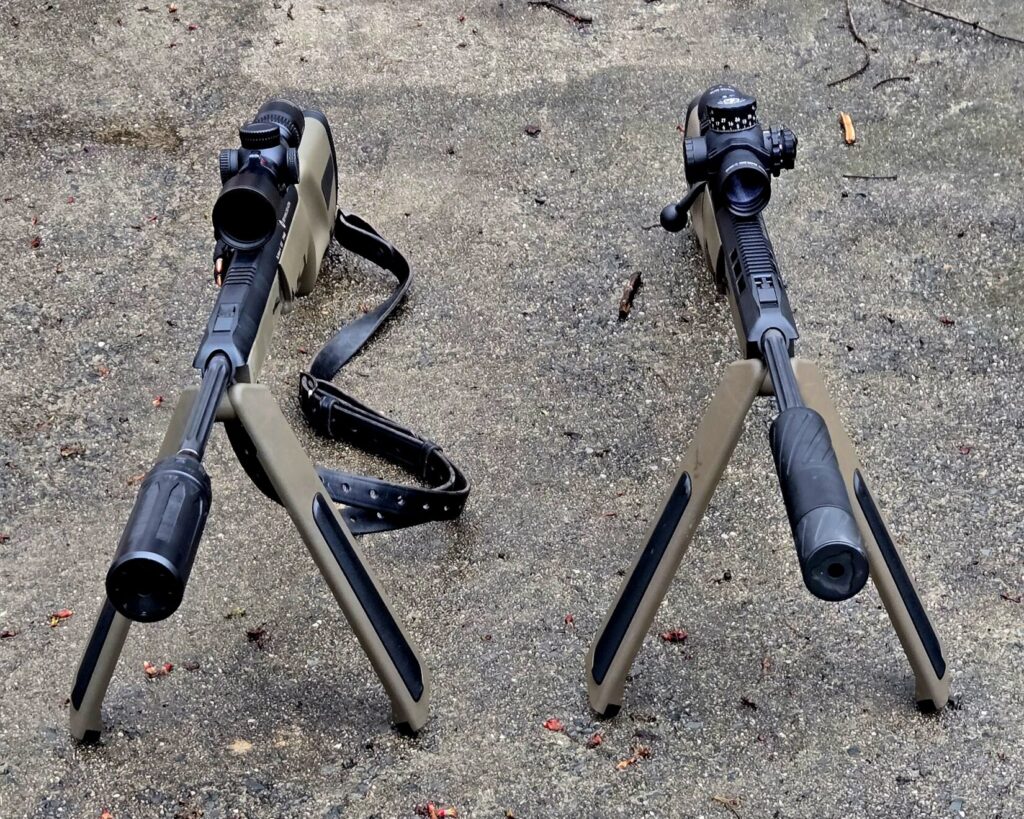
Starting from the muzzle, the first change isn’t so obvious, and that is the muzzle threading. The original scout features a ½”x20 thread pitch, while the upgraded scout is 5/8”x24. To use the Dead Air Silencers Nomad Ti XC suppressor I have equipped on mine involved a thread adapter before adding the muzzle device and screw-on suppressor.
The updated thread pitch is more in line with the US suppressor market. My thread adapter was $95 and purchased through Mike Moore of Tacdrivers, LLC. While version 1 and version 2 will run with a suppressor, version 2 will eliminate the need for another link in your system and $95 out of your wallet.
Full Length Picatinny Rail
The true scout rifle configuration utilizes an intermediate eye relief optic mounted forward of the receiver. In this form factor, the scout was meant to be shot with both eyes open, and the forward-mounted optic preserved the peripheral vision and field of view of the shooter. I took my scout to Gunsite set up this way, and have rather recently switched to a conventional over-the-receiver placement.
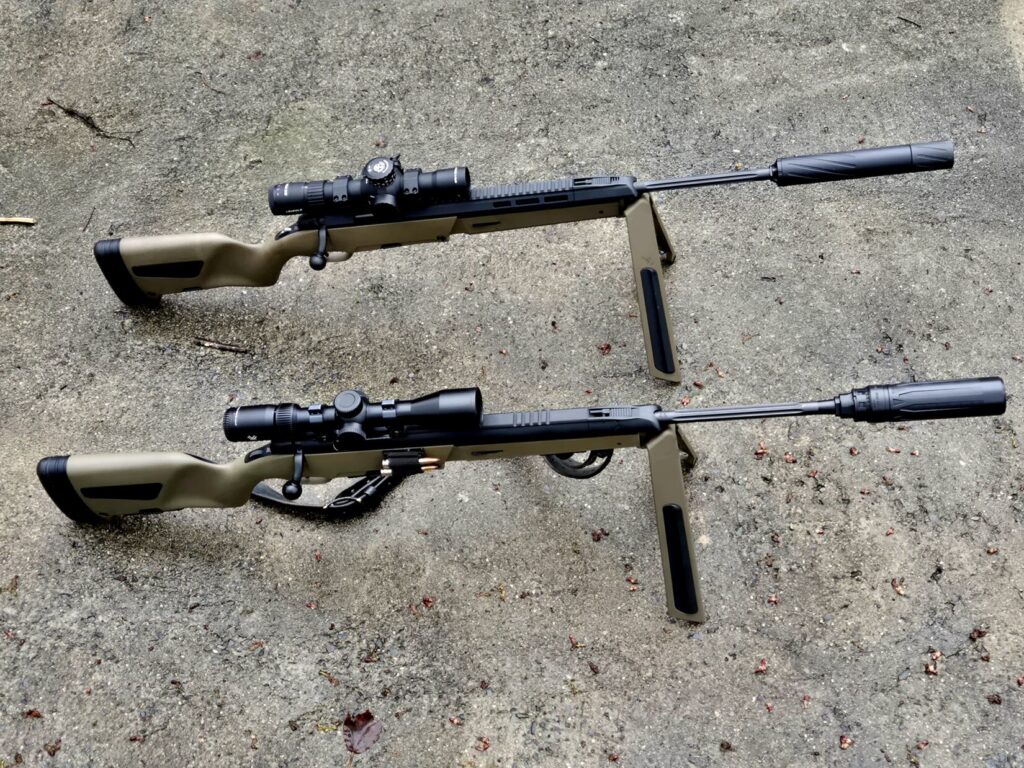
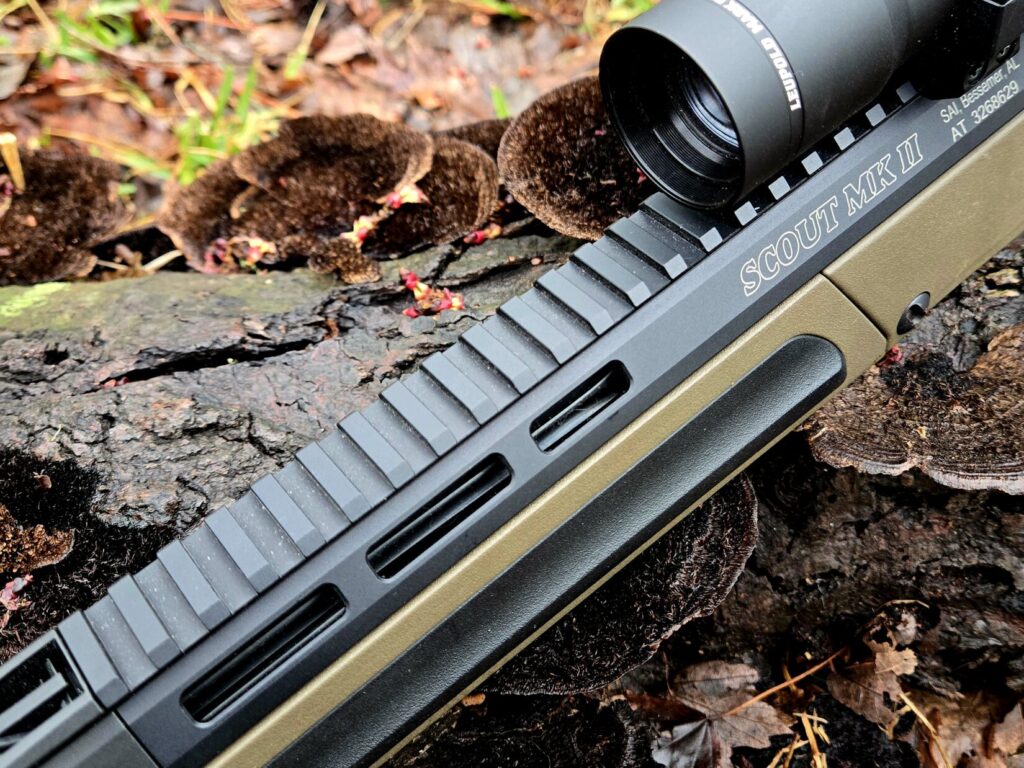
With a standard scope placement, one might wonder why the newer Steyr Scout 2 has a full-length Picatinny rail. The full-length rail allows for incredible versatility in scope placement as well as placement for thermal or night vision optics.
MLOK Placement
The MLOK mounting system wasn’t created when the Steyr Scout was released. MLOK burst onto the scene in the mid 2010s. The forend handguard of the Scout 1, therefore, didn’t include MLOK slots.
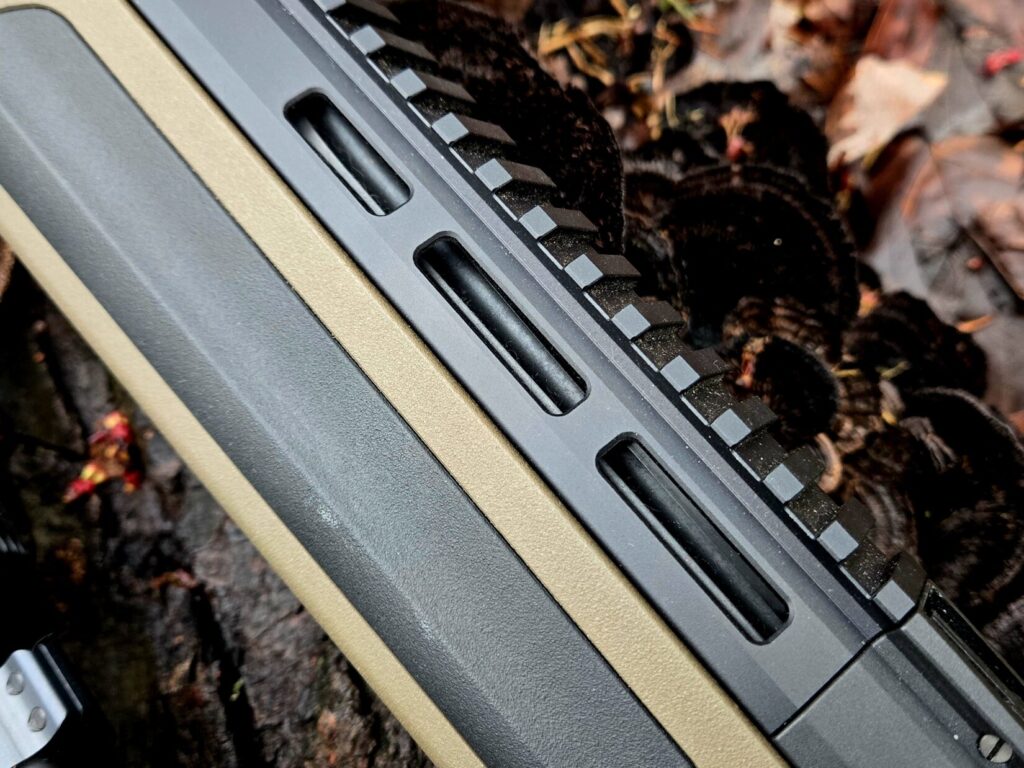
The Scout 2, on the other hand, offers MLOK on the 11 o’clock and 1 o’clock positions. For those looking to include a weaponlight on their bolt-action rifle, these positions are optimal as they keep the flashlight out of the way of the optic.
The user still needs to address the shadow made from the barrel and potentially the suppressor, but once figured out, the Scout 2.0 will have a low-light and no-light solution with a good turbohead weaponlight mounted.
Bottom Rail
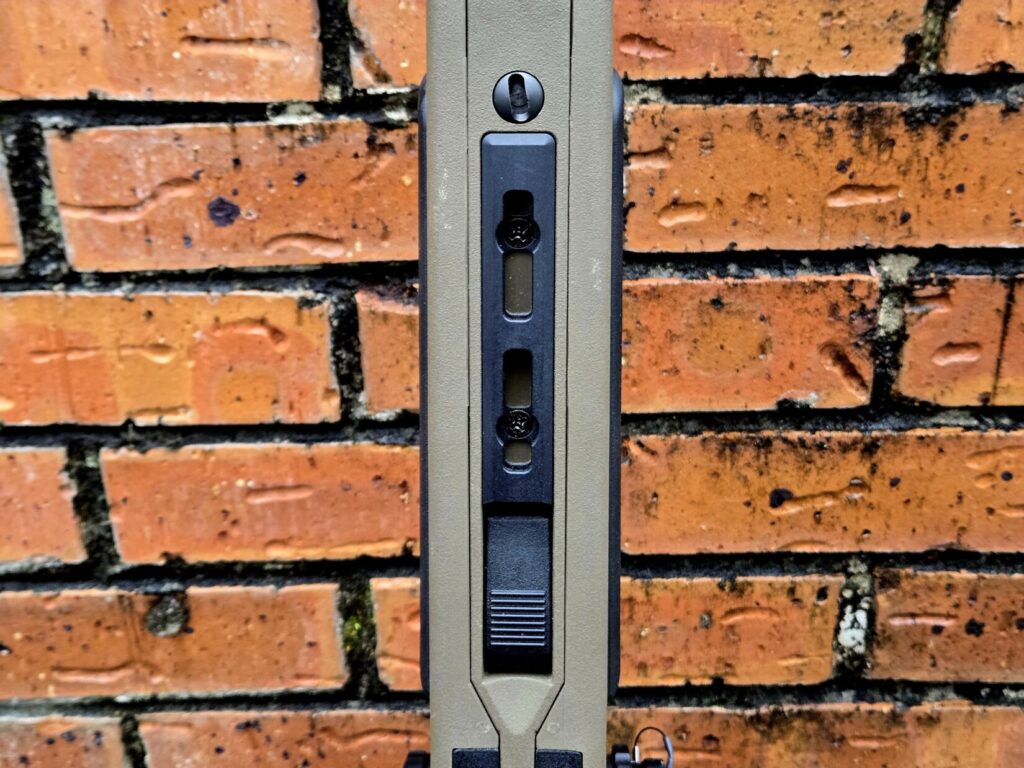
MLOK is used on the bottom rail of the Steyr Scout 2. There are many bipods that have MLOK attachments for use with AR15 rails and chassis bolt-action rifles with MLOK forends. The scout rifle has an integral bipod, but it isn’t adjustable for height and won’t swivel like some aftermarket options.
For those looking to utilize a more traditional supplemental bipod or tripod, a UIT (Anschutz) adapter from Spartan Precision or the equivalent must be used.
The hidden integrated bipod works as a solution for shooting from the prone, and if the rifle is configured in true forward-mounted scout style, Hawkins prone is also a viable method.
What Remains the Same
There was room for improvement with the Steyr Scout 2, but not much, and Steyr admits this on their website. There is no need to improve the spaghetti contour fluted cold-forged barrel, as it provides exceptional accuracy, and it is known for its longevity.
My personal scout has over 1100 rounds through it, and you would never know, looking at the rifling or the groups it can produce. The magazines are also exceptional, and I’ve never had an issue with one failing on me. There is even an adapter that can be used to function 10-round magazines if that is desired.
The diminutive backup sights have also been carried over from 1 to 2. I’ve spent very little time with them, as removing the optic on the rifle would mean the end of a hunt for me instead of attempting to take a shot with them.
Millet sling swivels are perhaps one of the most polarizing options on the scout rifle. Push-button QD swivels were patented in 1948, but the Scout 1 used a different option that hasn’t become as prolific. Changing out the swivel cups would mean changing the stock dye, which is incredibly expensive for a company.
Millet swivels are not the end of the world, and once you learn how to quickly remove your sling, you get over them pretty quickly. I’d recommend purchasing a couple of spare sling swivels and some sling hardware just in case you lose one in the field.
Hope for a 3.0
Since the Steyr Scout 2 exists, it begs the question, “Will there be a Steyr Scout 3?” I don’t see the need to trade in my 1 for a 2, but I may be convinced to pick up a 3 if certain changes are made.
For me, the changes I’d like to see (even if highly impractical or impossible) include a quick-detach barrel option that would allow me to change calibers based on what I’m hunting or the overall length if I’m running a suppressor and want a compact setup.
I’d also like the option of a different stock WITHOUT some of the key features that made the Scout a fan favorite. Don’t get me wrong, I like the spare magazine in the stock, but I long for the ability to drop the Scout into a traditional-looking wood stock. It doesn’t need to come with this stock, but an aftermarket option would be great to see.
Lt. Col Jeff Cooper was ahead of his time, suggesting that every man should be a rifleman and that the rifle was the “queen” of the battlefield. There’s no doubt the scout rifle concept is valid, and I will continue to train and hunt with mine.
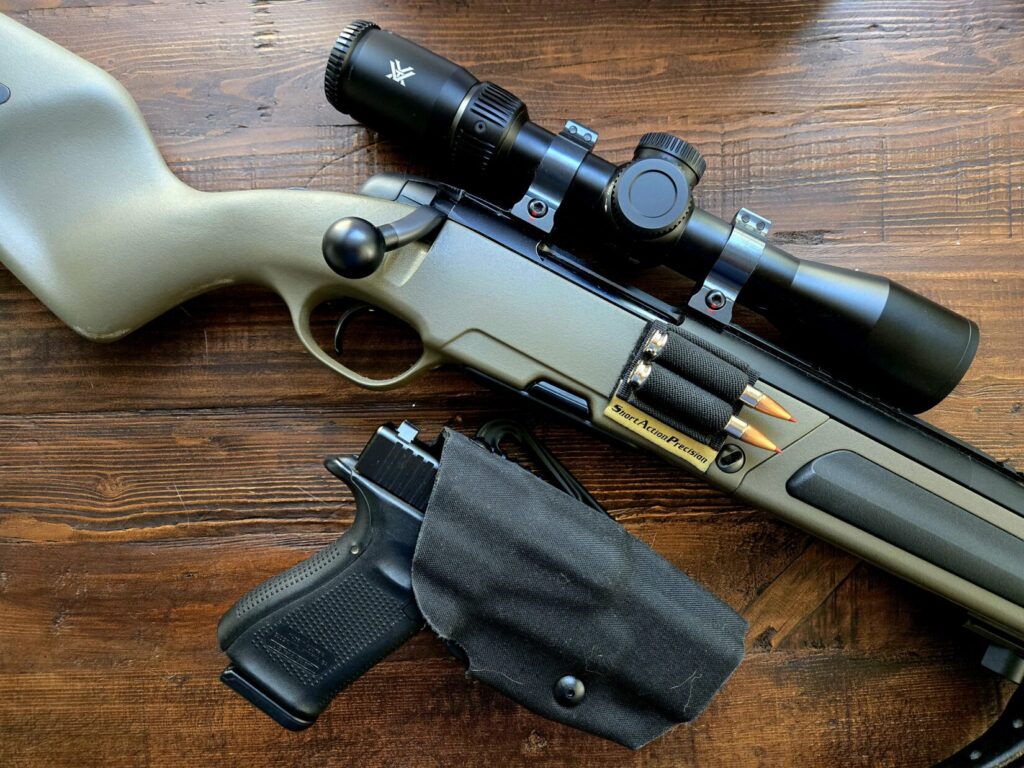
Whether you pick up a Scout 1 or Scout 2, you’ll have an excellent tool at your fingertips for a wide range of uses.