
If you’re new to guns, stepping into a gun store for the first time can feel like entering a foreign country. You are surrounded by shelves of colorful boxes covered in cryptic numbers and abbreviations like “9mm 115gr FMJ” or “.308 Win 168gr BTHP.” If you don’t understand what the labels mean, it can look like a complex mathematical code.
Having a basic understanding of three basic terms—caliber, grain, and velocity—is important for selecting your ammo, and even the caliber of firearm you use.
For those new to firearms, it’s easy to think the bigger the gun, the bigger the bullet. But that’s not always true, and ammo is also the same way. Just because a bullet (also called a projectile) looks big or small doesn’t necessarily relate to how far it will travel or how much “power” it has.
Instead, it all depends on a combination of things related to the overall cartridge. Even beyond the cartridge itself, the barrel length, use of a silencer, and other factors can impact a cartridge’s performance. But today, we are starting with the basics: caliber, grain, and velocity.
Caliber of a barrel
In the simplest terms, caliber refers to the diameter of the gun barrel and the corresponding ammunition. It is the size of the hole in the barrel that the bullet travels through. Manufacturers usually measure caliber in either inches or millimeters.
Inches vs. Millimeters
If a caliber is listed as a decimal, such as .45 ACP or .22 LR, it is being measured in inches. A .45 caliber bullet is approximately 45/100ths of an inch wide. If the caliber uses a whole number, like 9mm or 5.56mm, it is using the metric system.
I recently had someone new to silencers call and ask me if a 30-caliber silencer would work on their 5.56mm AR-15. They were not sure what ammo could be used with this caliber. A 30-caliber barrel is 7.62mm in diameter. That means a 5.56mm bullet would work because it’s smaller than 7.62mm, though some extra gas and sound will escape.
Why Names Get Confusing
To make things a little more complicated, many ammo types also include the name of the designer or the year of release. For example, the .30-06 Springfield is a .30 caliber cartridge adopted by the military in 1906.
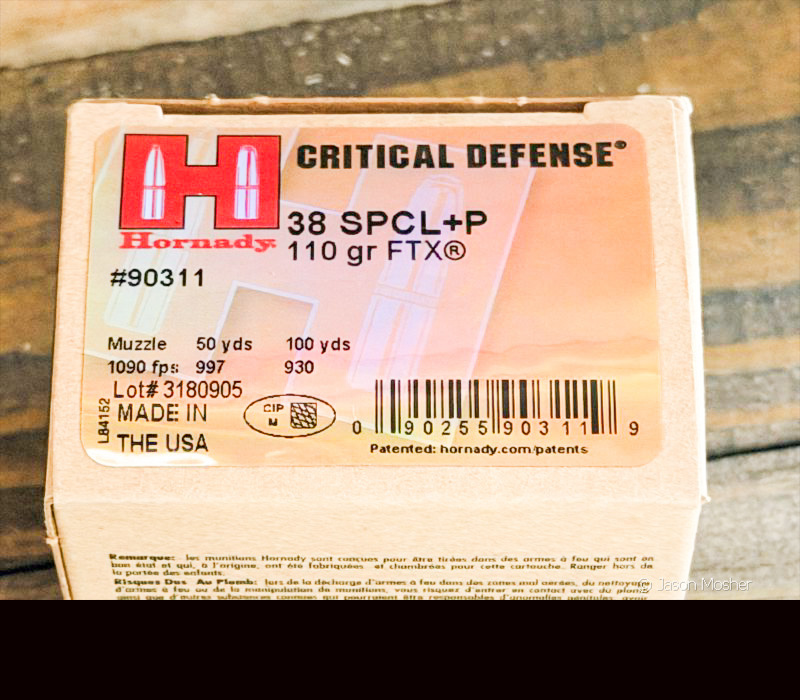
Some names of ammunition do not match the exact diameter of the bullet, either. An example is the .38 Special, which has a bullet diameter of .357. When the cartridge was named over 100 years ago, it was based on the outside diameter of the casing and not the bullet. This is why you can shoot a .38 Special round in a .357 Magnum revolver.
When selecting ammo for a firearm, you need to match the information stamped on the cartridge headstamp (the base of the shell) with the caliber marking engraved on the firearm’s barrel or slide. Just because a bullet is the same size as the barrel diameter does not mean you can use that round in that firearm.
For example, a .380 ACP and 9mm Luger both use .355-inch bullets, but their brass casings and pressure limits are completely different. If you have a .38 special, you cannot use a .357 Magnum round unless “.357 Magnum” is stamped somewhere on that gun, normally the barrel.
Firearms are engineered for a specific “chambering”—a precise combination of bullet diameter, case length, and pressure levels.
While some older firearms may not mark the caliber clearly, most modern firearms will clearly identify what caliber they are made to shoot. Make sure the ammunition has the same markings as the markings on the firearm.
What is Grain?
Grain is an ancient measurement based on the weight of a single seed of a cereal grain (like wheat or barley). To give you a sense of scale, there are 7,000 grains in one pound. The grain of a bullet is how much that bullet weighs. For example, you may see “115gr” or “55gr” on a box of bullets. This is how much the bullet weighs on that particular cartridge.
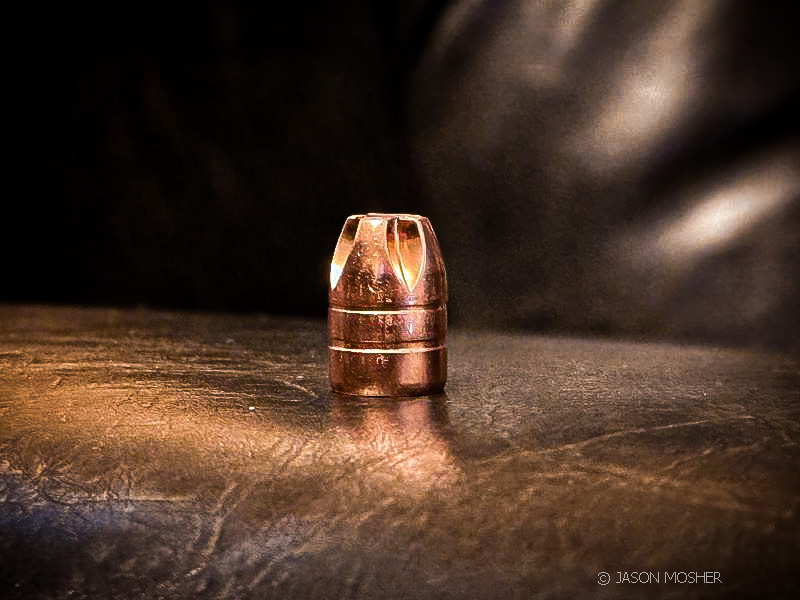
In the context of shooting, it’s also important to understand that grain can refer to two different things:
- The Bullet Weight: The actual lead or copper projectile that flies through the air.
- The Powder Charge: The amount of propellant inside the brass casing.
While the amount of propellant is also measured in grains, what you see on a box of ammo refers to the weight of the bullet, not the amount of propellant used in the casing.
Choosing the Right Weight
When selecting your ammo, you will often see common sizes of grain used for that specific caliber. For example, the 9mm Luger is commonly found in 115-grain, 124-grain, and 147-grain varieties.
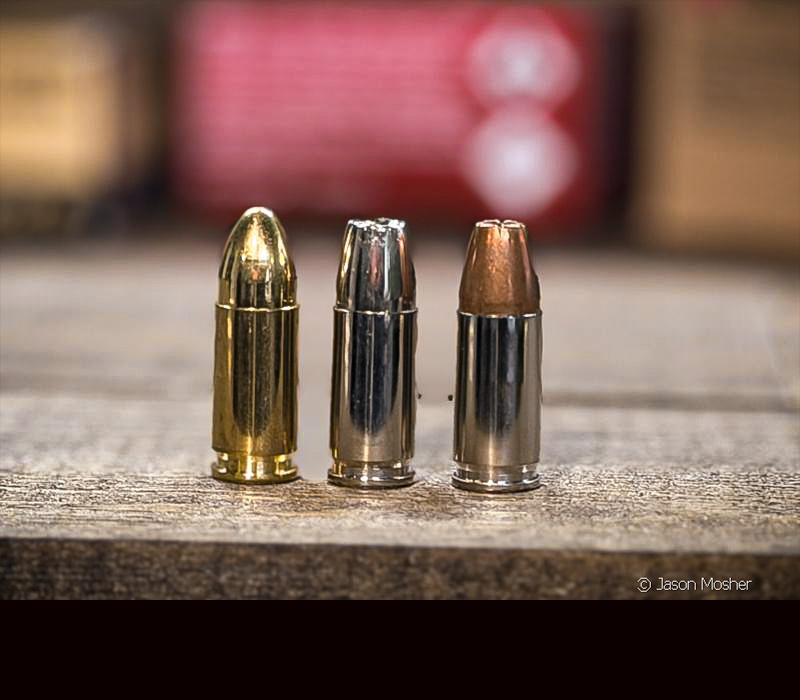
A “heavy” bullet for its caliber usually maintains its momentum better and penetrates deeper. A “light” bullet can travel much faster but might be more affected by wind or physical barriers. This is why self-defense ammo often uses heavier bullets, like 147-grain with 9mm. You want the momentum and penetration more than speed and distance.
What is Velocity?
Velocity is the speed at which the bullet travels after it exits the barrel. It is almost always measured in feet per second (fps). When the firing pin hits the primer, the gunpowder ignites. This creates rapidly expanding gases that push the bullet down the barrel. The speed at which it exits is the muzzle velocity.
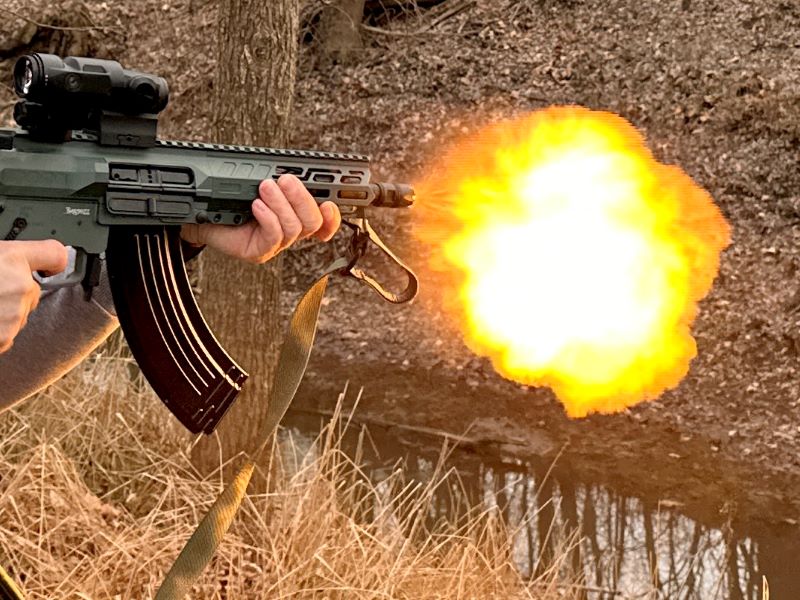
A lighter grain of bullet will leave the barrel at a higher velocity, and the heavier the bullet, the lower the velocity. But you also must factor in a few other things that can affect a bullet’s velocity.
Factors Affecting Velocity
- Barrel Length: Generally, a longer barrel allows the powder more time to burn and push the bullet, resulting in higher speeds.
- Powder Load: More gunpowder (or a faster-burning powder) increases the pressure and the speed.
- Bullet Weight: As we already discussed, a heavier bullet is harder to push and usually moves more slowly.
Velocity is a key component of kinetic energy. The faster a bullet moves, the more energy it carries to the target. However, higher velocity also comes with trade-offs, such as increased barrel wear and sharper recoil.
The Relationship: How They Work Together
Understanding caliber, grain, and velocity in isolation is helpful. However, understanding how they interact is where the real “magic” of ballistics happens. These three elements exist in a constant state of balance.
The Trade-off Between Weight and Speed
Physics dictates that it takes more energy to move a heavy object than a light one. Therefore, if you use the same amount of gunpowder, a 115-grain bullet will always fly faster than a 147-grain bullet.
This relationship is important when selecting ammo for specific purposes:
- Target Practice: Most shooters choose lighter, faster bullets because they are often cheaper and have a “flatter” trajectory at short distances.
- Self-Defense: Many prefer heavier bullets (higher grain) because they carry more momentum and provide more consistent expansion.
- Suppressed Shooting: People often use heavy bullets to keep the velocity below the speed of sound (subsonic). This prevents the “sonic crack” and makes the gun much quieter.
Impact on Recoil
Recoil, or “kick,” is a direct result of the relationship between these factors. A heavy bullet moving at a high velocity will produce significantly more recoil than a light bullet at a low velocity. If you are a new shooter or sensitive to recoil, choosing a caliber with a lighter grain weight can make your range session much more comfortable.
Accuracy and “Point of Aim”
Different weights and speeds will hit the target at different spots. If you sight in your rifle with 150-grain bullets and then switch to 180-grain bullets, your shots will likely land lower. This is because the heavier, slower bullet stays in the air longer, and gravity has more time to pull it down.
Why This Knowledge Matters?
Selecting the right ammunition is about matching the tool to the task. If you are hunting deer, you need a caliber with enough diameter and a grain weight that will penetrate. If you are shooting long-range competitions, you need high-velocity and aerodynamic bullets to fight the wind.
One of the most important reasons to understand these terms is safety. Knowing your caliber prevents you from loading the wrong rounds. For example, a .300 BLK will load into the chamber of a 5.56mm rifle, but the bullet will not fit down the barrel. If you were to pull the trigger, the barrel would rupture, and the gun could explode in your hands.
Understanding velocity helps you know the “danger space” behind your target. Knowing grain weight helps you manage the physical stress on your firearm.
So, the next time you pick up some ammo, pay attention to more than just the caliber. Look at the grain, weight, and velocity to determine which one meets your needs the most.
Frequently Asked Questions: Caliber, Grain, and Velocity
How can I tell if a caliber is measured in inches or millimeters?
The measurement system is indicated by how the number is written. If the caliber is listed as a decimal (e.g., .45 ACP or .22 LR), it is measured in inches. If it is listed as a whole or decimal number followed by “mm” (e.g., 9mm or 5.56mm), it is using the metric system.
What does “grain” (gr) actually measure on a box of ammunition?
On a box of ammunition, “grain” refers to the weight of the bullet (the projectile), not the amount of gunpowder inside the casing. It is an ancient unit of measurement where 7,000 grains equal one pound.
Can I always rely on the name of a caliber to tell me the exact diameter of the bullet?
No. Some names are based on older standards or “brand names.” For example, the .38 Special actually has a bullet diameter of .357 inches because it was named after the outside diameter of the casing over 100 years ago. This is why you must always match the markings on the back of your cartridge to the markings on your firearm.
How does bullet weight affect velocity and recoil?
These factors exist in a balance:
- Weight vs. Velocity: If the gunpowder charge is the same, a lighter bullet will travel at a higher velocity than a heavier one.
- Recoil: A heavy bullet moving at a high velocity will produce significantly more “kick” or recoil than a light bullet moving slowly.
Why is it dangerous to ignore caliber markings, even if a round fits in the chamber?
Just because a round fits in the chamber does not mean it is safe to fire. For example, a .300 BLK round can fit into a 5.56mm rifle, but the bullet is too large to pass through the barrel. Pulling the trigger in this situation would cause the barrel to rupture and the firearm to explode.