
Viridian Weapon Technologies pioneered the use of green lasers and dots. The company has also specialized in adding both to guns without optics cuts or rails. In this review, we’re looking at their RFX1 green dot and the ECR laser for the Smith & Wesson Bodyguard 2.0.
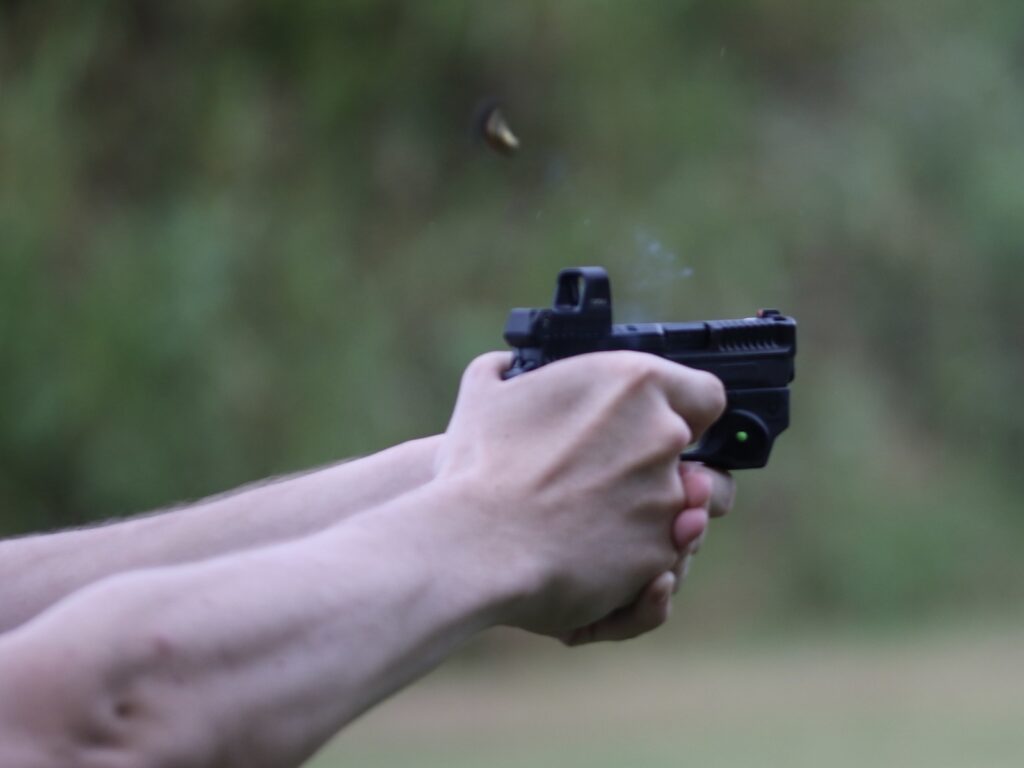
Smith’s Bodyguard update hit the market two years ago as a solid advancement in .380 micro-compacts. Despite being a featherweight pocket pistol, it shoots just about as well as many compact handguns. Pretty quickly it gained a following as an EDC pistol, and many are adding the RFX1 up top.
Adding optics to the Bodyguard 2.0
Micro-compacts have come a long way; it’s true. So have handgun accessories. A lot of the larger micro-compacts are optics compatible and have a rail for a light or laser. Finding an optics-ready gun as thin and light as the Bodyguard, though, was hard.
It crosses the line where there wasn’t quite enough real estate for a light and dot. With the popularity and versatility of the Bodyguard, Viridian came up with a solution.
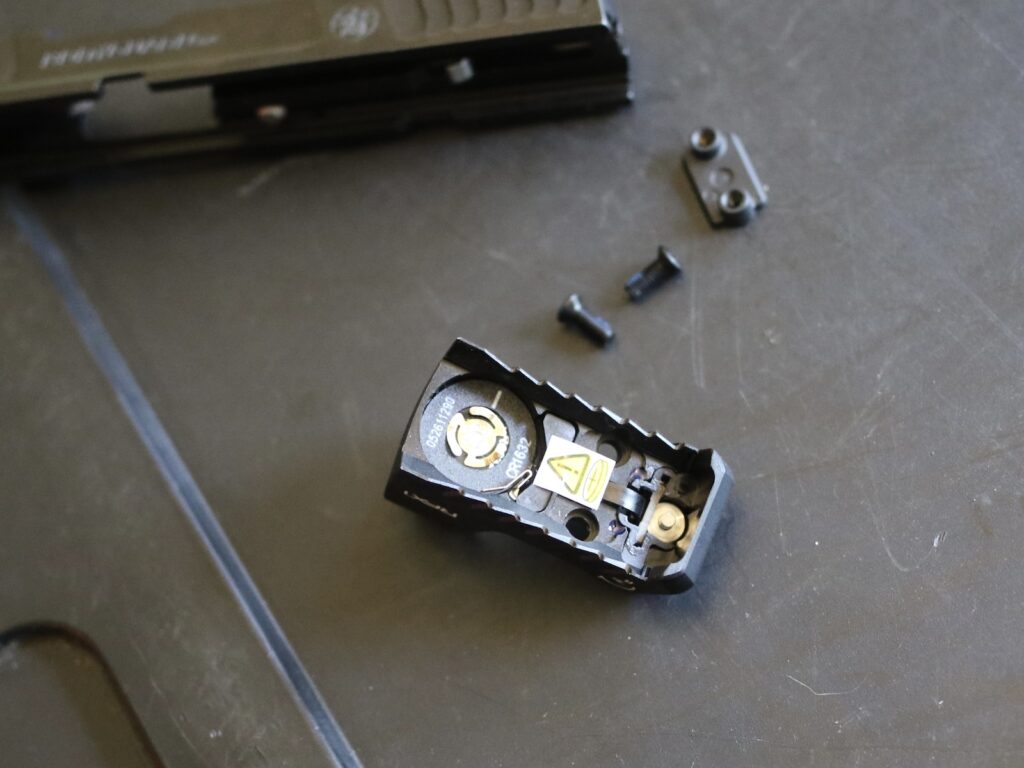
Viridian’s RFX1
Viridian’s RFX line is built on variety. There are some dedicated direct mount versions, and some designed to mount on common optic patterns in a more universal manner.
Viridian has built this RFX1 for the Smith & Wesson Bodyguard, but they make dedicated optics for Springfield, Taurus, and Ruger pistols, too. Some of the direct mount options mirror the slide serrations of the host guns, too, adding an aesthetic complement to the addition.
Installing the RFX1 to the Bodyguard 2.0
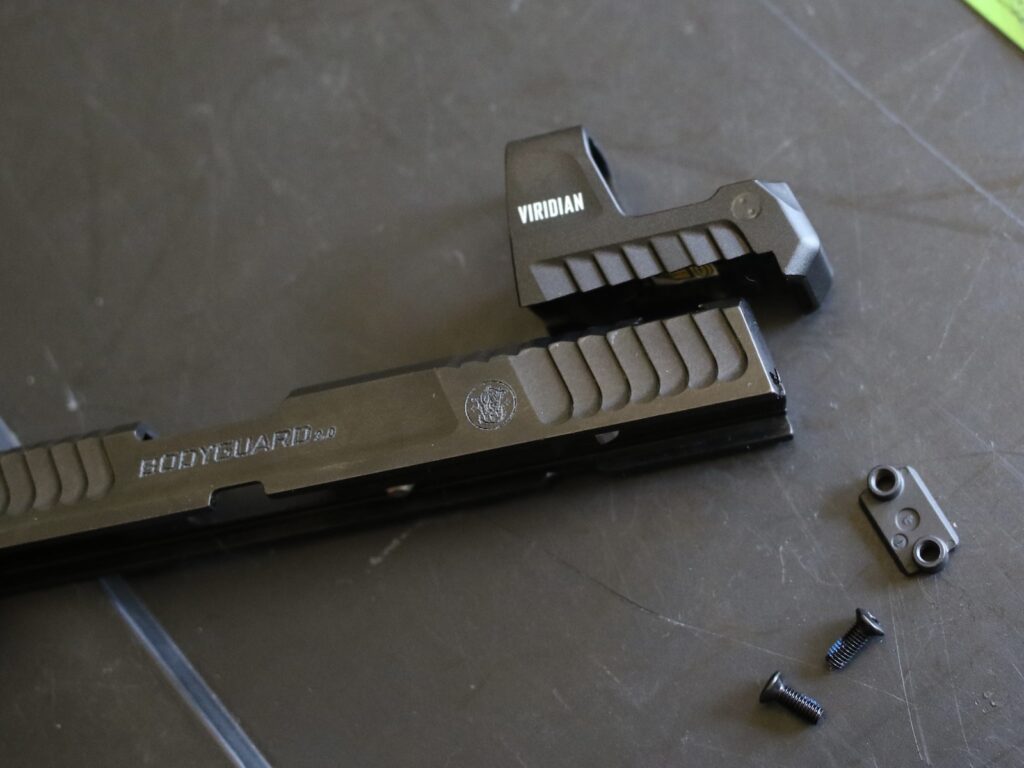
Bodyguard 2.0s aren’t optics compatible in the traditional sense, in that it isn’t cut for a plate or a dot. Instead, the RFX1 replaces the rear sight. Since the rear sight has to be removed, there’s no co-witness potential here.
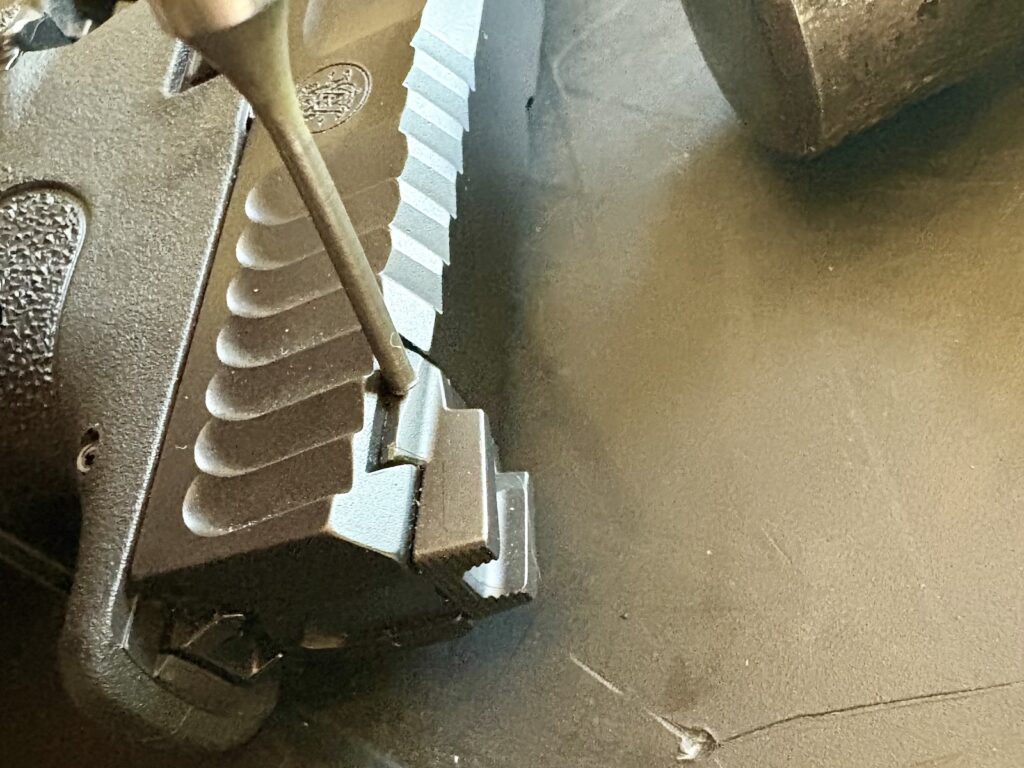
Safety first. Make sure the gun is empty. I’d suggest taking the slide off of the frame.
I drifted out the rear sight with a punch. There are two things to note here. First, the preferred method involves using a sight pusher. I didn’t have one small enough, so I opted for a punch.
Second, using a punch adds some risk. You can easily bugger up the rear sight or the slide. Go slow, use a light hammer and a brass punch, or a Delrin one could be even better.
I found it helpful to have a third hand involved to stabilize the slide.
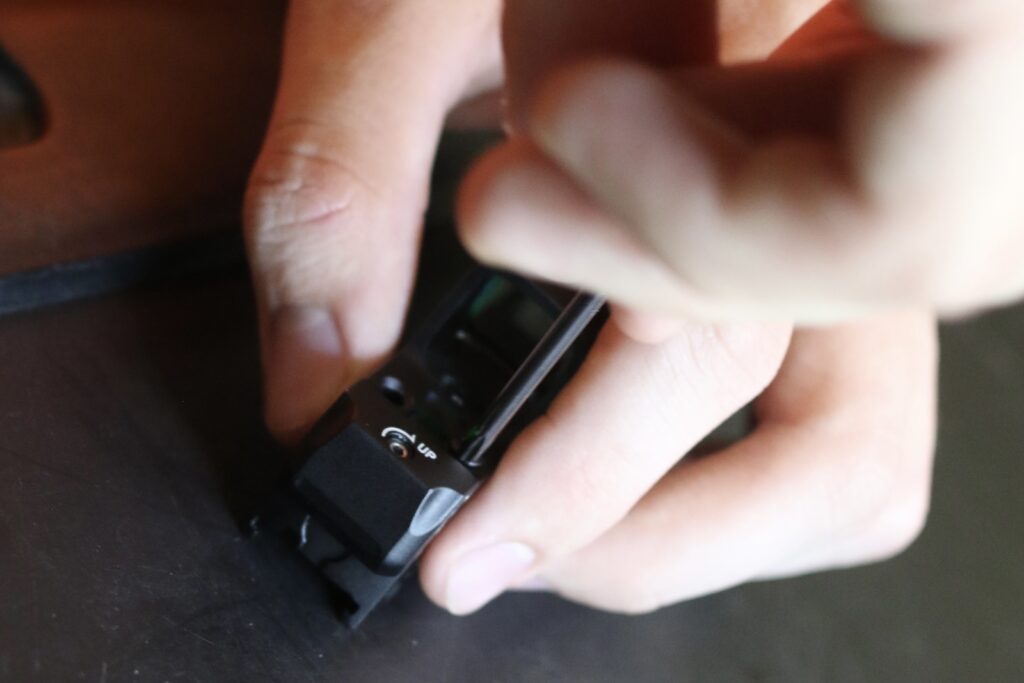
Once the sight is free, there’s a two-hole-nut that slides back in. This is loose and doesn’t need to be hammered in place. The dot will bolt into this, and the tension of those bolts pulls the nut up into the rear sight dovetail to hold it secure.
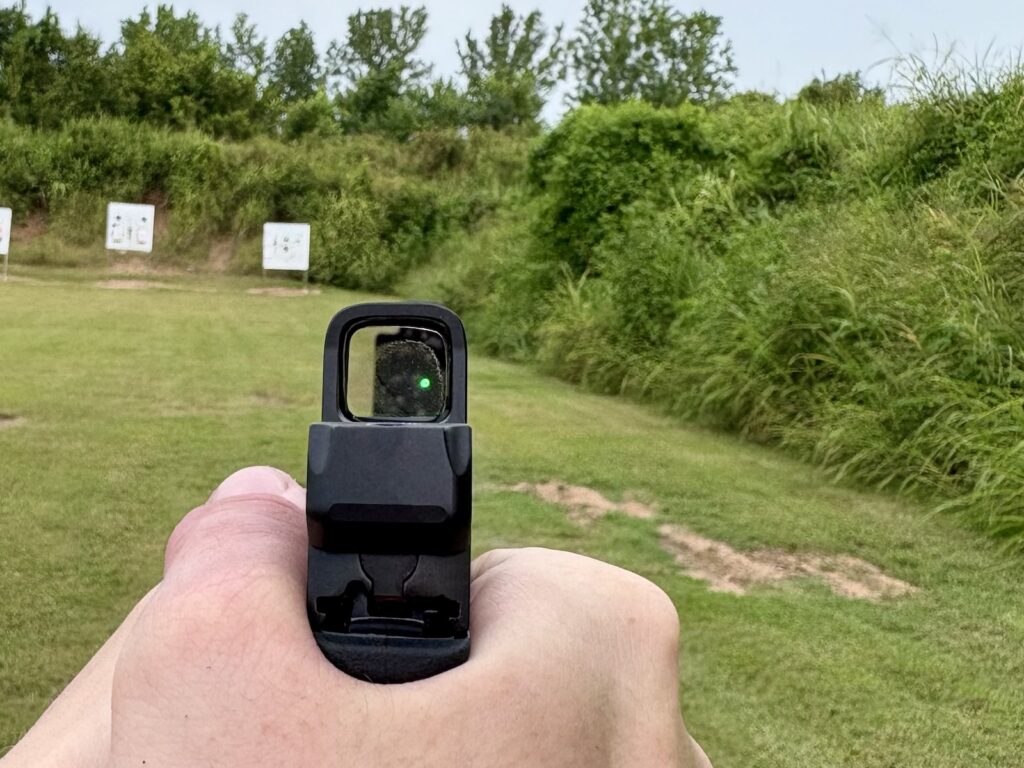
The dot was a breeze to install. It’s a cool design. The housing isn’t any wider than the slide. It’s not too tall. It’s not an obtrusive addition. It wraps a little bit over the back of the slide, but the extra length doesn’t get in the way of anything.
Adding a Laser proved more complicated
If lasers are your thing, Viridian makes an E Series green laser for the Bodyguard, too. Again, the Bodyguard doesn’t have a rail. It does, however, have a roll pin in the frame, just in front of the trigger guard. The laser hugs the front of the guard and secures with a replacement pin through that hole.
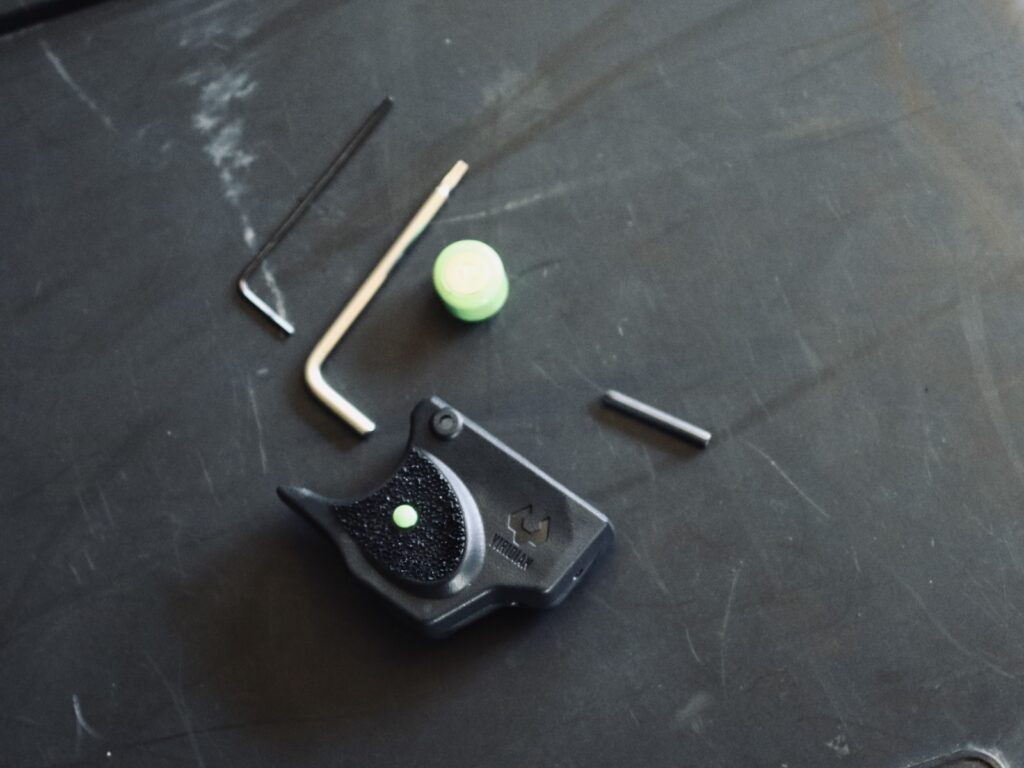
Getting the E Series mounted was a little bit more complicated than the dot. The factory roll pin in the Bodyguard would make a solid offensive lineman if it was just a little bit heavier. Ten minutes with a hammer and steel roll pin punch resulted in a bent punch. Eventually it came out, but I was slightly surprised the frame survived.
This pin is then replaced by the longer pin provided in the ECR package. It takes a while to get the new pin balanced properly so that extra length won’t force the two sides of the laser apart.
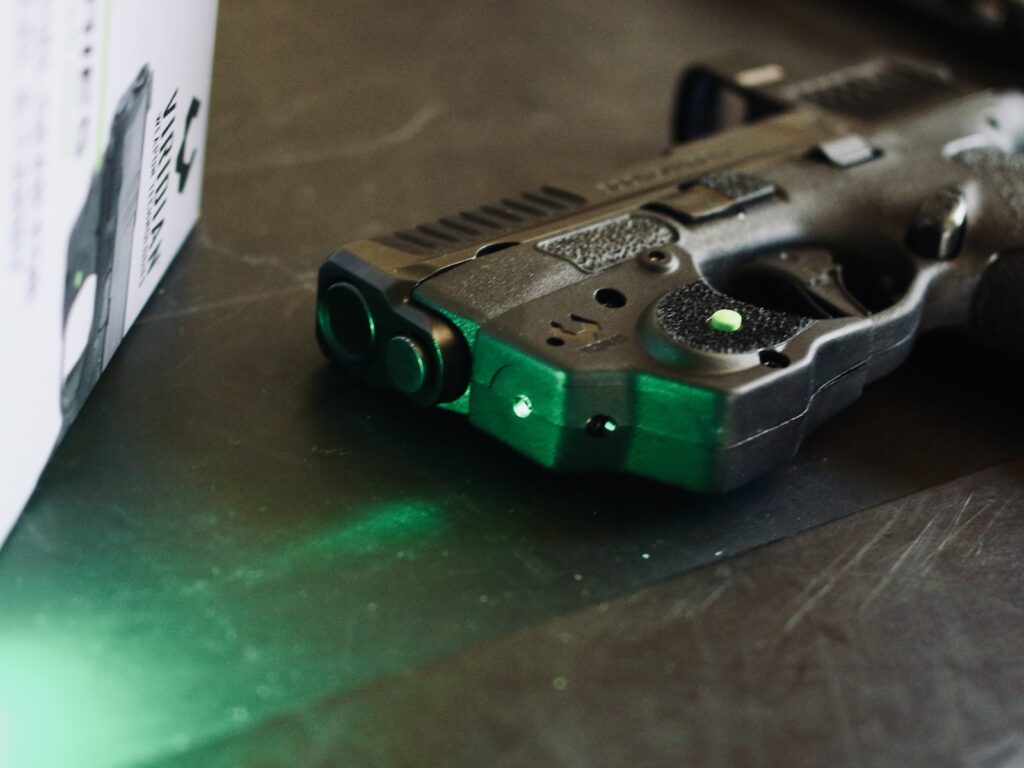
Installing the laser is easy once you have the new pin in place. Unscrew the two sides, insert the included battery, and fit the two sides back around the trigger guard.
Holsters for lights and lasers
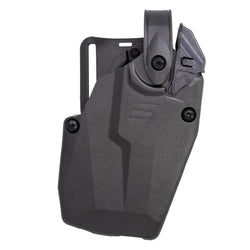
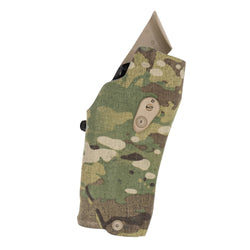
Where I think the Bodyguard really shines is as a pocket carry pistol for when carrying something bigger in an IWB holster isn’t practical. As the Bodyguard 2.0 wasn’t originally designed to be optics compatible, some of the holsters on the market ride too high for the RFX1. Safariland’s Model 25 won’t work.
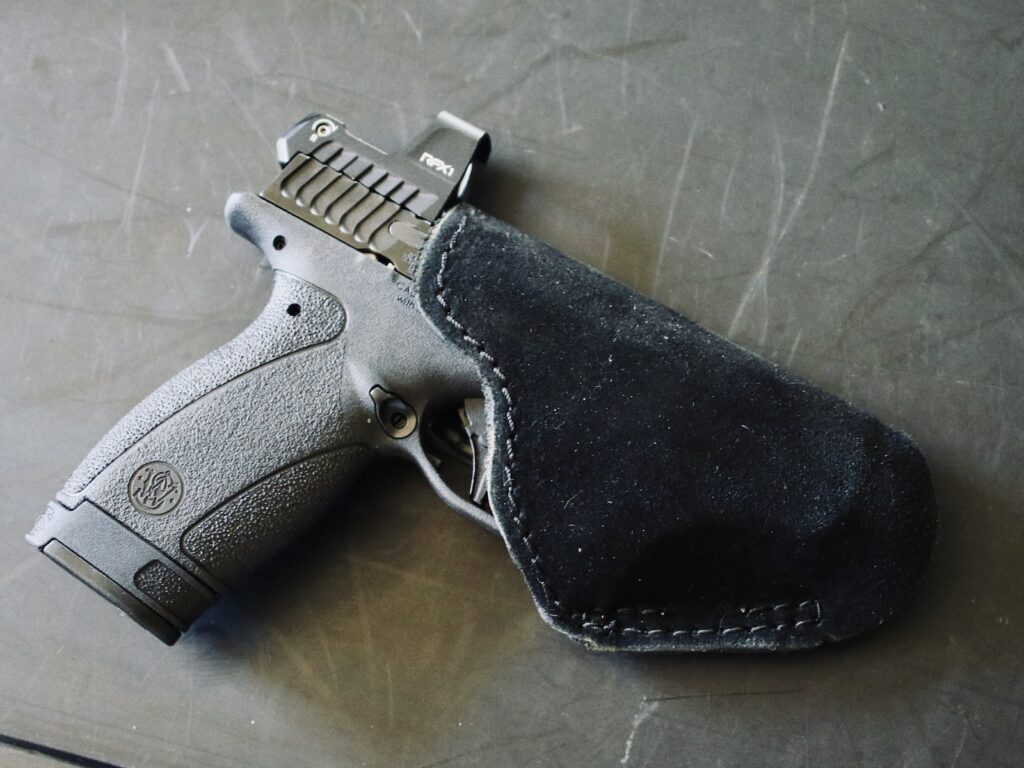
Could you cut down the Model 25 to fit? Possibly.
Most of the time I’m in pants with a belt. There, my go-to holster for the bodyguard is the Safariland Species. It’s a comfortable in-waistband holster that’s foolproof.
Neither the Model 25 nor the Species accommodates a laser, though, so if you do want to run the E series for EDC, you’d have to look elsewhere. Having a laser could be viewed as a good kind of redundancy. Electronics can always fail, so having a laser to back up the optic might not be a bad idea.
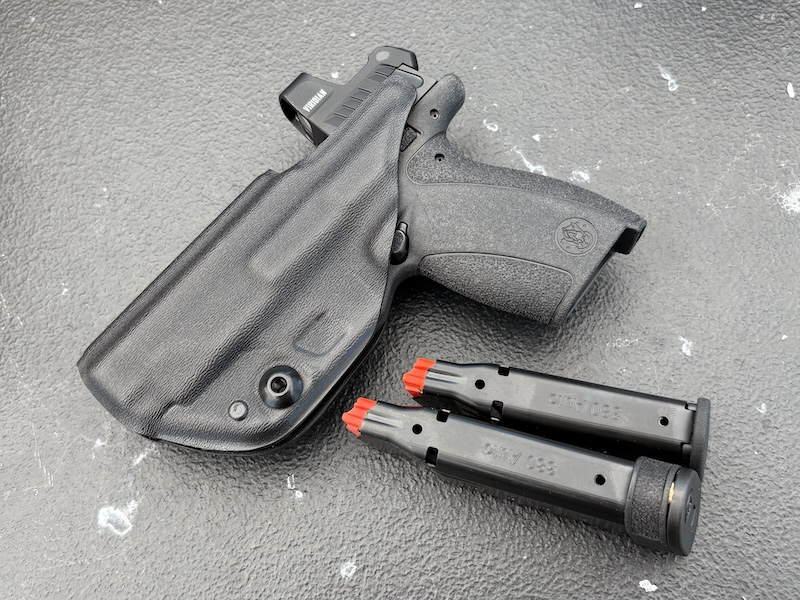
As I didn’t have a holster for the ECR, I decided to hold off on committing to the laser as a permanent addition and just landed on the RFX1.
Sighting in the RFX1 on the Bodyguard
If you have sighted-in dots, you know it can be a pain. The size of the Bodyguard 2.0 makes getting the gun stable while turning minute dials tricky. The task is manageable, and the end result is worth the effort.
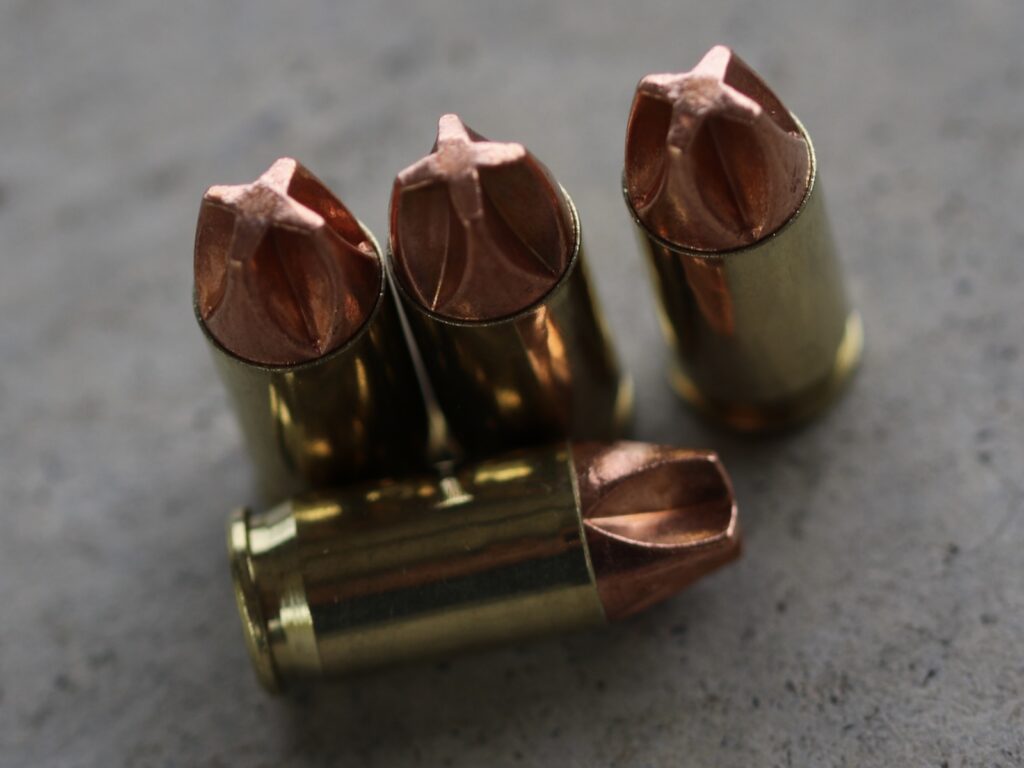
And that’s how I’d characterize this carry setup. The gun is small, but performs well with the right kind of ammo (I’m finding it runs great with Lehigh’s Extreme Defense XT). It is a viable tool for self-defense.
Adding the RFX1 isn’t as easy as larger direct-mount options, or even those that connect with plates, but it is worth the extra work.
Together, the Bodyguard 2.0 makes a compelling addition for EDC when carrying anything larger is out of the question.