
“Rangers Lead the Way” is the motto of the United States Army Rangers. They are known for their capabilities, including direct-action raids; reconnaissance; arctic, jungle, and mountain operations; and light and fast operations.
While the Rangers have origins in the original American colonies, the modern Army Rangers are a unit that dates back to World War 2 with numerous deployments across the globe. Their collective legacy is impressive, their reputation well-deserved, and their never-fail determination is fierce.
In 1982, a competition was created at Fort Benning to honor Lieutenant General (R) David E. Grange, Jr., called “Best Ranger.” The event tested the best of the best against one another to determine which team could be considered the best. This year marked the 42nd annual competition, the weekend of April 10-12, and I was there to witness it from a very unique perspective.
10 April 2026 0500: It Begins
Sixty-one Army Ranger teams of two gathered in an open field at Ft. Benning before running underneath the large Ranger tab, as their names were called out by the master of ceremonies.
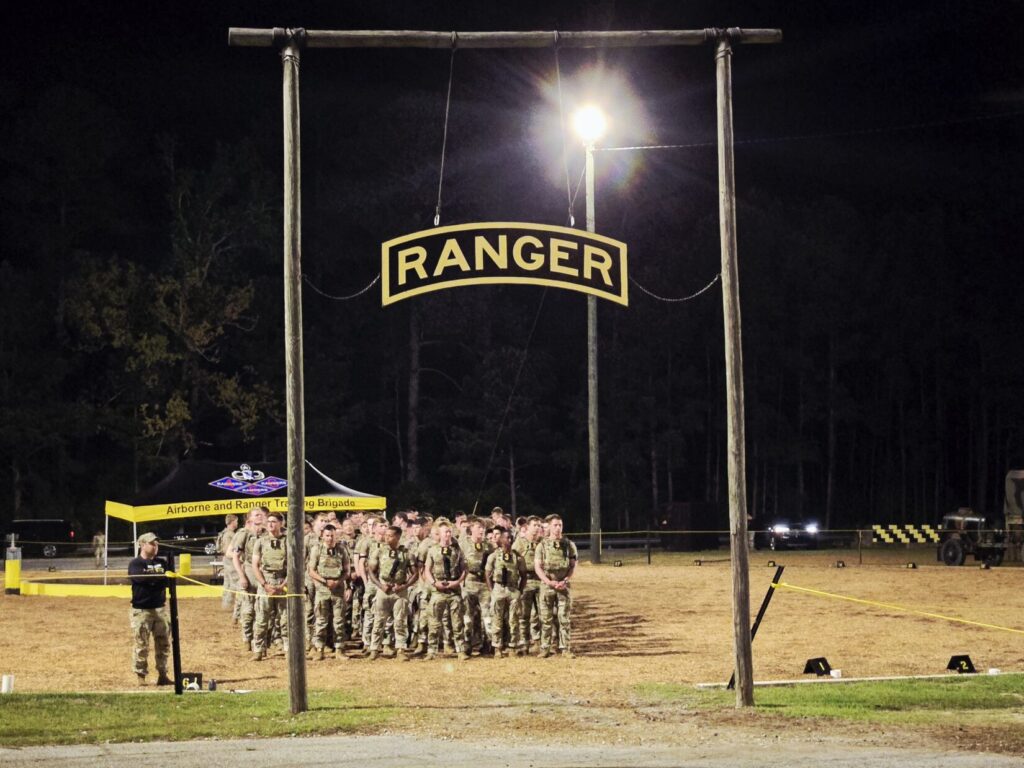
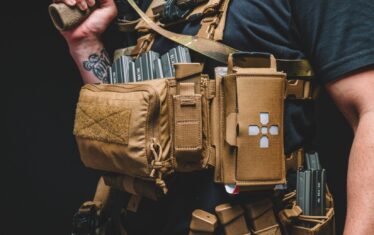
Temperatures were in the high 40s, and many spectators stood around in multiple layers of warm clothing. Meanwhile, the rangers were kitted out in BDU pants, t-shirts, and plate carriers with basic equipment strapped to them.
The rangers moved to the starting line, where they recited the Ranger Creed before commencing one of the ultimate tests of endurance. The crowd cheered them on and tracked their progress on a large projection screen thanks to GPS units worn on the rangers’ arms. The Best Ranger competition was officially underway.
Throughout the weekend, competitors were challenged to nonstop physical and mental tasks. Each activity was designed to test their skills in marksmanship, movement, land navigation, and more.
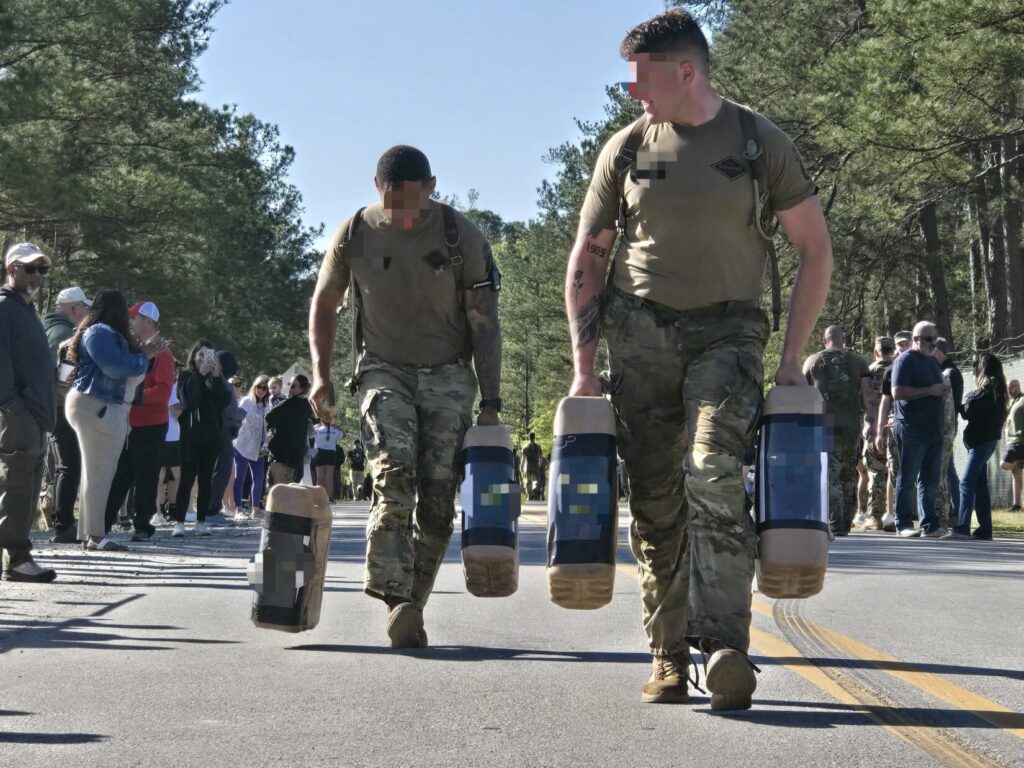
Early on, the competitors were pushed to physical limits thanks to 5-gallon Jerry cans in a farmer’s carry affectionately referred to as “the long haul.” If the cans touched the ground, the competitors had to run back to the start and back to where the cans dropped before picking them up again. This is just one of the many tests of stamina, strength, and determination.
Some tasks included water crossings, guaranteeing wet boots, and some complete submersion in water and/or mud. The prusik climb was another event where competitors ascended a 60-foot-high rope with only two prusik loops.
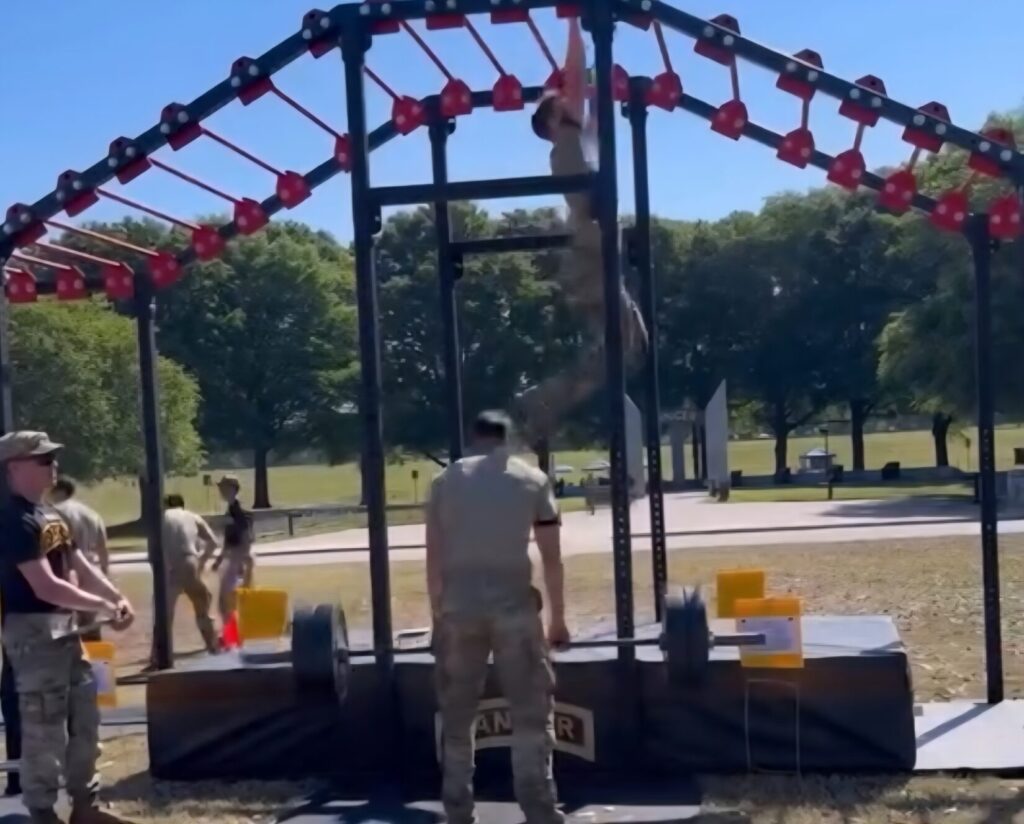
Another obstacle was the standard rope climb that required climbing 30 feet in the air. The monkey bars and ladders tore up the rangers’ hands, and the unknown distance ruck march went long into the night.
11 April 2026 0800: My Involvement
I attended Best Ranger at the request of my friend Jason Nauert. Jason is a television host for the Outdoor Channel on his show, Jason the Butcher, as well as a subject-matter expert for the military.
Jason attended Best Ranger last year for an episode of his show and was asked to run the first-ever civilian challenge lane at the competition. Given Jason’s background, his challenge lane became one of two “mystery lanes”. As a regular co-host/guest on Jason’s show and a survival instructor, Jason asked me to give him a hand as one of the officials in his lane.
A mystery lane is meant to be a mystery. Rangers have looked at previous years of competition and trained toward past tasks. The mystery is unknown, and to some degree, I feel obligated to keep it a mystery. Then again, I can share some details without giving too much away. The ranger teams that came through the lane know what they did, and I’ll give an extremely high-level overview of what we set up.
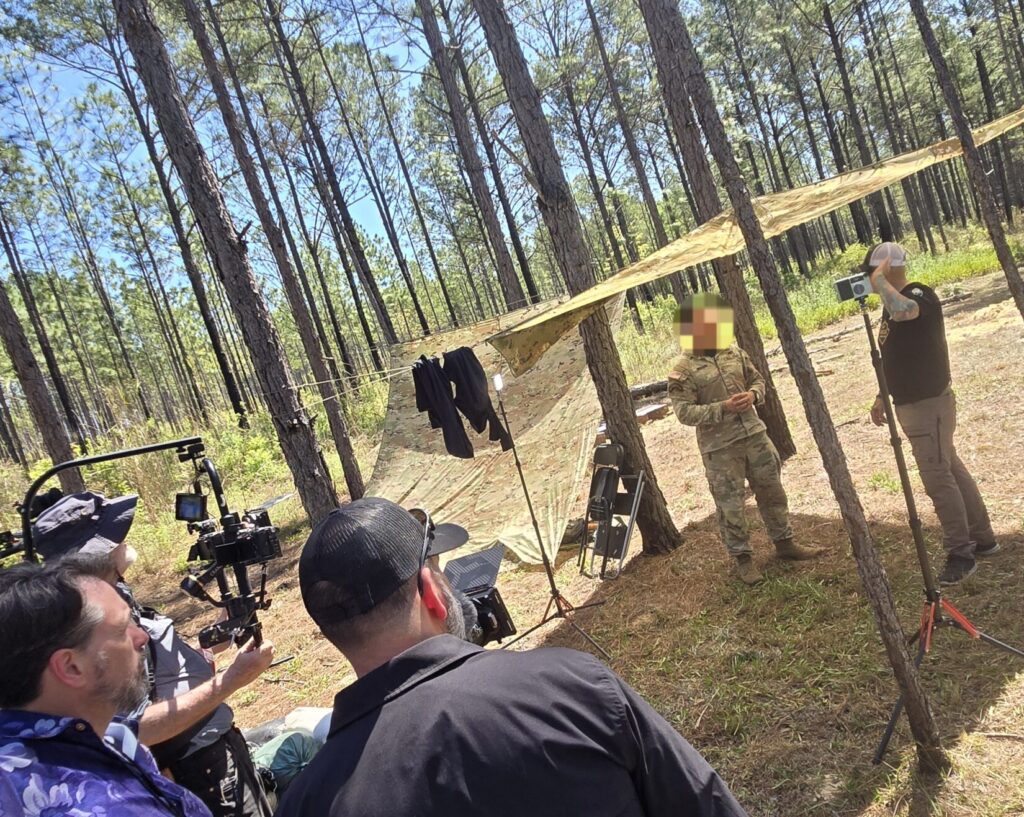
Jason’s lane was slated for Saturday, and it came as part of a SERE (Survival Evasion Resistance Escape) phase of the competition.
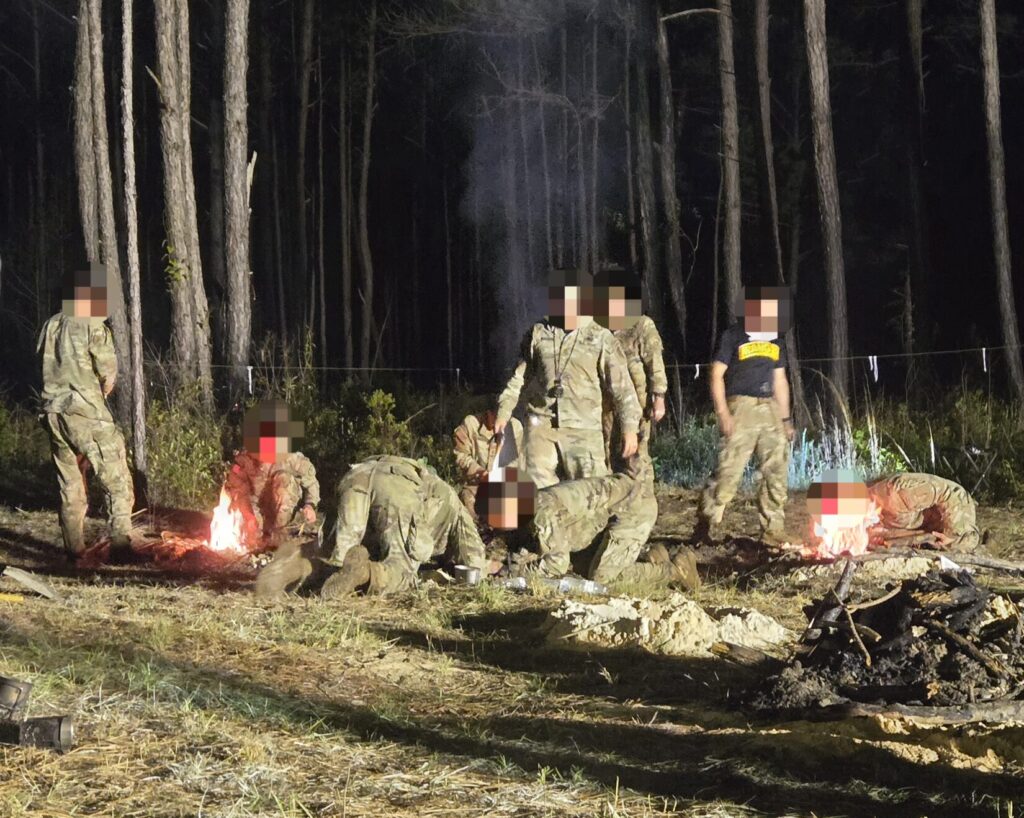
The rangers walked into our challenge lane after hours of competition. Our lane featured elements of game procurement and the skills needed to build fire. Minimal equipment was available in our challenge lane, including an Axiom Occularis slingshot by Simple Shot Slingshots, an issued Benchmade Nimravus knife, EXOTAC FireROD 2.0 and MatchCAP XL, a canteen cup, paracord, and some tinder.
Competitors burn between 30k to 35k calories during the event, and our challenge lane offered a chance to earn sustenance.
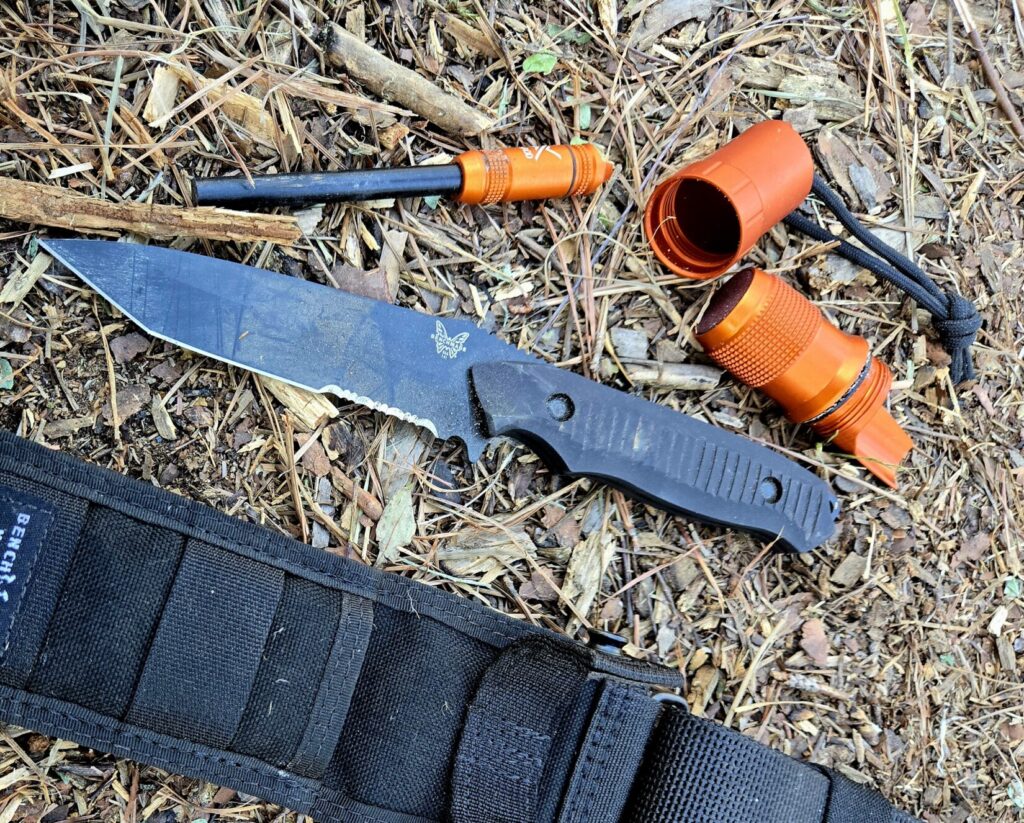
Jason and I worked with another friend, Chris Morris, to work the ranger teams through the phases of our lane. As the day turned into night and we edged up to 14 hours of our involvement, we watched as the brain fog and fatigue set in.
Despite the physical manifestations of the competition on the rangers’ faces, they all pushed through before heading off on the back of a truck to the night navigation phase.
12 April 2026: There Can Only Be One Best Team
The cutoffs are an added pressure of the Best Ranger event. At one point in the weekend, the top 32 teams were allowed to continue on with the remaining being dropped from the competition.
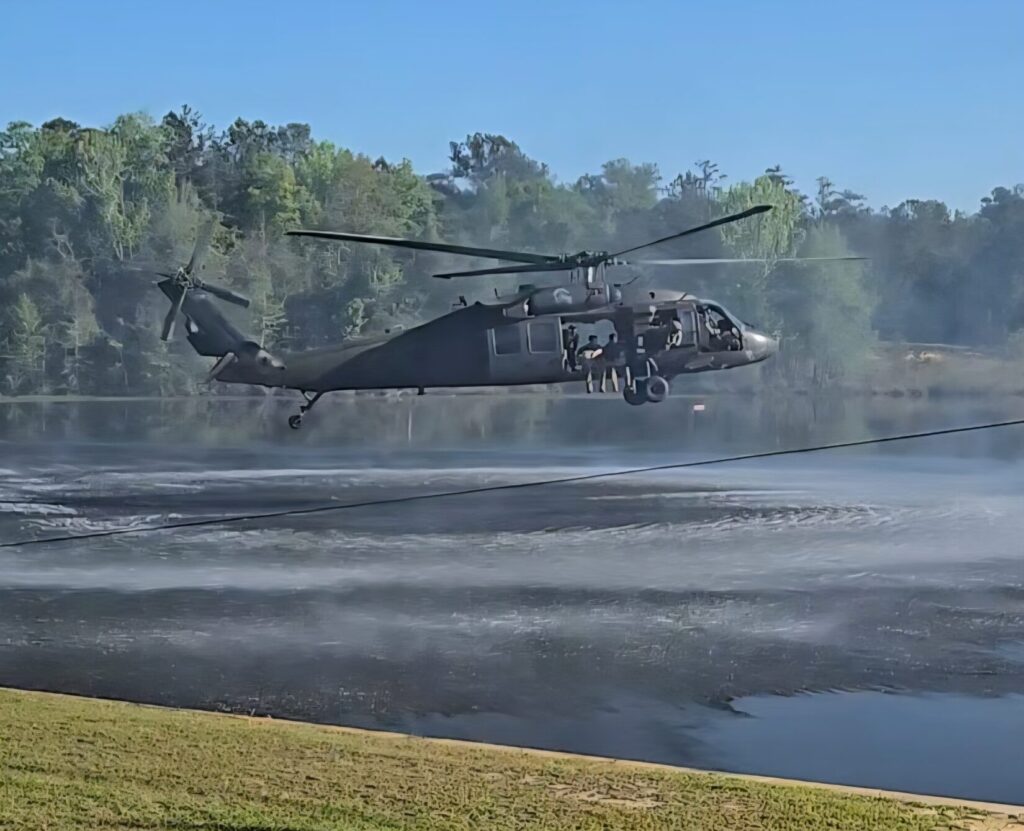
By Sunday morning, the teams were whittled down to only 16, who were welcomed by onlookers at Victory Pond who watched them helocast into the water. If you are not familiar with that term, it is when a helicopter comes into the area of operations, hovers low over the water, and the rangers jump from it to swim a rucksack raft to the shore before continuing on to the water confidence course.
When the rangers reappeared from the woodline after the helocast, they ran toward the Combat Water Survival Assessment Course. This event includes climbing a ladder, a log run, and negotiating a rope to the Ranger Tab suspended over the water.
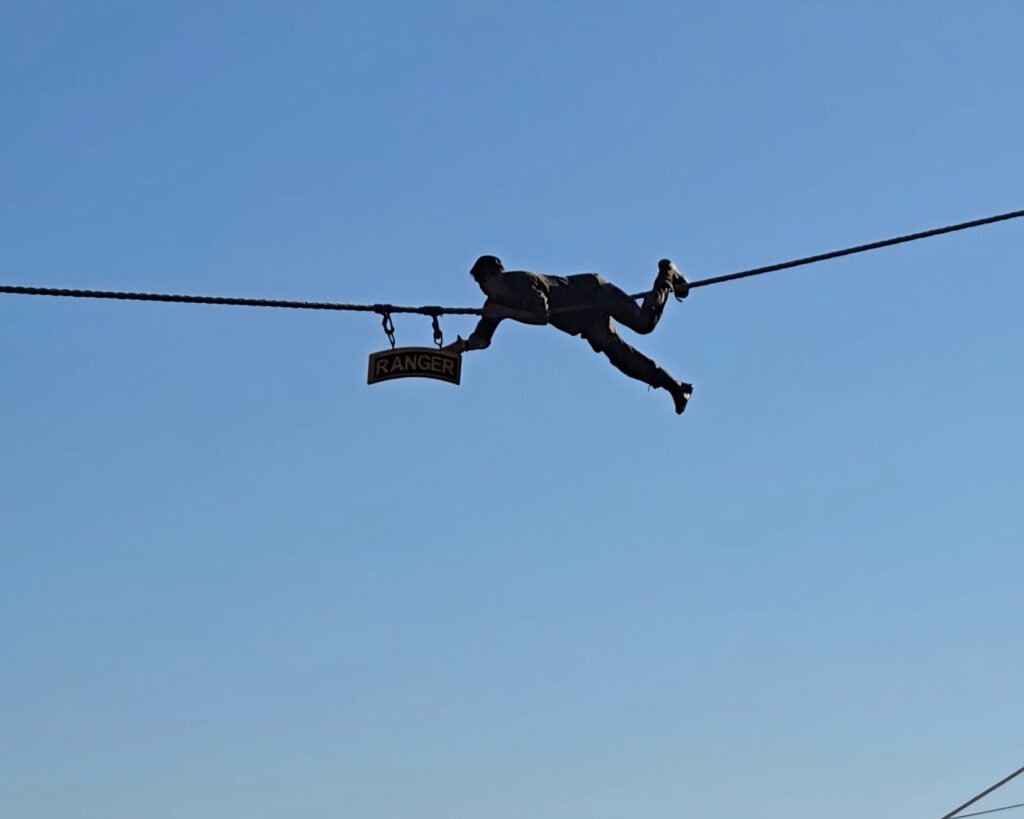
For the competition, the rangers didn’t need to request permission to drop, as they were more focused on finishing the course in the shortest time.
Once they hit the water and reached land, they ran to the tower where the “slide for life” takes place. This zip line starts high above the water, and the pulley system in the zipline screams a high-pitched whine as the ranger flies down its course. Considering all the physical demands placed on the rangers, grip strength is something you hope holds out during this stage.
By mid-afternoon on Sunday, the teams made it across the finish line. Scores were tallied up, and when the final results were read, the winners were Team 49 from the 2nd Ranger Regiment, 75th Ranger Battalion. This year, the 75th took the top three spots, and it should be noted that the 75th’s win this year was the 6th straight in the competition’s history.
Rounding out second place was Team 51 that also won the Ruck March Award, and third place was Team 50, which won the Marksmanship Award.
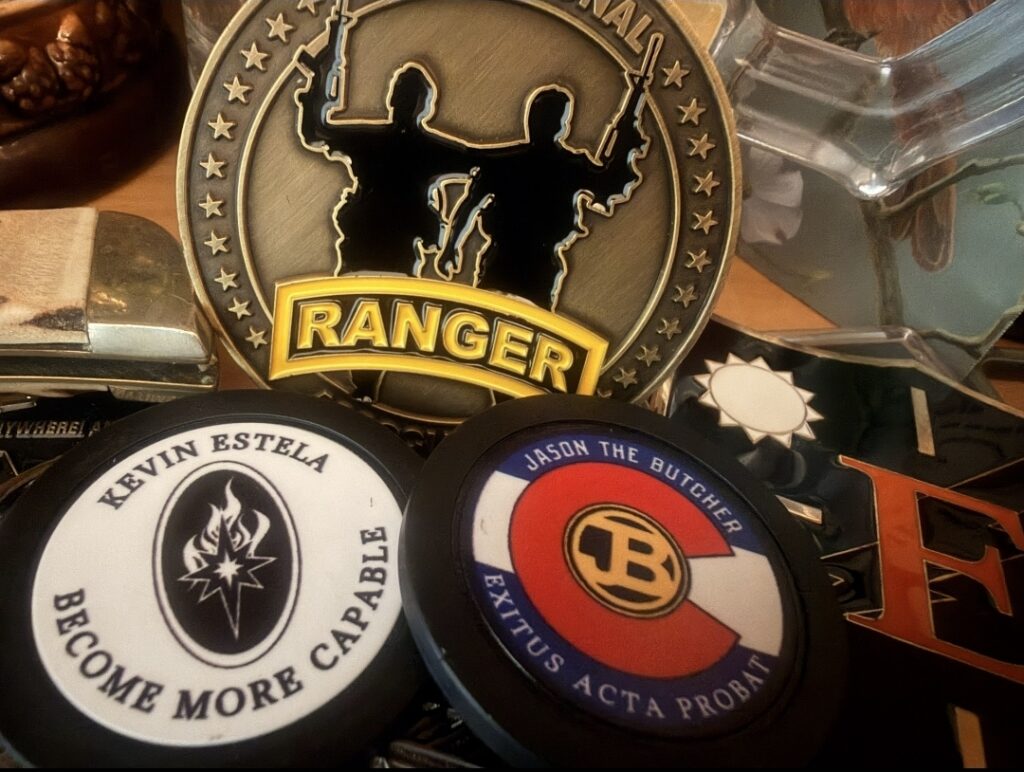
The Big Picture
It is easy to give up. It’s a choice and one that ordinary people make every day. It’s also easy to think selfishly instead of looking out for your fellow man. The competitors from Best Ranger never gave up over 72 hours, ultimately crossing the finish line as a team.
When spectators went home to eat and sleep, the rangers kept moving with little rest. “Exceptional” is the only word I can think of when it comes to these soldiers, and the event is awe-inspiring.
There’s an old Ranger quote from Col. Ralph Puckett that paraphrases what the Rangers do. “Be proud, but never satisfied. You can always do better.” Best Ranger is a tradition that will continue year after year, and the competition will continue to test the best of the best. The competition will always evolve to mimic conditions on the ever-changing battlefield, and the soldiers will be ready to face them as bravely as they do the challenges of the Best Ranger event.
For more information on Best Ranger, please visit www.bestrangercompetition.com or see it for yourself next year in Georgia at Fort Benning.