
A ground-up review of the double-stack 1911 market — every price tier, tested the same way.
What Is the 2011 Project?
In short: over the next several months, this series puts 21 pistols through identical tests — from budget imports to five-figure customs.
Sometimes, a project comes to fruition as a natural progression. It’s the logical movement from A to B, then to C. I can assure you that is not how the 2011 Project came to be. This project came together with a little luck, a lot of sheer work and willpower, and a few breaks that came my way.
After spending all of 2026 working on this project, it’s finally coming to life. I wanted to create a valuable tool to help you identify and sort through the 2011 pistol market (or the Double Stack 1911 market, if you want to be technically correct). Through individual reviews and comparisons, historical analysis, and conversations with people who have insider information, I created that tool. And through that, I set out to offer the most objective-based series possible to give you the insight you need.
Why Trust This Review Series
I lived in the retail firearms world for nearly 13 years—which makes up the majority of my professional life. I spent most of that time managing a high-volume FFL, working with buyers, training sales staff, and opening new stores. Through it all, I found that customers want honesty, especially when it comes to information. People can sift through BS, and I’ve seen many a salesperson word-vomit their way through a question or interaction, only to flounder and leave a disappointed customer behind.
I understand how that happens. Selling firearms isn’t an easy job. And I know there are people rolling their eyes in disagreement. But this is why I say it is: When people ask you about a firearm, especially in comparison to another model, the answer you give comes from a qualitative, not quantitative, background. It’s based on your experience with the firearm.
It’s hard to break down and give people an answer that’s based on facts, which is why people flock to reviews. They want to hear people’s firsthand experiences with the firearm in an environment that appears more objective. And that’s the inherent issue: it’s hard to come from a purely objective stance, because our objectivity is based on our own experiences and inherent biases.
That begs the question: what does it come down to? That answer is surprisingly easy—trust. My success in sales (if you’d like to call it that) comes from building trust with customers. I did that by offering honest opinions that are infused with objective information. The pros and cons, what various manufacturers offer, discussing “value,” and more. It’s that same trust that I’m offering you in the 2011 Project.
How Each Pistol is Tested
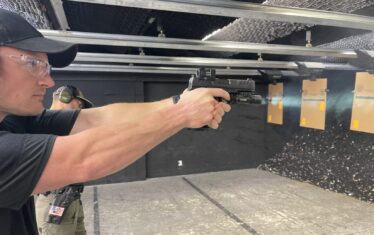
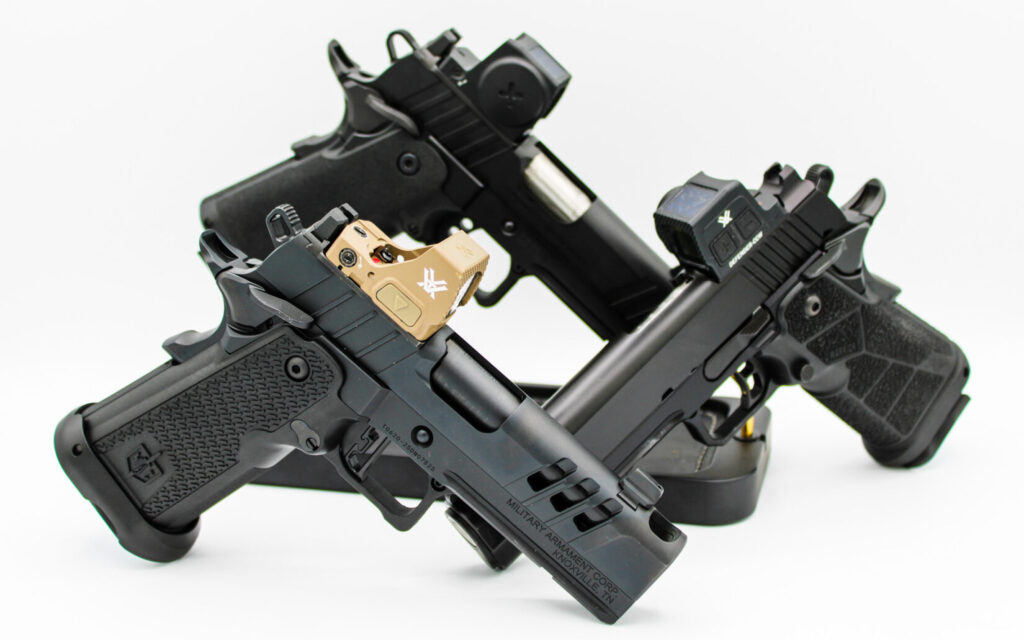
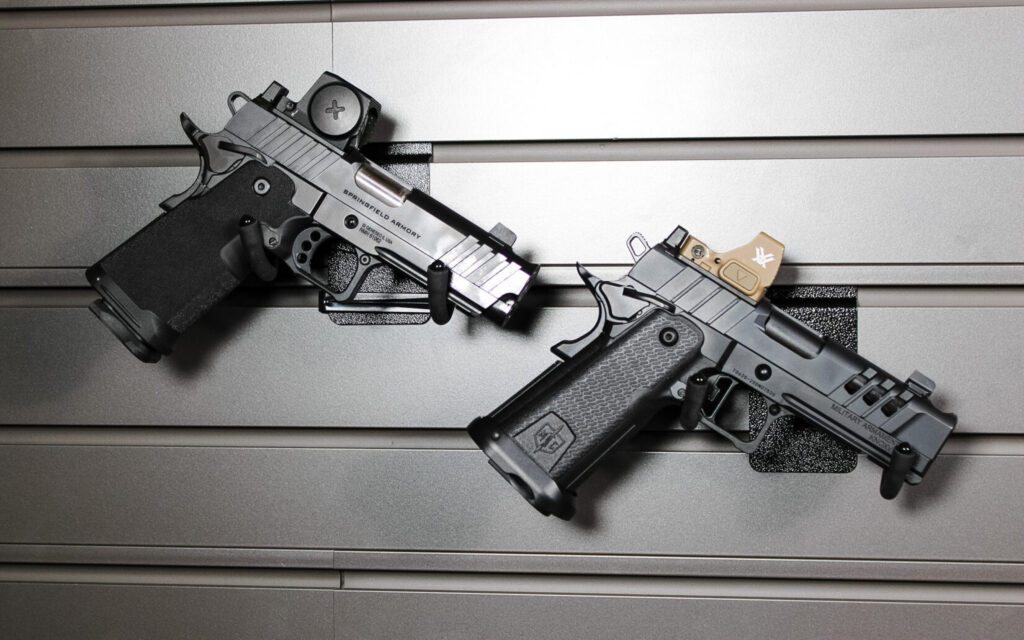
I have over twenty 2011-style pistols on hand for this project. Everything from budget options from Turkey to full-on custom guns from the likes of Dark Forge and Atlas. Each pistol reviewed will have at least 400 rounds through it. Why not more? Time. Some might exceed that 400-round limit, but that will be on a case-by-case basis.
Each pistol will undergo accuracy testing at 10 and 25 yards. This will be in the form of a five-round group from a rest. Why not more groups to determine an average? Because the goal is to set realistic expectations, not to fire perfect groups for the sake of it.
From there, I test guns through a series of drills, including Bill Drills, 1-and-1 drills, and the Humbler. My goal is also to have a second shooter on hand for as many as possible, so they can add their notes and opinions.
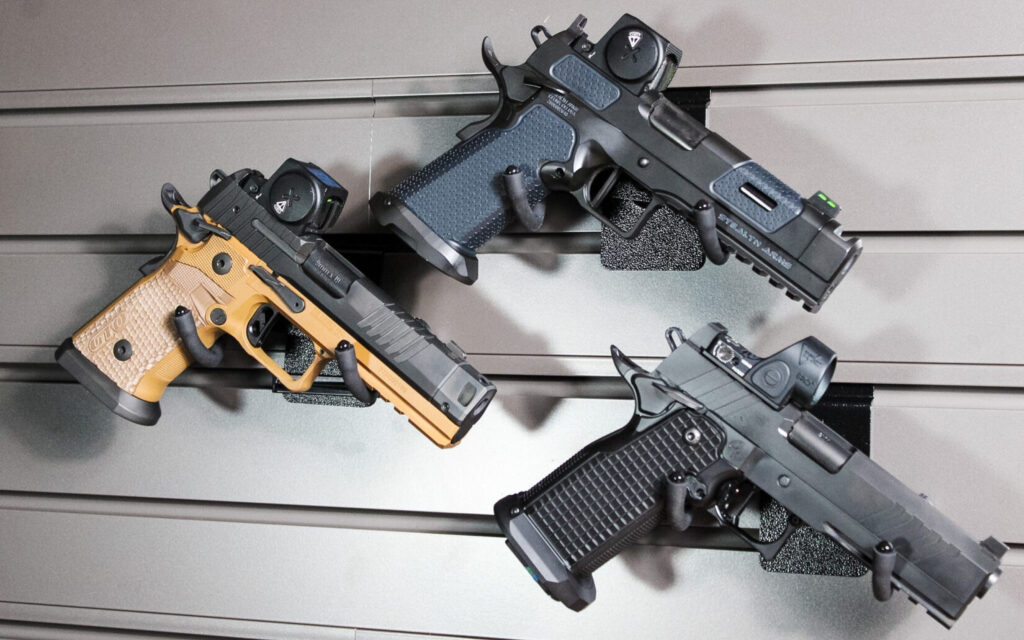
All these notes will be compiled into articles that cover each firearm with both qualitative and quantitative information to help you make an informed decision about whether the pistol is worth your hard-earned money.
The guns themselves will be divided into categories. An additional article will be published at the end of each category to provide a final hotwash and discuss who each pistol is for (or why one might be better for you over another).
THE CATEGORIES — What’s Coming
The categories and the pistols in each category are as follows. One important note: if you don’t see a particular firearm in this field, know that many companies were approached to participate in this project. While we received a ton of support, some companies opted out for various reasons. We are happy that each company on this list was willing to take part in this project.
Budget Options ($1,500 or less street price)
Mid-Tier Mayhem ($1500-$3500)
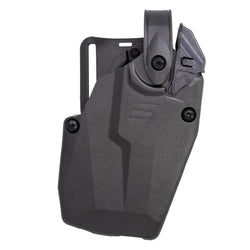
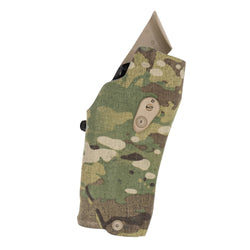
Duty Double-Stack 1911s
Tackling Goliaths ($4000 & Up)
And to keep things fun, there will be three additional bonus articles to add a little more flair and diversity. Why not make things fun, right?
How to Follow the 2011 Project
With 28 articles planned across four categories — plus a wrap-up “hotwash” for each — this is a project that will run over the coming months, not weeks. The best way to keep up: bookmark this tag page or check back here at CADRE Dispatch, where every new review, comparison, and category wrap-up will be archived as it publishes.
ACKNOWLEDGMENTS
Generally, the acknowledgment section of a book comes at the end, but in this case, I’d like to place it at the beginning. I’d like to thank Stephanie Kimmell, the editor of Safariland CADRE Dispatch, for supporting this project from day one. Her guidance made this all possible. She is the best.
Also, a huge thanks to the team at Safariland for helping with connections and general support for this project. Matt Riker of Kings River Custom was another huge help and gained valuable insight into the development of the 2011 platform; thank you, my friend.
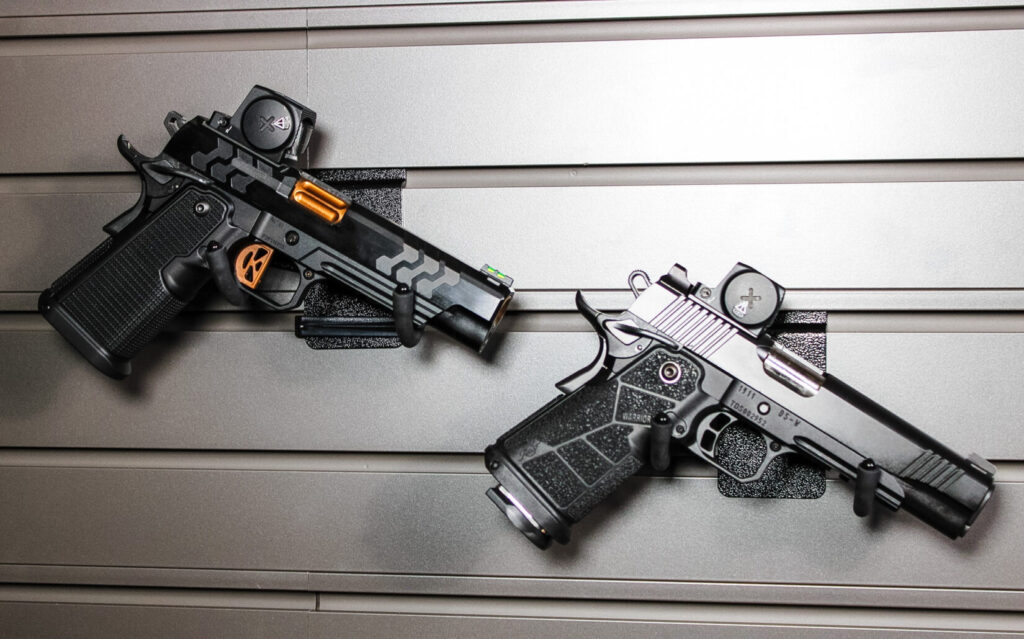
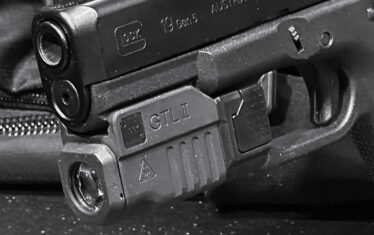
My sincerest thanks to Ammunition Depot, Vortex Optics, and Streamlight for supporting this project by providing the test ammo, TLR-1 HL-X Lights, and all the optics needed to conduct tests of this scale. This wouldn’t be possible without them.
Special thanks to Jon Patton of The Gun Collective YouTube channel for connecting me with many of the above brands. Keep doing great things, brother.
A huge shout-out to Kelbly Rifles for letting me use their range facility for all the testing. They are genuine friends. And a final shout-out to all the manufacturers who decided to support this project. Independent tests and projects like this couldn’t be done without your support.
A final thank-you to my father, Kris, who I dragged along on every range trip. His help, assistance, support (and at times gun model) were invaluable. Thank you.
Now on with the show. First up, Let’s Party Like it’s 2011.
Before You Dive In: 2011 Pistol Basics
What is a 2011 pistol? A 2011 is a double-stack 1911 — it keeps the 1911’s trigger, grip angle, and manual safety, but widens the frame to accept a higher-capacity magazine, typically 15–20+ rounds versus the 7–8 rounds of a standard single-stack 1911.
What’s the difference between a 2011 and a 1911? The core difference is magazine capacity and frame construction. A 1911 uses a single-stack magazine in a slim, one-piece frame; a 2011 uses a double-stack magazine in a modular frame — typically a metal chassis paired with a separate, often customizable grip module.
Is a 2011 pistol worth the price over a standard 1911? It depends on priorities. A 2011 costs more up front but offers significantly higher capacity while keeping the 1911’s trigger feel and ergonomics — increasingly popular for duty and competition use. A standard 1911 is still a strong choice if capacity isn’t the priority.
How many pistols are covered in the 2011 Project? 21 pistols across four price categories — Budget Options, Mid-Tier Mayhem, Duty Double-Stack 1911s, and Tackling Goliaths — plus category wrap-up articles and three bonus pieces.