
In Part I of the Blue-on-Blue Crossfire series, we defined Sympathetic Fire, also known as Contagion Shooting. In Part III, the most recent installment, we talked about one of the main aspects of fire discipline: PID (Positive IDentification) of your PTA (Potential Threat Actor) as an actual threat.
One historical example in Part III: Positive Identification was of the officer who saw a person on the Robb Elementary playground wearing black clothing, which was part of the dispatched suspect description. Fortunately, that officer had well-developed fire discipline, or they would’ve had a Blue-on-Blue.
Here, we’ll give you a shoot/no-shoot exercise you can use to train PID based on PTA behavior. It will also help you develop another aspect of fire discipline: tactical patience.
Developing Fire Discipline
Simply put, fire discipline is shooting when you need to, and not shooting when you don’t.
It’s also not shooting, even if you need to, when returning fire would endanger innocents. We already addressed solving line-of-fire problems in the Rule 4 series.
Fire discipline is how we resist engaging in sympathetic fire.
To combat sympathetic fire, we need to practice not shooting in shooting situations: specifically, when our partners are shooting, but we have not positively identified a threat ourselves, or when we do not have a clear line of fire. To train against engaging in sympathetic fire, we’ll need a partner or two (or more) to train with.
CALLING THE BALL drills
This exercise, or series of drills, is based on a civil disturbance or attack on a large outdoor venue.
In 2022, a spree killer shot up a 4th of July parade in Highland Park, Illinois. In this era of what Jeff Cooper described as “permissive atrocity,” urban police departments should have rooftop marksmen (and drones) covering any large outdoor events. But even civilians have been pressed into rooftop security duty with rifles. Remember the business owners in Koreatown during the Rodney King riots of 1992?
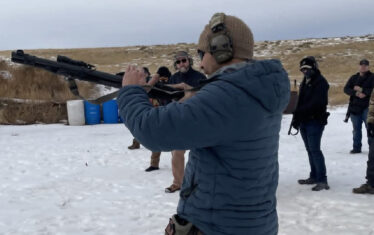
In Calling the Ball drills, trainees form a team of designated marksmen covering the crowd. Like airman and guardian, the terms rifleman and marksman are not gender-specific; Lyudmila Pavlichenko, for example, was one of the most accomplished riflemen in history.
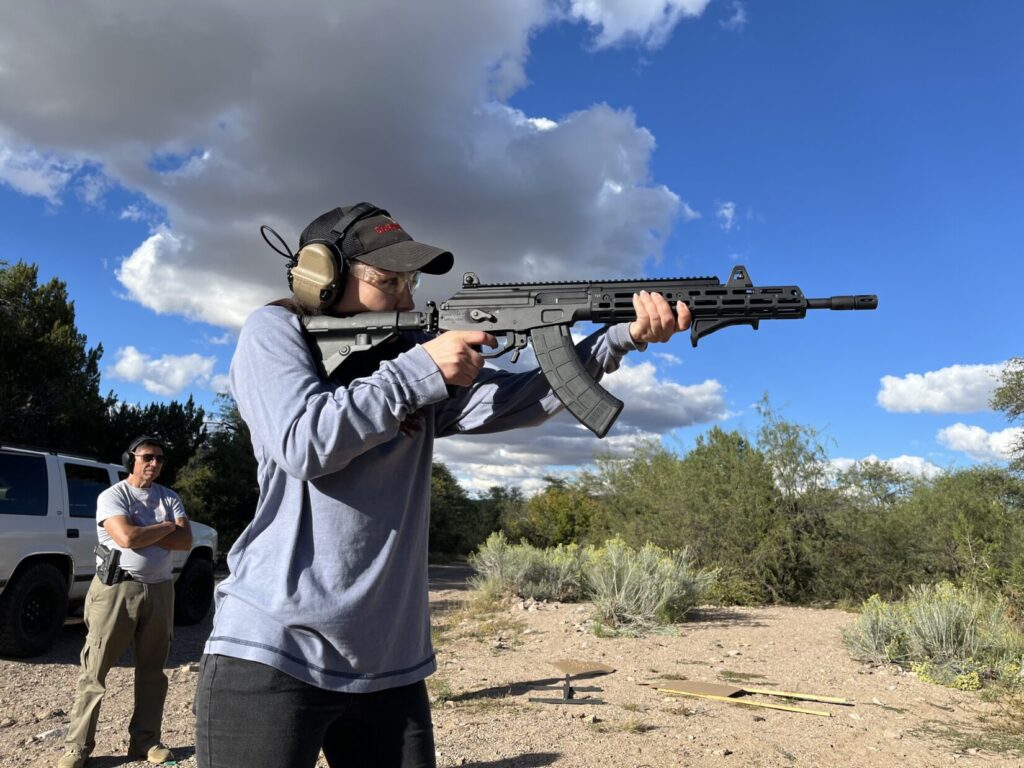
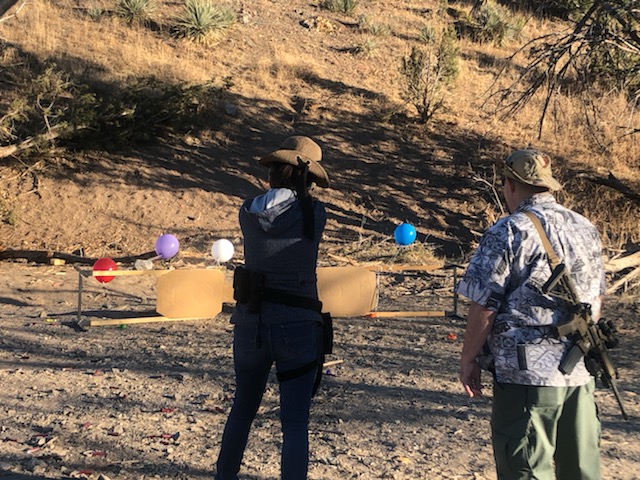
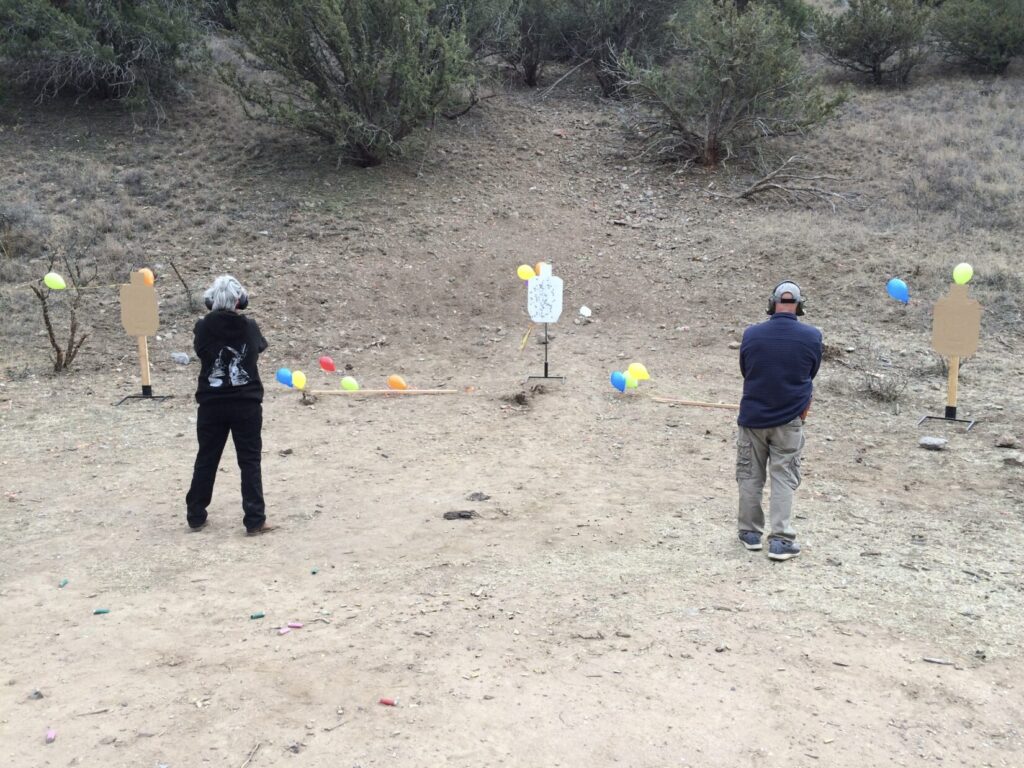
You’ll need a firing range with room for traverse. Targets scattered at random around the range represent bystanders, perhaps peaceful protesters, not too closely crowded together. Helium balloons of varied colors, tethered to the target stands so they are nearby, represent potential threat actors (PTAs) in the crowd.
Why Balloons?
Balloons move at random, like real threats (and real bystanders). They give immediate feedback when hit.
Some ranges or shooting sports ban humanoid targets, be they silhouettes or photographic. Laws banning them have been proposed. Shooting balloons, in contrast, appears to be quite harmless and recreational—even though balloons can be inflated to about the size of a human head, and their random movement in a gentle breeze mimics a living, breathing target better than any piece of cardboard or impact-resistant steel.
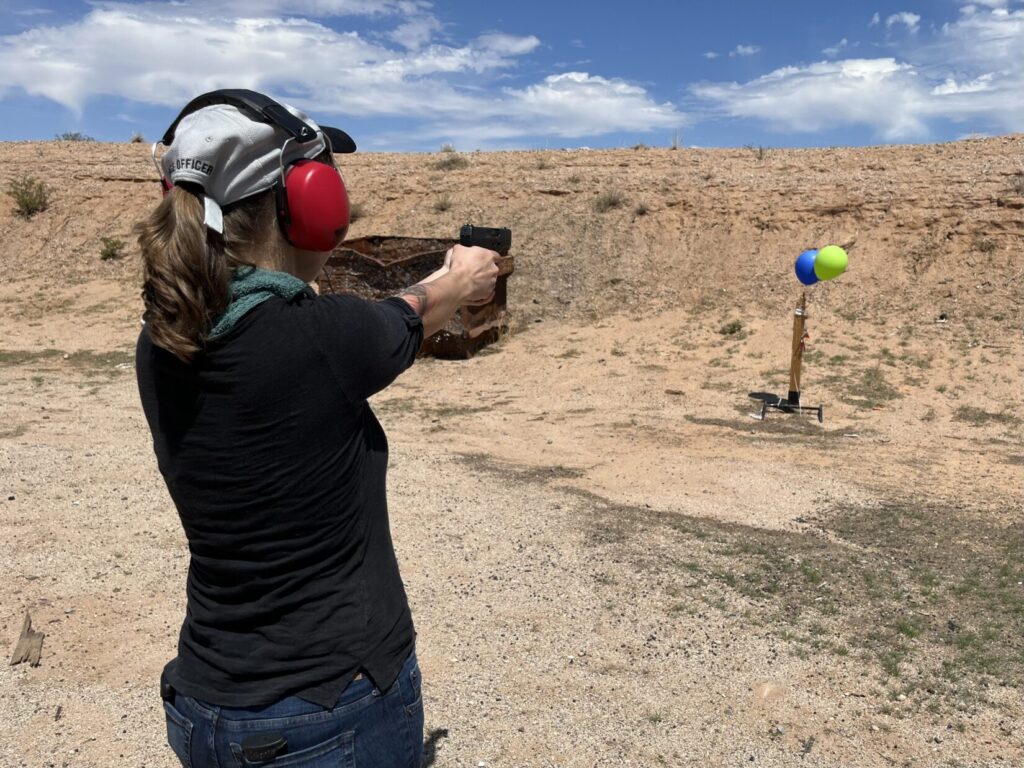
Unfortunately, they are also single-use. We get the most use out of balloon targets if it’s not a race to pop them all. The end of this article has some pro tips for setting up balloon targets.
Developing Intel
Criminals planning to attack a crowd will attempt to blend in till they can get close to the most, or their selected, victims. They swim in a sea of law-abiding citizens. If you’re going to spot the sharks before their feeding frenzy, it helps to have a few divers down there with them.
Since terrorists can easily spot and hide their preparations from uniformed officers, plainclothes officers should also be working the crowd. When I’ve performed such “cameo undercover” duties, our instructions were clear: we were not there to spy on people voicing their concerns. We were there to protect them and their ability to voice their opinions.
If you are a business owner just trying to protect your brick-and-mortar store from being burned down by drunks mad that their team lost a game—I wish that was a hypothetical, but it’s a historical reference instead—you will probably not have the benefit of intelligence collectors working the crowd.
If you must base your assessments on observations from afar, it would help if you’ve taken some Human Behavior Pattern Recognition and Analysis (“Left of Bang“) training, based on the USMC’s Combat Hunter program. That would help you to recognize problems before they become problems.
Natural Lines of Drift
For example, most people are lazy like me. They follow natural lines of drift. They walk around a fence to the entry gate.
The killer in Uvalde threw a bag over the fence of the Robb Elementary playground, then climbed over the fence. Even if he hadn’t just shot at funeral home employees, that would’ve been a huge red flag.
If the rifle-armed cop in Uvalde had observed the man in black jumping the fence, the officer would’ve had a higher index of suspicion. Instead, all that patrolman had to work with was a man in similar clothing, running the same direction as a bunch of students: not enough data to drop the hammer on somebody.
Our riflemen watching the balloons will learn more about whether or not they constitute a threat from the “observations” narrated by the instructor as the exercise progresses. In these drills, the instructor performs essentially the same role as a sniper’s observer, helping the marksmen identify what’s going on downrange.
Individual AORs
Set up one balloon for each rifleman. No two balloons should be of the same color. Their balloon is their AOR: area of responsibility.
Often an AOR is a geographic area, or an entry point (think zone defense in team sports). In this case, the AOR is a particular PTA, like player-on-player defense in basketball.
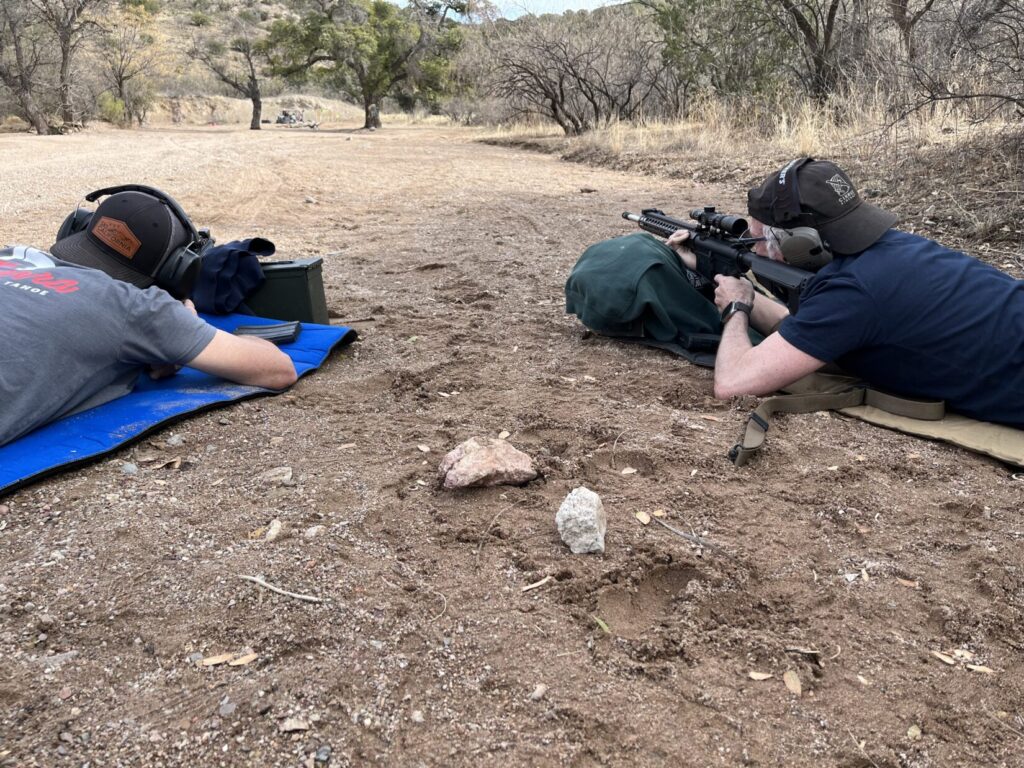
You can give out assignments, for example: “Chevy, cover the red balloon. Andrea, you’ve got greenie. James, keep an eye on yellow.” Students would then be free to select a firing position where they have stability and a clear view of their balloon, as long as they are not in each other’s line of fire.
Or, instead of assigning AORs, you can have each trainee scan downrange, select a balloon they can get a clear angle on, and “call the ball” like in volleyball. As they move into positions uprange of the target array, they can say, “I’ve got orange” or “I’ll cover purple.”
Ethics of Overwatching a Crowd
We would never fire into a crowd. Well, in the movies, maybe: I suppose if he had a nuclear weapon in a backpack, like in DreamWorks’ 1997 movie The Peacemaker, that would justify George Clooney’s command to “Take the shot!” even in a throng of people.
In our real, day-to-day world, if people are not too close together and you have a clear line of fire, you can protect a group of people from a spree killer or identified suicide bomber. It helps if you are shooting downward from a steep angle, so that the bullet is backstopped by the ground, but most practice ranges will not afford such luxury.
Tell the Riflemen What’s Happening
The instructor should weave a story with minute-by-minute updates.
“Red is reaching in his pocket,” an instructor might say. “He’s pulling out something black . . . It’s a cell phone.” No need to shoot the red balloon, at least not yet. The trainee continues to keep Red covered, in case anything changes.
Or, “Blue is sparking up a Molotov cocktail.” If the student covering the blue balloon has a clear line of fire, they (and only they) shoot the arsonist balloon. If the blue balloon is in front of or behind a bystander target, they hold their fire till it drifts into the open.
Don’t simply call out “Green!” or “Yellow!” Any idiot can pull a trigger on command.
We are trying to create discerning riflemen. That’s why you must give them a scenario (“Red has pulled out an AK and is rocking a magazine into it”) to let the trainees decide whether or not, and when, to fire.
“When learning how to fight with a pistol or a rifle, teaching a man how to shoot is vastly easier than teaching him how to think his way through a gunfight.”
–K. R. Murray, Training at the Speed of Life, Vol. 1, p. 14
Mix up your story inputs about the balloons at random to keep every rifleman on their toes. The stories you develop for your potential threat actor balloons are limited only by your imagination.
NO SHOOT situations should vastly outnumber SHOOT indications. That’s not only realistic; it also helps your marksmen to develop tactical patience.
Achieving Our Fire Discipline Goal
While their partner is firing at their own balloon, every other student keeps their designated balloon covered, without firing. How many times do we practice not firing while others are shooting?
When I worked a crowd as a plainclothes forward observer for rooftop marksmen, we were to call in our observations. We were not to draw our weapons, no matter how dire the situation, lest we be mistaken for the problem. That would have taken a great deal of fire discipline on our part, but a single .308 delivered from a scoped rifle at a plunging angle was more likely to stop the threat quickly and safely than a fusillade of pistol bullets fired horizontally with bystanders behind.
Pro Tips for Balloon Targets
Balloons can be inflated with either room air or helium. If you blow them up with air from your lungs, or use an air pump, they obviously won’t float, but you can still get them off the ground if you want to. You’ll need some sort of support or frame, and string or ribbon, to hang them from.
Because helium balloons float, they work better as simulated threats (or simulated hostages).
I avoid Mylar (foil) balloons. Mylar balloons are more durable during transport than latex rubber balloons, but they do not pop.
Instead, after you hit them, they just slowly fade away like Doug MacArthur’s Old Soldiers. One huge advantage of latex balloons is the immediate feedback that the shooter got the hit, when they instantly disappear.
Pros and Cons of Rubber Balloons
Latex rubber balloons are slightly porous. If you are the type who plans ahead, and you stick two dozen helium balloons in your truck two days before a training event, you may be saddened to find 24 shriveled balloons that don’t have enough helium to float on the morning of range day.
Even if you pick balloons up on your way to the range, you could lose a few to staples in your target stand lumber and other sharp pokey objects in your car before you arrive.
Packing your own helium
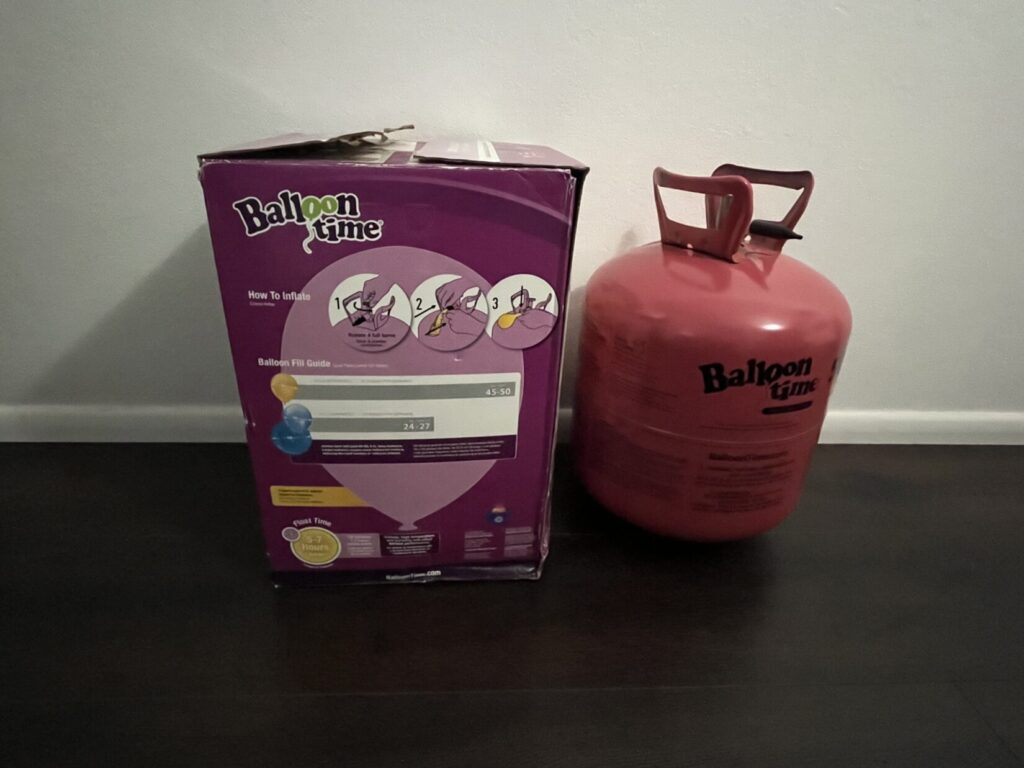
Those cylinders that hold helium don’t really save you much money if you buy them at retail price from a party store. The cost per balloon isn’t much better than if you have balloons filled at the store.
But portable cylinders allow you to fill balloons as needed at the range. If you need more, make more, which beats running back to the store for more filled balloons.
If you don’t need all the helium that day, you can save the gas for next time. Pre-filled balloons, in contrast, have a very short shelf life.
To hit a balloon, don’t wait till it’s centered in your sights and then snatch the shot. Instead, continue to track it as it moves, as you slowly press the trigger. When the shot breaks, you’ll be surprised by how easy it is to hit that moving target.
Your students will love the challenge and the immediate feedback of balloon targets. If you’re teaching a new student who is hesitant to even try shooting, letting them shoot balloons with a .22 is like handing them potato chips: nobody stops at one.
Shooting at balloons is not entirely unlike serving warrants. In both activities, there is a high ratio of time and effort invested in exchange for what ends up amounting to only a few brief minutes of adventure. But the fun and training value of balloon targets are worth all the effort you invest in setting them up, even if it only takes a fraction of a second to make one go away.
In the next installment of this series, we’ll use a classic hostage rescue training drill to hone your fire discipline even more.
Catch up on Part I: The Deadly Doughnut, Part II: Plunging Fire, and Part III: Positive Identification.